
Meet emerging designers shaping the future of visual communication, ethics and culture

Next-generation designers merge ethics, culture, and digital innovation, redefining visual communication with bold, socially engaged creative projects
How Emerging Designers Are Shaping the Future of Visual Communication
In today’s landscape of visual communication—where design converges with technology, cultural critique, and social responsibility—it is often fresh practices and emerging designers that pose the most revealing questions.
Free from established conventions and market expectations, young talents frequently adopt research-driven, critically informed approaches, treating visual design not merely as form-making but as a method of inquiry. Their projects reflect a growing understanding of design as a cultural and ethical practice, capable of addressing complexity through new visual grammars and interdisciplinary processes.
This perspective is exemplified by the work of three students from the Department of Visual Communication Design at Istituto Marangoni Milano who, under the guidance of Programme Leader Paola Rolli, received recognition at last year’s ADCI and ADCE Awards.
Three Award-Winning Projects That Turn Design Into Social Impact
Despite differences in approach, scale, and visual language, the three projects from Istituto Marangoni Milano share a comparable level of conceptual clarity and intentionality. Each work defines its own field of inquiry, using visual communication to organise meaning rather than to assert style.
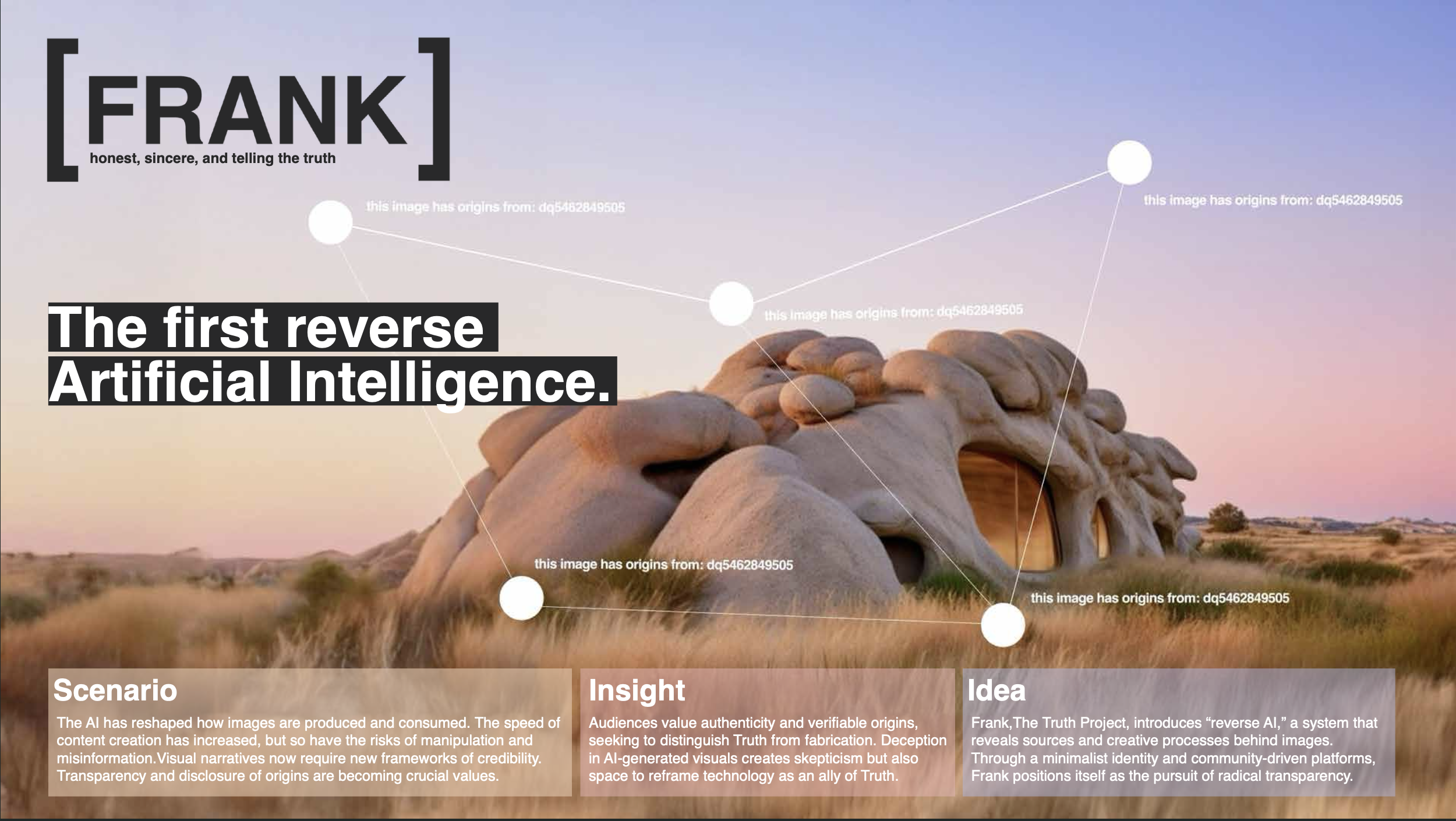
Frank, by Anna Rebekka Hofer, unfolds as a visual research project that examines the relationships among identity, perception and language. Through a layered and systematic aesthetic, personal reflections and everyday observations are translated into a structured visual grammar.

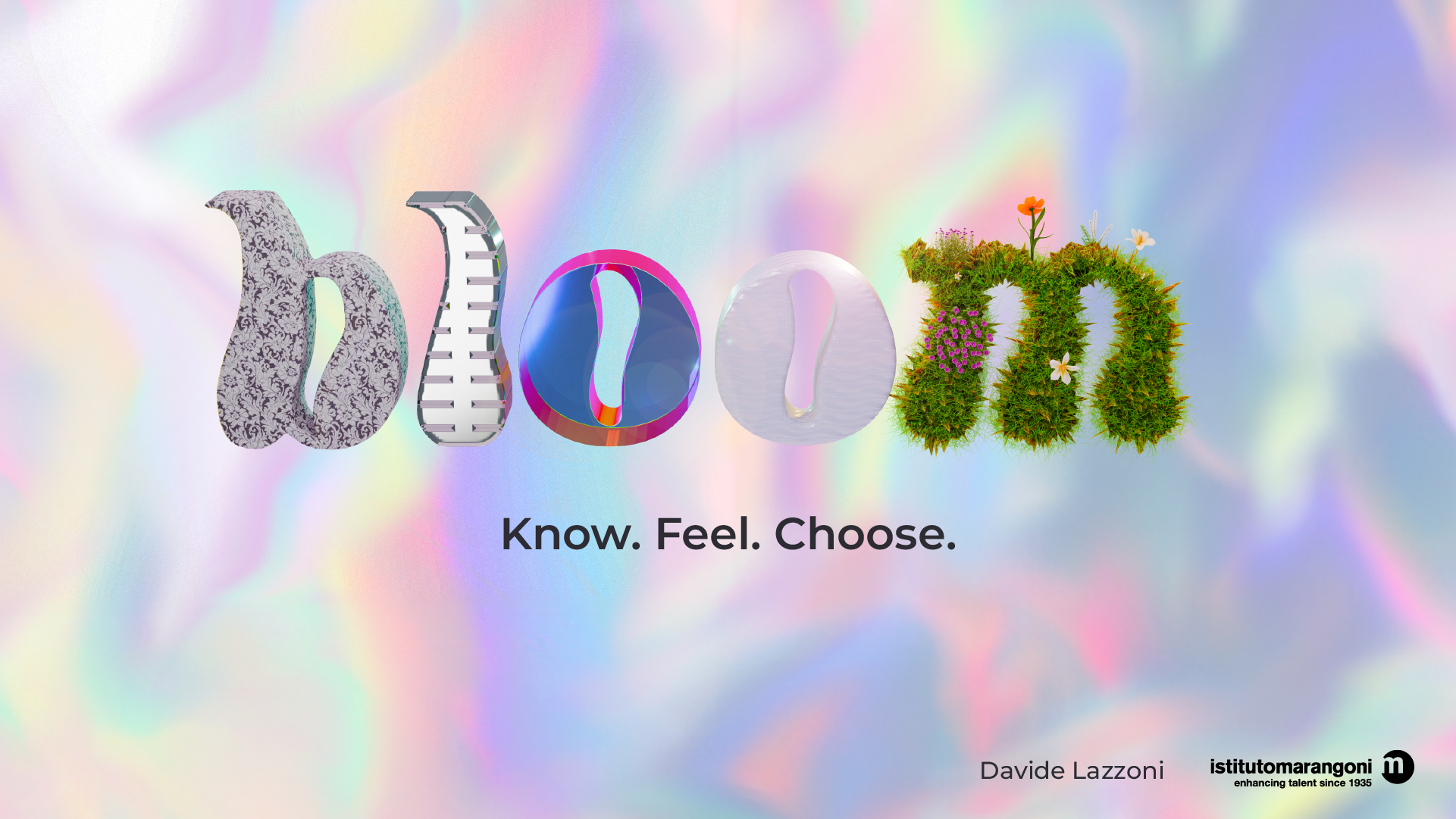
Frank by Anna Rebekka Hofer explores identity, perception, and language through layered visual research, translating personal observations into a systematic, structured visual grammar Bloom, developed by Davide Lazzoni, addresses the emotional experiences of people with Down syndrome through a social communication framework grounded in research, listening and participation. The project proposes a collaborative, ethically grounded design model, in which the process is as significant as the outcome.
Bloom by Davide Lazzoni explores emotional experiences of people with Down syndrome through collaborative, research-driven design, valuing ethical process as much as meaningful outcomes

In her video project Chinatown, Milano, Isabella Fernandez De Castro reimagines the city through a digitally mediated, surreal lens. Using the Chinatown district as a narrative space, she explores questions of cultural belonging, migration and hybrid identity.
Taken together, these projects articulate a shared position. Rather than producing images as isolated artefacts, they employ design as a critical instrument—one that enables interpretation and, at times, reconfigures the complexities that define contemporary life.
From Concept to Creation: The Thoughtful Process Behind Modern Design
For each of these emerging designers, the origins of their projects do not lie in a single moment of inspiration, but rather in an ongoing process of reflection.
Hofer describes Frank as the outcome of an intellectual journey developed during her studies at Istituto Marangoni Milano—a latent structure that surfaced gradually through observation and analysis. “Frank was already there, like an underground thread that eventually found its shape,” she noted. The project is grounded in an attentive reading of everyday experiences, where fragments of thought, language, and perception are woven into a cohesive visual system. In bringing it to life, Hofer’s ideas unfolded gradually, shaped by time, research, and personal perspective instead of a single defining gesture.
Lazzoni’s Bloom stems from an impulse: the intention to embed design within a real social context. It was also further motivated by his desire to apply his skills to serve an actual community. His initial approach was guided by an emotional sensitivity to the subject, recognising empathy—not rationality —as the essential starting point. Through dialogue, attentive listening, and direct engagement with the community, the project evolved into socially engaged design where process and responsibility are inseparable.
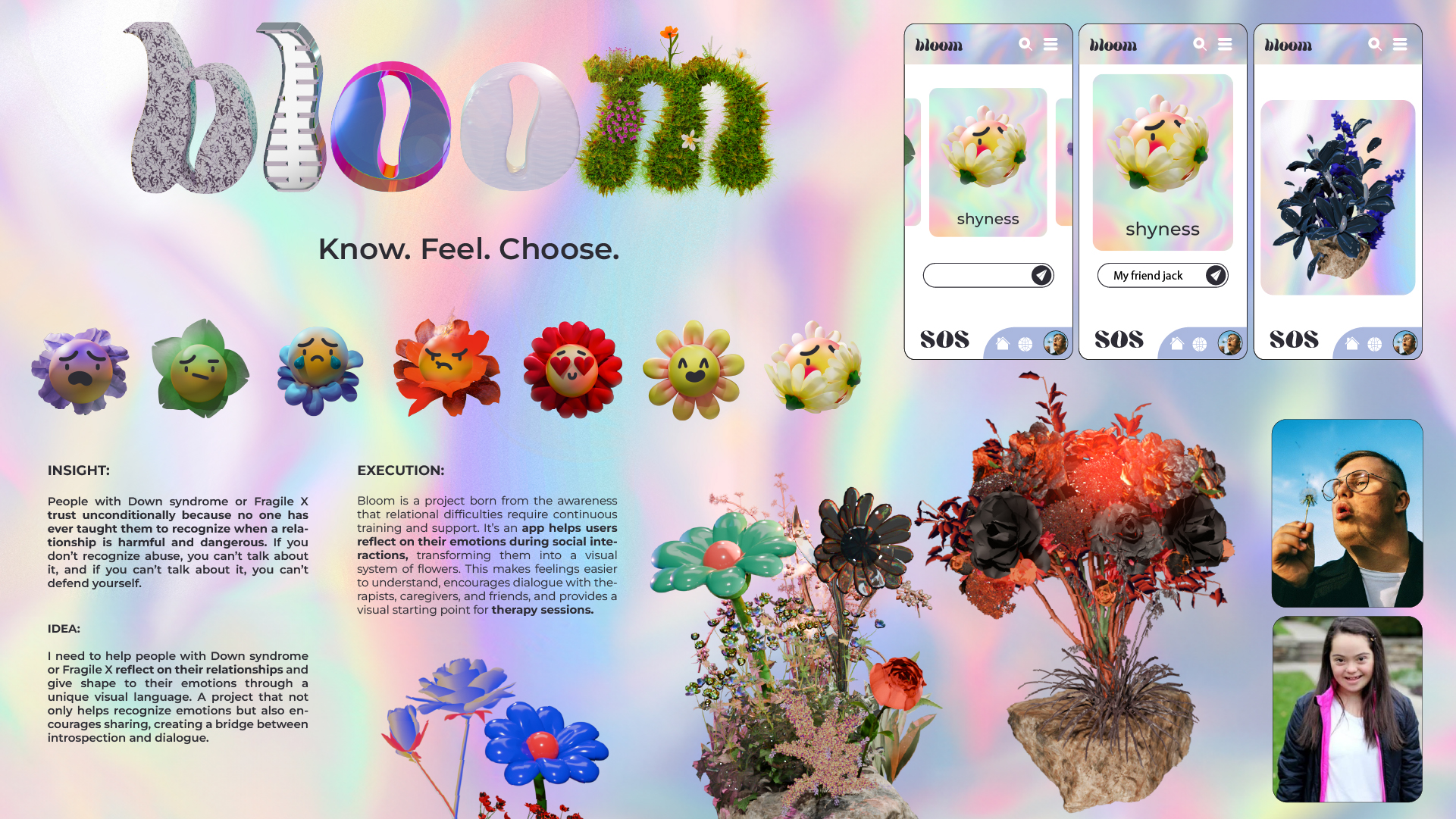
Bloom situates design within real social contexts, using empathy, dialogue, and responsibility to shape a collaborative, community-driven and socially engaged process Fernandez De Castro’s Chinatown, Milano project arose from an open brief—a story from your city—that prompted a broader reflection on belonging. Having lived in many cities and across multiple cultural contexts, selecting just one metropolis felt inauthentic. For this reason, she approached Milan not as a fixed location but as a layered, symbolic environment, focusing on Chinatown as a liminal space to explore questions of migration, displacement, and hybrid identity.
Inspiration and Innovation: Everyday Life, Storytelling, and Digital Aesthetics
The sources informing these projects reveal three distinct yet complementary approaches, each anchored in a specific mode of contemporary design practice.
Hofer’s Frank draws from the ordinary: chance encounters, marginal details and overlooked moments that gain significance through recontextualisation. Her process is one of ongoing transformation—a reinterpretation of reality that turns the mundane into the meaningful.
Lazzoni, in contrast, develops his visual thinking through narrative storytelling—cinema, literature and comics—translating an emotional archive into socially engaged design that responds to specific communities and lived experiences.
Fernandez De Castro works within a digitally inflected visual language, drawing on cinematic surrealism, video game aesthetics, and digital glitches. She references Paprika, a Japanese animated film by Satoshi Kon known for its psychedelic, metafilmic qualities and fractured, dreamlike imagery; Yorgos Lanthimos, a Greek director celebrated for his unsettling aesthetics, non-linear narratives and stylistic estrangement (The Favourite, Dogtooth, etc.); and Darren Aronofsky, an American filmmaker known for his intense, psychologically charged films (Requiem for a Dream, Black Swan) with tight editing and disturbing visuals. All are storytellers who translate complex themes into immersive visual experiences. Music serves as her narrative engine, with sound functioning as a structural element that guides rhythm and atmosphere, informing both form and intuition.
Taken together, these heterogeneous influences point to a shared condition of contemporary emerging design: a porous field where analogue and digital references, personal experience and collective narratives coexist without hierarchy—shaping practices that are reflective, situated and critically aware.
Navigating Challenges: How Young Designers Engage Communities and Cultures
The challenges encountered during each project’s development reveal an additional dimension of these emerging designers’ maturity.
For Davide Lazzoni, the most demanding aspect was directly engaging with the community that Bloom seeks to represent. Interviews with people with Down syndrome and social workers reshaped the project, making it truly participatory and attentive to lived experience.
Bloom situates design within social contexts, using empathy, dialogue, and participation to build an ethical, collaborative process serving a community Isabella Fernandez De Castro faced two interconnected challenges: representing multiple cultural perspectives with sensitivity, and navigating a process that resisted linear progression. Her Chinatown, Milano project unfolded incrementally, one scene at a time, guided by intuition and gathered materials rather than by a predetermined storyboard.
For Anna Rebekka Hofer, doubt is integral to the creative process. Non-linearity, detours, and uncertainty are not interruptions but mechanisms for critical refinement, with each project evolving precisely when its meaning, form, and impact are questioned.
Frank translates long-term observation of identity, language, and perception into a layered visual system shaped by research, time, and positioning. Despite their differences, all three projects share a common understanding of design as a practice shaped by careful listening, ethical responsibility, and the embrace of uncertainty.
Design That Moves Audiences: Emotional and Cultural Resonance in Visual Projects
In terms of impact, the projects converge in their ability to activate the audience’s attention and provoke reflection.
Lazzoni’s Bloom seeks to raise awareness of the often-overlooked challenges faced by people with Down syndrome, prompting subtle yet significant shifts in perception and behaviour.
Fernandez De Castro evokes curiosity and immersion without didacticism or overt explanation, creating a surreal atmosphere that gestures toward deeper social and cultural themes.
Hofer aims to leave a subtle yet lasting impression: rather than providing solutions, her work poses questions, positioning the visual designer as a facilitator of reflection rather than an arbiter of conclusions.
Evolving Work: Why Contemporary Design Is Never Truly Finished
Considering the potential evolution of each project reveals a defining trait of this new generation of designers: none see their work as ever truly finished.
Anna Rebekka Hofer envisions Frank growing into a multidisciplinary ecosystem—encompassing music, photography, writing and fashion—a shared language that can be collaboratively developed with other creatives.
Davide Lazzoni would return to the research phase to deepen community engagement; for him, Bloom is not an endpoint but an ongoing process of dialogue and co-creation.
Isabella Fernandez De Castro envisions an expanded version of her work: a surreal documentary capable of interweaving stories and memories of Milan’s first Asian migrants, realised through a more ambitious production framework.
In each case, the projects function as evolving structures rather than static outputs, reflecting an understanding of emerging design as ongoing, adaptive and responsive.
The Next Generation of Designers: Ethical, Interdisciplinary, and Critically Aware
The work of Anna Rebekka Hofer, Davide Lazzoni and Isabella Fernandez De Castro provides a clear insight into how a new generation of designers approaches visual communication today. Instead of viewing design as a purely visual or stylistic exercise, their practices position it as a cultural instrument—one that engages with ethical concerns, social contexts and interdisciplinary dimensions.
Recognition from institutions such as ADCI and ADCE underscores the coherence and maturity of these emerging designers’ approaches. While the three projects differ in scale, tone and methodology, they are united by a shared purpose: to employ visual communication and design to create spaces for reflection, enable nuanced storytelling, and contribute to a broader cultural imagination.
Paola Toia
Editor, Milano