
Why fashion is eating itself: Inside the global explosion of Gastrofashion

Fashion is eating food culture, turning meals into a more democratic, addictive aesthetic where luxury, social media, and identity collide
From luxury brand cafés to runway-ready food motifs, fashion’s growing appetite for gastronomy is reshaping how style is produced, consumed, and performed. Designers, photographers, and influencers are now turning the dining table into a stage for identity and desire, cultivating a new aesthetic language—one where taste, texture, and visual indulgence blur the line between what we wear and what we eat.
This piece explores why “gastrofashion” has become a defining lens for understanding contemporary luxury, and how the convergence of cuisine and couture is rewriting the cultural script of modern consumption.
Why Fashion Is Obsessed with Food: The Rise of Gastrofashion
This evolving trend highlights the industry’s growing obsession with taste, both literal and aesthetic. While the practice itself isn’t new, the term “gastrofashion” signals a fresh phase of haute couture à la carte.

A minimalist kitchen tableau where refined design, soft tones, and food rituals reflect the growing cultural appeal of gastrofashion. Photo credits: Stacey O'Gorman in Paris Georgia 2025. Photography & Styling: Raffaella Bichiri Coined by Adam Geczy and Vicki Karaminas in 2019, the concept of gastrofashion highlights how designers and luxury groups actively stage their brands in cafés, restaurants, and across the hospitality sector, transforming consumption into a ritual of both appetite and identity.
From the first Armani Café in the 1990s to today’s luxury brand bistros, this edible branding strategy asks: Are we what we eat, or what we wear?
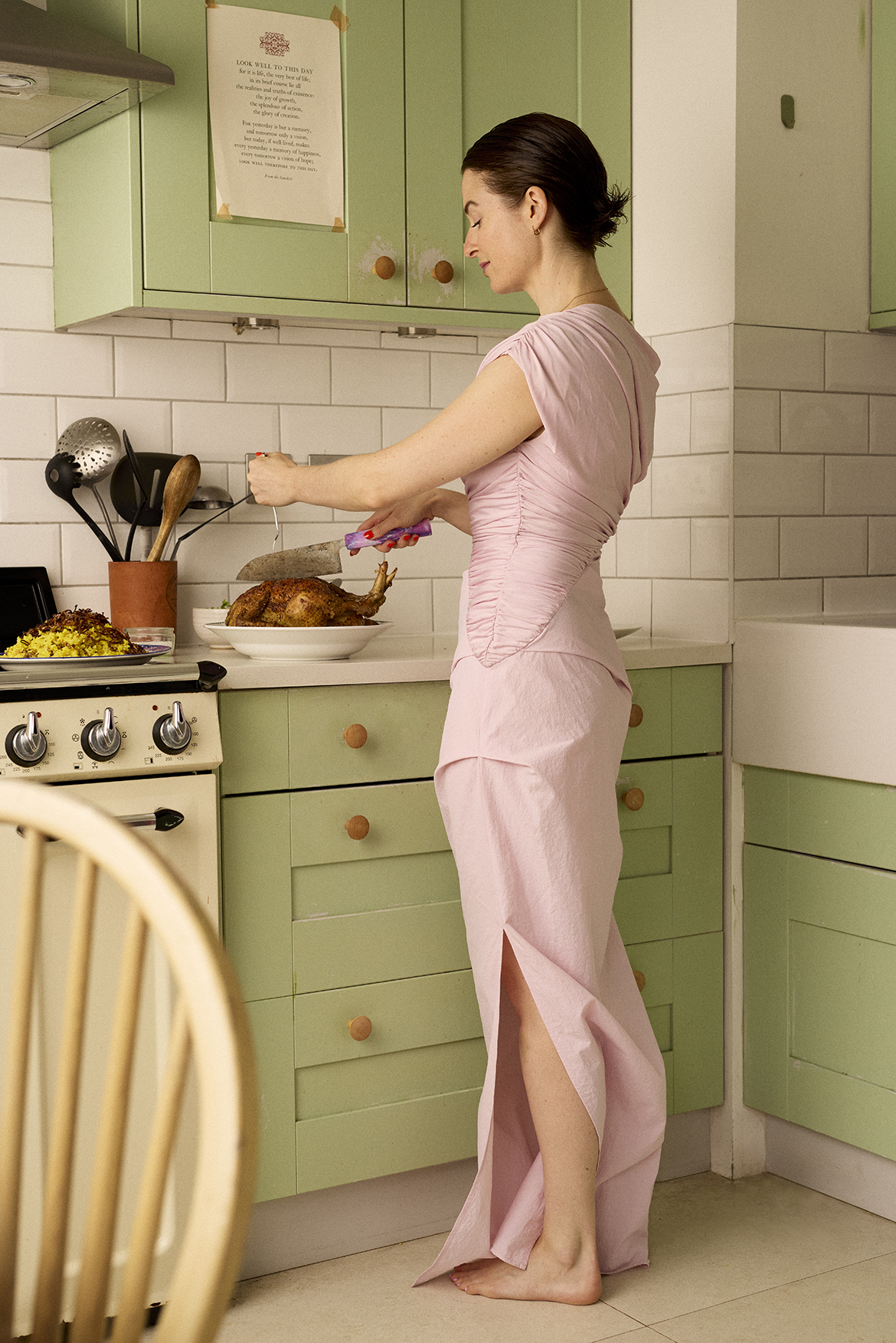
A serene kitchen moment where culinary preparation meets elegant fashion, capturing the intimate essence of the emerging gastrofashion movement. Photo credits: Stacey O'Gorman in Paris Georgia 2025. Photography & Styling: Raffaella Bichiri
How Gastronomy Became Fashion’s New Visual Language
Much has been written about food in fashion, but little has truly dissected the blending of gastronomy and the fashion industry, where food and dress mutually express social codes, gender, and desire.
In the world of editorial styling, gastronomy is not simply inspiration like fashion; it is mise-en-scène, a code of status, fantasy, and belonging. Fashion photography serves up seductive banquets, with models cast as muses of edible luxury. The question is how the contemporary image absorbs the spectacle of the performative feast, where appetite, abundance, and allure blend into a new era of gastronomic glamour.
“Vogue’s efforts to cover food have yielded some of the magazine’s most intoxicating, whimsical, and artistic editorials” – Melissa Marra-Alvarez and Elizabeth Way, Food and Fashion (2022), Bloomsbury
Since the early 2000s, with Irving Penn’s still-life food-sculptural images for Vogue and Tim Walker’s surrealist tablescapes, the feast motif emerged in fashion as a stage of indulgence, humour, and critique.
Today’s stylists and photographers reinterpret gastrofashion not simply as decadence but as narrative power, inviting viewers to consume fashion visually. It’s no longer just about appetite; it’s about identity, ritual, and excess.
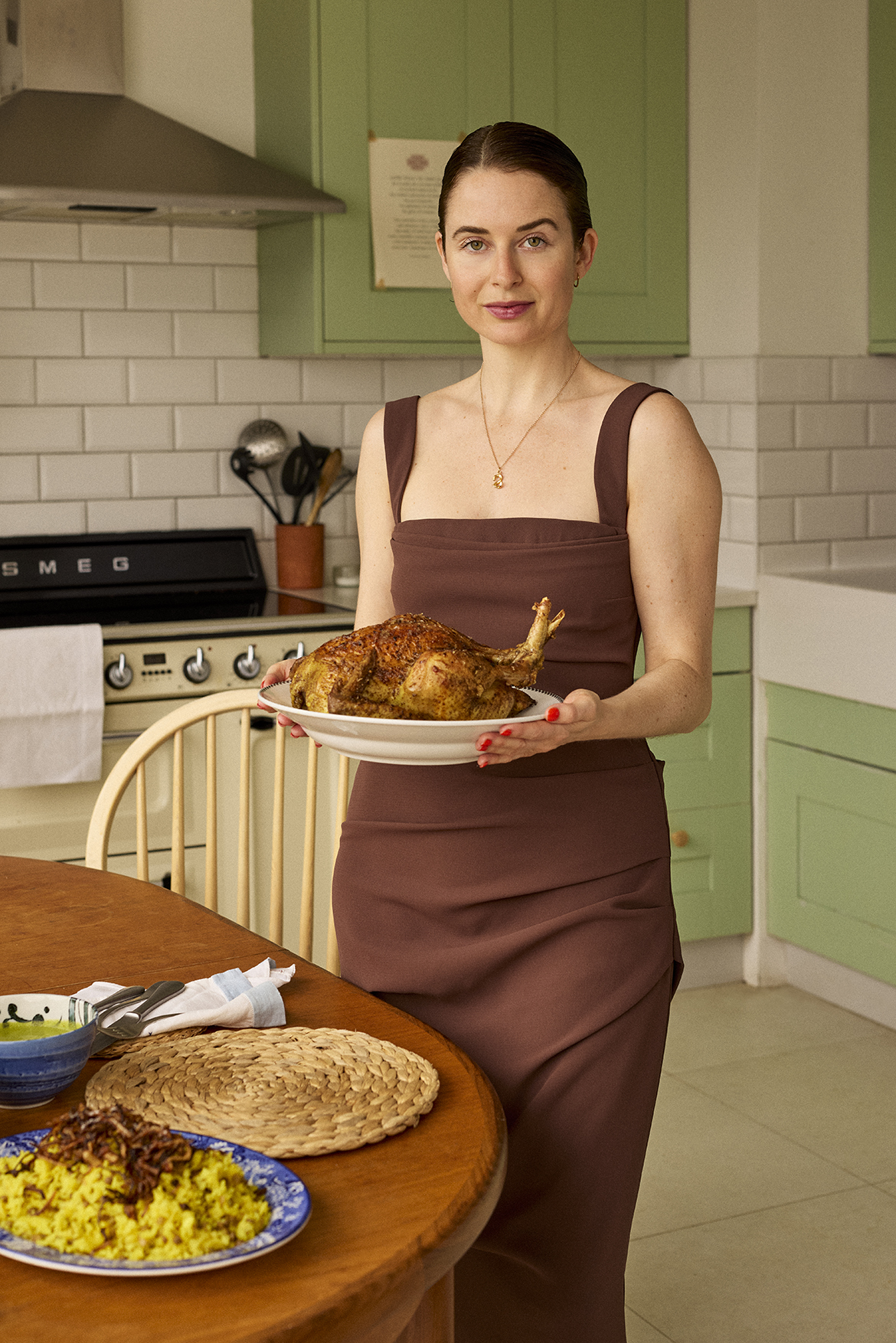
A perfectly plated roast takes centre stage, transforming everyday cooking into a refined lifestyle moment aligned with gastrofashion’s fusion of taste and style. Photo credits: Stacey O'Gorman in Paris Georgia 2025. Photography & Styling: Raffaella Bichiri
Food as a Fashion Symbol: The New Visual Codes of Modern Luxury
Digital campaigns amplify the gastrofashion trend: brands have turned dining scenes into metaphors for luxury’s evolving language—part performance, part parody, as seen in Moschino’s Pasta Bag 2025. The soft-core intimacy of food’s textures collides with the sharpness of couture tailoring, creating imagery that dares audiences to taste with their eyes.
Behind every staged dining lies meticulous art direction. What was once a satire of opulence (Tim Walker, Senior Moment with Gemma Ward, Vogue 2004) now functions as a coded language of creative storytelling. The table becomes both catwalk and confession.
Fashion consumes everything—and now, quite literally, it devours the feast itself. Luxury brands like Loewe, with their SS25 tomato clutch by former creative director Jonathan Anderson, have capitalised on this intersection. Food becomes not only a metaphor but also a performative accessory, as in Jacquemus’s Mediterranean breakfast staged as runway settings.
The Social-Media Surge of Gastrofashion: How Influencers Turn Dining into a Style Performance
On Instagram and TikTok, influencers have amplified the gastrofashion interplay as the “aestheticisation of consumption.” A new wave of content creators—the so-called Food Flexers—are flavour-curious, brand-savvy consumers obsessed with dining experiences.
In marketing terms, this is a powerful trend as algorithms “favour these edible-to-wearable moments,” packaging luxury not only as purchase but as a sensorial spectacle (STYLUS).
Haute cuisine and luxury fashion elevate when combined, reinforcing each other’s aura of exclusivity. Food styling on social media becomes a subtle marketing tool: taste, in both senses, is a lifestyle that can be displayed, consumed, and shared.
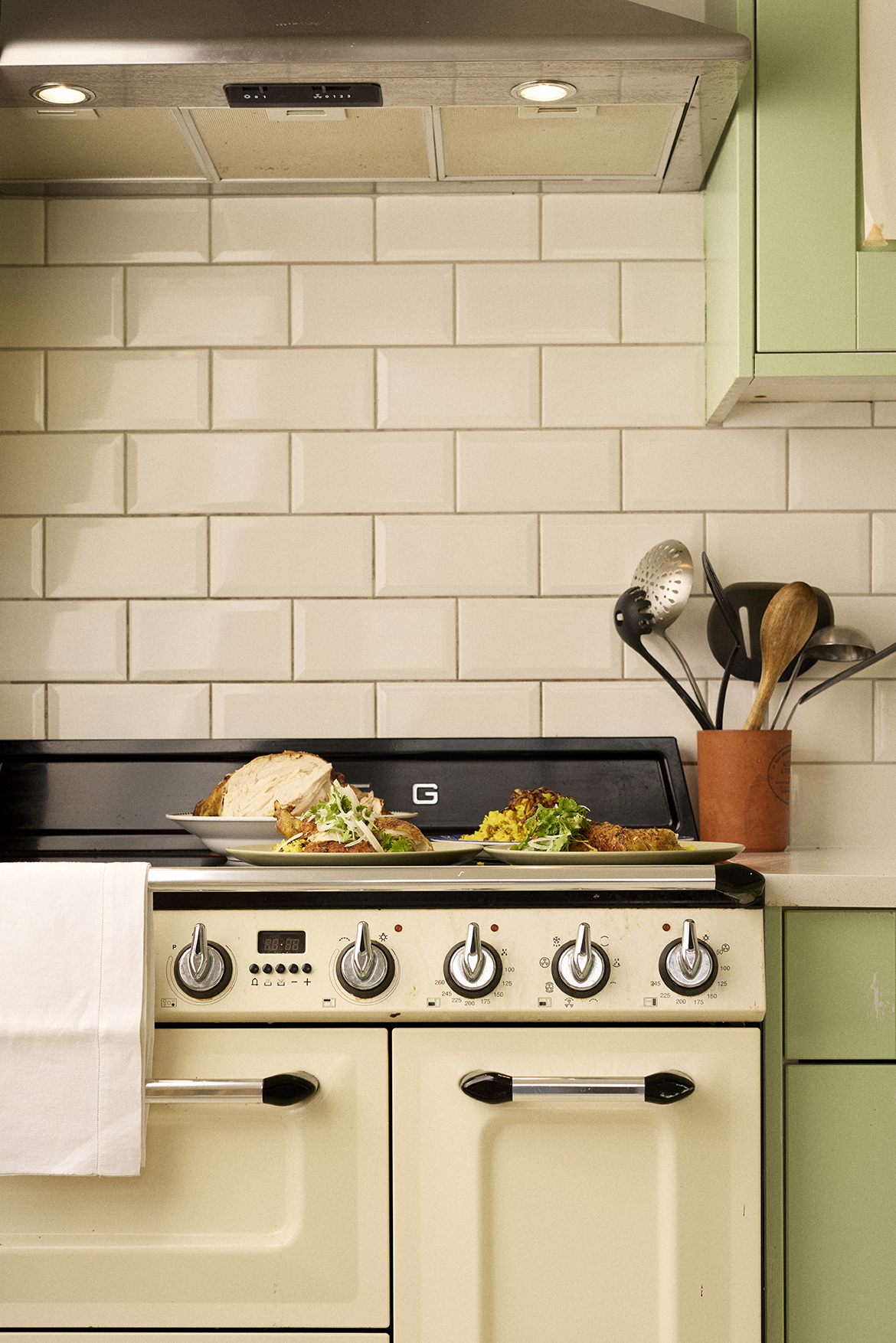
A beautifully styled kitchen scene blending food and fashion, showcasing gastrofashion’s rise as a cultural trend rooted in home cooking and aesthetic living. Photo credits: Stacey O'Gorman in Paris Georgia 2025. Photography & Styling: Raffaella Bichiri
The Future of Luxury: How Food Became Fashion’s Most Democratic Aesthetic
The surge of gastrofashion also points to a broader cultural shift, as the digital landscape presents a more accessible form of luxury. Viewers may not buy the Fendi Baguette bag, but they can replicate the “brunch selfie” aesthetic.
Food, then, acts as a democratic entry point into a conversation about fashion, offering symbolic inclusion in a sphere of exclusionary goods. The future of luxury may not only be worn, but tasted, shared, and posted.
Silvia De Vecchi
Librarian, London