

How is AI changing architecture today? Arturo Tedeschi on algorithms, design thinking and a new way of working
Architects have always adopted new tools. Few, however, have altered the discipline as fundamentally as artificial intelligence is doing right now. Beneath the surface of AI-generated imagery and optimisation, a deeper transformation is underway across architecture and design. From parametric and computational approaches to generative systems and AI-driven workflows, the focus is moving from form-making to process—that is, from designing objects to determining how ideas come into being.
Arturo Tedeschi’s work sits at the heart of this transition. Known for his use of algorithms in architecture and design, his practice explores how artificial intelligence can extend, rather than replace, creative thinking. This conversation, led by a design student, offers a close, first-hand perspective on how AI is used in architecture today, and what it might mean for the future of design.
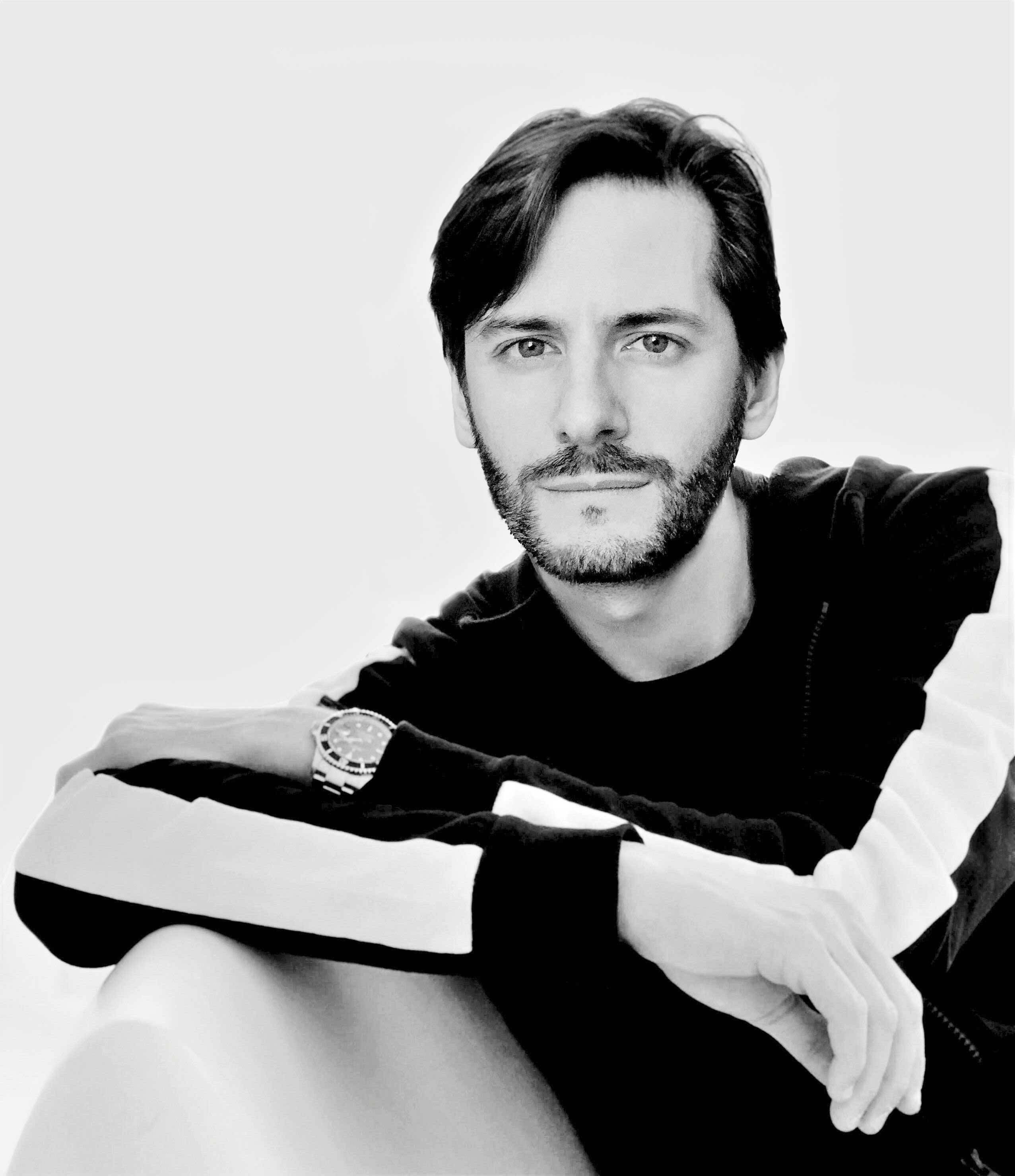
Known for integrating algorithms into architecture and design, Arturo Tedeschi explores how artificial intelligence can expand, rather than substitute, human creative thinking.
Arturo Tedeschi: the question that changed the tone of the interview
He leaned back, his eyes wide, and he placed a hand on his chest. “Bellissima,” Arturo Tedeschi said. “One of the best questions I’ve ever been asked.”
For a moment, the architect who designs cars, buildings, and algorithm-generated sculptures—who shares stages with Kazuyo Sejima and collaborates with major international brands—was speechless, completely still as the question sank in.
And I was sitting there thinking, “This is going to be good.”
How AI Is Changing the Creative Process in Architecture
Last Friday, I walked into the Convergence seminar at Istituto Marangoni Milano Design expecting to take some notes, maybe snap a few photos, and definitely fight the urge to check my phone. Instead, I spent the next hour watching Arturo Tedeschi explain how AI and algorithms gave him superpowers—and also how he designs cars by looking at architecture, and architecture by looking at, honestly, almost anything but architecture.
After his talk, I cornered him for a chat. Here’s what happened when a curious design student asked an internationally renowned architect some slightly unhinged questions.
What Defines Architectural Expression Today: Lightness, Form, or Something Else?
You recently shared a stage in Tokyo with Japanese architect Kazuyo Sejima, whose work is defined by lightness and near-disappearance, while yours moves in a more sculptural direction. Where did you find common ground, if any, as you listened to her?
Arturo Tedeschi: There is a huge difference between her work and mine. You said something very interesting—that in her work, you feel this kind of lightness. She works with layers. Think of the beautiful Bocconi in Milan: all that net, all that transparency.
But if I need to find common ground? Maybe it’s vibration. You can create something static—minimalistic, like Apple—precise, proper. But I believe that in both my work and Kazuyo Sejima’s, there is a theme of vibration. I always like to create architecture and products that resonate with people, and the only way to do that is to trigger the senses.
That vibrational quality—absorbing the atmosphere— gives you something that changes over time. And my work is sculptural, not because I lack direction. Sculptural shapes are a consequence of freedom. When I solve a problem, I look for the best shape, technically and creatively. I never start with technology; I start with the best solution.
Visualizza questo post su Instagram
Where Does a Designer’s Creative Process Really Begin?
What does your creative process actually look like, and where does it begin?
Arturo Tedeschi: I don’t have a repeatable workflow, but I always start outside the discipline. If I’m designing a car, I don’t research cars—I look to architecture. If I’m designing a watch, I look somewhere else entirely. I keep searching until something sparks, moving through references and images before I start coding or building anything. Technology comes later. First comes curiosity.
Arturo Tedeschi’s dream project: the bridge he still wants to build
You’ve worked across fashion, architecture and industrial design—what’s the one project you still dream of building? Is there a medium you haven’t explored yet that you’re secretly curious about?
Arturo Tedeschi: You’ll never guess—my dream project is actually a bridge. I’ve created one as a concept, but I would love to build it for real. Bridges are fascinating and deeply symbolic: they connect places, people and ideas. There’s something inherently beautiful about that.
When Did AI Start Changing Architecture and Design for Good?
This seminar explores how thinking and tools come together to expand creativity. In your own work, was there a moment when AI fundamentally changed the way you design—a real before-and-after?
Arturo Tedeschi: My studio’s motto is “seeking beauty through technology,” and technology has always been a companion. I started as a traditional architect, until one day I discovered algorithms, and that changed everything. I like to say algorithms are superpowers: I was never good at sketching, but with algorithms, you can code and create things you simply couldn’t before.
AI is a revolution everyone is talking about—even my mum—and it will affect everything, including our profession. When people say “they’re just tools,” I disagree: they’re not just tools, not a new toy or another piece of CAD software, but part of a much bigger picture—almost like a super-internet. AI is the topic now, but in twenty years, no one will say they studied it: it will simply be part of everything.
Visualizza questo post su Instagram
What Does Success Really Mean for a Designer Today?
Looking back at your 20-year-old self, what did you get completely wrong about becoming a successful designer?
Arturo Tedeschi: I was trained as an architect, taught that materiality and the physical world were everything. Architecture felt like a romantic calling, fuelled by my love for many architects. Success, to me, meant building things—objects and buildings—because I believed only physical architecture could affect reality: you build a palace, people see it, live in it, experience it. I don’t like the word “success,” but that was my vision.
Then, by pure accident, my life changed.
Now, success is something different. It’s about engaging with technology and the questions reality keeps posing to us as designers—questions that change with time. The most interesting part is answering them, learning, and coming to understand the world far better than simply creating a solid object in a city. I recently co-designed something I can’t name, but it’s now in homes all over the world, with a reach and a responsibility no single building could match.
I grew up with a romantic idea of buildings. Still, I’ve come to realise that, as a designer, you are constantly responding to questions that shift with technology, society, and the times. That is what keeps me feeling young: each project begins in a new environment, and somehow it always feels like the first time you’re doing this job.
If Design Could Speak: What Tedeschi’s Work Reveals About the Designer Behind It
If your designs could speak—the Iris Concept Car, your sculptures—what would they say about the person who created them? Would they see you as a curious child, an obsessive perfectionist, or something in between? And more personally, would you be proud of what they said, or slightly embarrassed?
This was when he placed his hand on his chest. This was when Arturo Tedeschi said, “Bellissima. One of the best questions I’ve ever been asked. It’s so beautiful, I need time to answer it as beautifully as it deserves.” He paused. You could hear a pin drop.
Arturo Tedeschi: Somewhere between a curious child and a perfectionist. I start with naïve curiosity that tips into obsession, and I always try to control every detail. I often say we must create something better than the render, more spectacular. So yes: obsession, perfectionism. But I love risk, and I never play it safe.
Some projects are well-defined and consistent; they would say, “Arturo, thank you for giving me life,” and they would be happy. Others might say, “You took too much risk giving me life. I’m fine, I’m happy to exist, but the direction you chose was very risky.” There’s this sculpture—very tall, 3D-printed—a huge risk: two months, complicated printing, messy. I feel she might have something to say to me.
Some projects go to the mass market, so I am strict and safe. Others loosen up with an open brief, and then I take many risks—and that’s perhaps where I created some Frankensteins.
Visualizza questo post su Instagram
Why Curiosity, Not Technology, Drives the Future of Architecture
Here’s the thing about Arturo Tedeschi that no render, no algorithm, no sculptural form can capture: he’s genuinely, almost disarmingly, human. A man who places his hand on his chest when a question catches him off guard, who admits he’s still figuring things out, who laughs at his own Frankensteins.
He talks about algorithms and artificial intelligence as if they were old friends; he pauses when a question truly lands and lets it sit there between you. He doesn’t perform wisdom; he radiates curiosity.
And as I packed up my notebook, it hit me: Arturo Tedeschi is not just designing objects. He’s designing courage—the courage to look beyond your discipline, to fail spectacularly, to let curiosity lead even when it gets messy, even when you end up with a Frankenstein.
His next project? Perhaps that bridge he’s been dreaming of. Maybe something none of us can imagine yet. Either way, if it ever speaks, I have a feeling it will thank him for the risk.