

From CGI to XR, 3D designer Santiago Martínez explains how AI is changing visual design, and why creativity still needs a human touch
Artificial intelligence is rapidly transforming the design industry—but will AI ever replace designers? As technology and human imagination continue to intertwine, AI tools for creatives are already reshaping the boundaries of artistic production. This raises new questions: what do authorship and collaboration mean in the age of generative AI, and how might artificial intelligence change the future of visual design?
It’s not an easy question to answer. So, we turned to Santiago Martínez, a Visual Design alumnus from Istituto Marangoni London, who has emerged as a versatile tech-creative designer working across 3D, CGI, AI, and XR—all while keeping a strong focus on human emotion.
How AI Is Changing Visual Design
If you are a creative designer wondering how to embrace technology in your work, stay with us. We have three reasons why not to fear AI, plus three recommendations.
Tiago’s approach is deeply rooted in storytelling, grounded in a previous role as Art Director at Vinter Marketing in Mexico, where he created immersive experiences for brands such as Disney, Marvel, HBO, and Sony Pictures.
Now, as a 3D Visualiser at Elmwood in London, he continues to elevate brand visualisation for prestigious clients like Haleon and Mars. He brings the same rigour to corporate branding that he brought to the museum floor, crafting innovative visual narratives that truly engage audiences.
Incorporus by Tiago. A series of visuals exploring the concept of reality. What if we could look at animated objects without them having a body? Almost like chasing spirits, the project captures moving objects through fabrics, achieving a sculpture-like quality as sheets collide to create new forms. (Medium: CGI. Software: Blender, Premiere Pro, After Effects)
What Does It Mean to Be a Visual Designer in the Age of AI?
I never set out to become a Creative Experience Designer, but it is what I enjoy most. In many ways, working with 3D, Artificial Intelligence, and XR is truly multidisciplinary and reflects how AI is becoming part of the visual design workflow. You need a solid foundation in design principles, film, storytelling, and branding, but you also have to be a bit of a tech nerd—always exploring and “playing” with new software. Above all, I think it’s essential for creatives to promote education, excellence, quality, persistence, virtue, and honesty.
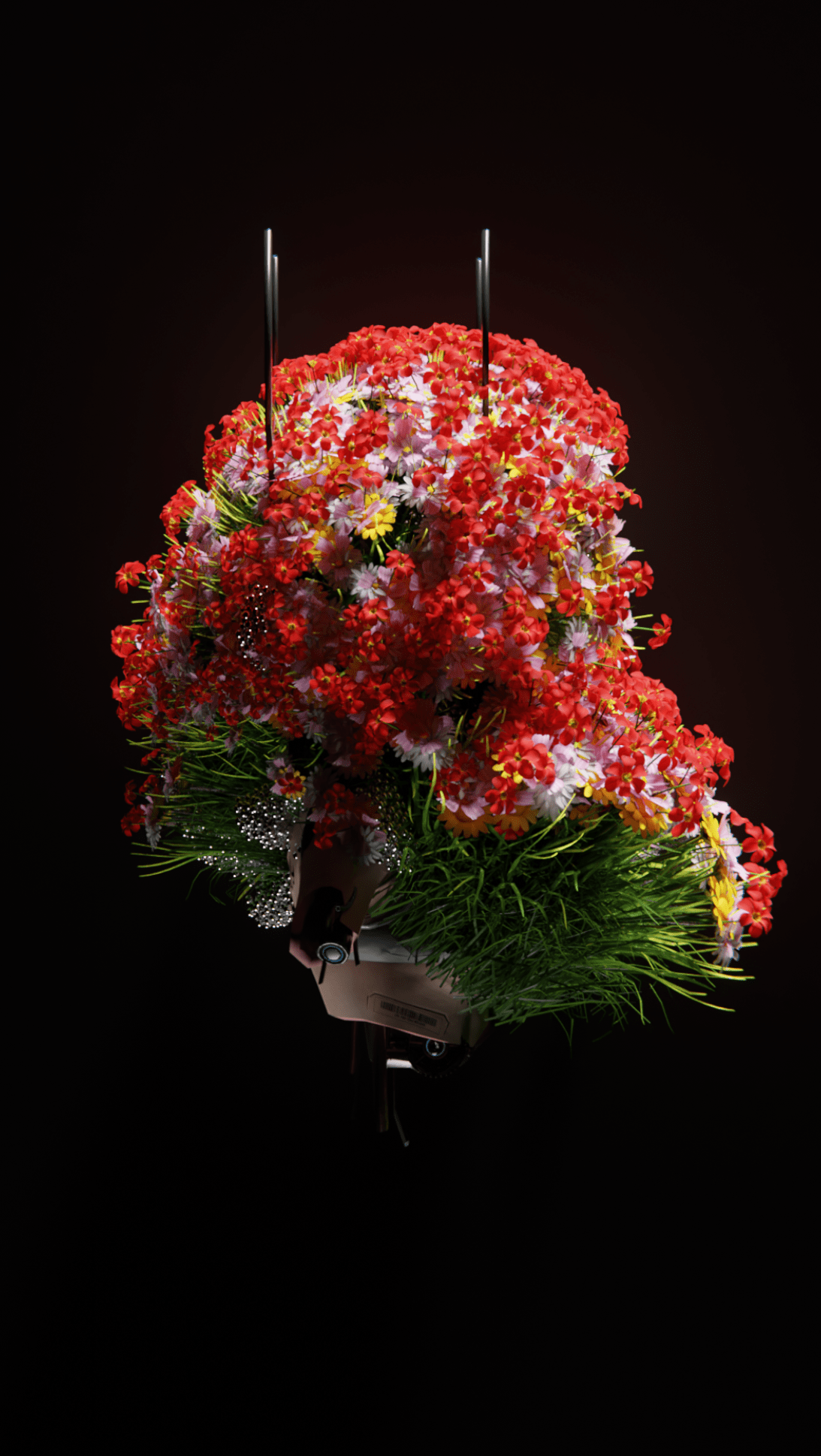
Gea by Tiago. A visual exploration of the mythical figure of Mother Nature, from birth to death. (Medium: CGI. Software: Blender, Premiere Pro, After Effects)
Are AI Tools Intimidating for Designers?
It is definitely scary when you are starting out, and see amazing 4K renders or super-advanced AI agents all over social media. It can feel like you have the same creativity but lack the technical know-how or experience. However, programs get easier to use every year (unless you are in a very specific pipeline like the VFX industry, which requires niche skills). Thanks to free tools like Affinity and Blender, the possibility to create is now within everyone’s reach.
Are Designers Struggling with the Rise of AI and New Technologies?
I think many people feel more lost than ever. Brands are struggling to find human identities, and art sometimes leans too heavily on agendas and abuses post-modernist ideas. However, we are still very far from reaching a point where AI can provide truly bespoke solutions. Consistency, for example, remains one of the main limitations of AI, and consistency is essential in commercial work. An exceptional designer will always be able to deliver consistent, high-quality, bespoke results because they practice repeatedly.
Kalia by Tiago. How can we find beauty in the chaos of our physical nature? (Medium: CGI. Software: Blender, Premiere Pro, After Effects)
How AI Is Reshaping the Visual Design Industry
The industry is evolving rapidly, not only because of the fear or excitement surrounding AI, but also because technology is advancing so fast that what you knew as the “industry standard” today might be obsolete in three years, or even sooner. For example, midway through my studies, an XR software was seen as an industry benchmark, and now it is completely outdated.
3 Recommendations for Designers Starting to Use AI Tools
AI tools are becoming part of many creative workflows, and students keep asking the same question: How can you embrace these technologies without losing your artistic voice? Here, Santiago Martínez shares three recommendations for designers just starting to explore AI.
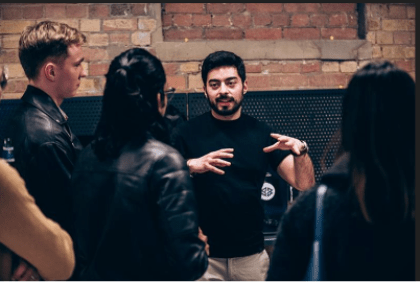
Design Lab at Istituto Marangoni London
1. Use AI to support human creativity
Embrace generative and agentic Artificial Intelligence in your creative workflow. Use tools for designers, such as Gemini Pro, Claude, and Firefly, to enhance—not replace—human creativity. When I study art and history, I try to understand the challenges people faced in the past and how technology helped them adapt. Then I consider how today’s tools might help solve our current problems. That mixture of past, present, and future ultimately brings clarity to an otherwise chaotic landscape.
The Artist, the Vision, the Oracle by Tiago. This artwork was developed as part of an R&D process with renowned British artist Jonathan Yeo. (Technical aspects: VR, 3D modelling, Cycles render) I applied this blended approach to the visual arts in a collaboration project with the renowned British artist Jonathan Yeo, utilising 3D printing, VR, and AR to redefine the boundaries of contemporary art. My main focus was to bring imaginative art forms into the world by emphasising four aspects: humanity, imagination, and beauty.
2. Keep the human touch in AI-driven design
What sets designers apart today is their ability to operate as hybrids. As a creative experience designer working across CGI, AI, and XR, I exist at the crossroads of technology, imagination, and beauty. I hope my work brings joy and excitement. My approach is deeply rooted in storytelling.
Umando (the Chair) by Tiago. More than a chair, it is an experiential piece of furniture that encourages reflection on purpose and humanity. It was on display at the Design Museum London during the exhibition Momentum, organised by Istituto Marangoni London for the London Design Festival 2024. (Software: Cinema 4D and Blender) For the Umando chair project—a series of visual designs—my goal was to capture the essential nature of humble humanity as we stand on the brink of a mixed-reality world. I design to deliver a fulfilling experience for those who engage with my work.
3. Adopt an experimental mindset when working with AI
I often get requests from people who want to explore CGI—usually graphic designers or artists looking to add custom lighting or motion to static 2D pieces. If you have a solid base in design principles and aren’t afraid to dive into the technical aspects, the possibilities are huge. However, it’s essential to stay humble. Mastering these programs to a professional level can feel like climbing a mountain—even if you already know your way around the Adobe Suite. The same applies to AI or XR. It is about adopting a ”what if” mindset and letting the software handle the heavy calculations. The program will simulate physics or light bounces—you are the one with the vision. That creative vision is ultimately what makes it human, even if the final output is a digital simulation.
Assandra (Scene 24) by Tiago. Part of the teaser for the upcoming short film Assandra, depicting a future where humanity fails to solve migration and AI challenges, forcing one machine to stand against a new world order. (Software: Cinema 4D and Blender) From the classrooms of Istituto Marangoni to the studios of Elmwood in London, Santiago Martínez Mercado embodies a new wave of designers: technologically fearless, commercially savvy, and artistically soulful.
His journey suggests this is only the beginning. As AI tools continue to evolve, the relationship between technology and creativity will grow even more complex—and more exciting for students ready to experiment as they help shape the future of visual design.
Silvia De Vecchi
Librarian, London