

British wool is driving a shift in sustainable fashion, reconnecting regenerative UK supply chains, rural economies and design education
British wool is once again earning serious attention in sustainable fashion, as debates around traceability, regenerative supply chains and material provenance move from theory to practice. Long overshadowed by imported fibres and technological innovation, the UK’s native wool—sourced from more than 70 sheep breeds and a national flock of 33 million—is being reappraised not just as heritage, but as a vital resource with real implications for luxury sourcing, rural economies and design education.
“Wool is more than just a fibre: it is a living legacy, woven into the history of human civilisation” – Justine Lee and Jess Morency, The Wonder of Wool: A Knitter’s Guide to Pure Breed Sheep (2025)
That reframing shaped the Working With Wool Symposium at Istituto Marangoni London, organised by Kirsten Scott, which brought together students, designers and sustainability leaders at a moment when fibre-level thinking has regained urgency. The renewed focus extends beyond research studios to the runway: at the Spring/Summer 2026 Dior menswear show, Jonathan Anderson reintroduced British wool through tailoring that nodded quietly to Dior’s longstanding engagement with British culture.
Visualizza questo post su Instagram
British wool in Dior’s Spring 2026 menswear collection by Jonathan Anderson, presented at Paris Men’s Fashion Week Yet the symposium made clear that this is not simply a question of aesthetic revival. By placing wool within a broader network of farmers, mills, educators and high-end brands, it underscored how fibre provenance now intersects with material innovation, product development and supply chain strategy. In this context, British wool becomes emblematic of the wider recalibration underway in sustainable fashion.
Why British Wool Was Long Undervalued in Sustainable Fashion
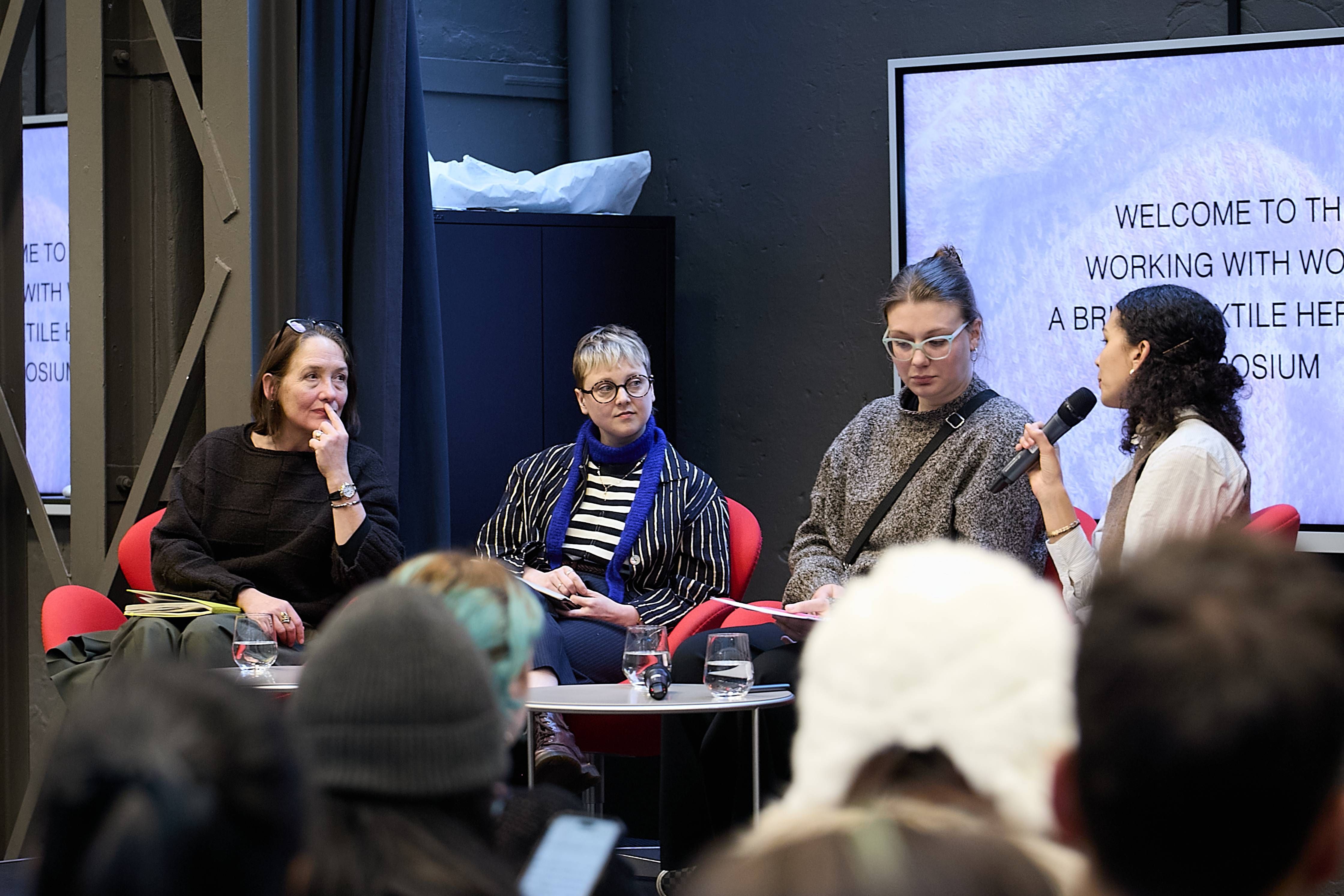
Working With Wool Symposium, Istituto Marangoni London—from left: Justine Lee, Nicci James, Louisa Knapp and Harriet Fletcher-Gilhuys. How has British wool been positioned within sustainability frameworks, and why was it overlooked for so long?
For knitwear designer Justine Lee, founder of Ossian Knitwear, the shift began with a sense of disillusionment: “My turning point came when I saw rivers turned black by textile factory effluent. I could no longer pretend fashion’s pollution was somebody else’s problem.”
After more than two decades designing with luxury fibres such as cashmere, Lee enrolled in an MA in Sustainable Textiles, where she explored emerging alternatives—flax, cellulose, and even mycelium—yet none proved viable at scale for knitwear production.
A visit to the British Wool Marketing Board reframed the question entirely. “We have 33 million sheep in the UK,” Lee noted. “Wool is our natural resource, and I had been overlooking it.”
The realisation was both industrial and cultural. With more than 70 native sheep breeds, Britain holds one of the richest wool ecologies in the world, yet much of its fleece has long been undervalued.
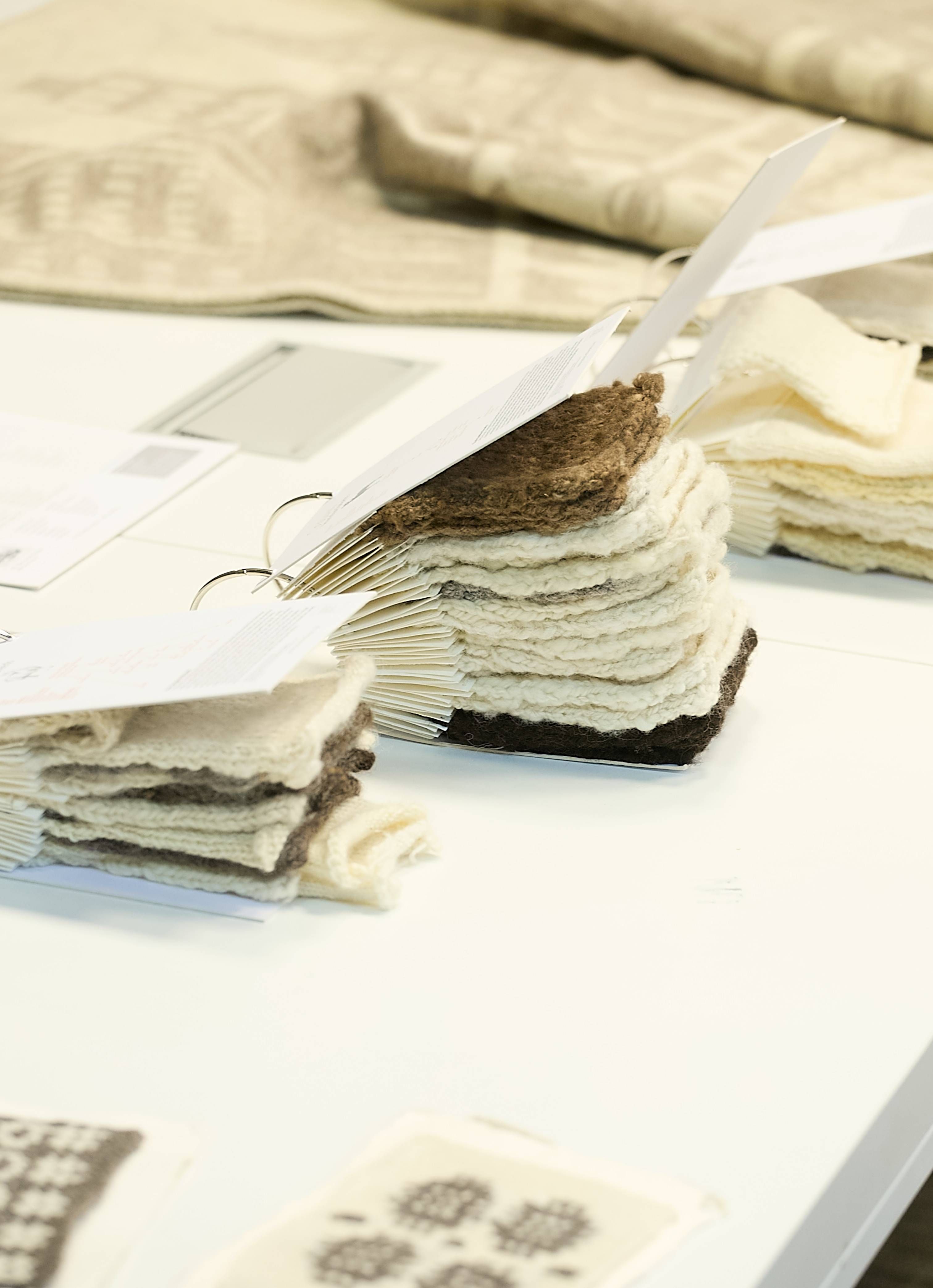
Lee went on to establish the London City Farm Yarn Project, which collects over 1.2 tonnes of fleece from urban farms and processes it collectively into affordable, high-quality British yarn. “I handled every breed,” she stated. “Some fleeces were so beautiful I couldn’t believe they were considered low value.”
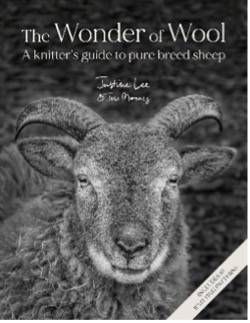
The Wonder of Wool: A Knitter’s Guide to Pure Breed Sheep (2025), by Justine Lee and Jess Morency Her renewed appreciation for breed-specific wool—soft, lustrous and materially distinct—challenged assumptions about what constitutes “luxury” fibre. That research now underpins The Wonder of Wool: A Knitter’s Guide to Pure Breed Sheep, the first comprehensive critical study dedicated to the unique qualities of British wool.
Regenerative Wool Supply Chains: From Farm to Fabric
“Produce locally, use locally, and repair the land in the process.” Guided by this principle, knit specialist Nicci James—founder of R&D studio UNUSUWUL—presented her research into breed-specific British wools, developed in collaboration with Fibreshed and British Wool.
Through material testing, industrial knitting trials, and biodegradation studies, James demonstrated that local wools are not only scalable but also materially distinct. Performance varies according to breed and landscape, challenging the assumption that wool is a uniform commodity.
“As designers, switching breed can completely transform the fabric we create” – Nicci James, Knit Specialist and Founder of R&D studio UNUSUWUL
Her methodology, The Unusuwul Process, uses knitted structures as a testing framework to reveal fibre behaviour at the microscopic level. “Under the microscope, each wool tells its own story; scale pattern, thickness, density, processing marks. Every fibre behaves differently,” explained Nicci James.
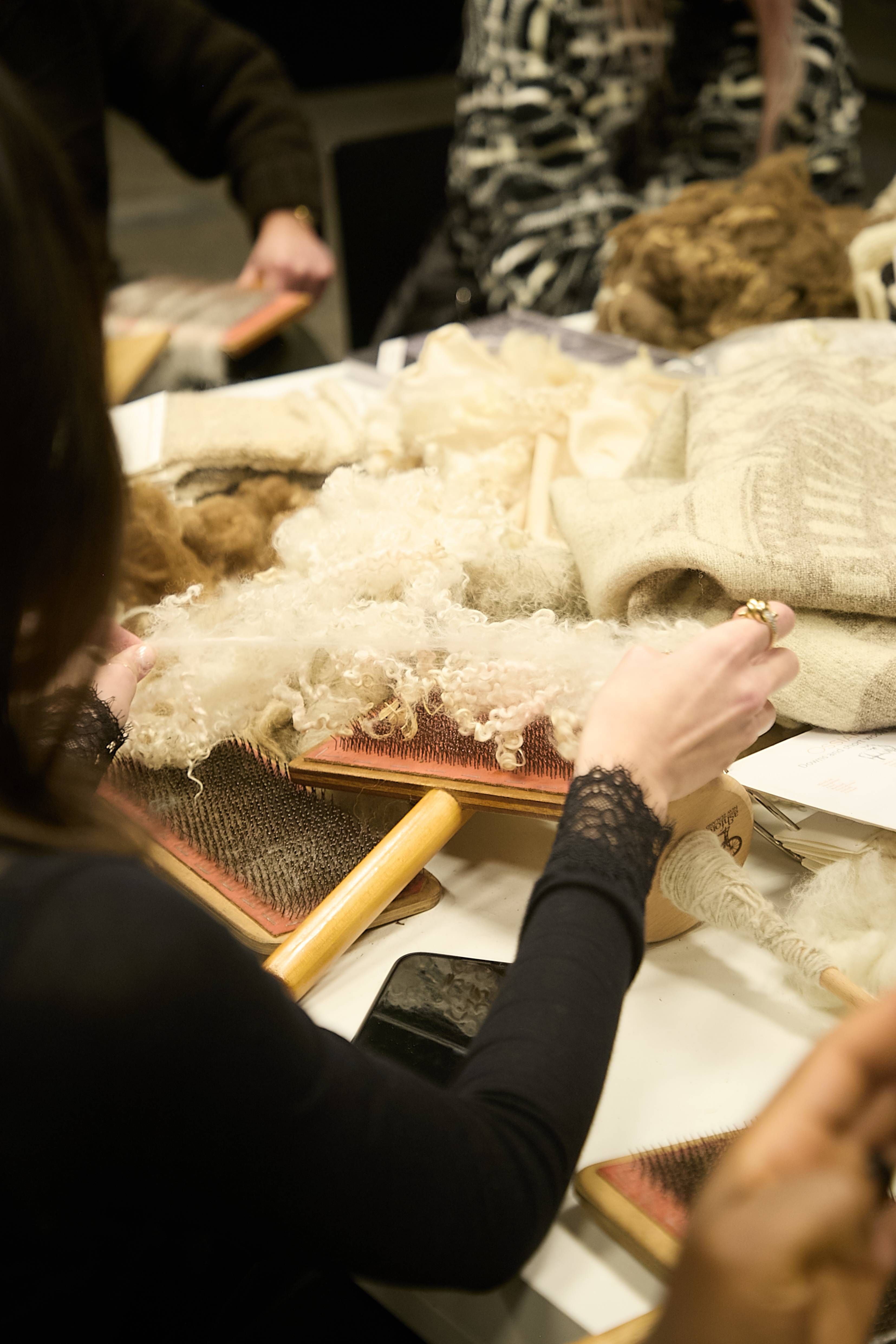
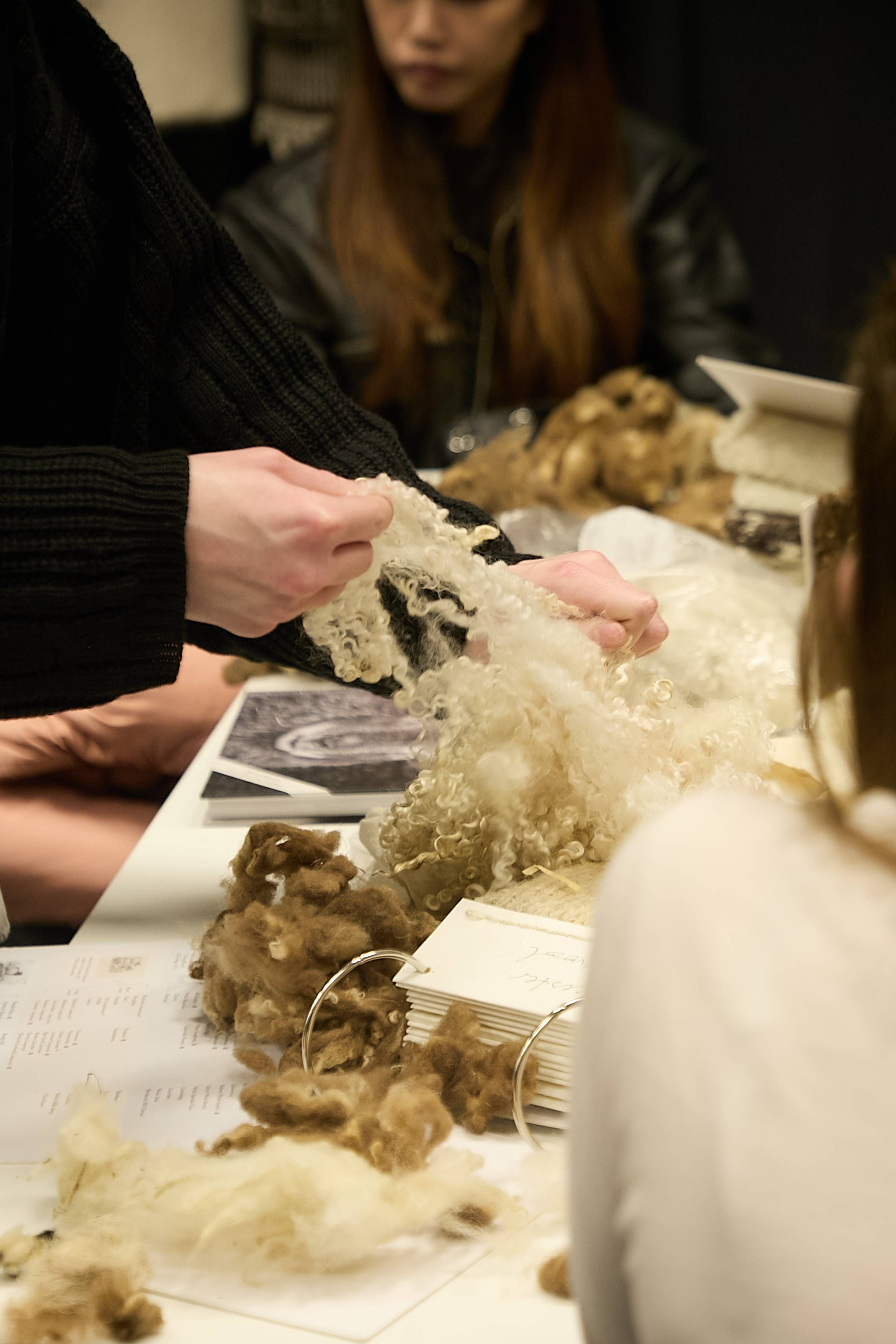
Spinning workshop at the Working With Wool Symposium, Istituto Marangoni London. Beyond performance, her research on biodegradation adds a critical systemic dimension. Different British wools decompose at varying rates and support diverse microbial activity: “Wool doesn’t simply break down; it actively interacts with the soil ecosystem.”
The implications extend beyond material innovation. Wool can function as a regenerative material not only at the point of production, but at the end of life—returning nutrients to the land from which it came.
Yet there is also a pressing cultural concern:
“The knowledge held by farmers, spinners and small mills is at risk of disappearing. Capturing and sharing it is urgent” – Nicci James
Revaluing British wool, then, is not just an environmental effort—it is equally an economic and cultural project, requiring stronger local supply chains, renewed transparency and closer collaboration between fashion and agriculture.
Why Luxury Brands Are Reassessing British Wool
“High-end fashion brands are coming directly to us for reassurance: They want to know their yarns really are British” – Louisa Knapp, Marketing Executive at British Wool
Traceability has become a strategic priority for the luxury sector, yet much of the wool used in UK manufacturing is still imported. Meanwhile, only around 15% of British wool is currently used in carpet production, leaving significant untapped potential for applications from apparel and home furnishings to advanced textiles.
At the centre of this shift is British Wool, the farmer-funded organisation responsible for collecting, grading and marketing more than 20 million kilos of UK fleece each year. Unlike many agricultural bodies, it receives no government funding—its entire operation is financed by farmers themselves. “Representing them properly is essential,” Knapp noted.
The value of British wool now depends as much on its infrastructure as on the fibre itself. A rigorous grading system allows specialists to assess a fleece in seconds, analysing length, colour and character to sort it into over 120 categories. By separating rather than selling mixed clips, farmers can command higher prices. “Our job is to ensure farmers receive the value they deserve,” explained Haldi Kranich-Wood, Business Development Manager at British Wool.
For luxury brands navigating growing scrutiny around sourcing and supply chains, the British Wool Certification Mark offers verifiable provenance, guaranteeing that a product is made from genuine UK fleece.
Interest from designers and creatives has accelerated over the past twelve months, signalling more than a seasonal trend. As Kranich-Wood observed: “It’s exciting to see British wool back on the catwalk: I’ve never seen so much interest from designers.”
How British Wool Connects Fashion, Agriculture and the Rural Economy
“You can’t talk about regenerative fashion if you don’t understand what happens on the farm” – Harriet Fletcher-Gilhuys, Lead Researcher for The Great British Wool Revival
For Harriet Fletcher-Gilhuys, lead researcher for The Great British Wool Revival, regeneration begins long before the fibre reaches the runway. Established in 2024 by the Fashion Roundtable in partnership with The King’s Foundation and YOOX Net-a-Porter Group through the Modern Artisan programme, the initiative aims to repair a fragmented system by reconnecting farmers, graders, spinners and designers within a transparent British wool supply chain.
Fletcher-Gilhuys’s research is grounded in hands-on agricultural practice: shearing a sheep, hand-spinning the fleece and cultivating natural dyes to produce a fully biodegradable collection rooted in British wool systems. “It showed me that farming and fashion speak different languages, and designers need the tools to bridge that gap,” she said.
Through a national mapping platform connecting hundreds of businesses—from wool graders and spinners to mills and independent farms—the programme advances a genuine farm-to-fabric model. By fostering long-term commercial relationships, it creates new income streams for British wool producers while equipping designers with the tools to navigate transparent, locally rooted supply.
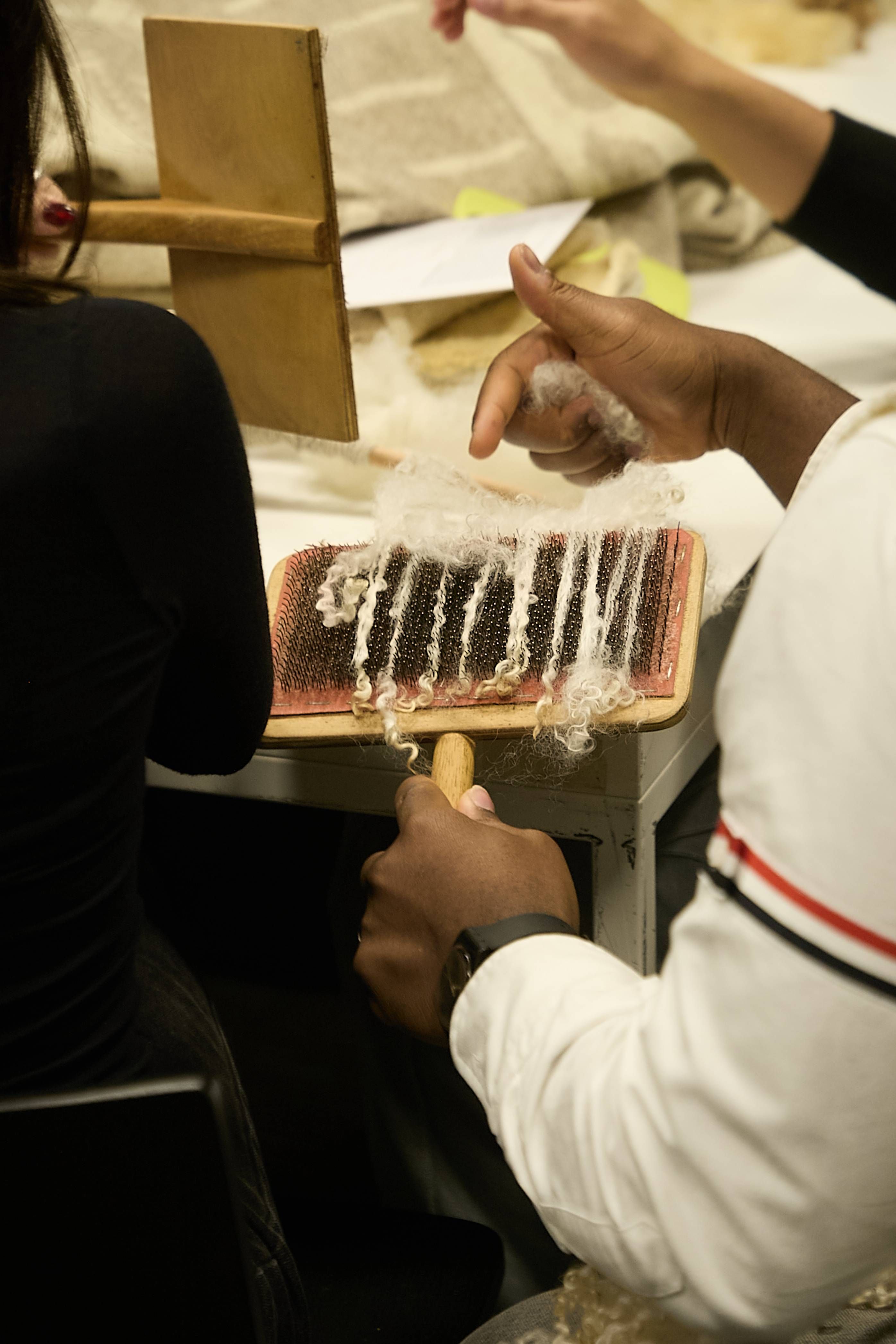
“There is huge momentum for building new pathways. Industry, policy, farming and craft are finally sitting at the same table,” Gilhuys concluded. In this convergence lies a broader economic recalibration. Regenerative fashion is about more than material substitution; it demands new relationships between land stewardship, rural labour and luxury production.
“If we want British wool to have a future, we must make it accessible, understandable and inspiring for the next generation” – Harriet Fletcher-Gilhuys
What the Next Generation of Designers Means for British Wool
British wool’s diversity, heritage and regenerative potential offer fertile ground for innovation across fashion, but its long-term relevance will depend on how it is taught, understood and reimagined.
At Istituto Marangoni London, MA Fashion Design students are developing collections in collaboration with The Great British Wool Revival, working directly with British wool from source to finished garment. For many, the shift from concept to fibre has been transformative.
“Understanding the fibre from sheep to finished garment changes how we think about fashion” – Lindsay Seidenstein, Knitwear Designer and MA student at Istituto Marangoni London
The final MA design collections will be exhibited at Dumfries House, part of The King’s Foundation, an institution closely aligned with craft, sustainability and rural stewardship.
By situating design education within a broader agricultural and economic ecosystem, the initiative signals that the future of British wool will be shaped by systemic change—reconnecting rural labour and luxury production—and by designers willing to rethink fashion from the fibre up.
Silvia De Vecchi
Librarian, London