

Where do ideas come from? An exhibition in Milan explores why Achille Castiglioni and Bruno Munari saw play as a source of creativity
Where do ideas come from? Achille e Bruno. Liberi di giocare, the exhibition currently on view at the Fondazione Achille Castiglioni in Milan, approaches that question through the work of Achille Castiglioni and Bruno Munari. Bringing together two of the most influential figures in twentieth-century Italian design, it explores the role that play can have in the creative process. In this piece, design expert Paola Toia takes readers inside the exhibition and into a way of thinking that continues to challenge many assumptions about how new forms and objects emerge.
Why Do Some of the Best Ideas Emerge Through Play?
Experience teaches you that creative work is never linear. The more you learn about methods, processes and problem-solving, the more you realise that good ideas rarely arrive in a straight line. They often emerge from unexpected observations, mistakes, seemingly insignificant objects, or connections that make little sense at first.
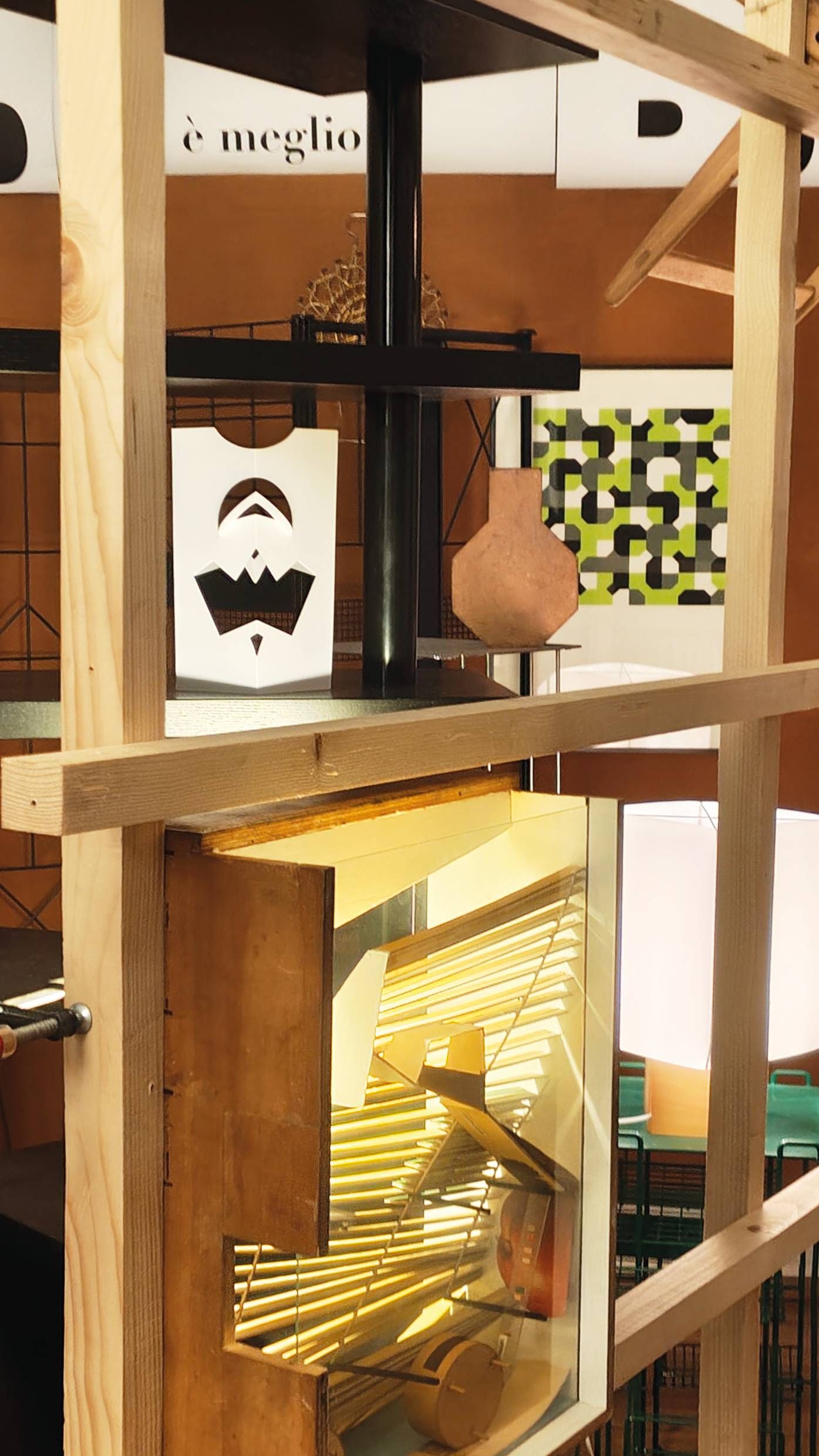
That helps explain why Achille e Bruno. Liberi di giocare speaks so directly to visitors. Opened recently at the Fondazione Achille Castiglioni in Milan and running until 16 February 2027, the exhibition brings together Achille Castiglioni and Bruno Munari in a dialogue centred on games, curiosity and the intuitions that arise when experimentation is given room to unfold. Visitors are invited to step inside their way of thinking and discover how humour and play informed their creative practice.
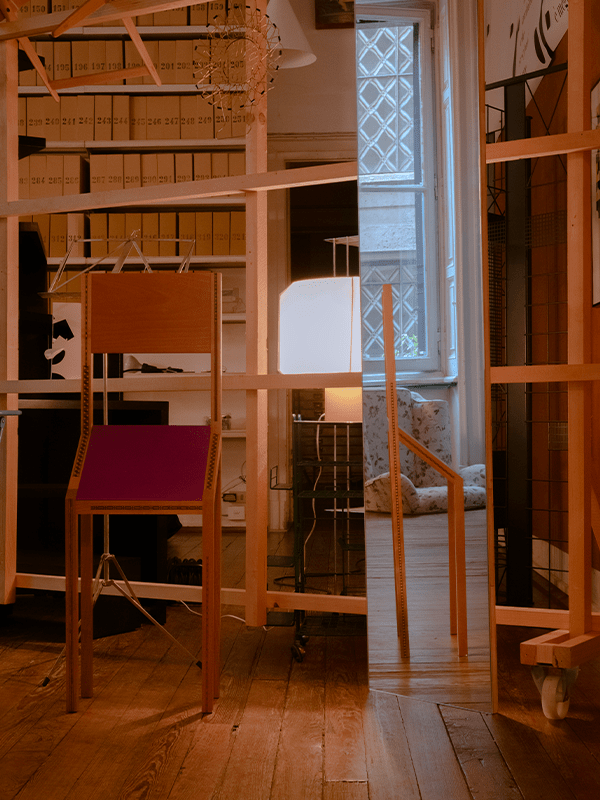
Inside Fondazione Achille Castiglioni, play becomes a creative language, connecting Achille Castiglioni and Bruno Munari through curiosity, humour and experimentation. Ph. Chiara Pezzimenti. Courtesy press office. It is no coincidence that people continue to be drawn to both designers. Beyond the lasting influence of their work, there is the attitude that guided it: an outlook that still feels fresh decades later.
Before going any further, a practical note: Achille e Bruno. Liberi di giocare is open by reservation at the Fondazione Achille Castiglioni, Piazza Castello 27, Milan.
What Did Achille Castiglioni and Bruno Munari See That Others Missed?
One of the exhibition’s central ideas comes from curator Marco Marzini, who describes design as a form of play. In his view, play has little to do with entertainment and far more to do with exploration, experimentation and the discoveries that stem from them.
Anyone who has worked on a design project will recognise this pattern: a brief arrives, research begins and a first idea takes shape. Yet soon enough, new questions arise, unexpected connections come into view and what initially looked like a solution becomes the starting point for a different enquiry.
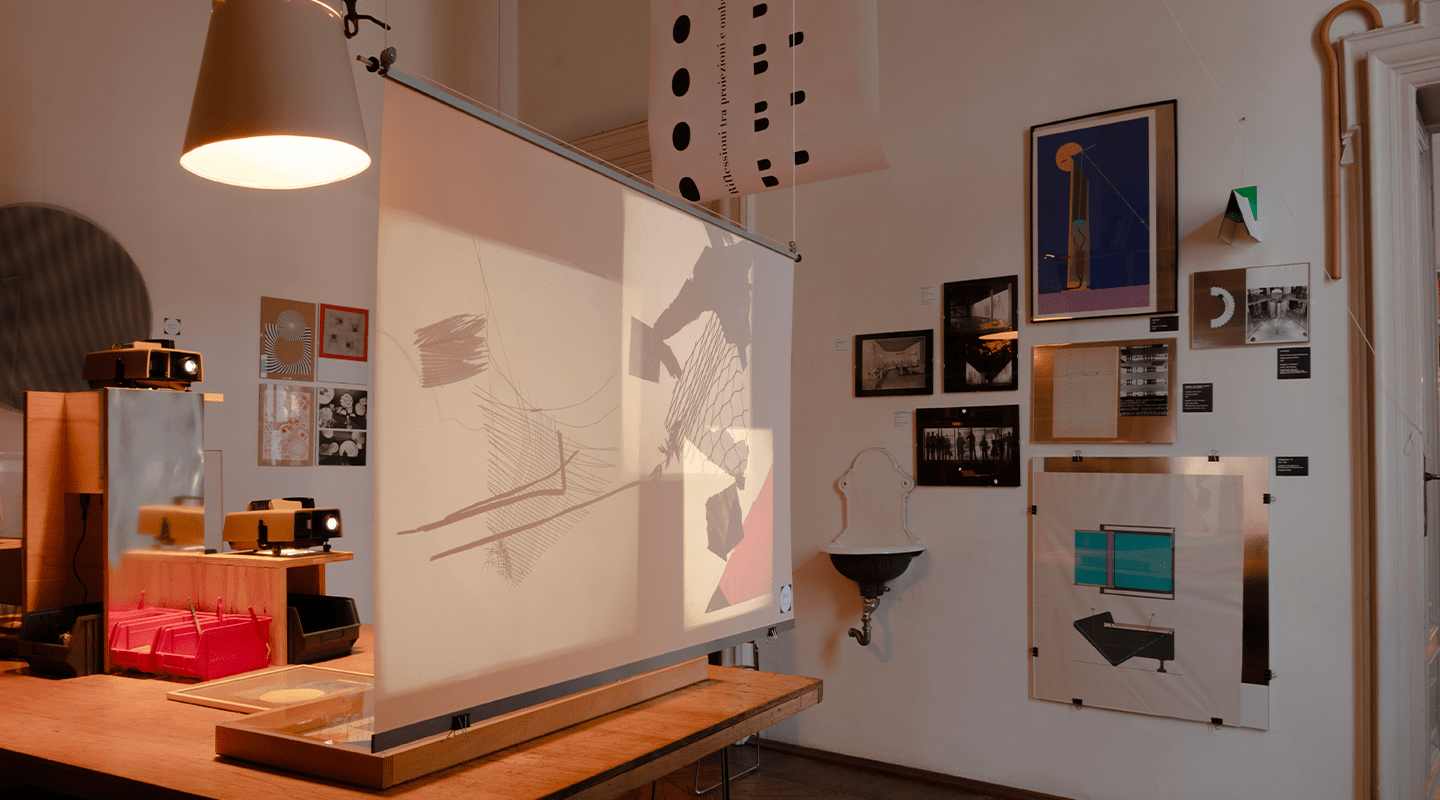
At the exhibition, design becomes a playful inquiry, where shadows, objects and archives reveal the experimental thinking of Castiglioni and Munari. Ph. Chiara Pezzimenti. Courtesy press office. Which is why design does not follow a predictable route. It develops through a sequence of tests, intuitions and adjustments, much like a game whose rules evolve over time.
For both Achille Castiglioni and Bruno Munari, this playful dimension was an integral part of the way they worked. It informed how they explored ideas, tested possibilities and approached challenges.
The Forgotten Side of Italian Design Is Not Style but Curiosity
Walking through Achille e Bruno. Liberi di giocare, one quickly notices that many of the themes on display sit outside conventional definitions of design.
There are reflections on light and shadow, visual illusions, natural forms, typography, masks, chairs and everyday objects. At first glance, these subjects appear unrelated, yet they are connected by an interest in how we perceive the world around us.
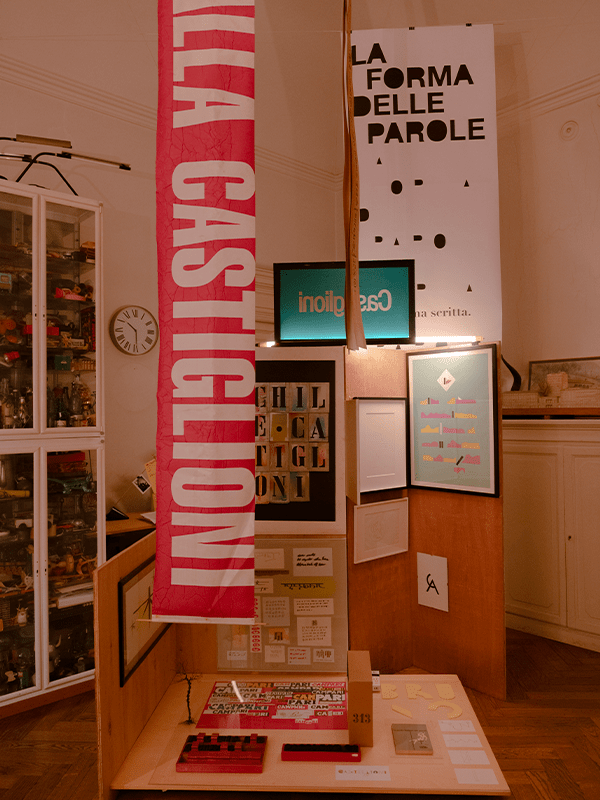
Typography, everyday objects and visual experiments reveal curiosity as the hidden engine of Italian design, beyond style and convention. Ph. Chiara Pezzimenti. Courtesy press office. For Achille Castiglioni, careful attention often provided the starting point for a project. He was known for collecting ordinary objects and studying them closely, searching for hidden qualities, unexpected functions and opportunities for transformation. Many of his most celebrated designs grew out of this ability to see familiar things from a different perspective.
Bruno Munari looked at observation from another angle. Moving freely between design, art, graphics, publishing and education, he spent much of his career developing tools and methods that encouraged people to experiment. Across his output, he challenged the idea that creativity belonged exclusively to specialists and argued that a spirit of enquiry could become a way of understanding reality.
What linked the two was a belief that paying close attention often reveals more than looking further afield.
Why Do Some Creative Breakthroughs Begin With a Wrong Turn?
Although they are frequently discussed together in the history of Italian design, Castiglioni and Munari approached the discipline from very different directions.
Achille Castiglioni’s projects were deeply rooted in function, usability and human behaviour: they often grew out of close observation of everyday life, revealing how small adjustments could significantly improve the relationship between people and objects. The irony, simplicity and intelligence that characterised his work continue to influence generations of designers.
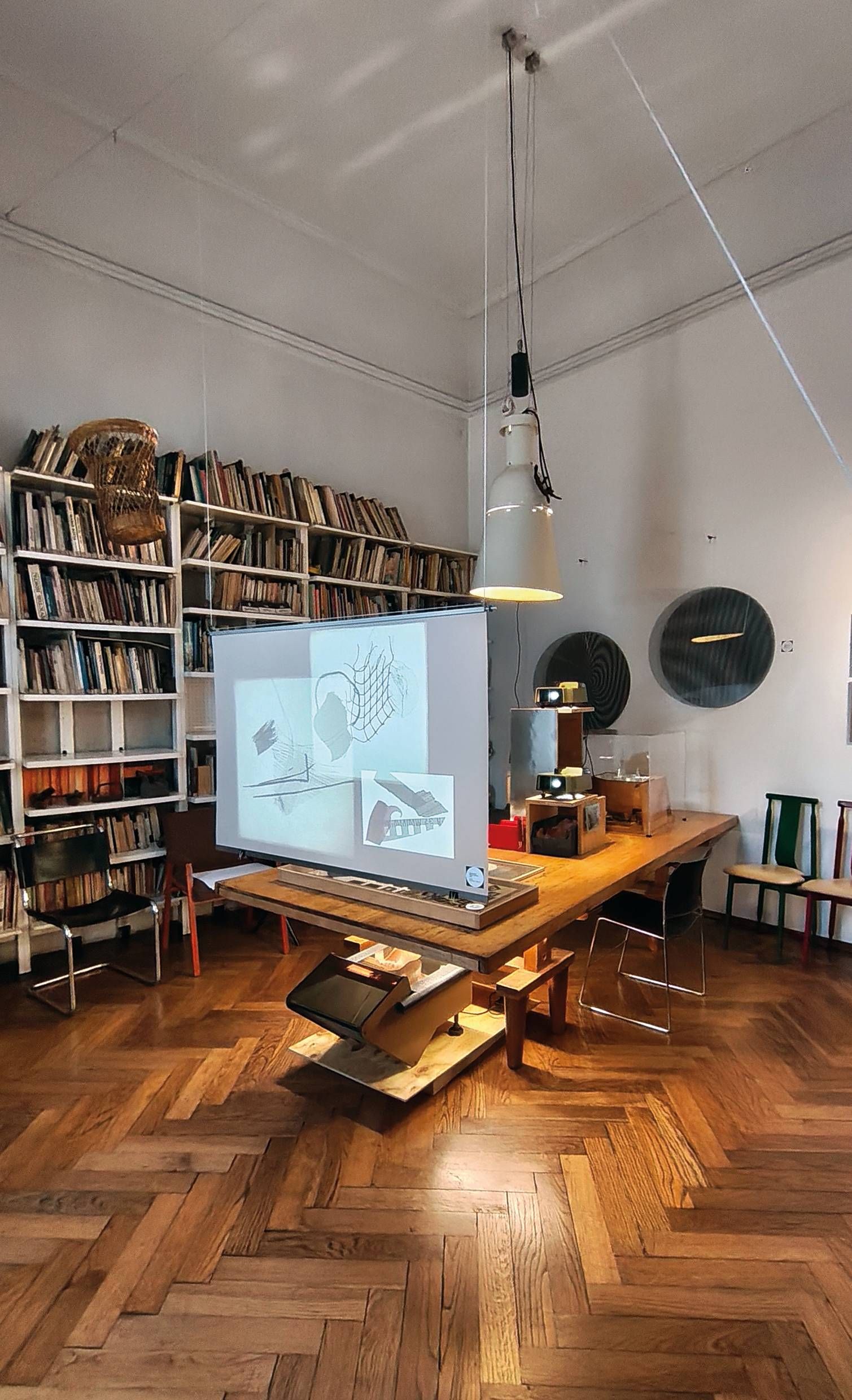
Inside Achille Castiglioni’s studio, everyday observation becomes a design method, where function, irony and wrong turns open new creative possibilities. Ph. Marco Marzini. Courtesy press office. Munari, meanwhile, moved across disciplinary boundaries throughout his career. Designer, artist, inventor, educator and author, he explored visual communication, movement, perception and learning with remarkable freedom. His books, workshops and experimental projects remain key reference points in design education around the world.
For all the distance between their respective practices, both believed that creativity does not arrive fully formed. It develops through curiosity, trial and error, and a willingness to remain open to unexpected possibilities.
What Keeps Drawing Designers to Achille Castiglioni and Bruno Munari?
For design students, it can seem unusual to look for inspiration in figures whose most influential work was developed long before the digital age.
Achille Castiglioni and Bruno Munari were not thinking about artificial intelligence, immersive technologies or algorithmic culture, but what they leave behind is an enduring way of tackling problems.
They remind us that good design begins with attention: it starts with noticing details that others overlook, asking questions before rushing towards answers, and having the confidence to take a few wrong turns without knowing exactly what might come of it.
Creative work is now measured in terms of efficiency and output. Yet Achille e Bruno. Liberi di giocare reminds us that many of the skills at the heart of design are difficult to acquire through software tutorials or technical manuals alone: attention, imagination and a willingness to explore. Above all, the exhibition celebrates the ability to keep playing long after everyone else has decided it is time to become serious.