

As AI enters fashion publishing, how do you build a magazine worth reading—and buying? COEVAL offers a clear editorial answer
More than 65% of creative professionals are already using AI tools in their daily work, according to Business Research Insights, while AI in the fashion market alone is expected to surpass $1.5 billion by 2026—expanding at a pace few other sectors can rival. If artificial intelligence will inevitably reshape fashion publishing, the question becomes: how can editors and image-makers engage with creative AI tools without flattening their human point of view or losing cultural relevance?
With generative AI now embedded in daily workflows—accelerating everything from visual research to moodboarding and image-making—the pressure lies not only in the sheer volume of content produced, but in its growing uniformity: references begin to feel familiar, aesthetics converge. It is precisely for this reason that emerging editors and independent publishing projects are asking how to build a magazine that still feels authored, recognisable and worth returning to—and, crucially, worth buying—at a time when digital publishing, in particular, has been all but levelled by the same tools.
Why Launch a Magazine in the Age of AI?
COEVAL Magazine offers a compelling response. Founded in Milan in 2015 by photographer Donald Gjoka as an extension of his ongoing visual research, COEVAL has evolved into an encyclopaedic platform where fashion, art, music and cinema coexist within a single editorial framework. What began as a digital archive has since grown into a print publishing model that engages directly with the dynamics of the contemporary fashion industry while maintaining a clear, recognisable curatorial voice. Guided by curiosity and a commitment to contemporary coexistence, they have already incorporated generative AI imagery into their process, without allowing the technology to dictate the outcome.
Visualizza questo post su Instagram
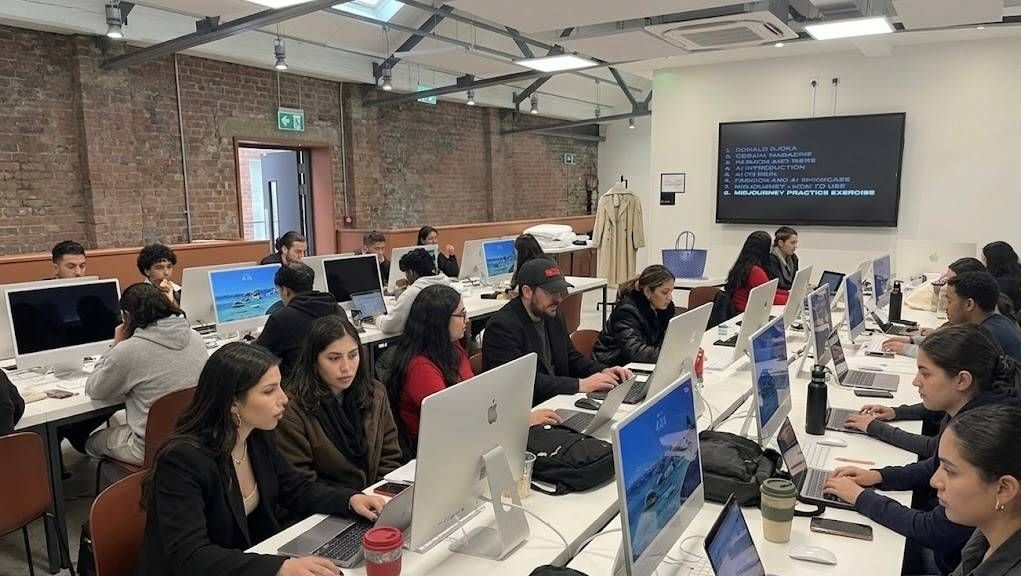
Invited to present at Istituto Marangoni’s London Industry Week, Gjoka led a workshop on how to launch a magazine today, offering a practical perspective on how AI tools for creatives can accelerate idea generation, visual experimentation and early-stage editorial thinking. We sat down with him afterwards.
From Tumblr to Print: How COEVAL Turned Research into a Magazine
Where did COEVAL begin—and how did it first take shape?
Donald Gjoka: It started while I was working as a photographer, as an evolution of the research I was doing daily on Tumblr in 2015. I felt that this research needed to become something shared, current, and evolving. COEVAL is a synonym for contemporary, coetaneous—existing at the same time.
What was COEVAL trying to capture from the beginning?
Donald Gjoka: The idea was to document what is happening in the present, and that is still what we do. In every issue, digital or printed, we use an encyclopaedic format: every article is about someone, not something. The ‘CO’ in COEVAL points to the coexistence of multiple worlds—the idea that fashion and culture are in constant dialogue and must live together.
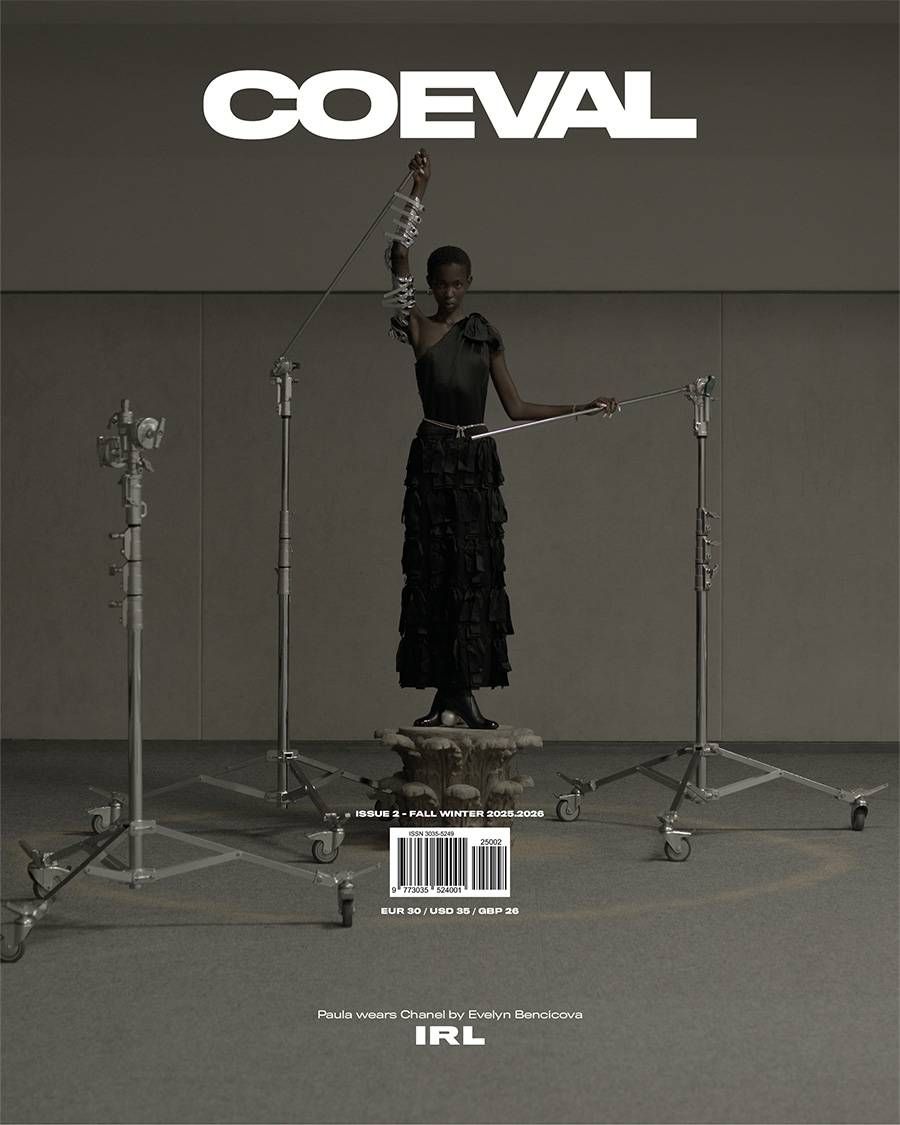
During the workshop, COEVAL Magazine presented as a case study on independent publishing in the age of AI and evolving editorial practices.
Building a Visual Identity in an Overproduced Image Culture
What makes COEVAL’s visual identity instantly recognisable?
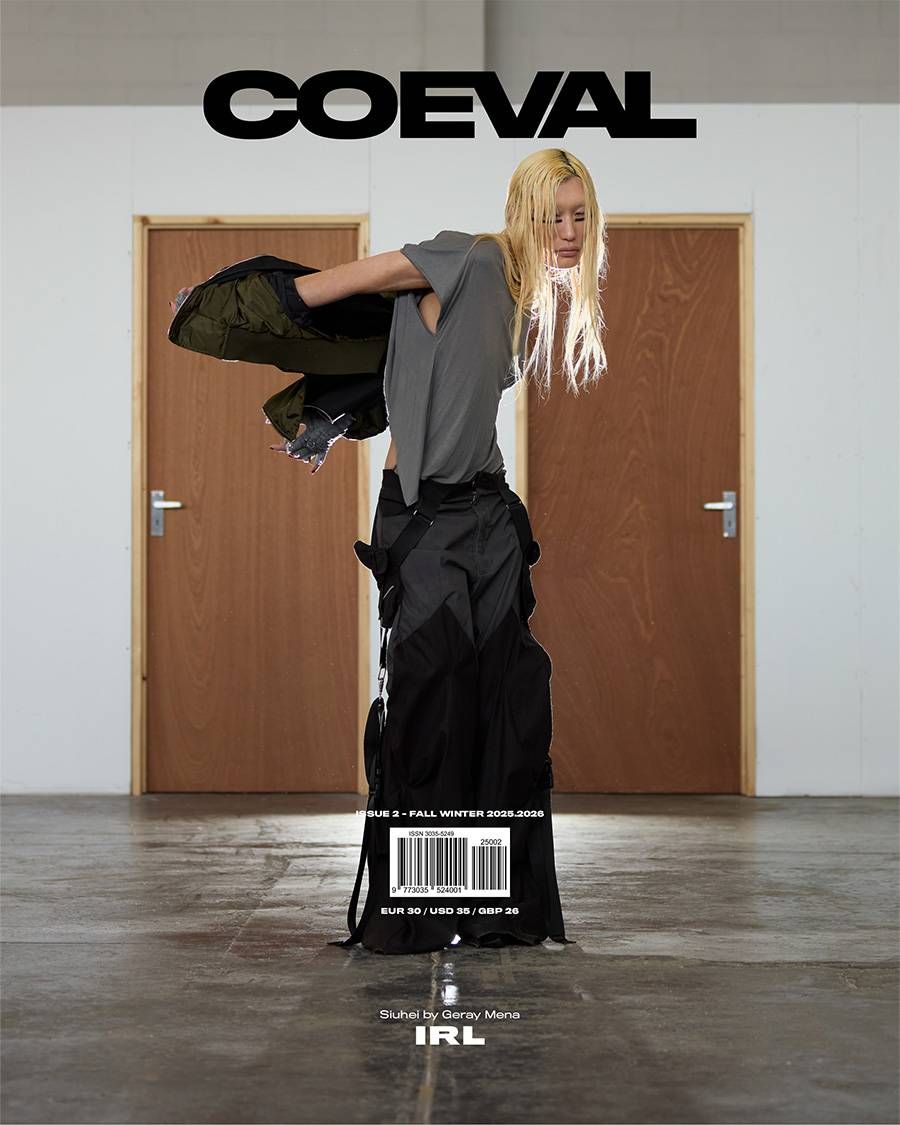
Donald Gjoka: Experimentation and contemporaneity. The visual identity lives in the covers, probably more than anywhere else. For both Issue 1 and Issue 2, we had ten distinct collector’s covers, each giving real space to the photographers we work with. We believe in valuing people and giving them weight.
What defines a distinct editorial identity for a magazine?
Donald Gjoka: The identity is the sum of all the individuals we choose to amplify. What connects everything is an attention to innovation and to what is happening now.
What Makes an Editorial Concept Stand Out Now?
What makes an editorial concept work in today’s publishing landscape?
Donald Gjoka: A research-driven approach that stays far from mainstream themes. That has been COEVAL’s logic since 2015: we follow curiosity, not trends. The publications that stand out are those that know why they exist, who they are speaking to, and what they refuse to become.
What sets COEVAL apart from other independent magazines?
Donald Gjoka: What has always interested me—and what I think is increasingly rare—is the capacity to hold fashion, art, music and culture in genuine dialogue, rather than treating them as separate domains.
As discussed during the event, AI tools support research, moodboarding and early concept development in contemporary magazine production.
How to Create a Magazine People Will Actually Pay For
What makes a magazine successful today?
Donald Gjoka: Here at Istituto Marangoni London, the first thing I look for in students’ magazine ideas is whether the concept has a reason to exist beyond aesthetics. The students who had genuinely thought through their community—who they were building for, and why—were the ones whose pitches carried real energy.
Why is a strong point of view essential when launching a magazine?
Donald Gjoka: That instinct for specificity is harder to teach than any technical skill, so when it appears naturally, it is worth paying attention to. Students were responding to gaps in their own experience, which is exactly where the best publishing ideas come from. COEVAL started in the same way: from a personal need to document and share something that did not yet have a proper home. That rawness, before it gets edited out by caution, is genuinely valuable.
How do you balance creative vision with the realities of publishing a magazine?
Donald Gjoka: For a decade, COEVAL operated as a digital platform before we felt ready to commit to print. That transition required an understanding of economics, distribution and production costs—none of which diminishes the creative work. On the contrary, understanding the model enabled us to protect and expand it on our own terms. The creative vision and the business logic must constantly speak to each other. I think young creators sometimes resist this framing because it feels like a compromise. But building something that lasts—something that can genuinely serve its community over time—requires holding both sides simultaneously.
What Skills Do Editors Need to Build a Magazine Today?
How do you start a magazine with no experience?
Donald Gjoka: With curiosity, relentlessly cultivated, combined with a willingness to experiment without fear of failure, and the patience to let that curiosity evolve into something specific.
Do ideas matter more than execution in magazine publishing?
Donald Gjoka: Ideas have become far more central to me than execution; that shift took years to understand fully. Young editors who invest early in the quality of their thinking, rather than rushing into the finished product, tend to build something more enduring.
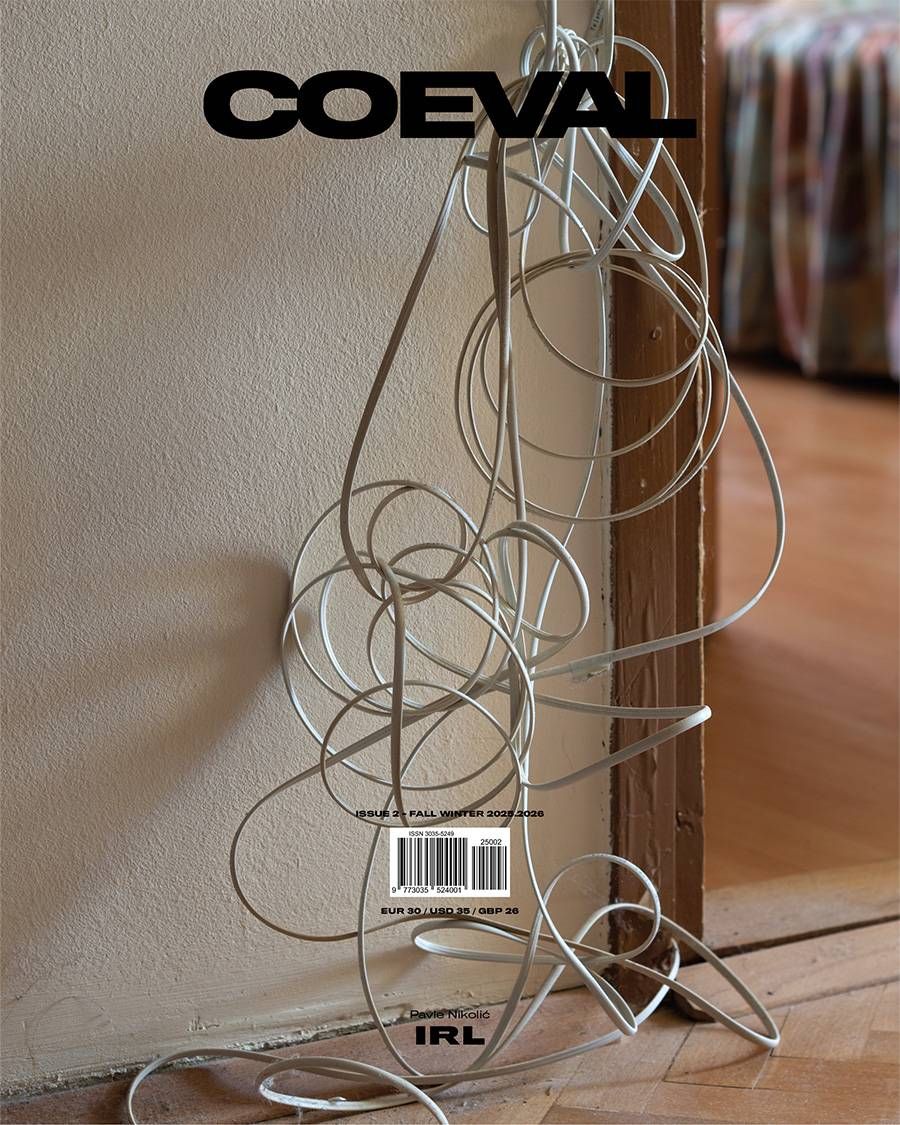
During the talk, Donald Gjoka highlighted editorial identity as the key factor in building a magazine worth reading today.
AI in the Creative Process: Tool, Collaborator or Constraint?
How is AI changing the way you develop creative ideas?
Donald Gjoka: I use AI to generate ideas that draw on my background in fashion photography, my conceptual vision, and the technology's possibilities. I have become interested in showcasing both the potential and the limitations of these tools. Moreover, AI has shifted my focus towards ideas becoming far more central than execution. It has also altered the very notion of authorship in my work. I have been thinking for years about the idea of multiple authors—the collaboration between human creativity and technological innovation.
What does AI make possible for emerging creators?
Donald Gjoka: Democratisation of access—that is the most immediate and tangible impact. AI gives early-stage creators the ability to visualise, iterate and develop concepts at a speed and cost that simply did not exist before. For independent publishing, where resources are always limited, this compression of the pre-production phase has real strategic value.
Where does AI add the most value in the creative process?
Donald Gjoka: Primarily in the phases where speed and abundance are assets: research, visual moodboarding, productivity and early concept development. AI shortens the distance between an initial instinct and a tested direction, allowing key creative decisions to emerge earlier and with more material to evaluate.
What still needs to stay human in a magazine made with AI?
Donald Gjoka: The editorial judgement that follows remains entirely human. I see it as a distinction between where ideas are generated and where they are refined: AI can surface unexpected connections, generate starting points, and accelerate the process of elimination.
How do you keep a strong editorial identity when using AI?
Donald Gjoka: The identity must be clearly defined before the tool enters the conversation. COEVAL has a strong editorial position: every article is about someone; fashion and culture exist in dialogue; research stays far from the mainstream. Any idea, regardless of its origin, either aligns with that logic or it does not. The filter is consistent. I treat AI output as I would any external reference: raw material subject to editorial judgement. The authenticity of the magazine lies in the cumulative decisions made on top of that material. The clearer the identity, the faster that recognition happens.
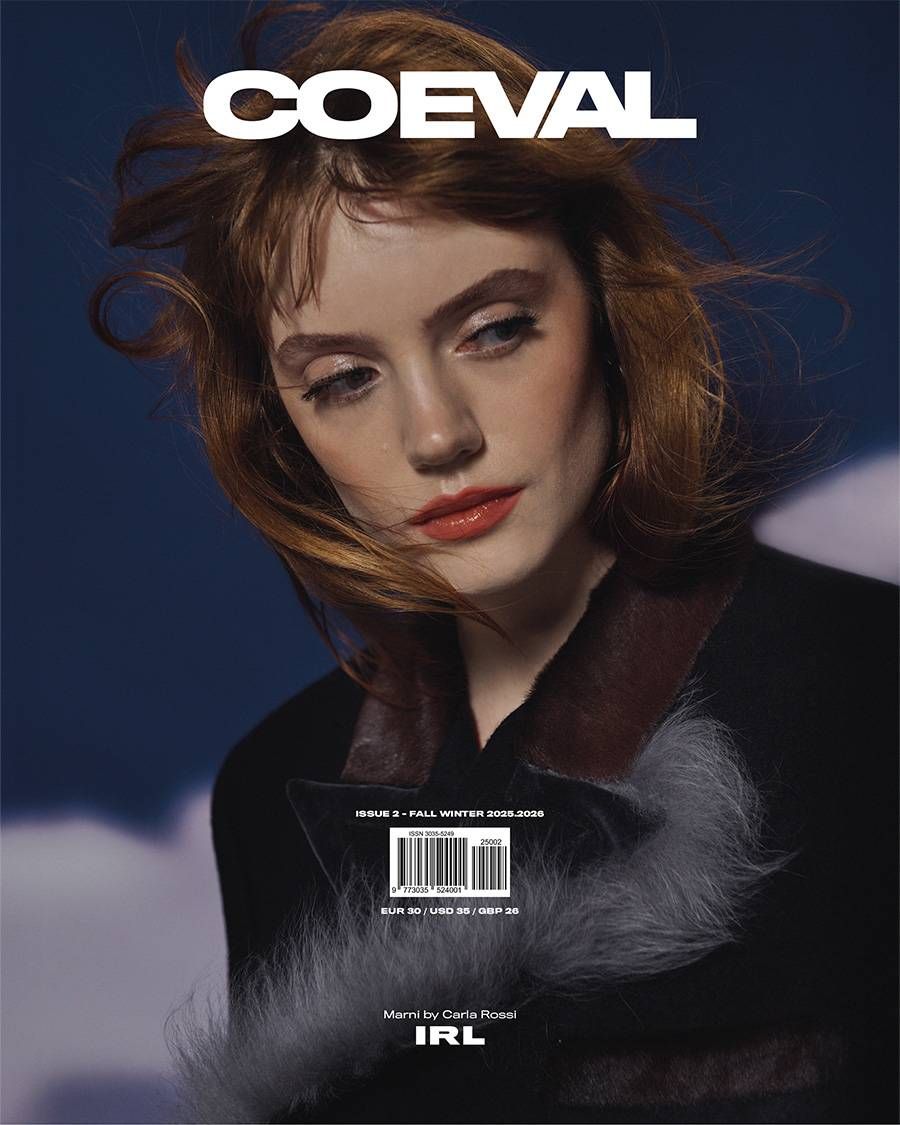
As explored at Istituto Marangoni London, independent magazines balance creative vision, community and business strategy in the AI-driven publishing landscape.
Why Independent Magazines Are Moving Back to Print
Why are independent magazines moving back towards physical experiences?
Donald Gjoka: I believe the most important shift is towards the offline. That may sound counterintuitive, but it is exactly where COEVAL is heading: events, tangible experiences, and community in physical space. We already spend too many hours online, both professionally and personally. A physical object to read transforms the experience entirely.
Can independent magazines survive in the age of AI?
Donald Gjoka: The titles that endure will be those with a reason to exist that no algorithm can replicate. The specificity of a publication’s point of view—its community, its history of consistent research—is not something you can generate through prompts. It requires time and conviction.
What Makes a Magazine Worth Reading in 2026
In one sentence: what makes a magazine relevant in 2026?
Donald Gjoka: An editorial position so honestly held and consistently developed—over years, not issues—that no tool or trend could have produced it.
Silvia De Vecchi
Librarian, London