
Marcel Wanders: Why Is Imagination a Radical Position in Contemporary Design?

Contemporary design, imagination and authorship from Marcel Wanders’ perspective, as he reflects on education and creativity beyond references
“My advice for emerging designers? I wish everyone a big (creative) problem” – Marcel Wanders
Contemporary design is increasingly shaped by visual overload, algorithmic references and rapid production cycles; as a result, imagination has become a radical stance. This was the central theme of Marcel Wanders: The Power of Imagination, a talk hosted at Istituto Marangoni Milano Design and moderated by Giulio Cappellini, designer and Art Director of the school.
Bringing together students from across all design disciplines and a broader public audience, the encounter offered a rare opportunity to engage directly with one of the most influential figures in international design: Marcel Wanders. The talk unfolded as a critical reflection on authorship in design, creative responsibility and the role of imagination as a driving force in the creative process.
Marcel Wanders is widely recognised as a defining voice in contemporary design: founder of Moooi, creator of great products and interiors, and a designer whose work consistently challenges functional conventions in favour of emotional resonance, narrative depth and cultural symbolism.
For students at Istituto Marangoni Milano Design, experiences like this are fundamental: they offer an opportunity to understand design as a living discipline shaped by vision, intellectual independence and the courage to think beyond reference-driven aesthetics.
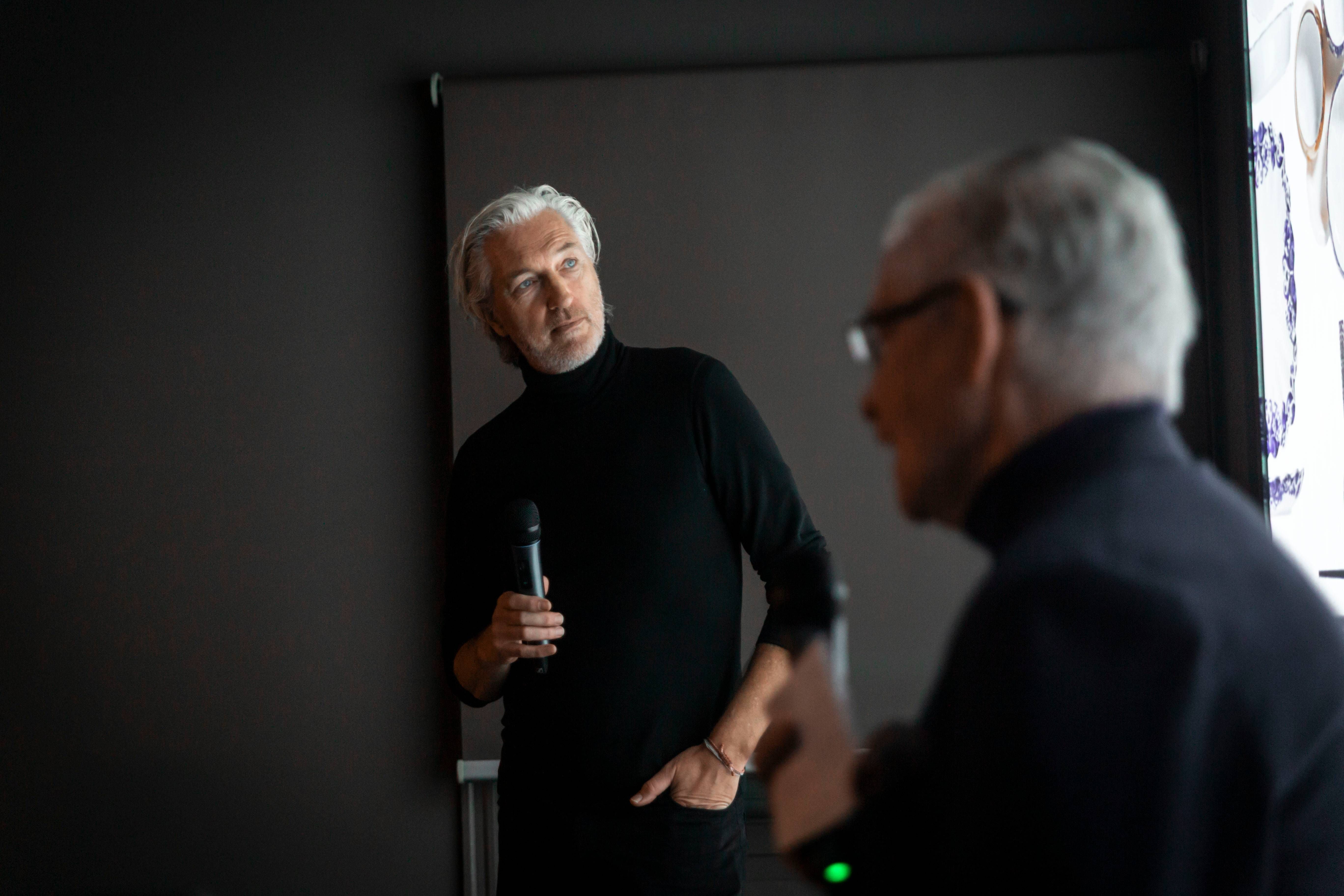
Marcel Wanders addressing students at Istituto Marangoni Milano, framing imagination as a radical, necessary stance in contemporary design education
When Imagination Becomes a Position in Contemporary Design
Throughout the conversation, Wanders repeatedly framed imagination as the true starting point of design. He suggested that design is, above all, an act of envisioning—allowing ideas to exist before they are constrained by feasibility, references or rationalisation.
Anastasiia Ovsiannikova, a Human Robot Interaction Master’s student at Istituto Marangoni Milano Design, noted after attending the talk that this stance felt deliberately countercultural: “He spoke about designing as ‘dreaming the impossible,’ and it didn’t feel like a metaphor, but a stand against how constrained and reference-driven design has become today.”
For Wanders, imagination must come before reason. Only when an idea has fully formed in its most radical state should it be questioned, shaped, or brought into reality. This reversal of the conventional design process—where constraints often dictate outcomes from the outset—served as a powerful provocation to an audience used to navigating rigid creative frameworks.
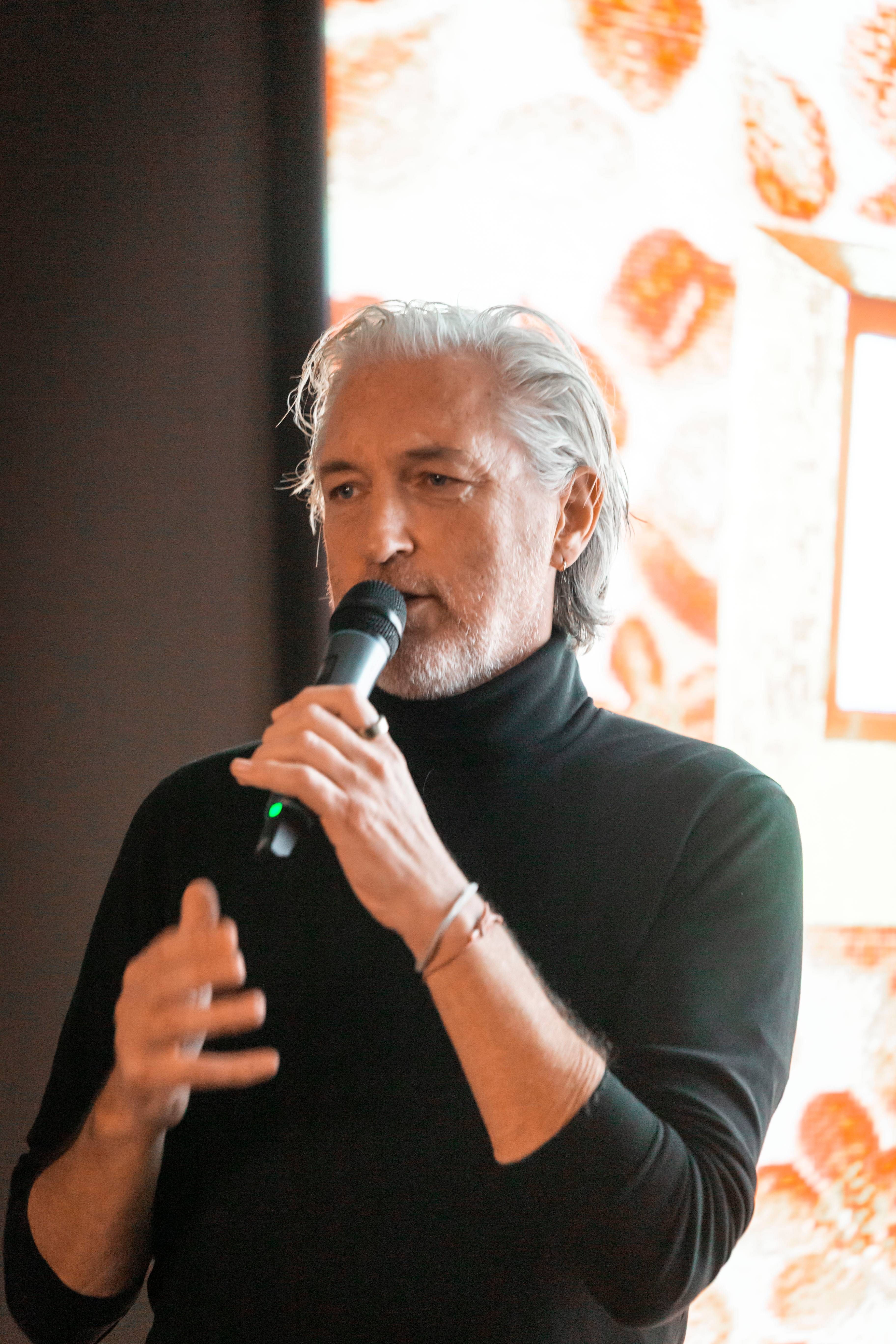
A moment of focused dialogue during the talk, where imagination, authorship and responsibility emerge as central tools against reference-driven design
Designing Against the Algorithm: Why Play and Silliness Still Matter
Another central theme was the human side of design. Marcel Wanders spoke at length about what he called human “silliness”—a quality that is playful, irrational, emotional and often underestimated. Rather than dismissing this trait, he sees it as one of the most valuable resources available to designers: a space where authenticity, empathy and surprise can flourish.
Anastasiia Ovsiannikova reflected on this aspect with particular clarity: “He described silliness as an essential human quality. It’s exactly this side of people that he said he loves working with as a designer.”
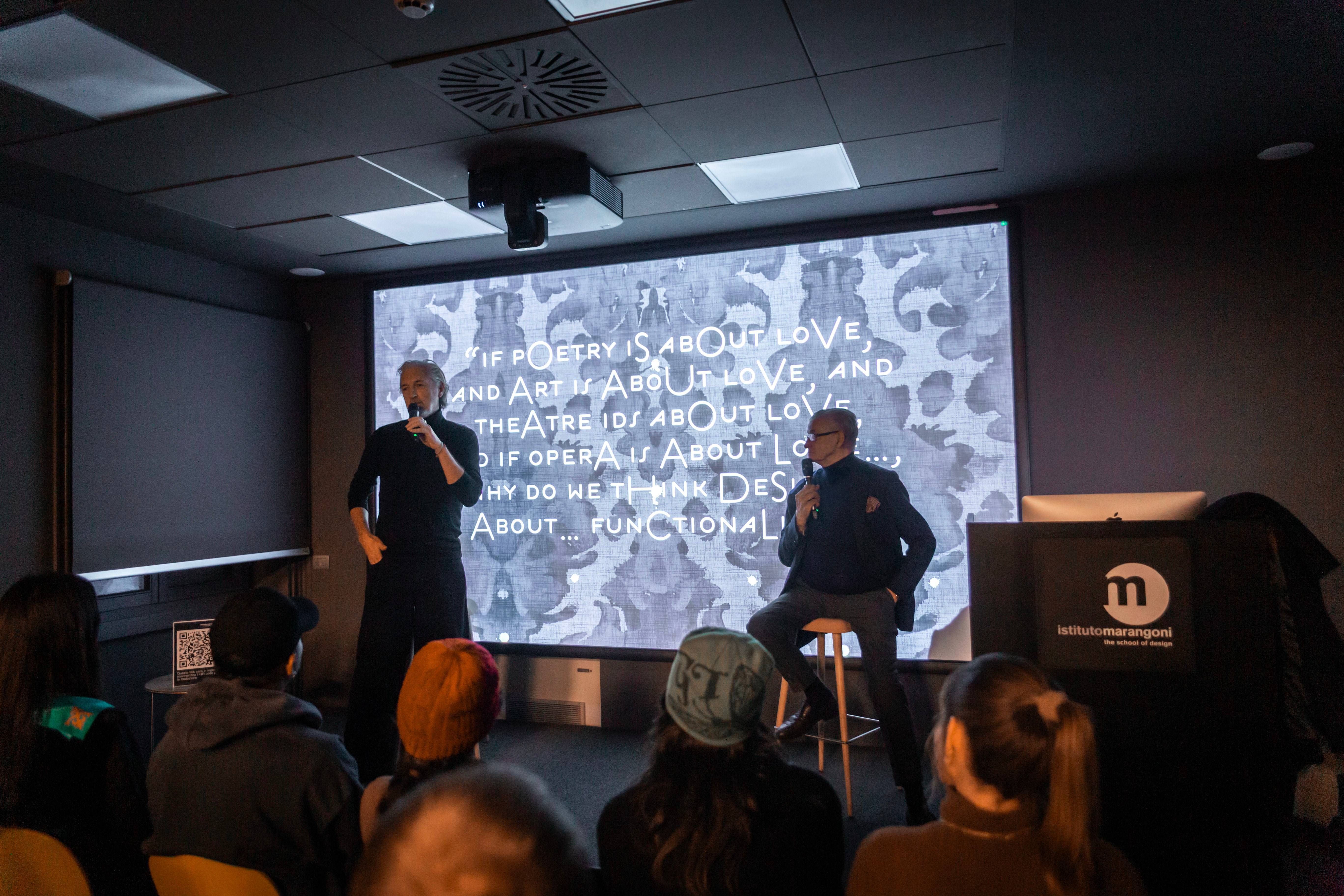
Wanders in conversation, reflecting on play, silliness and emotional intelligence as essential, often overlooked forces in contemporary design. In a professional context increasingly dominated by optimisation and efficiency, Wanders’ focus on play and irrationality repositions design as a deeply human practice—one that must stay connected to emotion as much as to function.
Design as a Gift: Authorship, Identity and Emotional Recognition
One of the most resonant moments of the talk came when Wanders compared meaningful design to a well-chosen gift. A truly successful object, he argued, creates a dual recognition: the recipient feels seen, while also recognising the creator behind the gesture.
“When a gift is right, you feel seen by it—almost as if you’re thinking ‘he sees me’—but at the same time, you clearly recognise who it came from: ‘this is so Marcel,’” he said.
This analogy offered a concise and revealing definition of authorship in design: a balance between empathy and identity, between understanding others and remaining true to oneself. As students noted, it was “a very honest way of describing what meaningful design can be.”
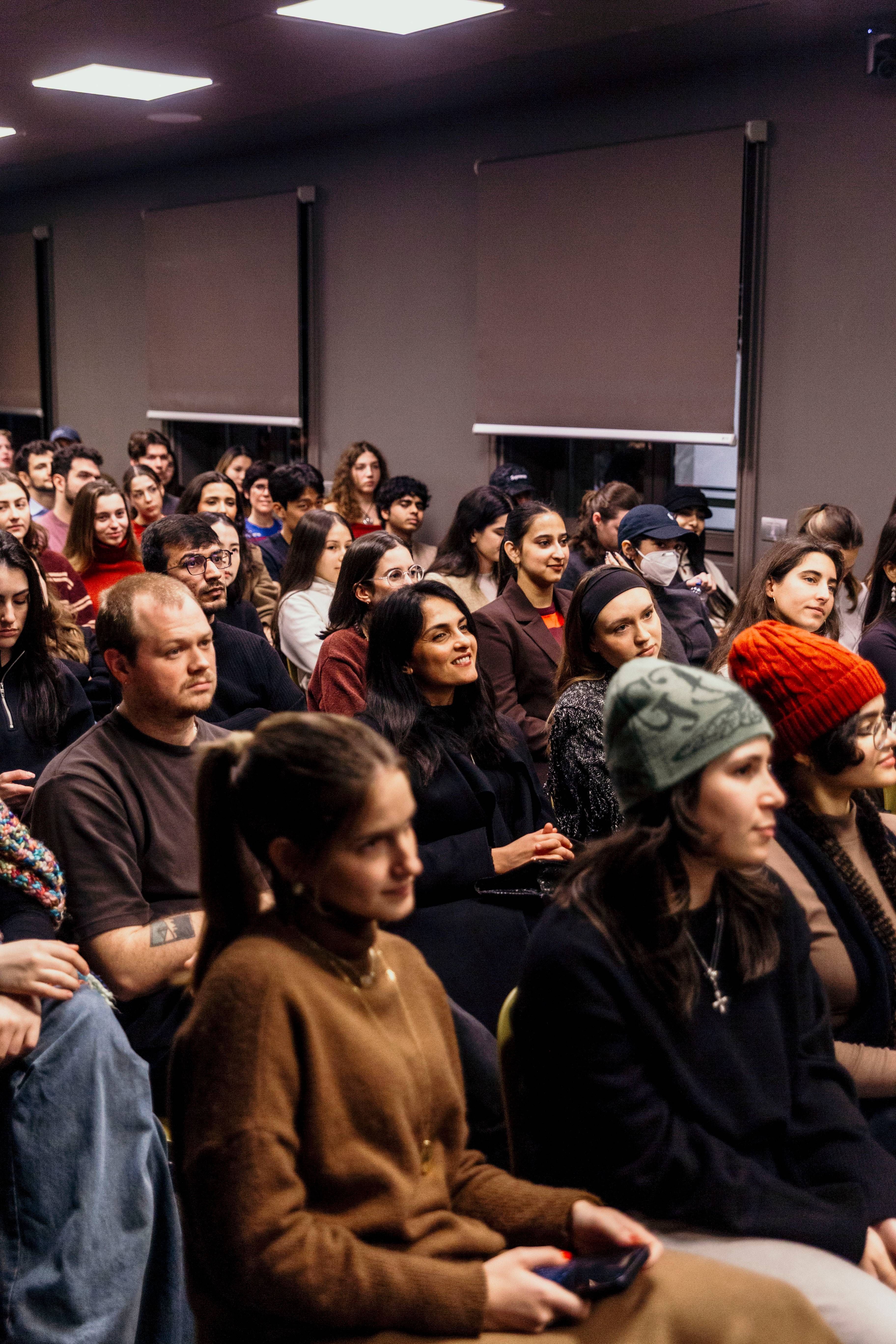
An engaged audience of design students listening as imagination is reclaimed as the true starting point of the creative process
Materials Don’t Define Ideas. Ideas Define Materials
When Giulio Cappellini asked about his favourite material, Wanders deliberately avoided naming one. Material, he explained, should never be treated as the answer itself, but as a medium—a pathway for ideas to take shape.
This perspective reframes materiality as a consequence of conceptual clarity. For design students, it served as a reminder to stay anchored in ideas rather than get distracted by surface choices.
“It was a great reminder not to lose focus and not to stray away from the ideas during the design process,” Ovsiannikova stated.
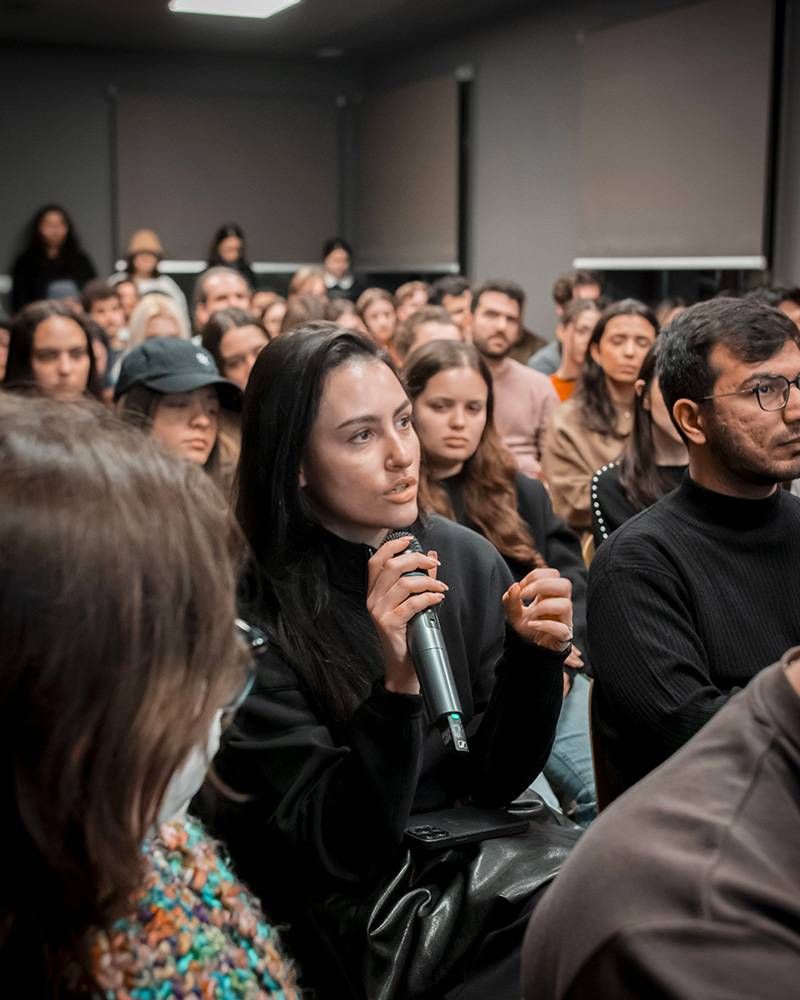
The talk unfolds as a shared space of questioning, where design is presented not as problem-solving, but as a lifelong act of imagination.
“I Wish Everyone a Big Problem”: Designing Beyond References and Algorithms
When asked for advice for young designers, Marcel Wanders delivered a statement that summed up much of his philosophy: “I wish everyone a big problem.”
By this, he did not mean a single issue to solve, but a question, tension or obsession that could sustain a lifelong design practice. In this sense, design becomes a continuous inquiry rather than a series of solutions. He followed this with a deliberately provocative remark:
“Forget Pinterest” – Marcel Wanders
His message was clear: stop designing by endless visual recycling and start from ideas, positions and personal vision. A call not just for design students, but for designers across generations.
Why Design Education Must Start with Better Questions
For Anastasiia Ovsiannikova, the talk ultimately felt like an invitation to rethink priorities:
“Overall, Wanders’ words felt like a push to be bolder, sillier, and more honest with ourselves before everyone else. Not to look for answers, but to keep looking for better questions.”
This sentiment captures the deeper value of encounters like this. For students of Istituto Marangoni Milano Design—and for the wider design community—meeting figures like Marcel Wanders means engaging with design not as a closed set of rules, but as an open field of inquiry, where imagination remains not only relevant, but essential.