
What are Rome’s cobblestones? The hidden detail behind an award-winning design

Rome’s cobblestones, known as sampietrini, define the city in ways most people never notice. Here’s how they inspired an award-winning design collection
You already know where to look in Rome: upwards, at the Colosseum, the fountains, the façades. Yet almost no one looks down, even though the surface beneath your feet has shaped the city for centuries. Known as sampietrini, these small cobblestones are everywhere, but few people ever stop to ask what they are, where they come from, or why they have endured. From this overlooked detail, emerging designer Gustav Craft began his project. With VIA, the Swedish design student reworks this familiar surface into a furniture collection, recently recognised with the Fendi Design Prize 2026.
“Everyone photographs the Colosseum, the fountains, the façades. The sampietrino has been there longer than almost anything else in the city, yet no one looks down.” We met Gustav Craft, a third-year Swedish student at Istituto Marangoni Milano Design, who was recently awarded the Fendi Design Prize 2026 for VIA, his furniture collection developed within the Product Design pathway.
The project is inspired by Rome, but it doesn’t begin with its postcard-perfect beauty. Instead, it stems from an observation of something so familiar it usually fades into the background: the structure that makes up its streets.
“Rome was not built in a day. But it was built stone by stone, hand by hand, with a precision so absolute that its roads outlasted every empire that tried to erase them” – Gustav Craft, Product Design student at Istituto Marangoni Milano Design and winner of the Fendi Design Prize 2026
As we speak with this emerging designer, the reason for his award becomes clear: his approach is rooted in research, a deep understanding of materials and a precise sensitivity to context. But let’s take it step by step and hear from him in his own words.
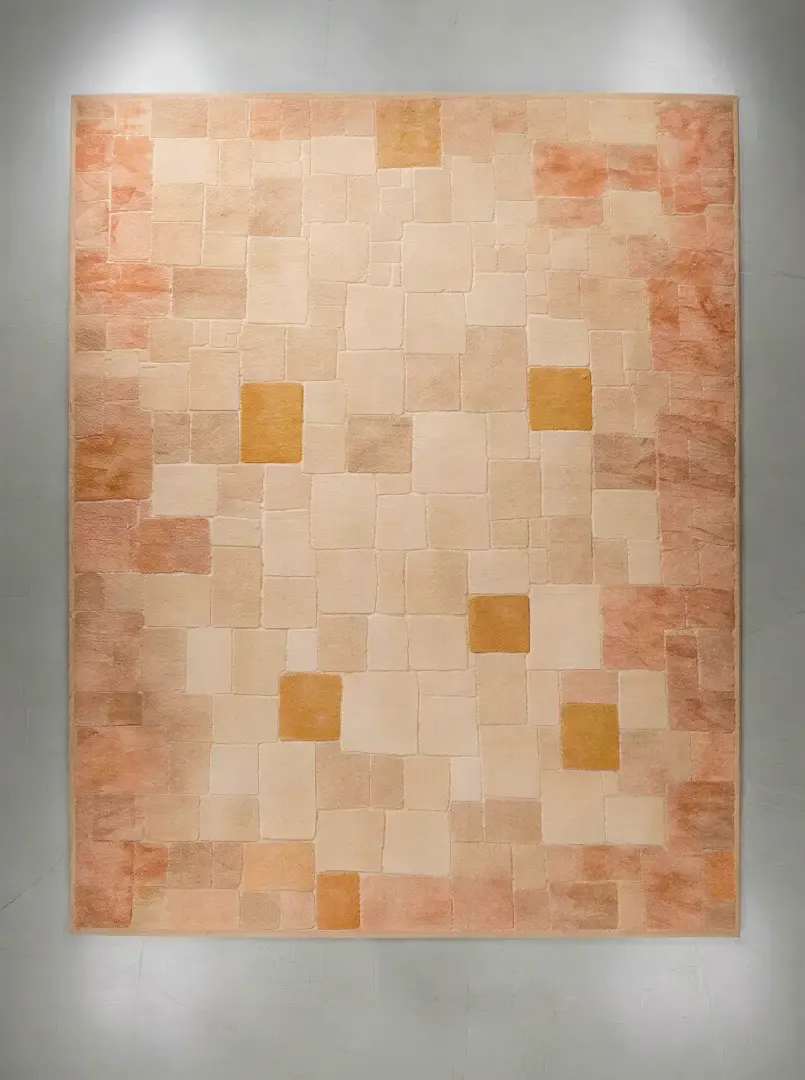
The Road Surface - Hand knotted Wool Rug. Courtesy of the student
Why Does No One Notice Rome’s Cobblestones Despite Walking on Them Every Day?
“There’s a certain way people move through Rome: you’re almost always looking up at façades, monuments, domes, the Colosseum, the fountains, all those places that already exist as images in your mind before you even arrive, as if the city itself were asking to be experienced that way,” explains Craft. “What you don’t usually do is look at your feet, and that’s exactly where VIA begins, starting from what’s already there.”
The project began with a brief set in Rome. Instead of gravitating towards the city’s most iconic landmarks, the designer was drawn to something more enduring and nearly invisible: the sampietrino, the basalt cobblestones that pave Rome’s streets. Every visitor has encountered them, often without conscious notice.
“The sampietrino is something you walk on but rarely stop to observe, and that tension became the starting point of VIA Furniture, the idea that something so present in Rome can remain almost entirely unnoticed” – Gustav Craft
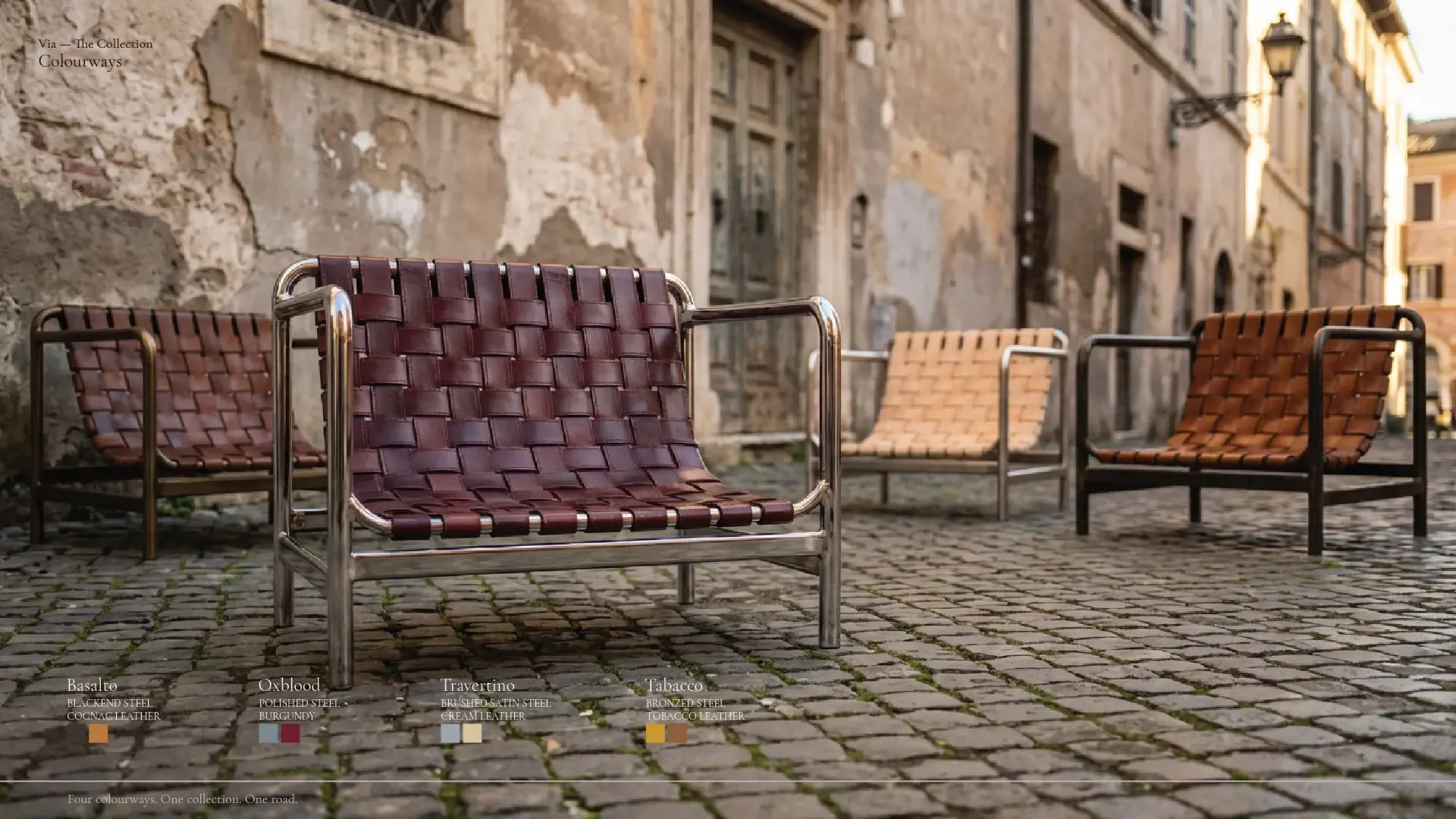
Via Chair - Woven Leather on Tubular Steel. Courtesy of the student What Are Sampietrini and Why Are They Unique to Rome?
What makes the sampietrino compelling to this young designer is not just its form, but its condition: it is everywhere and yet it goes overlooked.
“It’s incredible that almost nobody knows the name sampietrino; it’s the most Roman object there is” – Gustav Craft
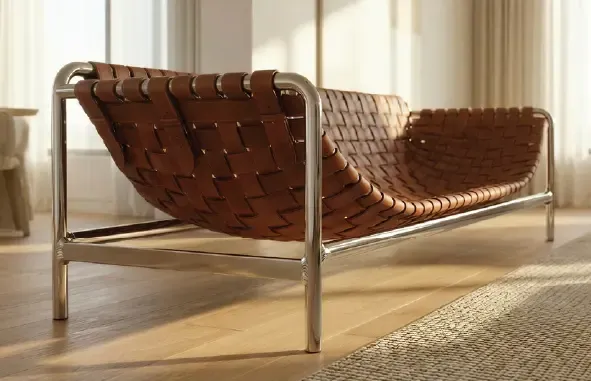
Via Chair - Woven Leather on Tubular Steel. Courtesy of the student
Where Rome’s Cobblestones Come From and Why They Last for Centuries
There is a quiet kind of permanence to it—a material that has absorbed centuries of movement without ever becoming a focal point. “Quarried from the Alban Hills, hand-cut by Roman craftsmen, and laid in an irregular orthogonal grid, it has borne the weight of legions, merchants, and lovers for over two thousand years,” the product design student notes.
Without altering its essential nature, VIA draws attention to the sampietrino—not by exaggerating it, but by repositioning it within a chair, a sofa, a table, a rug, and even a mirror.
From Streets to Design: The Origin of an Award-Winning Collection
From the outset, VIA was conceived as a system rather than a standalone piece. The project unfolds through a series of objects that all reference the sampietrino, each exploring it from a distinct scale and perspective.
“From the beginning, I knew my furniture project had to be a collection, not a series of individual pieces. The logic only works if everything speaks the same language” – Gustav Craft
A chair, a rug, a mirror: each element interprets the same visual and material logic. The chair’s woven leather echoes the rhythm of the street. The rug offers an aerial perspective on that surface. The mirror lifts the stone away from the ground, turning it into something to be looked at, rather than stepped on.
“Each object is a different way of looking at the same thing. The collection doesn’t multiply ideas; instead, I chose to deepen one,” the award-winning designer reflects.
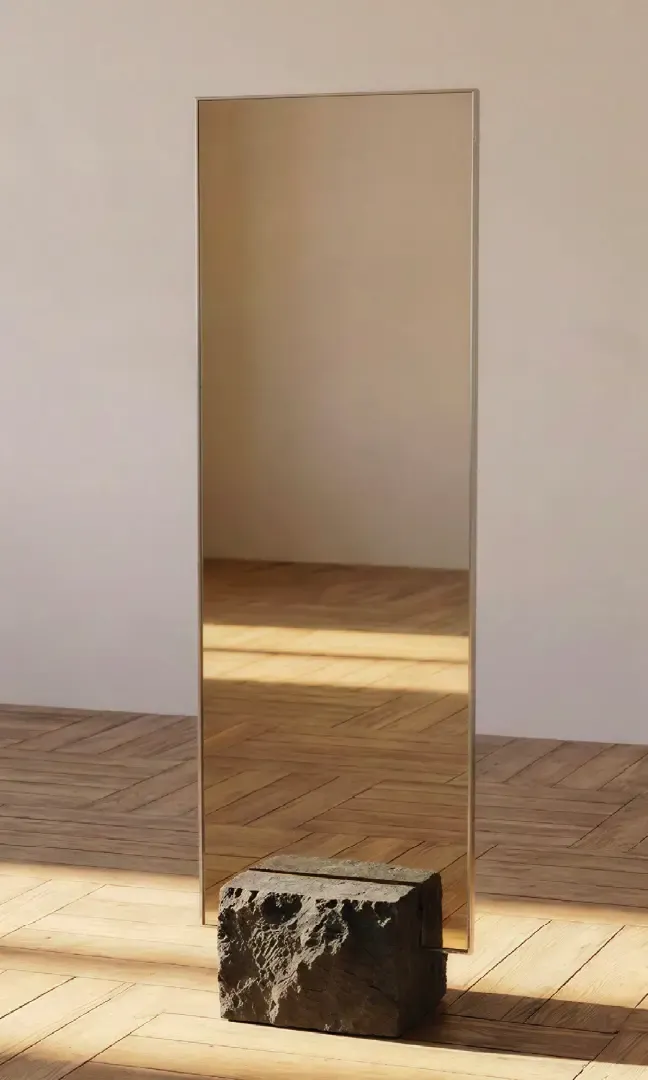
Via Mirror - Floor Standing. Courtesy of the student
When Rome’s Cobblestones Become a Design System in Contemporary Furniture
What holds the VIA project together is its visual coherence and the depth of its research. For the emerging designer, this was the true starting point. “At Istituto Marangoni Milano Design, I learned to take research seriously, not as something that simply supports a presentation, but as the foundation of the work itself,” Craft notes.
Understanding what the sampietrino is, where it comes from, how it is made, as well as how it has been used, is essential to its reinterpretation. “Without that level of detail, the project would risk remaining on the surface. Instead, it builds from the inside out,” Craft says.
Why This Design Project Feels So Relevant in Rome Today
With VIA, Gustav Craft has just been awarded the Fendi Design Prize 2026—a recognition that places a student project within the design industry. Yet his perspective remains grounded. “Honestly, I’m still not sure I fully grasp the scale of it,” he admits, framing the award as a possibility, a way to continue working, exploring and developing his practice.
“Furniture design is where I feel most at home, but I’ve always believed that exploring different sides of design only makes you better at the one you love” – Gustav Craft
Therefore, the project doesn’t mark a conclusion, but a point of departure.
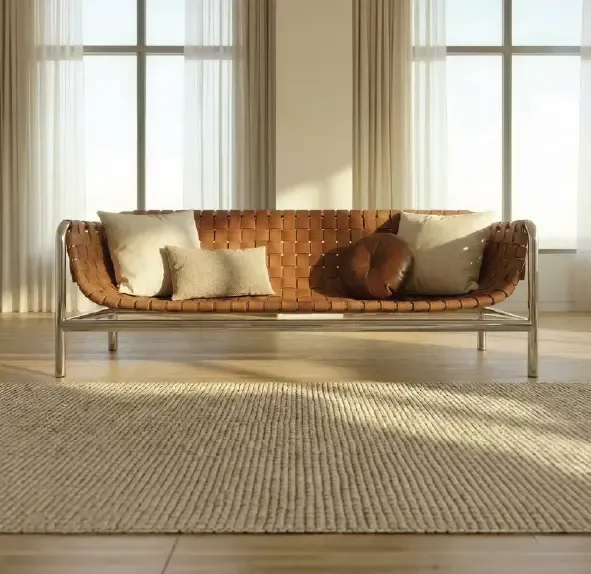
Via Chair - Woven Leather on Tubular Steel. Courtesy of the student
What Rome’s Streets Reveal About How We See the City Today
What VIA ultimately does is quite simple, even if it might not seem so at first. It doesn’t invent new objects or introduce new materials, nor does it strive to make something extraordinary. Instead, it shifts attention from what is already visible to what has always been there.
That’s what makes this emerging designer’s project resonate—even with an established Roman luxury house like Fendi, which awarded him the prize: not because it adds something to Rome, but because it reframes how the city is perceived.