
Fashion creates mountains of waste. These Indian artisans are reimagining a slower future

How Bhujodi weaving, Ajrakh printing and handmade textiles continue to survive in India’s craft communities
While fashion generates waste at an unprecedented scale, craft communities across parts of India are preserving a radically different approach. They make cloth slowly, using handlooms, local wool and techniques passed down through generations. Across Kutch and the Kumaon Himalayas, practices such as Bhujodi weaving and Ajrakh block printing persist outside the pace of industrial fashion, relying on labour-intensive processes that honour material knowledge, repair, longevity and the relationship between maker and fabric. In this essay, Pallavi Singh reflects on her time with artisans, weaving groups and social enterprises in western India and the Himalayan region, where handmade textiles sustain both livelihoods and longstanding craft traditions. Moving through post-earthquake Kutch, natural-dye workshops and knitting collectives in Kumaon, Singh examines how these practices address mounting concerns about fashion waste, sustainability and the future of clothing, while revealing the skill and cultural memory embedded in every stage of production.
How the Bhuj Earthquake Changed India’s Craft Economy
Fashion education often begins with understanding a designer’s impact on society, recognising that fashion mirrors cultural, social and economic realities. My journey as a responsible designer began while working with master artisans in Kutch, a district in the western Indian state of Gujarat, bordering Pakistan and the Arabian Sea, renowned for its craft networks, community-led practices, and skilled artisans.
On 26 January 2001, at 08:46 am IST, Kutch was struck by the Bhuj earthquake, one of India’s most devastating seismic events. In just 110 seconds, over 8,700 villages were affected, 20,005 lives were lost, and more than 166,800 people were injured. Beyond its immediate destruction, the earthquake disrupted centuries-old craft traditions, leaving artisans without essential resources or infrastructure.
What followed, however, was not only physical reconstruction but also a remarkable revival of craft and sustainable approaches, led by resilient communities in collaboration with government initiatives, social enterprises and NGOs.
What Fast Fashion Cannot Replicate About Bhujodi Weaving
To explore this firsthand, I travelled to Bhujodi and Ajrakhpur villages in Kutch, spending time with the Vankars and the Khatris communities, and visiting Khamir—a social enterprise that supports artisans and connects traditional practices to contemporary markets. Working closely with these communities deepened my understanding of sustainability, craft and fashion-making.
In Bhujodi, I met Devji Vankarji, a master weaver whose work exemplifies the village’s weaving legacy. Here, knowledge is passed down through generations, with children growing up surrounded by the sound of looms at home. Devji learned the craft from his father and has woven for over 35 years, mentoring more than forty weavers. His contribution to Indian handlooms has been recognised with the Sant Kabir Handloom Award.
Shri Kharet Devji Bhimji, son of Shri Kharet Bhimji Velji, at work in his home. Renowned for his expertise in Bhujodi weaving, he has preserved and carried forward his ancestral craft tradition.
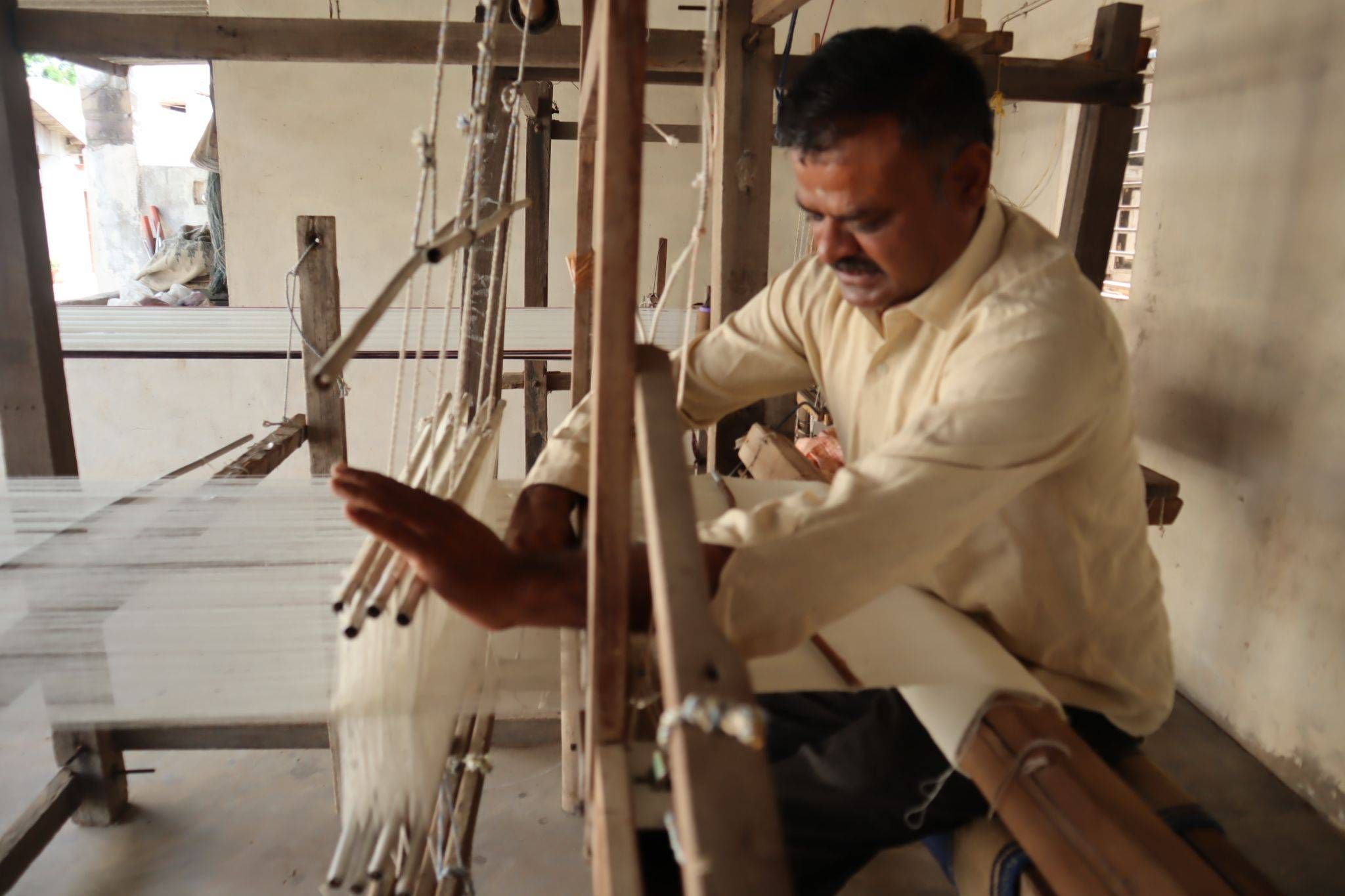
Bhujodi weaving is practised on pit looms using the “extra-weft” technique, where intricate patterns are created entirely by hand. The craft relies on locally sourced materials such as sheep wool, Merino wool and Kala cotton—an indigenous, organic cotton native to Kutch—along with natural dyeing processes. Motifs often draw from farming tools and ritual objects, imbuing every textile with cultural meaning.
Production is deliberately slow; a single shawl can take up to a month to complete. Devji’s father himself won a national award for a masterpiece Bhujodi shawl. This pace contrasts sharply with today’s fashion system, where speed and scale often take priority. Globally, fashion generates approximately 92 million tonnes of textile waste each year, while less than 1% of garments are recycled into new clothing, according to the Ellen MacArthur Foundation.
Inside Ajrakh Printing and the Revival of Natural Dye Textiles
After Bhujodi, I travelled to Ajrakhpur to learn about Ajrakh block printing, where I met Mohammad Juned Khatri, a ninth-generation artisan. Raised in one of the most respected families preserving this centuries-old craft, Juned combines traditional resist-printing and natural dyeing techniques with a willingness to innovate.
Over the years, Juned has collaborated with leading design houses. His practice reflects both resilience and continuity: from rebuilding after the 2001 Gujarat earthquake to navigating the disruptions caused by COVID-19, he has remained committed to preserving the dignity of handmade textiles.
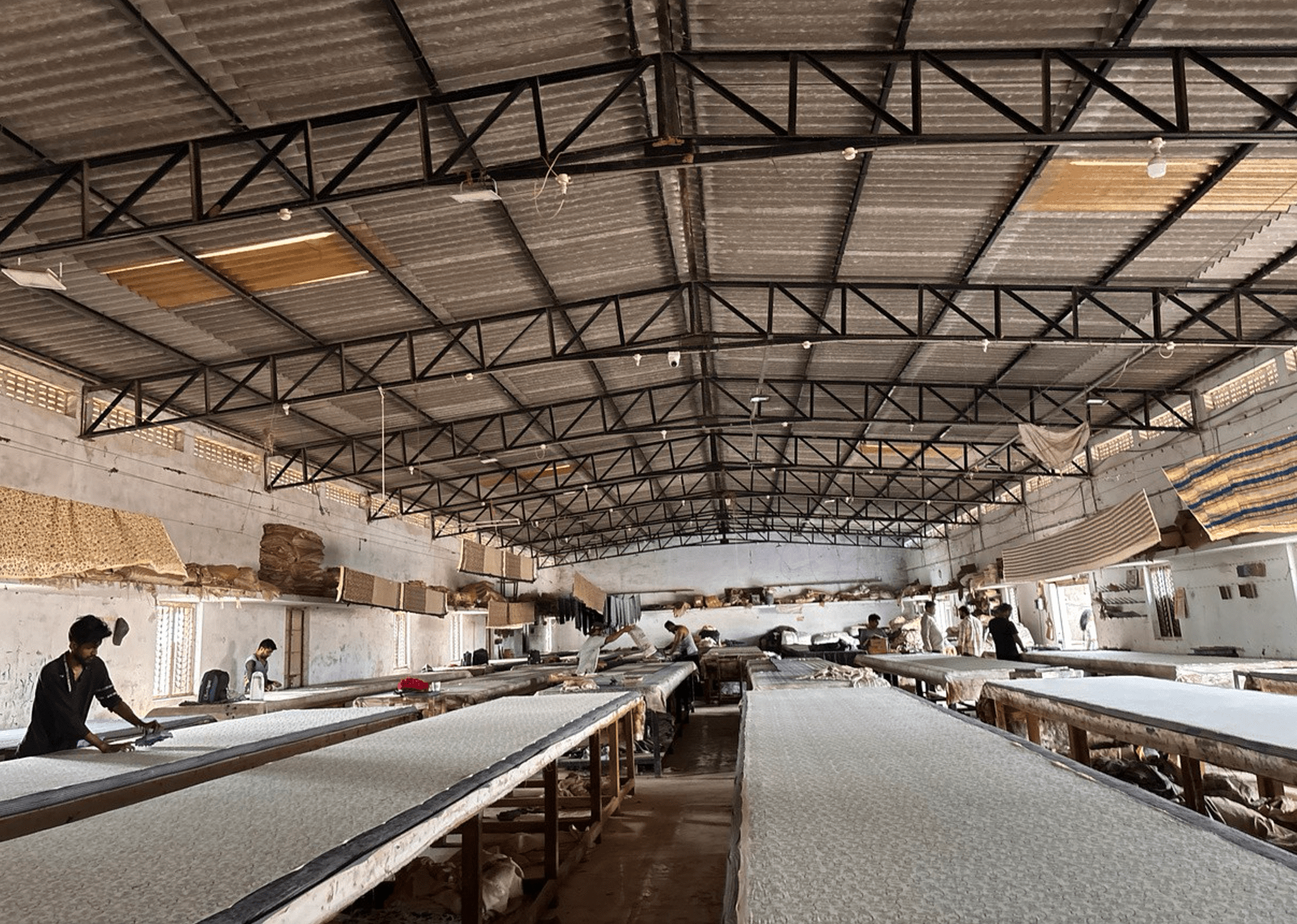
Juned Khatri’s working unit in Ajrakhpur, where block printing is carried out on a large scale. Ajrakh printing is a meticulous, multi-stage process. Cotton fabric is washed, treated with natural mordants, printed using hand-carved wooden blocks, and repeatedly dyed and dried. Colour comes exclusively from natural sources—indigo, turmeric, and madder root—demanding careful planning and ecological awareness. Water conservation is integral to the process; a community-run recycling plant in Ajrakhpur reuses nearly 100,000 litres of water daily.
Can Handmade Fashion Offer an Alternative to Industrial Clothing?
These experiences shaped my understanding of sustainability. In both Bhujodi weaving and Ajrakh printing, artisans are custodians of knowledge and active decision-makers. This challenged my role as a designer and encouraged a more collaborative approach.
For my collection, I drew inspiration from Ajrakh block printing, which is traditionally limited to four core colours: red, black, yellow and blue. Working alongside artisan Juned, we experimented with additional shades inspired by the baris (traditional windows) I saw at the Earthquake Museum in Bhuj. By carefully observing the chemical reactions of natural dyes, we created contemporary hues.
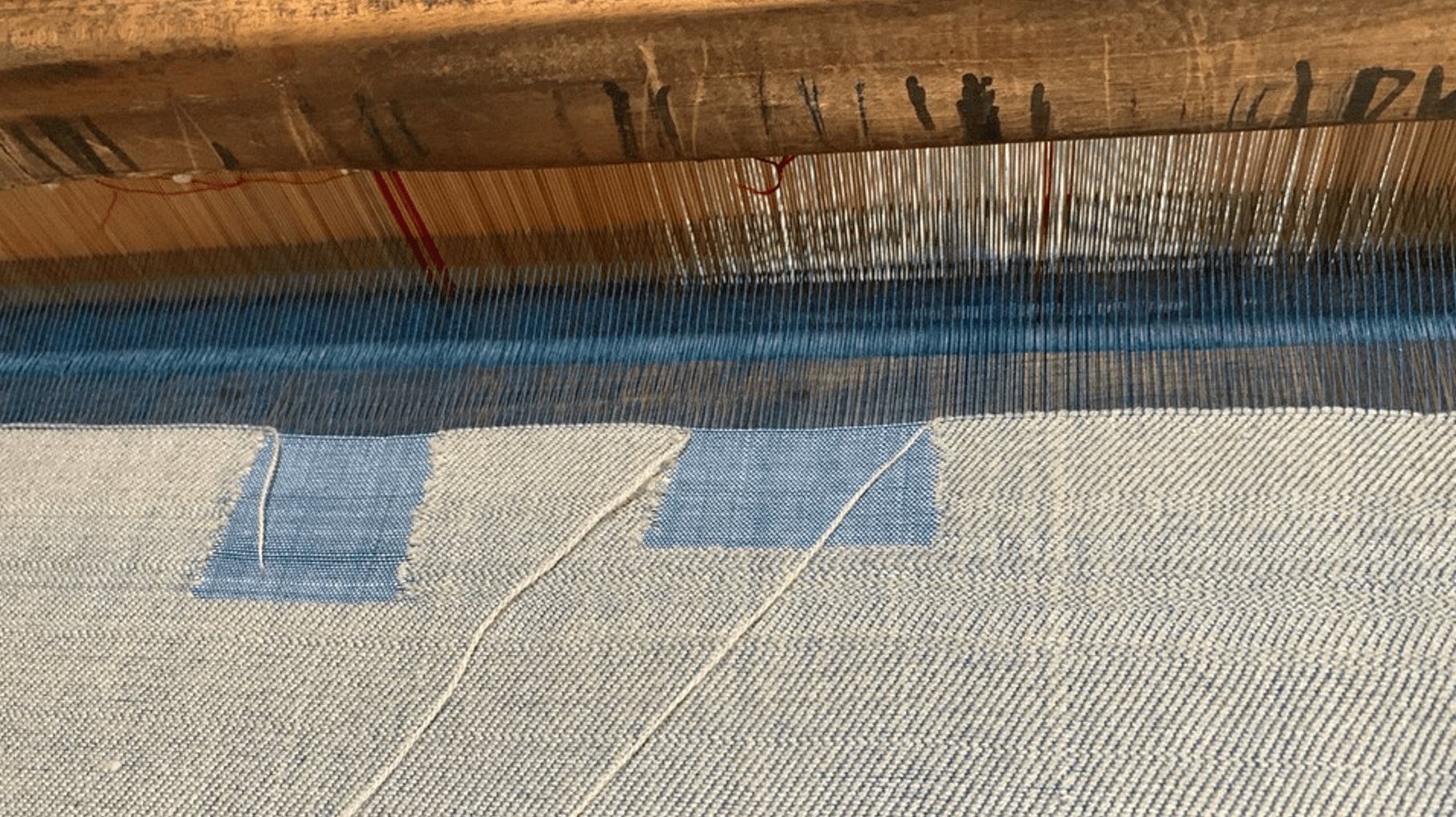
Bhujodi weaving on a handloom for Pallavi Singh’s Revive collection. In Bhujodi, I explored blending Merino wool with Kala cotton to test longevity, texture and drape. Material behaviour informed silhouette and structure, reinforcing the idea that craft processes should guide design decisions rather than be forced to fit predetermined outcomes.
The Himalayan Knitting Traditions Finding New Life Through Fashion
This philosophy carried into my winter collection, where I integrated hand-knitted elements. Alongside the Vankars (Bhujodi weavers) and Khatris (Ajrakh block printers), I collaborated with Kilmora, a social enterprise promoted by KGU that supports women knitters in the Kumaon Himalayas, whose practices are rooted in the use of natural wool and indigenous Himalayan techniques.
Kilmora uses botanicals to dye the yarn, resulting in gentle, earthy hues unlike the harsh synthetic colours we are accustomed to. I especially value that natural dyes are far softer on the skin and considerably friendlier to the environment, reducing water pollution and eliminate chemical waste. It feels instinctively right, and honestly, sustainability truly begins with the choices we make.
Kilmora operates through 13 organised knitting groups, each with roughly 35–40 women artisans. Yarn is distributed for production either at home or at the Kilmora workspace. The hand-knitted nature of the work results in subtle variations in tension, texture and finish—qualities that distinguish handcrafted textiles from industrially standardised products.
Indian emerging designer Pallavi Singh with the group of knitters who collaborated on her fashion collection, Revive.
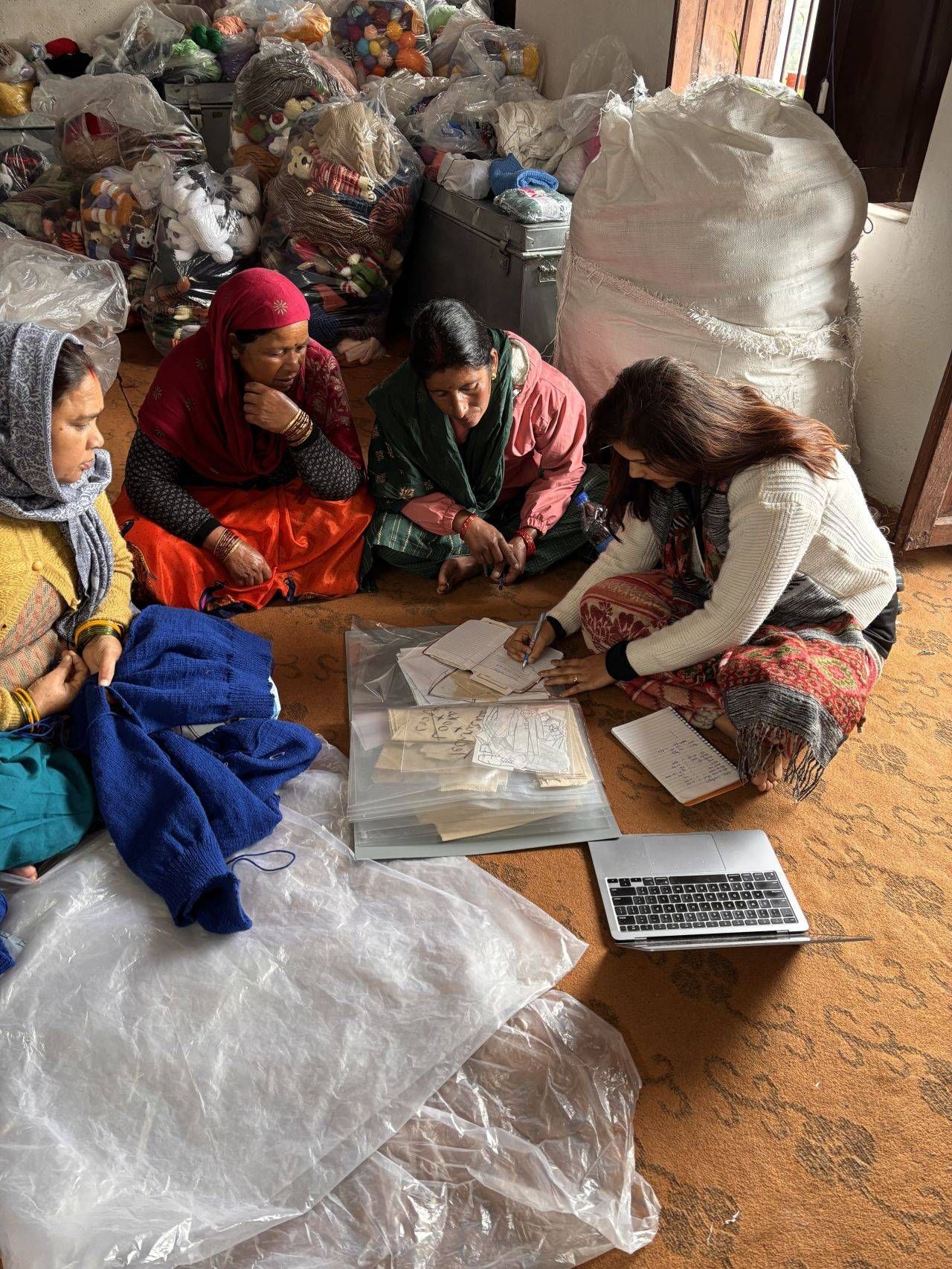
Within my collection, I collaborated with these knitting groups to develop modular knitted elements, including cuffs and collars. These pieces were integrated into garments featuring Bhujodi weaving and Ajrakh block printing, adding both thermal functionality and seasonal relevance.
Pallavi Singh with knitters Gita and Champa, carrying the hand-knitted pieces created for her collection.
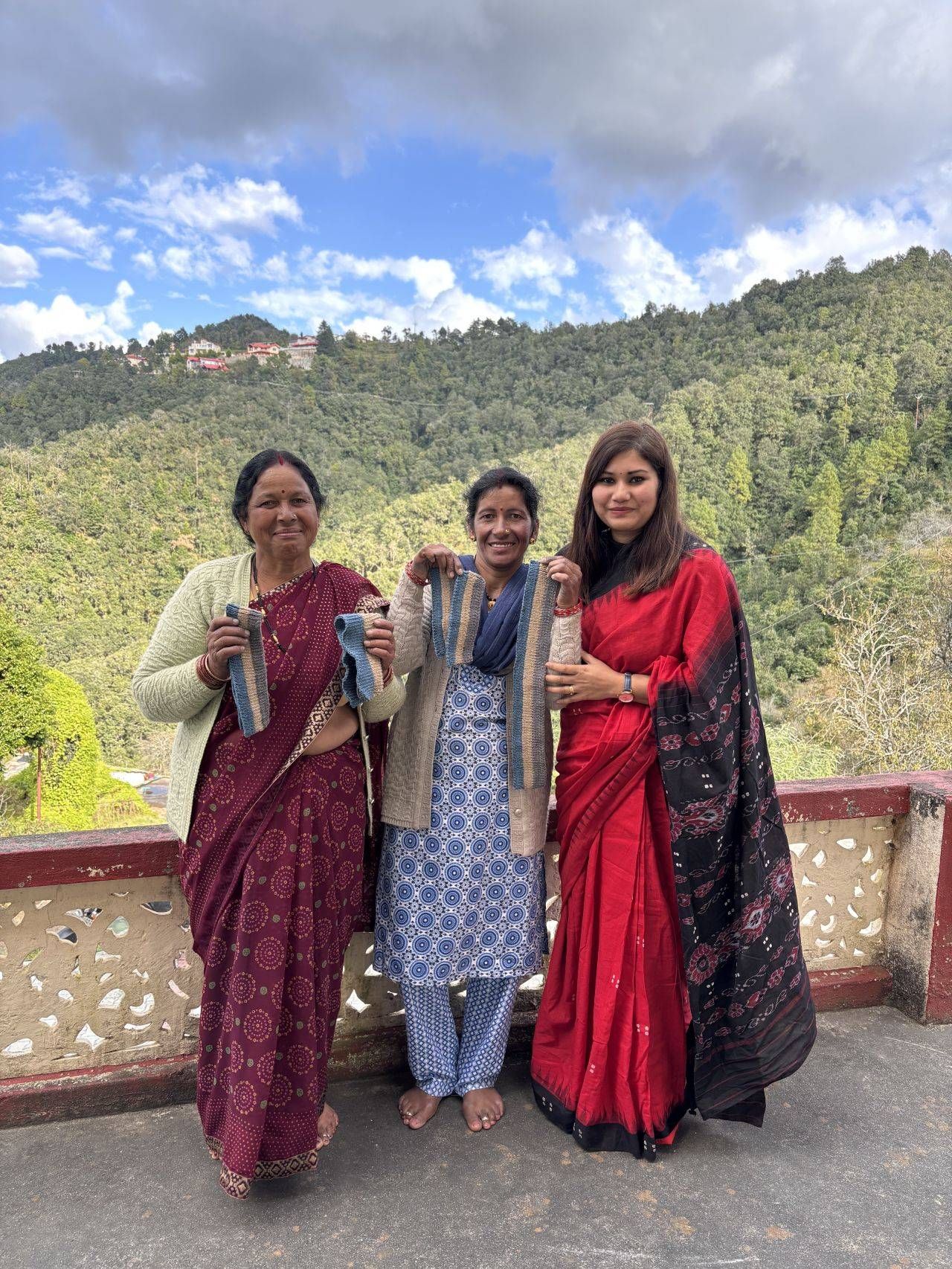
This approach enabled multiple regional craft practices to coexist within a unified design framework, demonstrating how material-led decision-making and craft-specific processes can inform contemporary winterwear without compromising cultural integrity.
How Social Enterprises Are Keeping India’s Craft Economies Alive
Working across regions revealed the critical role of social enterprises like Khamir in Kutch and Kumaon Grameen Udyog (KGU) in Nainital. These organisations sustain local livelihoods, support reverse migration, and reinvest in rural development.
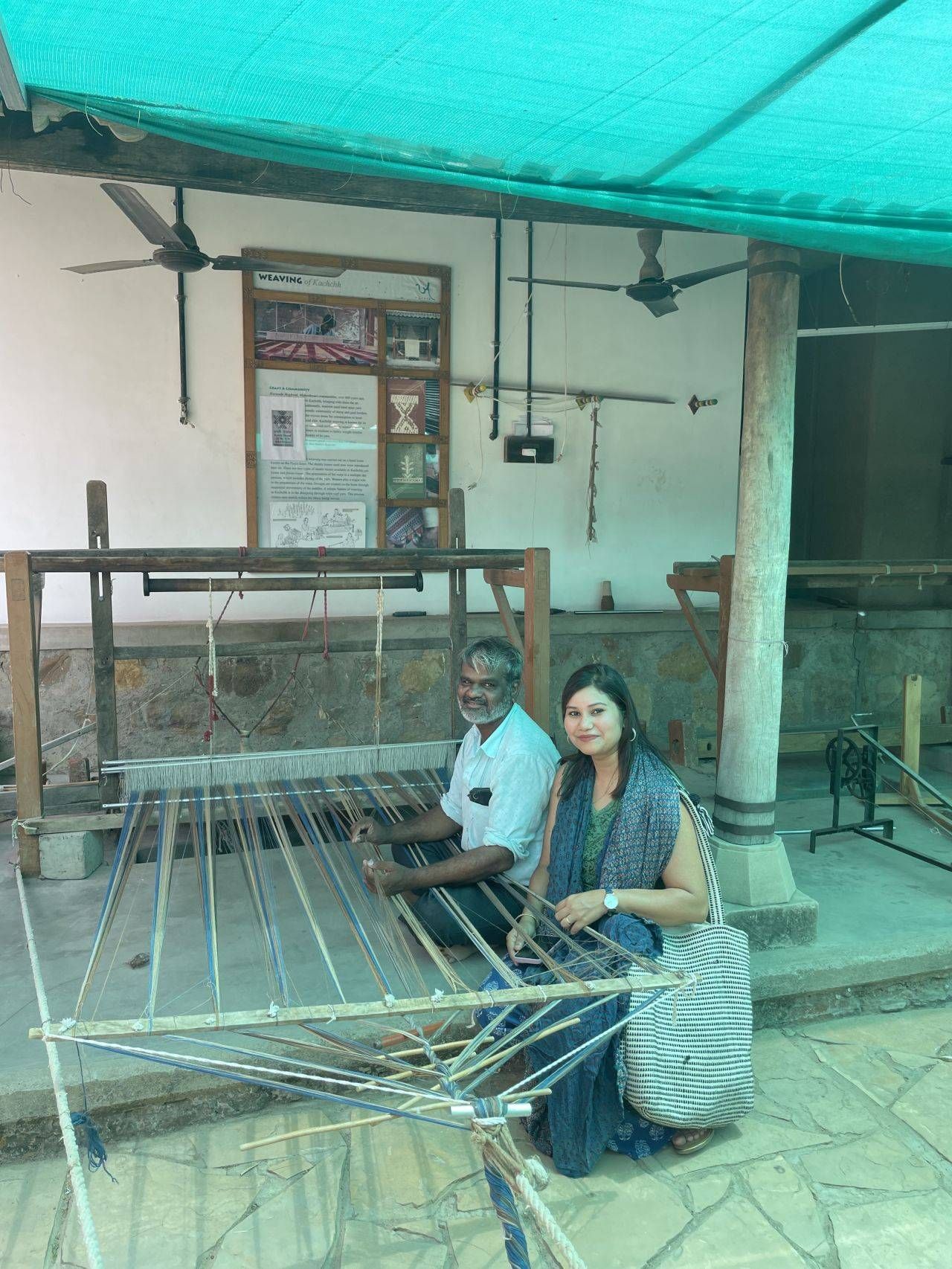
Khamir Craft Resource Centre was established in 2005 in Bhuj, Kutch, after the devastating 2001 Gujarat earthquake. Khamir—short for Kutch Heritage, Art, Music, Information and Resources—was created as a platform to connect artisans with markets. Its Kala Cotton Initiative, launched to revive Kutch’s indigenous, rain-fed and pest-resistant cotton, plays a significant role in the region’s economy. By rebuilding the supply chain between farmers, spinners and weavers, it provides sustainable employment and promotes eco-friendly textiles. Today, Kala cotton is handwoven into garments and furnishings.
Pallavi Singh with a weaver who has been working with Khamir for over 10 years. On the loom is Kala cotton, a fabric that connects the farmer with the weaver through a sustainable craft chain.
Kilmora is a social enterprise creating economic opportunities in India’s Kumaon region. Founded in 1996 as the livelihood wing of the Central Himalayan Rural Action Group (CHIRAG/KGU), it focuses on handloom and natural products. It is a Fairtrade- and Craftmark-certified organisation and also ploughs back its earnings into rural development initiatives. Through a diverse range of handicrafts and agri-products, it strives to offer quality and a fair deal to customers, farmer-producers and artisans alike. Its offerings include handwoven and hand-knitted products, cold-pressed oils and scrubs, naturally grown culinary herbs, grains and spices, and locally grown Himalayan fruit products such as jams and chutneys. KGU has introduced several environmentally friendly practices, including rainwater harvesting at Kilmora’s office, solar-powered units for electricity and heating, washing handwoven items with soap nut, and moving toward preservative-free products in its agricultural unit.
Migration to cities in search of work has long been common in these regions. Over the past 25 years, however, the organisation has fostered environmentally conscious practices by creating opportunities around handwoven textiles, supporting farmers through the purchase of locally grown traditional grains and spices, and helping women generate additional income through knitting, foraging forest herbs, and cultivating and drying culinary herbs.
What India’s Craft Traditions Teach Us About Making Fashion More Responsibly
For a young designer like me, working with craft demands a fundamental shift in mindset. It means slowing down design timelines, allowing material limitations to guide creativity, and recognising artisans as co-creators rather than executors. Decision-making becomes relational, shaped by trust and ongoing dialogue.
As a student designer, this journey deepened my understanding of responsibility in the fashion industry. Through my collection, Revive, I focus on a design process that allows craft communities to sustain their knowledge, adapt to new contexts and retain agency over their work. The regions of Bhujodi, Ajrakhpur and Kumaon offer powerful lessons for fashion’s future: enduring design is rooted in time, care, and collaboration, and fashion, when approached thoughtfully, becomes a tool for resilience.
Pallavi Singh
Alumna, Mumbai