
How the EU Digital Product Passport is changing fashion design in practice
The EU Digital Product Passport reshapes fashion design through transparency, traceability and digital twins, redefining sustainable value
EU Digital Product Passport reshapes fashion design through transparency, traceability and digital twins, redefining sustainable value
EU Digital Product Passport: Why Fashion Is Entering a New Era of Transparency
As global fashion faces growing pressure for climate accountability and transparent sourcing, a new regulatory milestone is reshaping how products are conceived, sold and understood. At the heart of this change is the European Union’s Digital Product Passport (DPP)—a digital identity attached to each item that consolidates data on materials, origins, environmental performance and lifecycle management. First introduced under the EU’s Ecodesign for Sustainable Products Regulation (ESPR), the DPP will become mandatory for many product categories—including textiles and apparel—rolling out in phases from 2025 to 2027 and beyond.
The Digital Product Passport is driving unprecedented levels of supply chain transparency and traceability across fashion, standardising how brands support their sustainability claims and unlocking product-level information that has long been buried in complex global networks. For designers, communicators and brand strategists, this shift demands rethinking the product itself: every item becomes a data-rich asset—accessible via QR code, NFC or another scannable tech—able to show compliance, provenance and impact to regulators, marketplaces and end users alike.
In this feature, Anvi Sharma—Fashion Writer, Stylist and IM alumna of the Master’s in Fashion Promotion, Communication & Digital Media—explores why the EU Digital Product Passport for fashion is more than another regulatory box to tick. It signals not only a commercial inflexion point for luxury but also a cultural shift in how value is built: products are now conceived alongside their digital twins, and credibility increasingly hinges on verifiable information. From innovations in traceability and the circular economy to impacts on brand storytelling, customer engagement and resale, this article examines why Digital Product Passports in fashion are emerging as a defining turning point in sustainability governance in 2026, and how their influence will ripple across creative, commercial and end-market ecosystems.
What the EU Digital Product Passport Means for Fashion Brands
Fashion loves a good story: craft, heritage, theatricality, innovation and sustainability. Every product comes with a narrative that captures the ethos of its designer’s vision. But as climate accountability and regulation tighten, glamour alone no longer cuts it.
The EU Digital Product Passport (DPP) marks a decisive shift from aspiration to evidence, and it is set to change how fashion and design approach products—making it one of the boldest moves in the sustainability and digital policy space.
This is not about recycling more—it’s about redesigning how products exist in the economy and making them circular from the start.
Visualizza questo post su Instagram
Why Transparency in Fashion Is Becoming a Regulatory Requirement
For decades, sustainability in fashion has been wrapped up in storytelling. Today, that comfort zone is disappearing.
The EU Digital Product Passport introduces a new paradigm: claims must be backed up. Transparency moves from branding to infrastructure, forcing fashion to confront what it produces, how it’s made and what happens next.
QR Codes, NFC and Digital Identity: How the Digital Product Passport Works
The EU Digital Product Passport gives each product a digital identity—quite literally, its own passport.
Through a QR code or an embedded NFC tag, a garment, bag or shoe can be scanned or tapped to reveal its composition, origin, production process and end-of-life details. The product itself becomes an interface—carrying data, memory and environmental responsibility, aligning economic growth with planetary limits.
Visualizza questo post su Instagram
Why NFC Tags Are Replacing QR Codes in Fashion Transparency
NFC tags are a game-changer within the DPP framework. Unlike visible, often temporary QR codes, NFC technology can be seamlessly embedded into labels, linings or hardware.
Durable, discreet and intuitive, NFC enables frictionless interaction. With a simple tap, the product speaks—and transparency becomes almost invisible, yet always present.
How the Digital Product Passport Enables Circular Fashion
For an industry built on image and experience, and increasingly challenged by e-waste and fast fashion, this matters.
Digital Product Passports make retail more informed and ethical, push supply-chain accountability and give the next generation the data needed to build a closed, circular economy.
Visualizza questo post su Instagram
How the Digital Product Passport Is Powering Fashion Resale and Repair
These passports extend well beyond the first purchase. By enabling product-level traceability, they underpin repair, resale and reuse ecosystems, allowing garments to be tracked over time, disassembled where necessary, and reintroduced into the market with verified data attached.
Within this framework, longevity shifts from an abstract sustainability goal to a measurable commercial asset, directly supporting emerging business models in resale, recommerce and the broader secondary market economy.
Digital Twins in Fashion: What the Digital Product Passport Demands of Designers
Within this framework, craftsmanship is formally documented, ownership becomes informed, and consumption increasingly intentional.
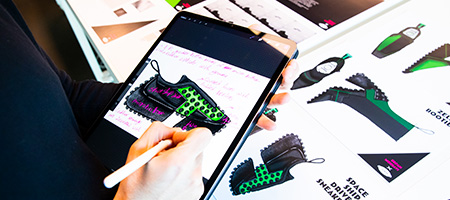
As authentication, provenance and durability become embedded product features, designers must move beyond product ideation and take responsibility for the entire product lifecycle. The implications run deep—especially for emerging creatives. The design brief now stretches beyond form and material to include systems and data.
Why the Digital Product Passport Marks a Cultural Shift in Fashion
Instead of stripping fashion of its mystique, this new visibility strengthens it. When provenance can be verified and care extended, desirability evolves. Value is no longer speculative; it is legible and sustained over time.
The EU Digital Product Passport marks a cultural shift: a simple idea with far-reaching consequences, capable of reshaping fashion in a largely and urgently positive way. It also sets a framework that other industries may soon have to follow.
Not bad for an NFC tag, right?









.jpg)

.jpg)