
Why luxury hotels smell so good: the secret role of scent in unforgettable stays

Why scent has become luxury hospitality’s most powerful tool, creating emotion, memory and lasting impressions long after a stay ends
Long after a hotel stay has ended, the room, the view and even the service fade from memory. Yet it is the scent that lingers. From signature fragrances diffused through grand lobbies to bespoke perfumes inspired by a place, smell is now the most powerful yet overlooked tool in luxury hospitality. More than a sensory branding detail, it heightens emotion and leaves a lasting impression. As travellers seek journeys that are distinctive and resonant, hotels are embracing fragrance as a mode of storytelling, making it a key part of their identity. In this piece, alumna Lucrezia Spina reveals how three recent collaborations demonstrate that perfume can transform the guest experience, turning a destination into something truly indelible.
Why Luxury Hotels No Longer Compete on Design Alone
Luxury hotels are more than places to sleep or enjoy a beautiful breakfast; they aim to engage all the senses and create memories that last long after guests depart. I first noticed this in Dubai: when you step into certain hotels, you are surrounded by a distinctive perfume that fills the air and becomes instantly recognisable. I found myself eager to walk in for that reason alone, and even now, I still recall that unique, unmistakable scent, inseparably linked to that place.
View this post on Instagram
Why Does Scent Have Such a Powerful Effect on Memory?
This is no coincidence. Humans can distinguish around one trillion scents and connect them directly to deep memories. Research suggests that 75 per cent of daily emotions are linked to smell.
Closely tied to our feelings, smell is strongly associated with the limbic system and has a powerful impact on perception, making a place unforgettable. This unique ability turns fragrance into a strategic tool that conveys calm, luxury, familiarity and well-being, effectively becoming a hotel’s olfactory signature.
View this post on Instagram
A neuroscientific study by Walnut Unlimited supports this idea, revealing that the combination of scent and music—two hallmarks of luxury hospitality—increases engagement and makes experiences more memorable.
Further evidence comes from the Business Impact of Scent research by Premium Scenting of Initial, which surveyed leading figures in hospitality and sensory guest experiences. The findings are striking: 67 per cent of guests say a pleasant hotel scent would make them feel more relaxed, 69 per cent believe a lobby fragrance improves brand perception, while 53 per cent are less likely to stay in a hotel if the scent is overpowering.
Why Every Space in a Luxury Hotel Smells Different
For all these reasons, the most promising fragrances in hospitality are both functional and appealing: a lobby, a restaurant, a meeting room and a suite do not need the same perfume throughout the day. Each choice is guided by the mood a hotel wishes to create in each setting and at different times.
According to the scent experts at ADDORA officina dell’aria, speaking about scent marketing for hotels, notes like white tea, green tea, citrus, sandalwood, lavender, cedar, and jasmine are among the most popular profiles for hospitality spaces. In contrast, wellness retreats and spas typically favour eucalyptus, rosemary and chamomile.
View this post on Instagram
A trend I noticed in Dubai is the layering of several fragrances across an entire property. Hotels contain diverse environments, from elevators and corridors to gyms, guest rooms, bars, rooftops and common areas, often spanning multiple buildings. Today’s advanced systems use coordinated diffusers to cover large areas, ensuring the air feels distinct and evocative throughout every space, at every hour.
The Fragrance Brands Redefining the Future of Luxury Travel
Some brands have gone even further. Magna Pars in Milan, the world’s first Hotel à Parfum, is a special case. Here, cocktails and dishes speak the language of fragrance: a menu à parfum and an Olfactory Aperitivo invite guests to experience each drink as a sensory journey rather than just something to consume.
View this post on Instagram
As my fascination with the subject grew, I started seeking out those brands that were truly raising the bar. These three summer collaborations convinced me that fragrance, in the world of luxury hospitality, is now much more than a mere detail.
Can a Perfume Capture the Essence of an Italian Summer?
Nestled amid lush greenery in the heart of Forte dei Marmi, Augustus Hotel & Resort evokes an enchanted garden, with maritime pines, shaded pathways, and the refined, classic style typical of Italian seaside resorts—a symbol of luxury hospitality in Versilia for over seventy years.
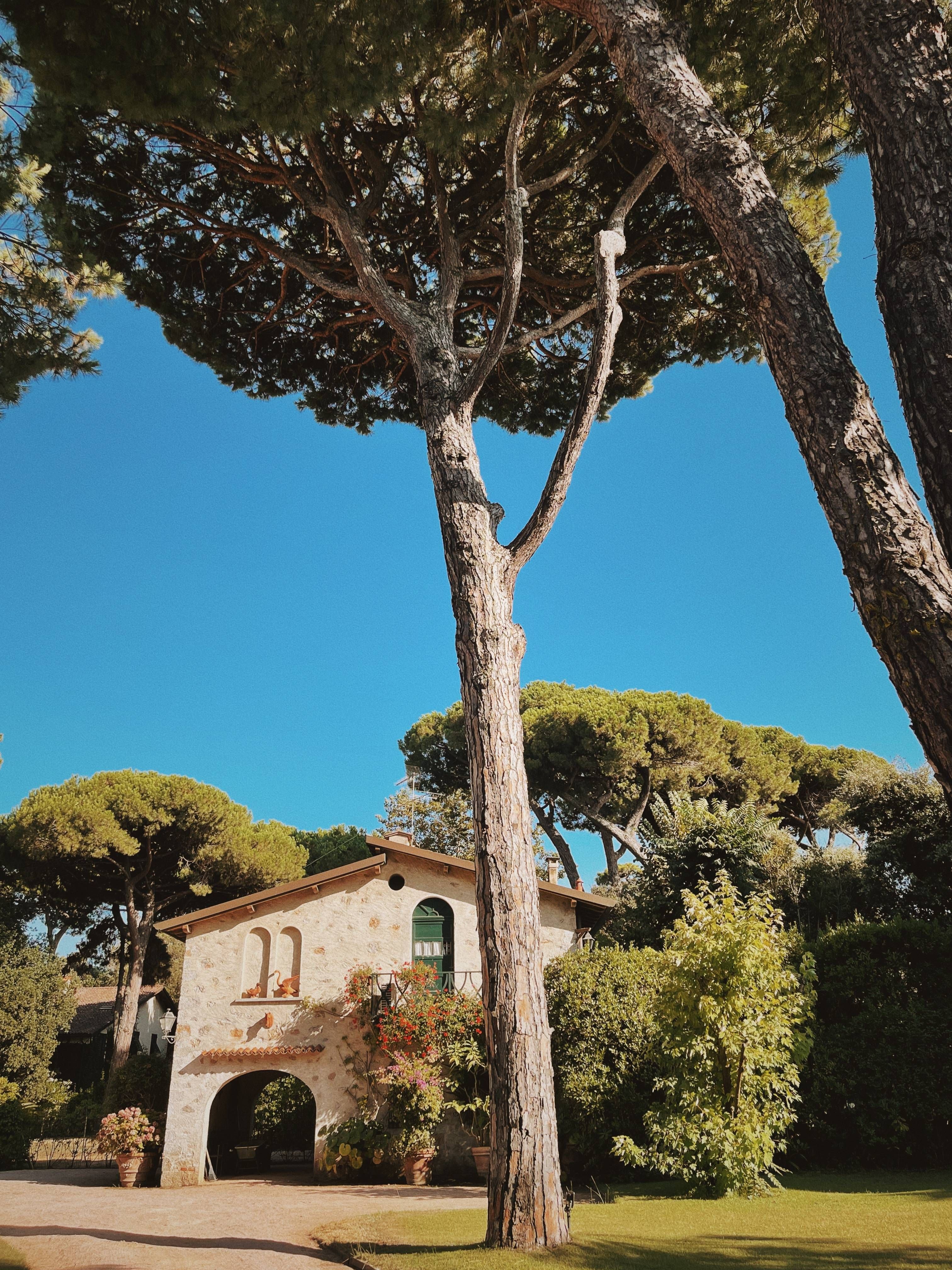
The enchanted garden of Augustus Hotel & Resort in Forte dei Marmi, where maritime pines and classic seaside elegance evoke Italian summer. Courtesy press office. When thinking of an Italian summer, citrus fruits come to mind immediately. This is exactly the inspiration behind Mediterranea, the fragrance by Culti Milano, a brand considered a pioneer of ambient scenting. The scent conjures an early morning walk through citrus groves and Italian landscapes, opening with fresh and luminous notes of lemon, bitter orange and bergamot, followed by a warm yet delicate ginger heart, and finishing with a deeper, more refined cedarwood base.
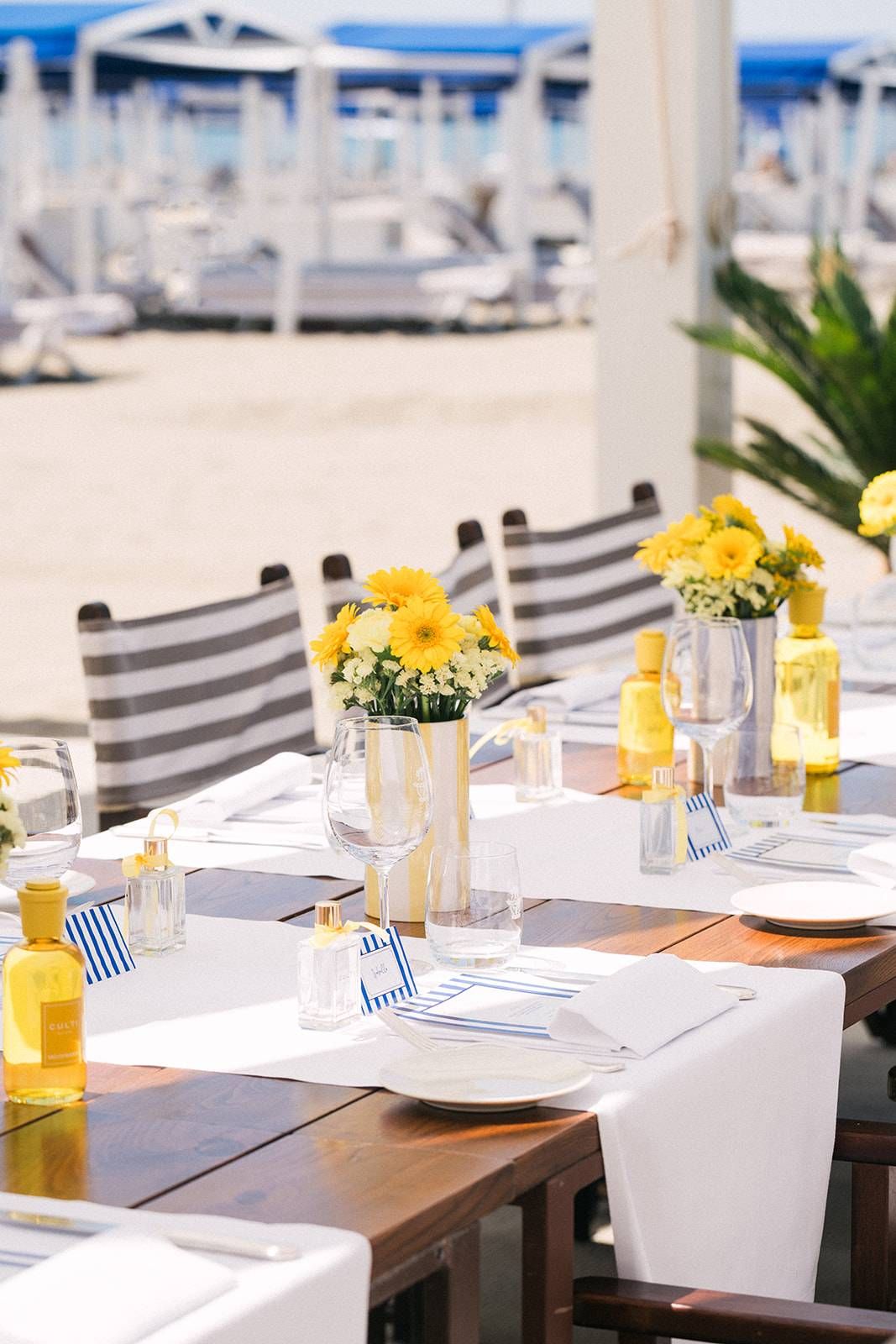
Culti Milano’s Mediterranea brings citrus notes to the table, translating lemon, bitter orange and bergamot into an Italian summer ritual. Ph. Serena Rossi. The fragrance guides guests through the common areas, all the way to the Augustus Beach Club, the hotel’s private beach, turning the stay into an immersive sensory journey. The aim is to foster an emotional identity that resonates with the spirit of the place. Even the packaging completes this narrative: the transparent yellow glass bottle is designed to reflect sunlight, instantly evoking energy, vitality and freshness.
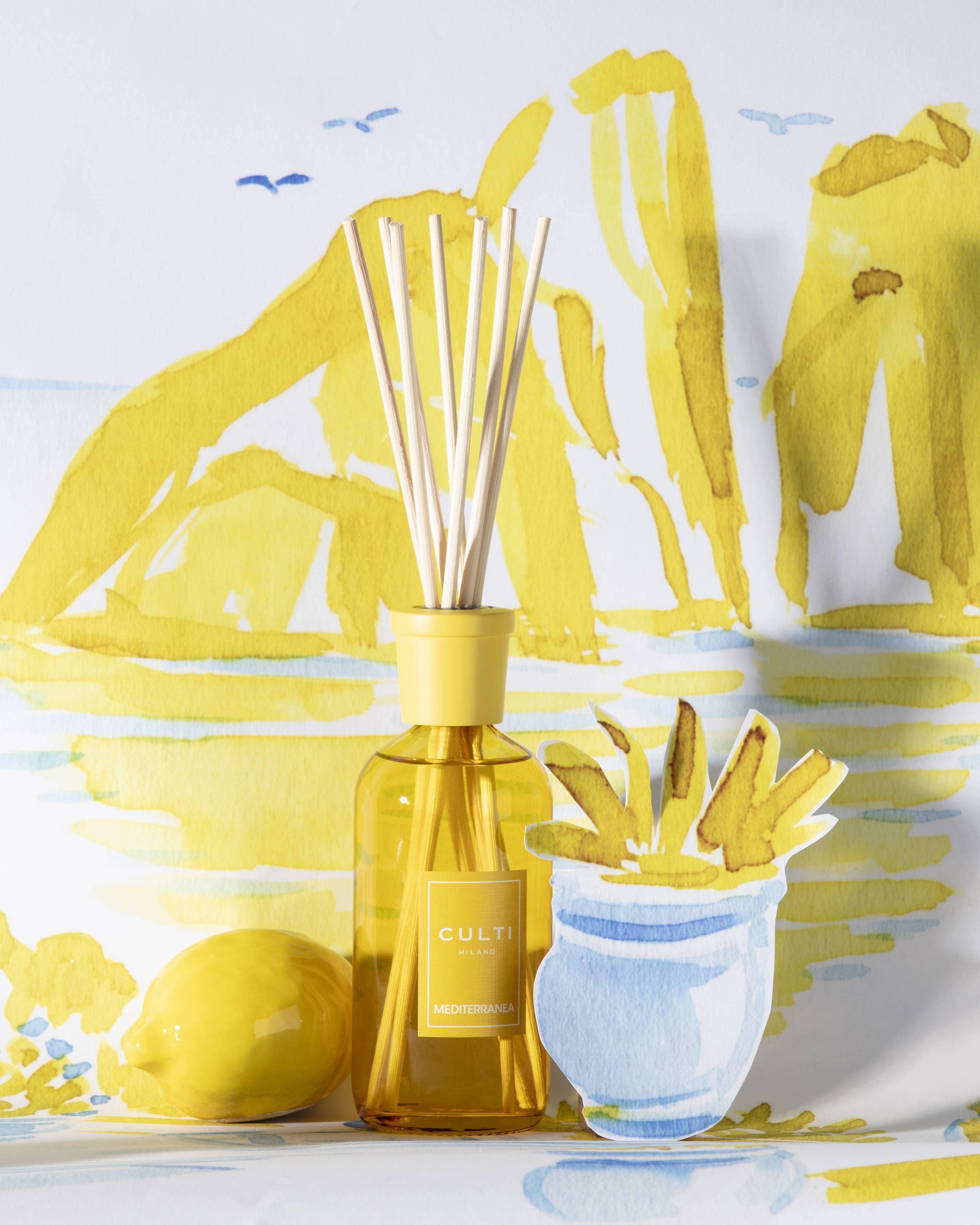
Mediterranea’s transparent yellow glass bottle reflects sunlight, extending Augustus Hotel & Resort’s sensory journey with notes of energy, vitality and freshness. Courtesy press office.
When Hospitality Becomes Performance: The Reinvention of Moëhr
Moving to the French Riviera, in glamorous Monte Carlo, we encounter the pinnacle of luxury and the international jet set. It is here that Moëhr is reborn—a perfume house originally founded in 1881 at the Grand Hôtel de Monte Carlo by perfumer Nestor Moëhr, now revived by brothers Vincent and Nicolas Poylo.
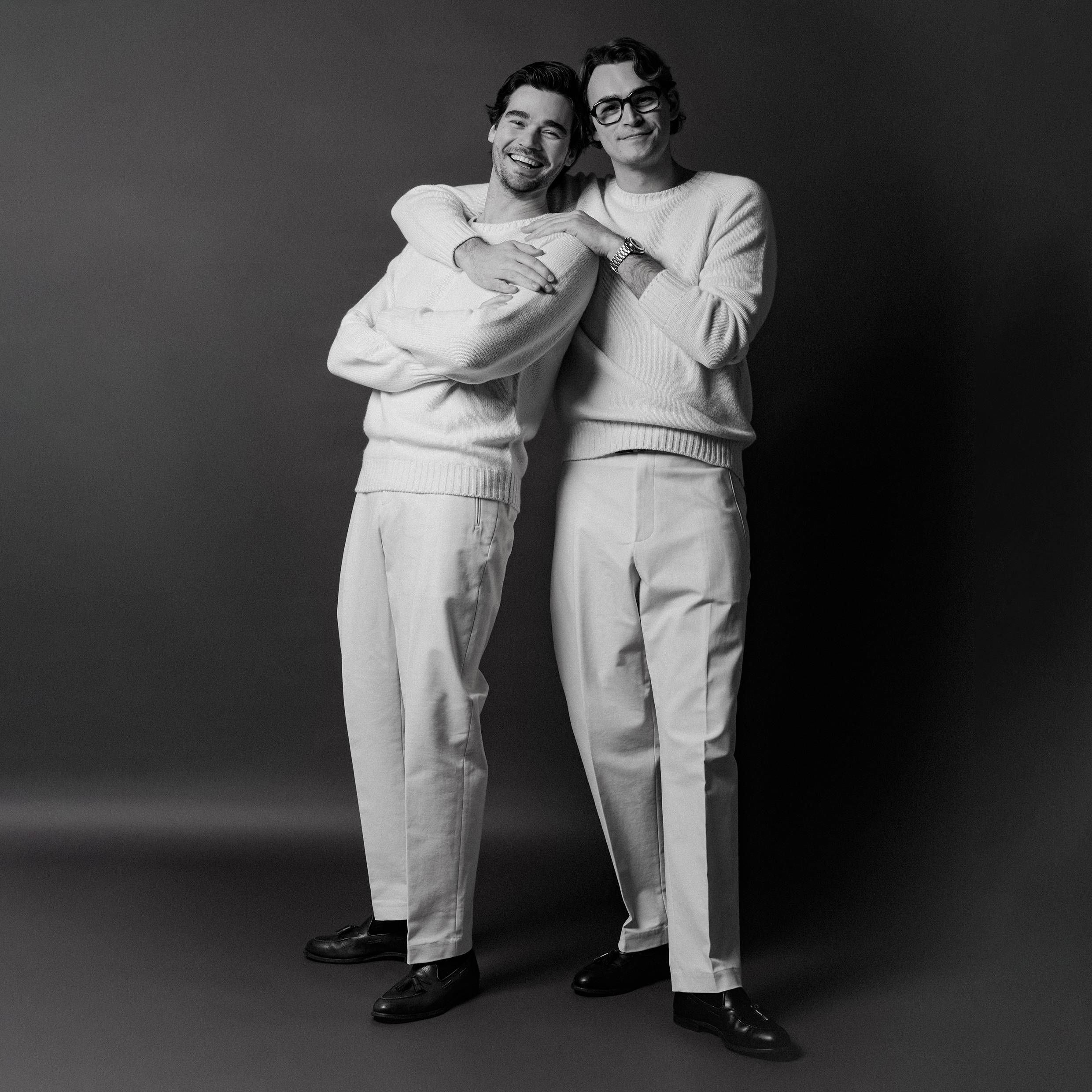
Vincent and Nicolas Poylo revive Moëhr’s Monte Carlo heritage, transforming luxury hospitality into a fragrant performance of Riviera elegance. Courtesy press office. They reinterpret the brand’s universe with an aesthetic inspired by grand historic hospitality, childhood memories of hotel stays, and a burlesque imagination filled with mystery, irony, and gourmand elements.
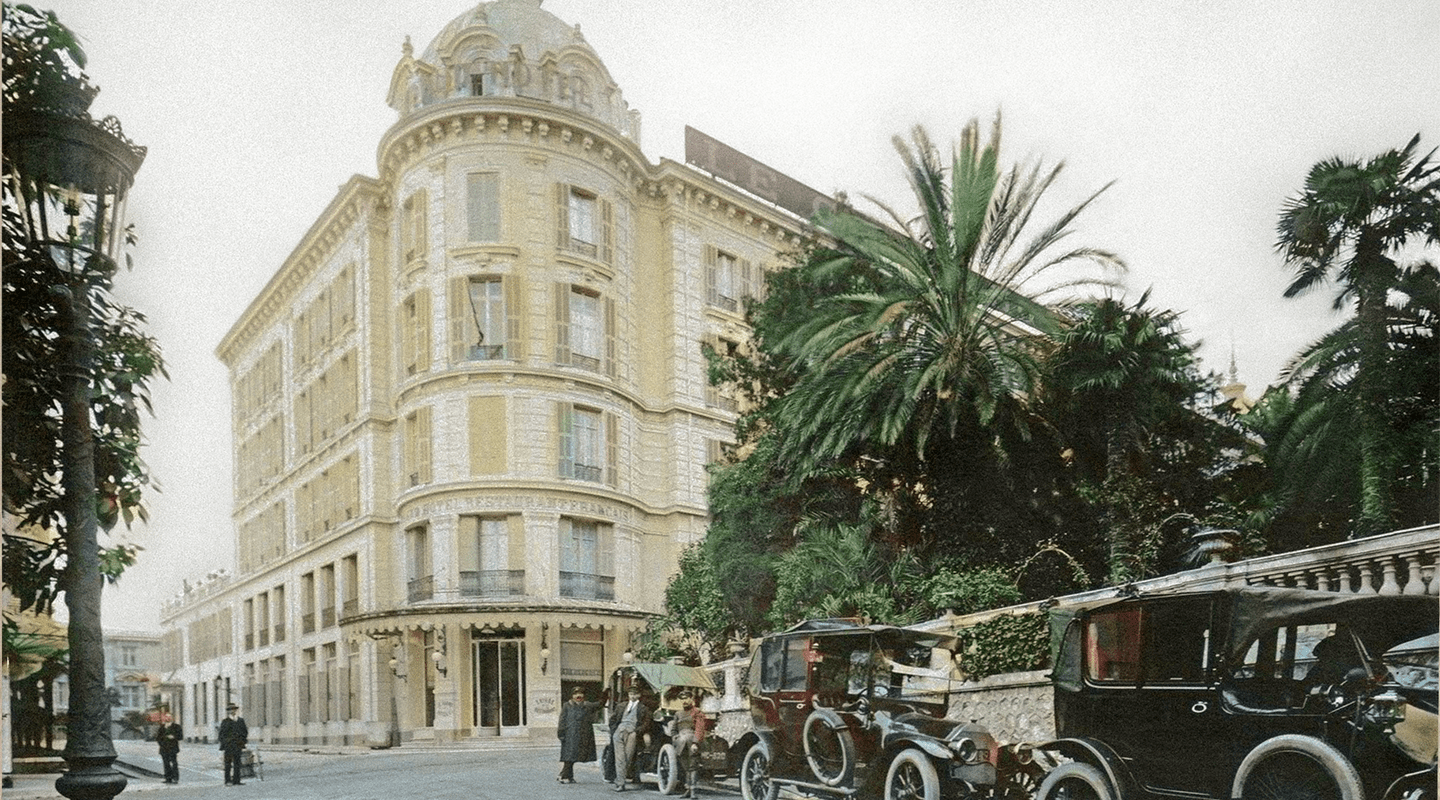
Monte Carlo’s grand hotel heritage inspires Moëhr’s revived universe, where historic luxury, childhood memories and burlesque fantasy meet. Courtesy press office. The collection includes six eaux de parfum, each dedicated to an imaginary guest of the Grand Hôtel and paired with a symbolic dish such as omelette norvégienne, sponge cake with orange blossom, or an amber dessert with cocoa and tobacco. This pairing is intentional: Vincent Poylo comes from a gastronomic background, while Nicolas Poylo hails from creativity and branding. Perfume as a signature dish, and vice versa.
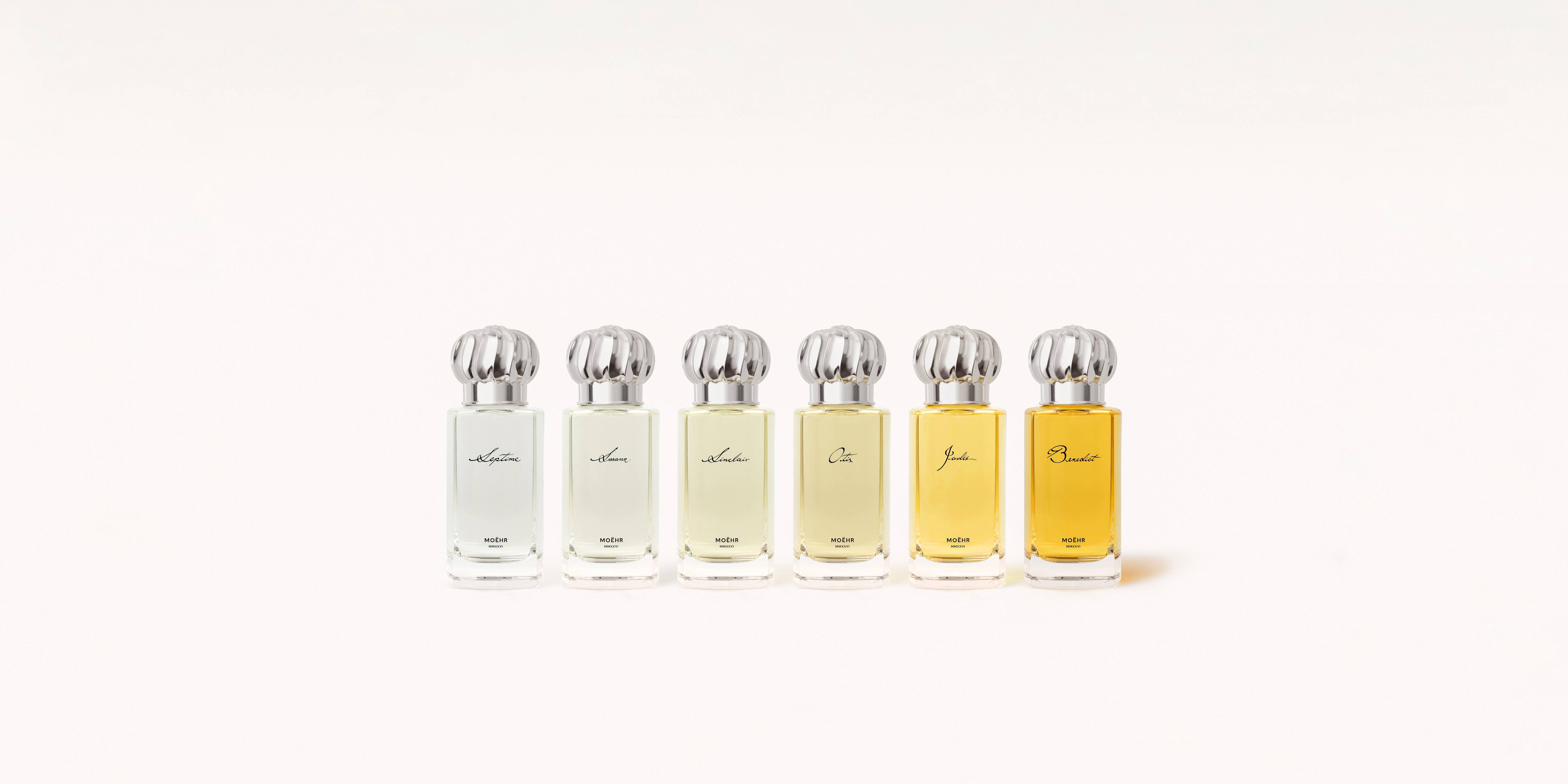
Moëhr’s six eaux de parfum transform imagined Grand Hôtel guests into fragrant characters, blending Riviera elegance with gastronomic memory and theatrical allure. Courtesy press office. Great care was devoted to bottle design. Nicolas Poylo spent years studying antique objects, including bottles, vanity cases and travel boxes, to create something that looks as if it truly comes from the nineteenth century. The zinc cap is inspired by a piece commissioned in 1891 by Nestor Moëhr for his wife; the glass is crafted in Veneto, and the decorations are hand-painted in France by artist Esteban Fuentes de Maria.

Against the Riviera horizon, Moëhr’s world evokes travel, memory and nineteenth-century elegance, echoed in its carefully crafted bottle design. Courtesy press office. The brand’s communication is highly cinematic. The first campaign, Carry the Heritage, follows parkour champion Lilou Ruel as a hotel porter traversing an imaginary Grand Hôtel, delivering a fragrance to the table of chef Mauro Colagreco, symbolically passing heritage to a new generation.
Why Luxury Hotels Are Looking to Perfume for Cultural Identity
When considering fragrance and luxury hotels, thoughts naturally turn to Arabia, mystical deserts, lush oases, sensual and intense fragrances rich in essential oils and low in alcohol. This imaginative landscape defines Amouage, the historic Omani high perfumery house, which collaborated with Mandarin Oriental to create Whispers Of The Fan, an exclusive line of scented amenities available in six products: shampoo, conditioner, shower gel, hand wash, hand and body lotion, and solid soap.
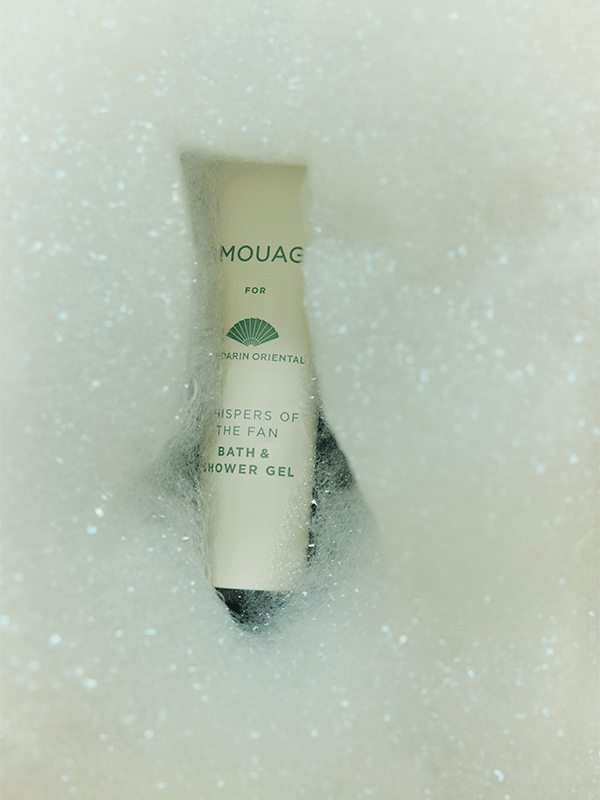
Amouage’s Whispers Of The Fan for Mandarin Oriental turns daily rituals into a scented expression of Arabian luxury and cultural identity. Courtesy press office. How were these fragrances created? To develop them, Amouage Chief Creative Officer Renaud Salmon embarked on a journey to two symbolic locations of the Mandarin Oriental group: Hong Kong, where the Mandarin Hotel was born, and Bangkok, home to the historic Oriental Hotel. Along the way, what struck him most was the constant contrast of Asian cities, where tradition coexists with modernity, tranquillity with chaos, and spirituality with urban dynamism.
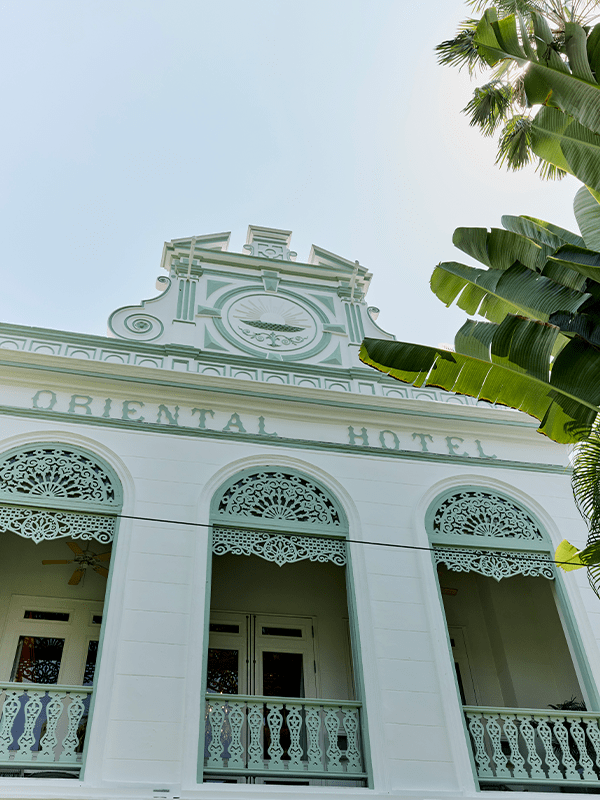
The historic Oriental Hotel in Bangkok inspired Amouage’s Whispers Of The Fan, where Asian heritage, tranquillity and urban energy converge. Courtesy press office. The final inspiration came from the Mandarin Oriental emblem: the eleven-blade fan. This led to the idea of building the fragrance around eleven olfactory notes, one for each blade, creating a subtle yet memorable presence, like a whisper. Hence the name. Among the eleven notes, those that captivated me most include mandarin (linked to the brand name and Chinese rituals), coconut (recalling the palm trees of Bangkok), lotus flower (a symbol of spirituality), tea (a ritual of hospitality), and incense (an olfactory bridge between Oman and Asia).