
-copy-2.png)
Becoming a Product Designer Today
 SHARE
SHAREIn today’s design landscape, the role of the Product Designer goes far beyond the form of an object: it requires method, vision, and the ability to interpret complex needs and transform them into coherent, concrete, and feasible solutions. It is precisely within this balance between creativity and design thinking that the path of Alberto Lago takes shape—an alumnus of Istituto Marangoni Milano Design and now a Product Designer at Lissoni&Partners. Within the studio, he works on highly customized projects, also engaging with the yachting sector, where design becomes an integral part of architecture and the overall spatial experience. The sea, as we will see, often returns as a recurring thread throughout his projects.

Before embarking on a career in design, Alberto gained six years of professional experience in the metalworking industry, covering roles in both production and warehouse operations. A fundamental step that helped him build a clear awareness: the desire to change direction, without improvisation.
“I had very clear ideas about what I wanted to do and who I wanted to become. I was looking for a university that could provide me with creative and methodological skills to conceive a product from start to finish, to channel my creativity and turn it into tangible products—and Istituto Marangoni gave me exactly that.”
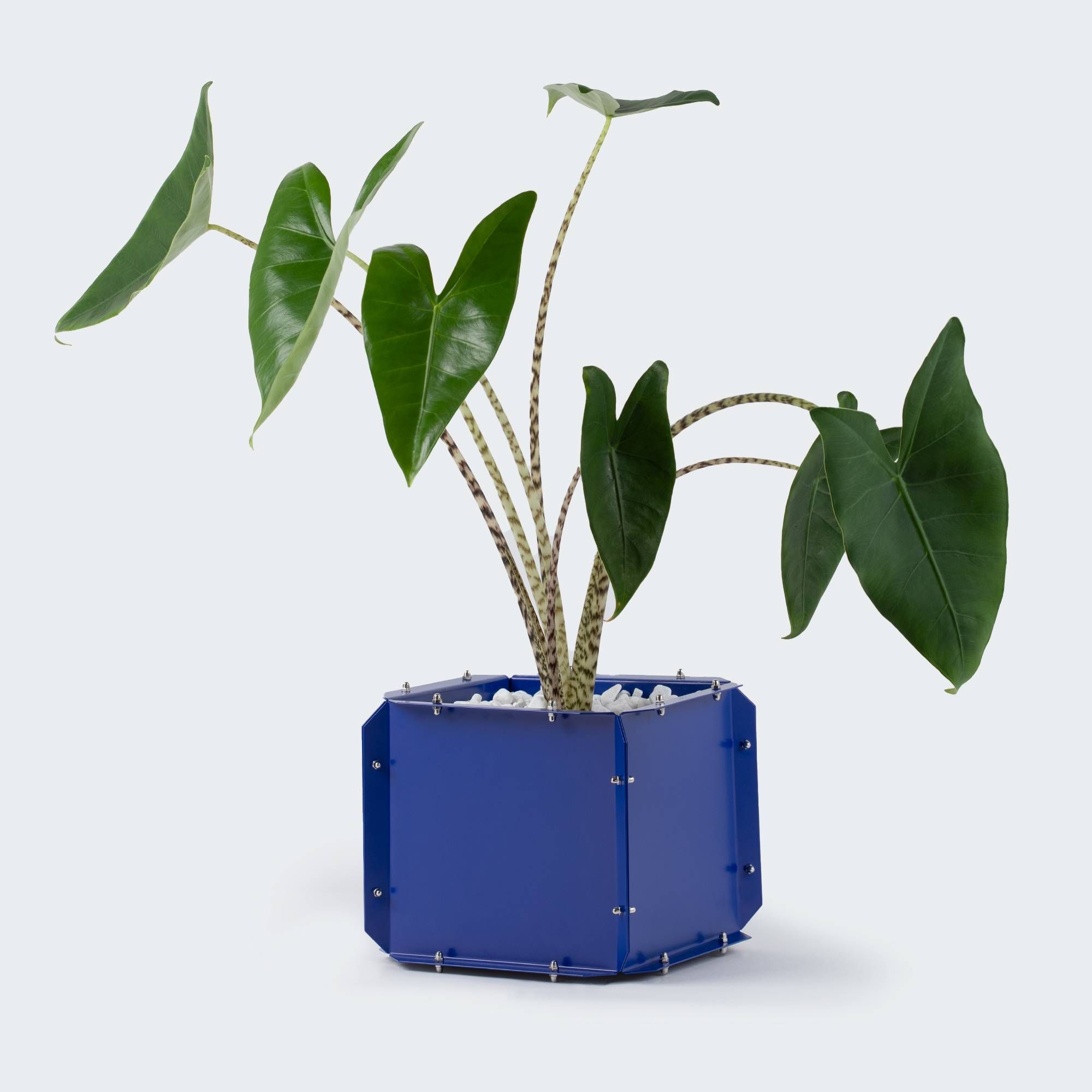
Modular system designed by Imagine, a studio founded by Alberto Lago together with two fellow alumni from Istituto Marangoni Milano Design. Made of stainless steel, the system is based on modular elements that allow a high level of customization, adapting to different functions and contexts—from vases and storage objects to shelving systems or even a TV unit, thanks to its structural interlocking design.
An immersive path between the workshop and a contemporary vision
For Alberto, the experience at Istituto Marangoni Milano Design was not just about education, but a true daily training ground for becoming a designer. A journey lived with intensity and initiative, making the most of every opportunity as a concrete chance for growth.
“I made the most of every opportunity the university offered—I really squeezed it to the core. Whenever I didn’t have classes, I was always in the model-making lab with Lorenzo Bustillos, my Program Leader, asking for feedback on my academic and personal projects, or discussing the latest developments in the design world, from AI to the most interesting projects by leading designers working with prestigious companies.”

Whistle Lamp, a wearable lighting project designed by Alberto Lago. Conceived in Venice, the lamp can be worn on a belt or crossbody, leaving the hands free. Thanks to a flexible internal metal core embedded in the rope, the light can be directed as needed. Originally designed for working on boats, it is adaptable to a wide range of everyday contexts.
It is precisely this attitude—living design as a daily discipline—that Alberto identifies as one of the most valuable elements he took with him from his studies.
“Living your passion every day is definitely what I took with me from Istituto Marangoni Milano Design, and what still guides me today in my work at Lissoni&Partners. Living design in the heart of Milan and being able to contribute to its continuous evolution is a privilege for which I will always be grateful.”
A design approach that starts from space
Today, Alberto works on projects characterized by a high level of customization, where design goes beyond a single solution and instead builds a coherent, integrated system capable of enhancing the overall experience.
His method is guided by a clear and consistent principle:
“My design approach is always the same: designing open spaces.”
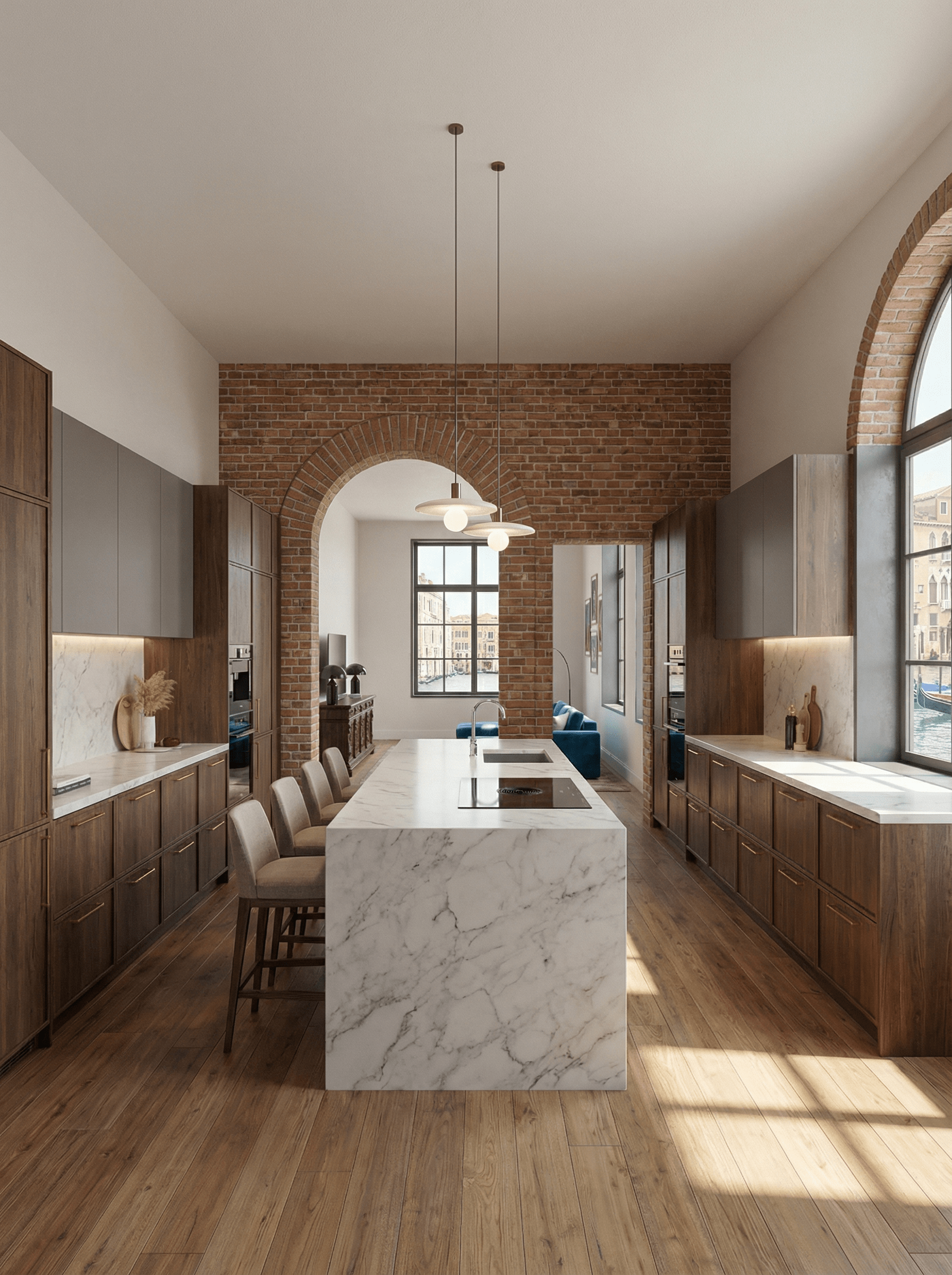
Even when working on rooms or furniture, the focus remains on creating visual continuity, reducing the visual impact of elements, and conveying a sense of openness and breathing room.
“In custom design, I always try to integrate products into the architecture, preferably through material continuity. This approach reduces the visual impact of furniture, creating wider views and making spaces feel larger.”
For Alberto, this mindset represents a clear departure from a certain type of traditional design, often more centered on the object as the main protagonist.
“It is the opposite of traditional design, where the focus is on the product, often conceived as the central and distinctive element.”
From concept to detail: a process built on listening and structure
In contemporary design, the ability to manage diverse inputs and multiple visions is a crucial skill. Alberto describes it very directly: those commissioning a project often don’t have “too few ideas,” but rather too many—and that is exactly where method becomes essential.
“Believe me when I say that they often have too many ideas, not too few. Yet despite the multiple visions, the workflow always remains the same.”
The process begins with understanding how spaces will actually be used, gradually moving toward a complete definition: layout, moodboard, materials, colors, and final choices. A project built step by step, through meetings and progressive validations.
“In the first meetings, we focus on how the spaces will be used. Then we define the room layout. With clients, we develop an initial moodboard that becomes the foundation of the project, which we present step by step during subsequent meetings.”
Attention extends all the way to the smallest details, without ever losing coherence:
“We start from the overall architecture and go all the way down to defining the color of the cushion fabrics and the artworks on the walls. Every detail is conceived and designed by us, always in line with the client’s aesthetic preferences.”

Seaside Collection, a furniture collection designed by Alberto Lago. Characterized by slightly elastic ropes, the pieces are conceived to move gently with a light breeze, evoking laundry hanging from windows and terraces in coastal towns. A project that brings a subtle sense of the sea into everyday spaces, translating maritime imagery into design.
Curiosity and identity: the skill that makes the difference
To those approaching the world of design today, Alberto offers clear advice—one that speaks more about mindset than technique: explore, experience, be curious.
“Navigate. I don’t mean it in the literal sense, but as an invitation to explore the world that feels like yours—whether it’s music, art, product design, or naval design. You have to be curious.”
For him, one of the strongest assets in decisive moments—such as job interviews and entering the professional world—has been personal experience, because it builds both identity and credibility.
“The elements that had the greatest impact during my job interviews were precisely my personal experiences and my identity.”
And from here comes the most important lesson: truly knowing the field you want to work in, deeply and beyond theory.
“A deep knowledge of the sector you work in is one of the fundamental foundations for becoming a good designer.”
 GET IN TOUCH VIA WHATSAPP