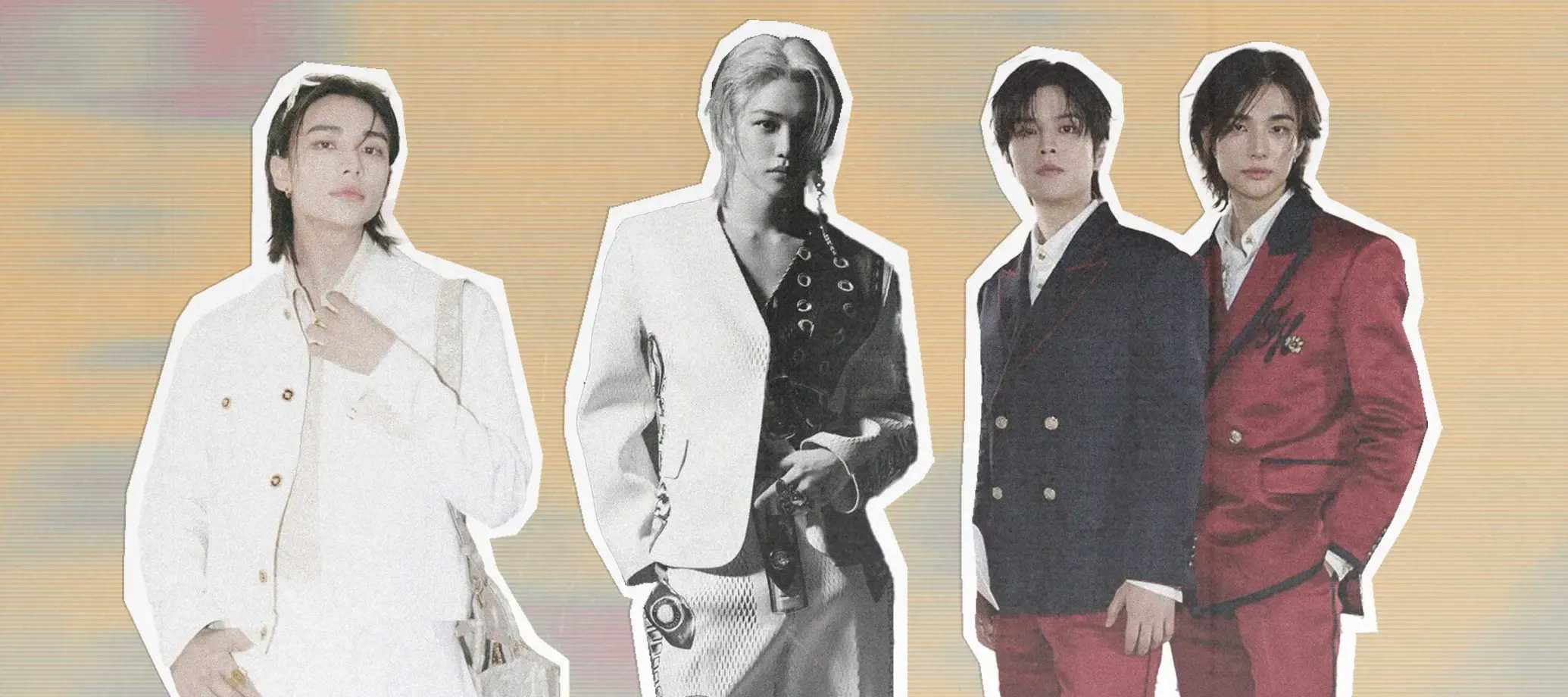

Could these albums become the next fashion icons?
From Aphex Twin to Arca, Ecco2k and Yaka, an exploration of album covers and music identities shaping fashion and contemporary visual culture
From Aphex Twin to Arca, Ecco2k and Yaka, an exploration of album covers and music identities shaping fashion and contemporary visual culture
Why Album Covers Still Matter in the Streaming Era
No creative has ever thought of album covers as simple visual add-ons to music. For decades, album artwork sparked conversation, became collectable, and stood as a form of graphic design, image-making and cultural symbolism—sometimes as influential as the music itself.
In the streaming era, however, this conversation has largely faded from the mainstream, as music is increasingly consumed through playlists and thumbnails.
Yet album artwork has not disappeared—it has just evolved. Now it thrives in a more selective, design-driven niche where visual ambition and conceptual depth are as bold as ever. For fashion designers looking for new references, this is precisely where the spotlight should be.
Some of today’s most exciting, often underground releases move seamlessly between music, fashion, internet aesthetics and generational identity. From Aphex Twin’s unsettling iconography to the hyperreal visual codes of post-internet pop, album covers still shape how contemporary culture looks, feels and circulates.
In this piece, Shanghai-based student Siwei Wang examines a selection of recent albums whose visual language hints at a future that goes beyond music alone. By connecting electronic music, experimental pop and fashion symbolism, she asks a central question: which albums are poised to become the next fashion icons? This article charts some of the most iconic album covers from artists shaping today’s aesthetics, spotlighting music projects whose visual presence is already influencing fashion, streetwear and digital culture. If you’re seeking to understand where contemporary cultural symbols are born, Siwei Wang argues, you should start by looking at music.
When an Album Becomes a Fashion Symbol
Music and fashion have always been inseparable. From Raf Simons paying homage to Joy Division and New Order by turning album covers into prints, to Alexander McQueen and Nick Knight collaborating on Björk’s Homogenic cover, and Takahiro Miyashita printing Kurt Cobain’s portrait on T-shirts as a visual symbol, designers’ tributes as music fans have simultaneously amplified the discourse and depth surrounding musical works.
In this article, I’m diving into a lineup of albums with visuals bold enough to become the next big fashion symbols.
Visualizza questo post su Instagram
Aphex Twin: Album Covers, Visual Identity and Cultural Legacy
Let’s start with two landmark ambient albums—The Richard D. James Album and Selected Ambient Works 85–92—both written and produced by the Irish musician Richard D. James, aka Aphex Twin. These serve as perfect examples of what makes an album visually iconic and how that symbolism translates into fashion.
The Richard D. James Album, released in 1996, represents one of Aphex Twin’s most accessible yet conceptually complex works. Selected Ambient Works 85–92 (often called SAW85–92 or SAW 1) is an ambient techno album composed and produced earlier in his career—recorded in 1992 for the Belgian techno label R&S Records and later remastered in 2008, it is his third release under the Aphex Twin alias.
Both albums are musically groundbreaking, earning exceptionally high ratings from mainstream music critics like Pitchfork and rave reviews from fans on platforms like Rate Your Music.
Visualizza questo post su Instagram
When discussing ambient music, Aphex Twin stands as a key figure in music history, right up there with Brian Eno. His tracks are full of powerful memory anchors. While preserving ambient music’s signature dreamy, gentle sonic qualities, he ingeniously disrupts its original layering by introducing deliberate glitches and unexpected sounds that rewire the listener’s expectations.
As Gilles Deleuze put it: “It leaps from chaos to the beginning of order, yet at every moment, it faces the danger of collapse and disintegration. A sonic thread runs through Ariadne’s line. Or perhaps Orpheus’s song.” Selected Ambient Works 85–92, on the other hand, strips things back: its cover turns the classic tuner shape into a bold symbol, primed to become a totem or even a fashion pattern. Aphex Twin’s visuals are just as iconic as his music, offering a direct line into the world of fashion. Collaborating with visual artists such as director Chris Cunningham, he translates his sound’s unpredictability into visuals that are eerie, terrifying, humorous, and instantly memorable.
Visualizza questo post su Instagram
A recurring motif throughout Aphex Twin’s visual history is his digitally distorted face, perpetually frozen in an uncanny grin. This visage appears in grotesque, comical, and terrifying forms, becoming his most recognisable personal logo. This grin conveys not joy, but rather a digitally crafted mask—a playful deconstruction of the “artist persona” itself, equal parts creepy and alluring, as seen on the cover of The Richard D. James Album. Selected Ambient Works 85–92, by contrast, strips things back: its cover turns the classic tuner shape into a symbol, primed to become a totem or even a pattern.
The Albums Defining Today’s Visual and Fashion Imagination
Once visual and musical memory anchors are firmly in place, an album can operate as a fashion symbol. The following releases strike me as some of the most compelling recent examples of this potential.
-
Ecco2k’s E
Art Pop, Cloud Rap, Internet Aesthetics and Fashion Identity
Ecco2k—a Swedish artist, designer, and member of the Drain Gang collective—dropped his debut album E (stylised as ℮) in 2019. It’s a drifting journey between wakefulness and slumber, floating between ambient textures and airy vocals. Drawing from Cloud Rap, Ambient Pop, Electronic, and Glitch, the album constructs a weightless, introspective soundscape that has since become a go-to reference for today’s internet-driven music aesthetics. -
The Hellp’s LL
Electroclash, 2000s Dance Music and Club Culture Revival
The Hellp are a Los Angeles–based electronic duo known for their raw, performance-driven approach to club music. Their 2024 release, LL, mashes retro aesthetics with contemporary electronic production—think gritty Electroclash textures, early-2000s dance beats, distorted basslines and warped synths all in one mix. The tracklist unfolds like a high-speed ride through fragments of past and present, filtered through a deliberately abrasive, lo-fi lens. -
Oklou’s Choke Enough
Electronic Music, Intimacy, Isolation, and Album Artwork as Narrative
Oklou is a French electronic musician, singer, and producer based in Paris, known for her introspective approach to experimental pop and electronic music. Released in 2025 after more than two years in the making, her album Choke Enough shows just how personal the creative process can get. The indoor scene on the album cover recreates an actual hangout at Oklou’s Paris apartment, where she frequently met with friends while making the record.
Even surrounded by people, she consistently experienced a “decentred sense of self” (as she stated in an interview: “my heart and conscience have really decentred from myself”). Her friends by the window in the background represent her real crew, while the close-up of herself in the foreground embodies an “inner perspective detached from the outside world.”
The layered multiple exposures capture the contradictory state of being “in a crowd yet isolated.” -
Arca’s Arca
Experimental Music and Visual Identity
Arca (born Alejandra Ghersi) is a Venezuelan experimental electronic musician, singer, and visual artist known for radically subverting traditional electronic soundscapes. Active since the early 2010s and frequently collaborating with boundary-pushers like Kanye West and Björk, her work blends industrial noise, glitchy electronics, and Latin rhythms, always pushing the envelope with warped vocals and fragmented beats. Her 2017 self-titled album, Arca, was a decisive shift in her practice, transitioning from producer-led compositions to a voice-centred approach.
The opening track “Piel” builds an intimate atmosphere through breathy vocals and sustained synths; “Anoche” intertwines Spanish lyrics with metallic clashes for a dark, sensual feel; “Urchin” simulates the distortion of a digital body through glitchy effects and shifting rhythms.
Throughout the album, the human voice functions as the primary experimental medium, exploring the convergence of identity, flesh, and technology. -
Yaka – Jungle +
Jungle, Rap Music, Chinese Pop Memory and Contemporary Visual Culture
Released on November 14, 2025, Jungle + is the second project by Shanghai-born, Brooklyn-based artist Yaka, continuing the momentum that has been reshaping conversations around China’s underground music scene. After the breakout success of his debut album, Yaka quickly emerged as one of the scene’s most closely watched voices, recognised for his distinctive vocal manipulation, textural layering, and a sound that feels unmistakably his own. Building on that foundation, Jungle + pushes his practice further, diving deeper into sampling techniques rooted in classic Chinese pop.
The project incorporates familiar melodies from iconic artists like Faye Wong, Sam Hwang, and Jay Chou.
Through recomposition and transformation, voices from the past are reframed and given fresh life within a contemporary sonic framework. The project also features collaborations with artists from his close creative circle, including 99god, delphia!, P-Kid, and Death Souljah, adding further layers to the world he constructs.
Yaka’s approach is rooted in his early listening habits. Growing up, he absorbed whatever his father played in the car—from Chinese pop to Western radio and CDs spanning all genres—which led him to focus on sound over lyrics. As he has noted, forgetting lyrics and instead humming fragments became his earliest form of composition.
Visually, Yaka’s distinctive colour palette and the use of Chinese characters function as unmistakable anchors, reinforcing the album’s identity through both sound and image.



.jpg)