
The Fondation Azzedine Alaïa and the future of fashion archives
Olivier Saillard on the Fondation Azzedine Alaïa and the evolving role of fashion archives in shaping tomorrow’s industry
Olivier Saillard on the Fondation Azzedine Alaïa and the evolving role of fashion archives in shaping tomorrow’s industry
Innovation through Heritage: The Fondation Azzedine Alaïa in the Digital Age
The fashion system bears the strain of relentless speed: compressed calendars, perpetual visibility, accelerated production cycles, and immediacy. In contrast, the Fondation Azzedine Alaïa is guided by a different premise: treating the archive as a working space and time as a creative discipline.
This premise is not merely theoretical. It shapes the Foundation’s institutional programme and informs the way its archive is activated today. As part of an Industry Project at Istituto Marangoni Milano, students are invited to develop a digital content and cultural media strategy for the Fondation Azzedine Alaïa in Paris, whose mission extends beyond preservation. The Foundation safeguards Azzedine Alaïa’s work alongside the art, fashion and design he collected throughout his life, organises exhibitions, publishes scholarly volumes and sustains cultural and educational initiatives that extend his intellectual legacy.
Introduced with an encounter featuring Carla Sozzani, Founder and President of the Fondation Azzedine Alaïa, and Olivier Saillard, its Director, the project considers how the Foundation’s archive and cultural programme can be articulated for a global audience shaped by digital culture.
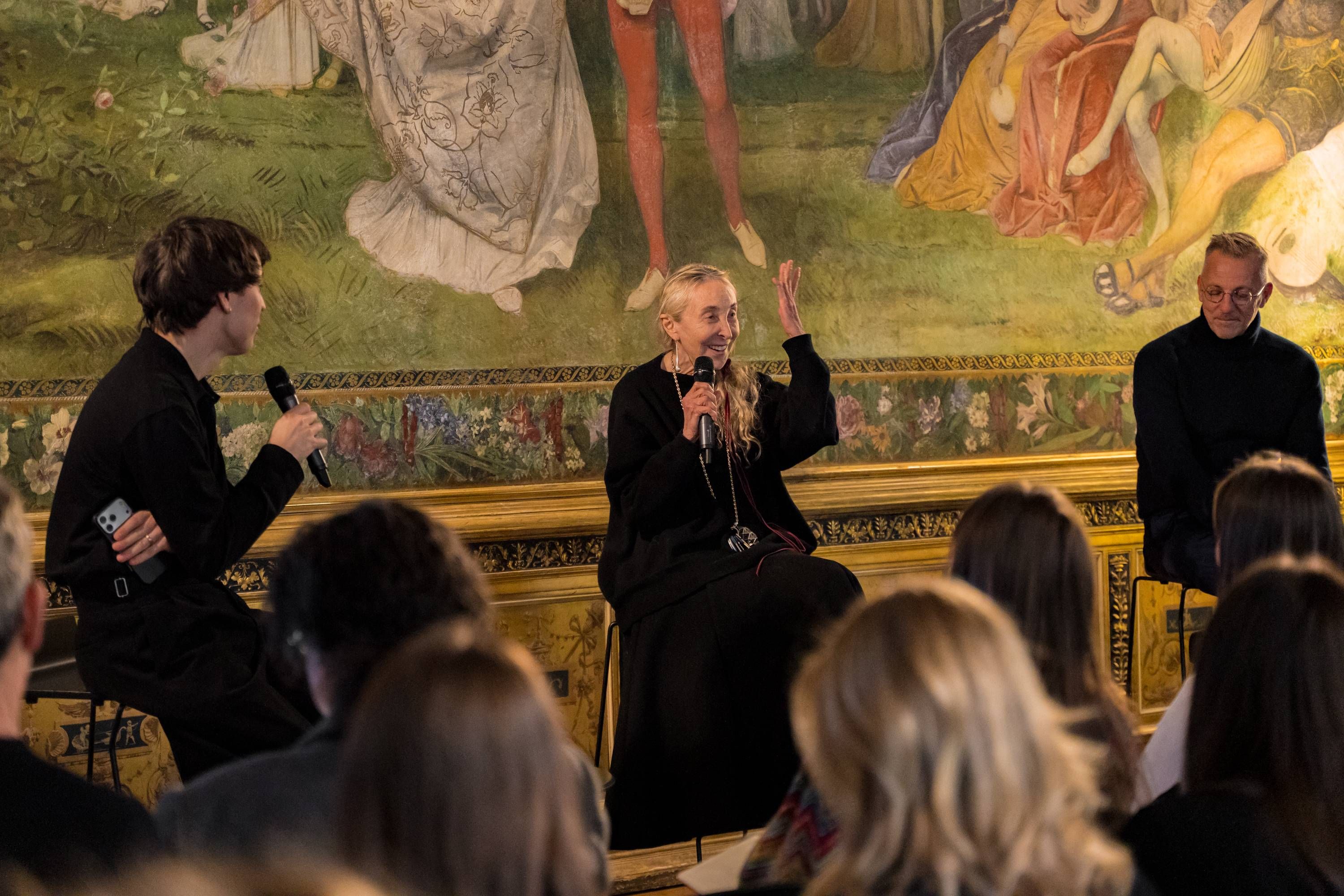
In conversation at the Milano School, Olivier Saillard and Carla Sozzani discuss heritage, digital visibility and the evolving role of fashion archives in contemporary culture Acting as digital strategists and creative communicators, students explore new approaches to visibility and engagement, situating their work within a broader reflection on the role of fashion archives in today’s economy. Far from static repositories, archives remain indispensable to the fashion landscape: ecosystems of memory, technique and cultural identity that preserve sketches, prototypes, patterns and original garments, granting designers, researchers and historians access to the processes that shaped entire eras. In doing so, they restore a different rhythm—one of slow observation, material analysis and critical understanding—conditions that underpin meaningful innovation.
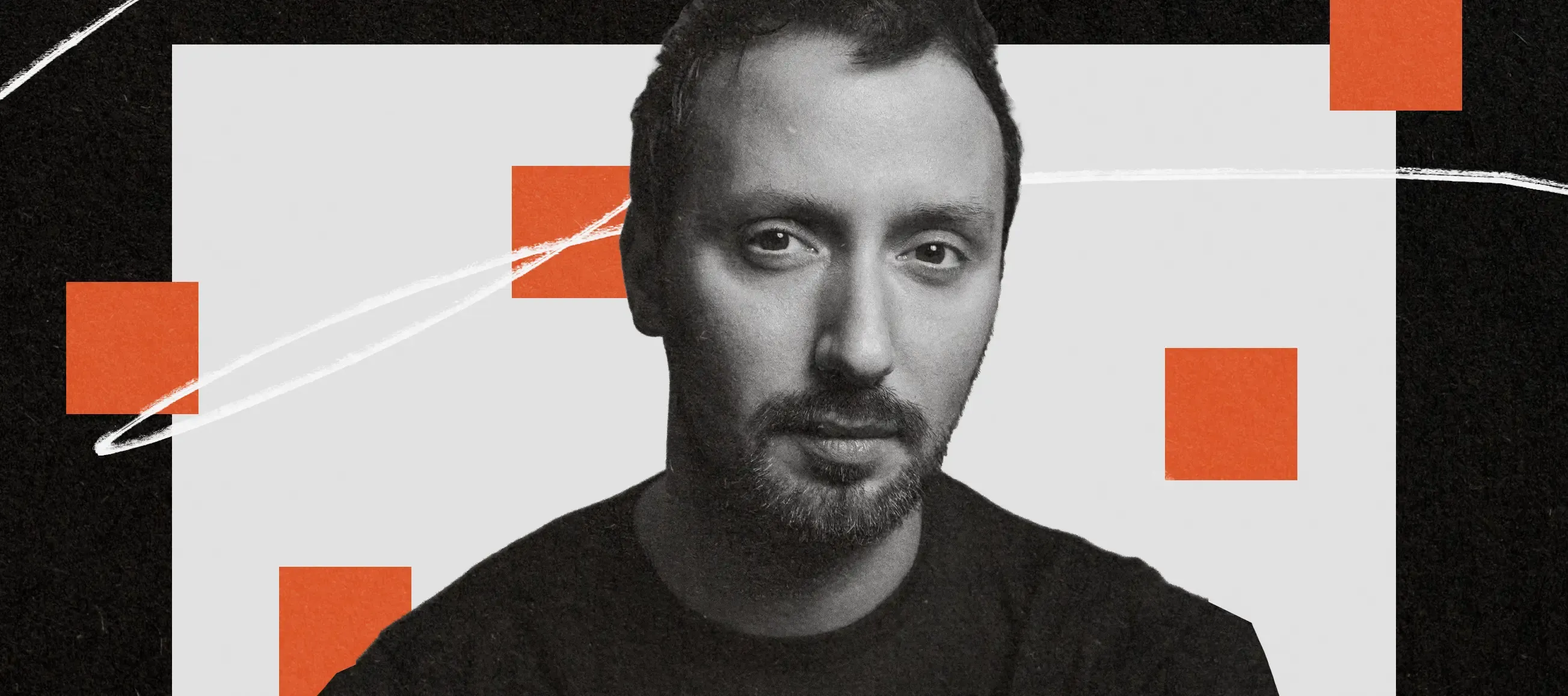
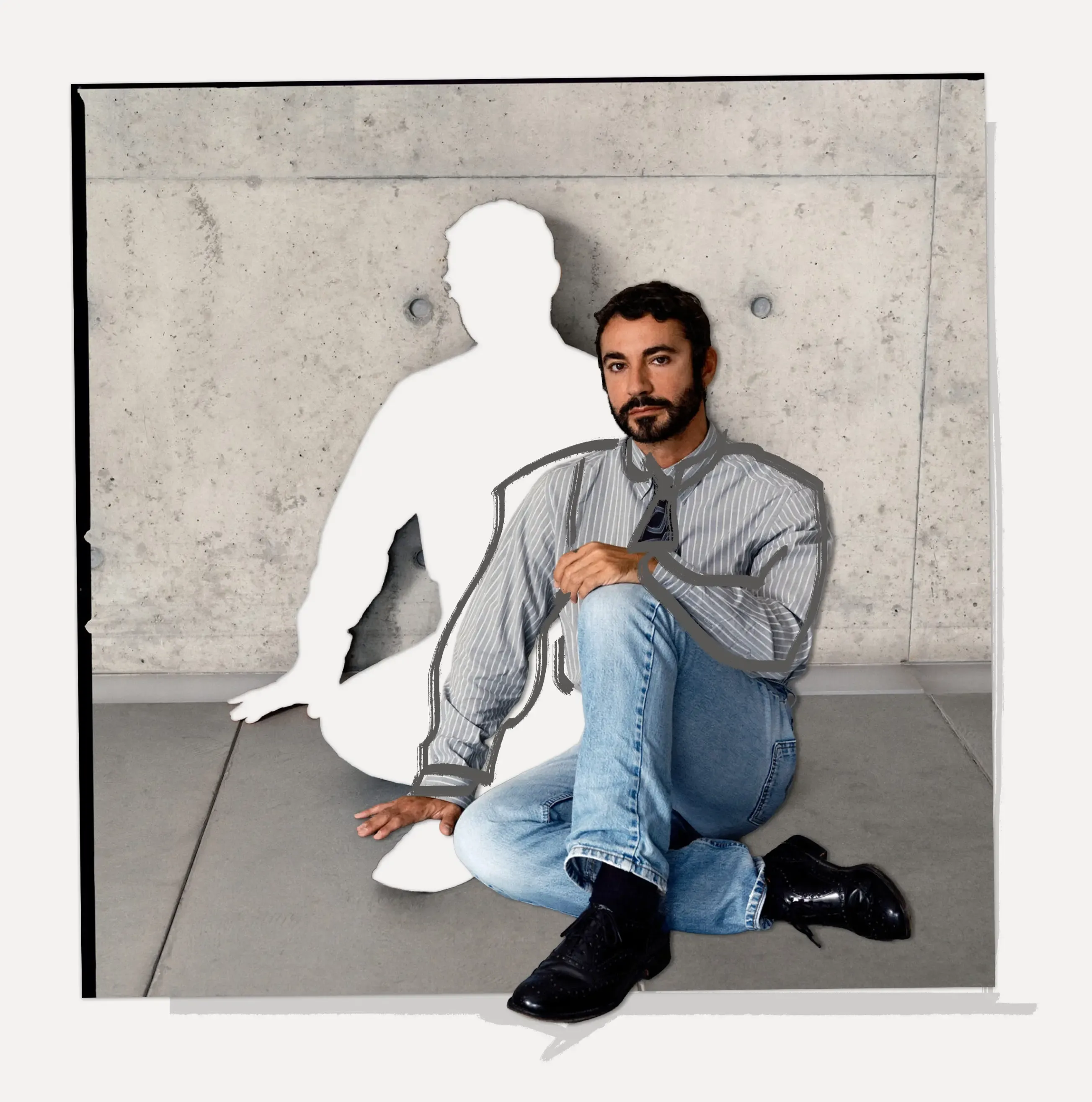
Widely regarded as one of fashion’s most influential historians, Olivier Saillard previously directed the Musée de la Mode de Marseille and later the Palais Galliera, the Fashion Museum of the City of Paris. He curated the first Alaïa exhibition in Paris and now oversees artistic and cultural direction at J.M. Weston while leading the Fondation Azzedine Alaïa. In this exclusive conversation with Maze35, Saillard reflects on fashion heritage, the living legacy of Azzedine Alaïa and the evolving role of archival research in fashion education.
The Fondation Azzedine Alaïa: Preserving Heritage as Creative Infrastructure
Fashion heritage becomes relevant only when it remains operational. At the Fondation Azzedine Alaïa in Paris, the archive is not a static repository but a living creative infrastructure—accessible, studied and reactivated in the present.
How does the Fondation Azzedine Alaïa transform heritage into a creative resource?
We are entrusted with preserving the entirety of Monsieur Alaïa’s creations, not only to share them with the public but also, as agreed, to make them accessible to the Maison Alaïa design studio. This responsibility keeps his heritage collection alive, allowing it to inform and inspire contemporary creativity. Our mission, however, extends further. We seek to reveal the many ways a garment can come to life beyond the act of drawing—through technique, construction and, above all, in Azzedine Alaïa’s case, through the mastery of cutting and craftsmanship. These practices remain essential to understanding his work and the depth of artistry behind it.
How the Alaïa Archive Operates as a Research Laboratory
In today’s fashion industry, archival research serves as a powerful source of innovation. The Alaïa archive stands as a site of inquiry: it is not simply a repository of finished garments but a working laboratory in which time, materiality, and process can be examined up close.
Can fashion archives function as true research laboratories in the digital era?
There is a certain virtue in slowness, in allowing time to unfold at its own pace. Nothing should be rushed. We have just finished reorganising an entire second floor of photographs, and the process itself serves as a reminder: we must trust the pace of archival work; it cannot be forced. Archives possess a kind of poetry that the digital realm rarely captures. You might spend a day sorting dresses or leafing through papers, and then, suddenly, the corner of an envelope catches your eye—a handwritten name on it, and something stirs. One day, we came across a thank-you note from Yves Saint Laurent to Azzedine Alaïa. In that moment, the archive revealed its magic: the quiet thrill of discovery, the beauty of the unexpected. It is a form of poetry that still exists—something the digital world, for all its efficiency, cannot fully replicate.
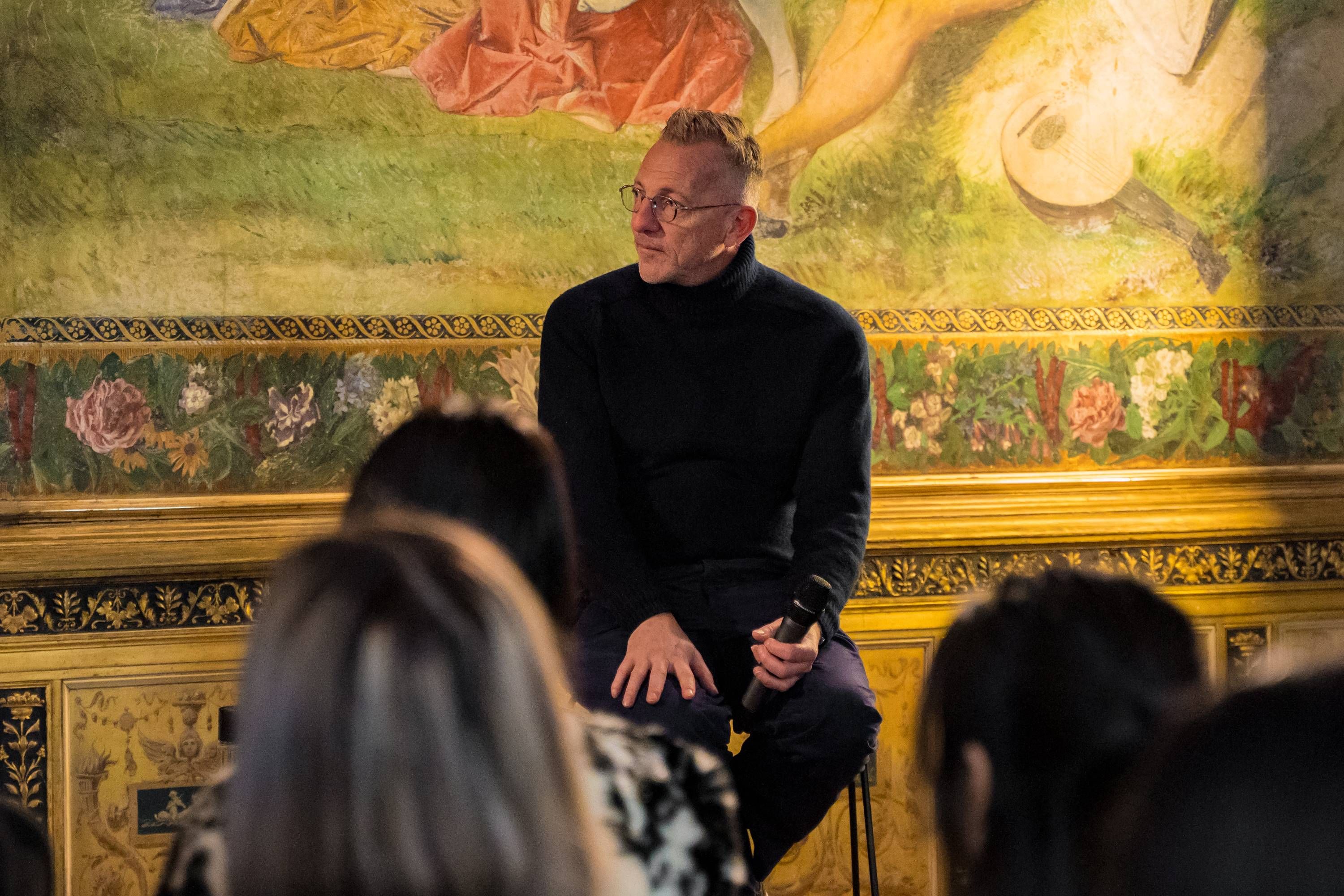
Olivier Saillard at the the Milano School, reflecting on fashion archives as creative infrastructure and the urgency of reclaiming time within today’s accelerated industry
Olivier Saillard on Time, Attention and Digital Acceleration in Fashion
The contemporary fashion system is defined by speed, visibility and constant digital circulation. In this environment, the archive stands as a counter-model that restores attention, duration and material presence.
Why is time becoming fashion’s most contested resource?
Working with archives demands time—real time. I believe Monsieur Alaïa always approached time in a profoundly different way. It is a crucial distinction, especially today. At times, I find myself scrolling Instagram, losing an entire hour to the most meaningless things. The truth of the archive lies in the physical object itself: its weight, its texture, its imperfections. No screen and no amount of digital distraction can replace that reality.
Why Physical Archives Still Matter in Fashion Education
The debate around archives extends beyond institutions and into classrooms. For emerging fashion designers, direct contact with garments may determine how they understand craft, proportion and memory within today’s industry.
How does direct contact with archives shape the education of young fashion designers?
A clear distinction will likely emerge among tomorrow’s creators: those who have learned their craft exclusively through screens, and those who have ventured into libraries and archive boxes, encountering garments in their tangible form. As any university researcher knows, not everything can be found online; at a certain point, one must step into a library. Museums, art centres and even schools safeguard archives of their own. It’s this direct encounter with archival materials that, in my view, restores a sense of physicality to creation and, just as importantly, a sense of memory. Someone remarked earlier that fashion began to look the same the moment we exchanged pencils for computer mice. Perhaps there is some truth in that. We need to reclaim a certain awkwardness—almost a forbidden word in today’s classrooms—because awkwardness, too, has its beauty. Mistakes have their beauty.
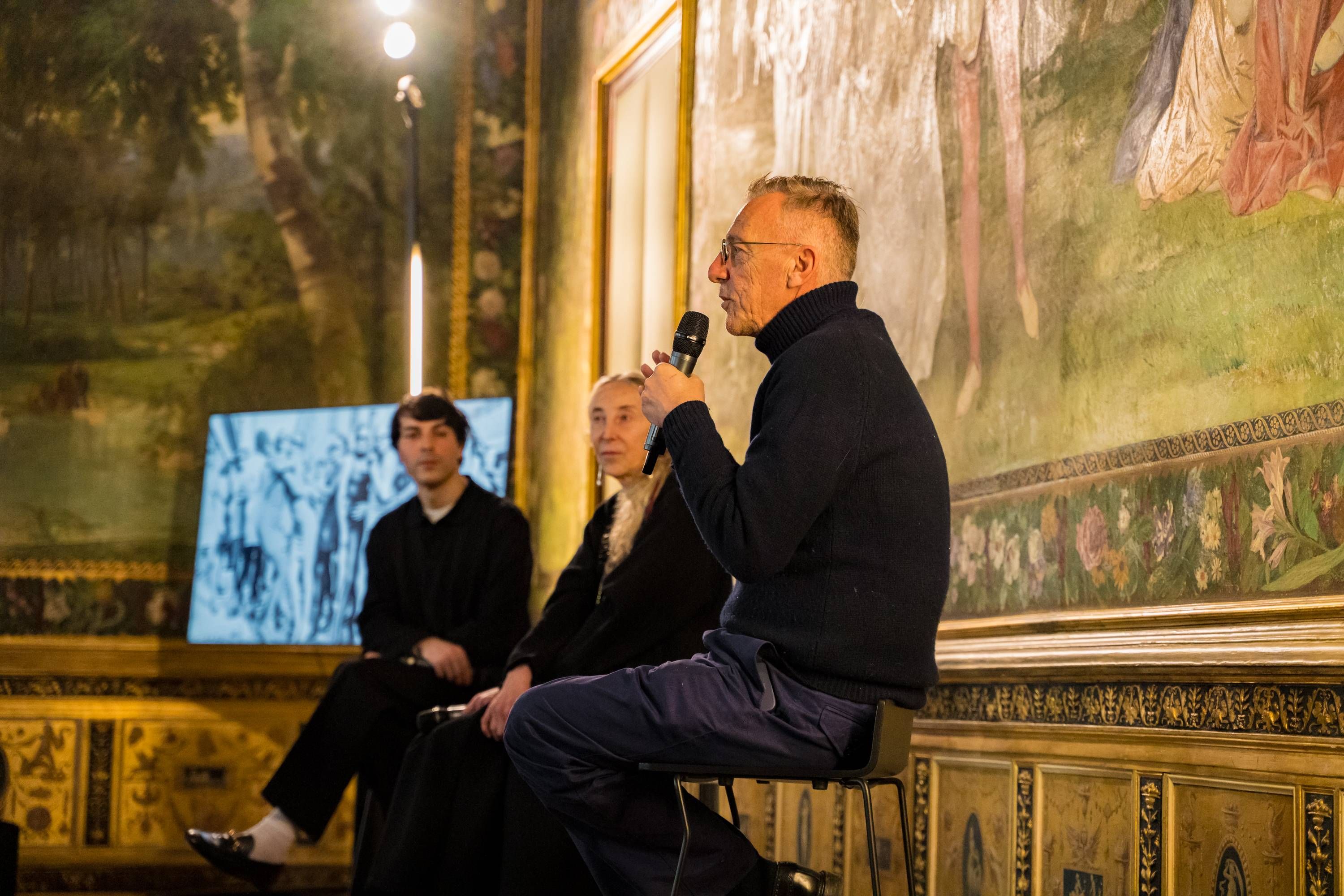
Saillard addresses students on the value of archival research, advocating for slowness, material study and direct contact with garments in fashion education Beyond Six Collections a Year: Rethinking the Fashion System
If the archive introduces another rhythm, it also exposes the fragility of the current production model. The structure of the contemporary fashion calendar intensifies creative pressure and accelerates output. Reconsidering time, scale, and expectation may be central to restoring depth within the system.
Looking at Azzedine Alaïa’s legacy, which lesson feels most urgent for a fashion system in search of direction and for the next generation of designers, curators and historians?
Beyond his extraordinary talent, Azzedine Alaïa cultivated a different relationship with time. He never felt compelled to present collections incessantly; instead, he chose a rhythm that sustained his vision without jeopardising his work. Another designer comes to mind: Martin Margiela, who created an entirely new system for presenting, making and revealing fashion. Both offer a crucial lesson: our relationship with time demands reconsideration. There is no real need to produce six collections a year. For emerging designers, the objective is not necessarily immediate absorption into a major luxury house. A collection need not comprise 30, 60 or 90 looks. In fact, I would be delighted to see a young designer present a collection built around a single look. To me, that would feel genuinely contemporary. Ultimately, it is not creation itself that is at stake, but the tempo we assign to it: the time we allow it to take and the space we give it to exist.
Should fashion return to the past to move forward?
Yes, but the past is never truly recreated. At best, we approach it through the language of the present, for there is no alternative. What must be reclaimed instead is the true luxury of our time: time itself, and space. Almost everything else is accessible today. Even without significant means, one can dress like those who possess them—often with greater imagination. In my experience, wealth rarely equates to style; constraint, by contrast, tends to sharpen creativity. For creators, this is the real shift that needs to occur: a renewed relationship with the system, with time and with the space that ideas need to grow. Only then can creation truly breathe. In an industry that accelerates by the minute, where trends are born and vanish at the speed of a swipe, archives stand as sites of depth, memory and meaning. They remind us that fashion is not merely a succession of collections, but an ongoing conversation between past craftsmanship and future imagination.
Silvia Tarini
Editor, Milano