

Neil Barrett reflects on British menswear, creative identity and fashion education during an exclusive conversation with students at Istituto Marangoni London
Neil Barrett, listed among the BoF 500, stands as one of the most influential figures in British menswear, recognised for redefining the modern wardrobe through a precise balance of tailoring, minimalism and innovation. Drawing on a family legacy of bespoke tailoring and a passion for technical experimentation, Barrett began his career at Gucci before joining Prada, where he launched and shaped Prada Menswear. There, he pioneered a new approach to contemporary tailoring that fused Italian craftsmanship with sportswear influences.
In 1999, he founded his namesake label, NEIL BARRETT, debuting in Milan with collections defined by sharp construction, understated aesthetics and innovative use of performance fabrics. His distinctive approach to modern menswear has attracted international icons such as Brad Pitt, Justin Timberlake and Orlando Bloom, firmly placing the brand at the crossroads of luxury fashion, functionality and cultural relevance.
For Barrett, fashion is more than form—it is a vehicle for identity, innovation and relevance. As Fashion Programmes Mentor at Istituto Marangoni London for the 2025/2026 academic year, he brings decades of industry experience to fashion education. During an exclusive conversation with students, featured in Maze35—Istituto Marangoni’s magazine—Barrett shared insights into his creative journey and his perspective on the role of education in shaping the future of fashion. Here are the highlights from that conversation.
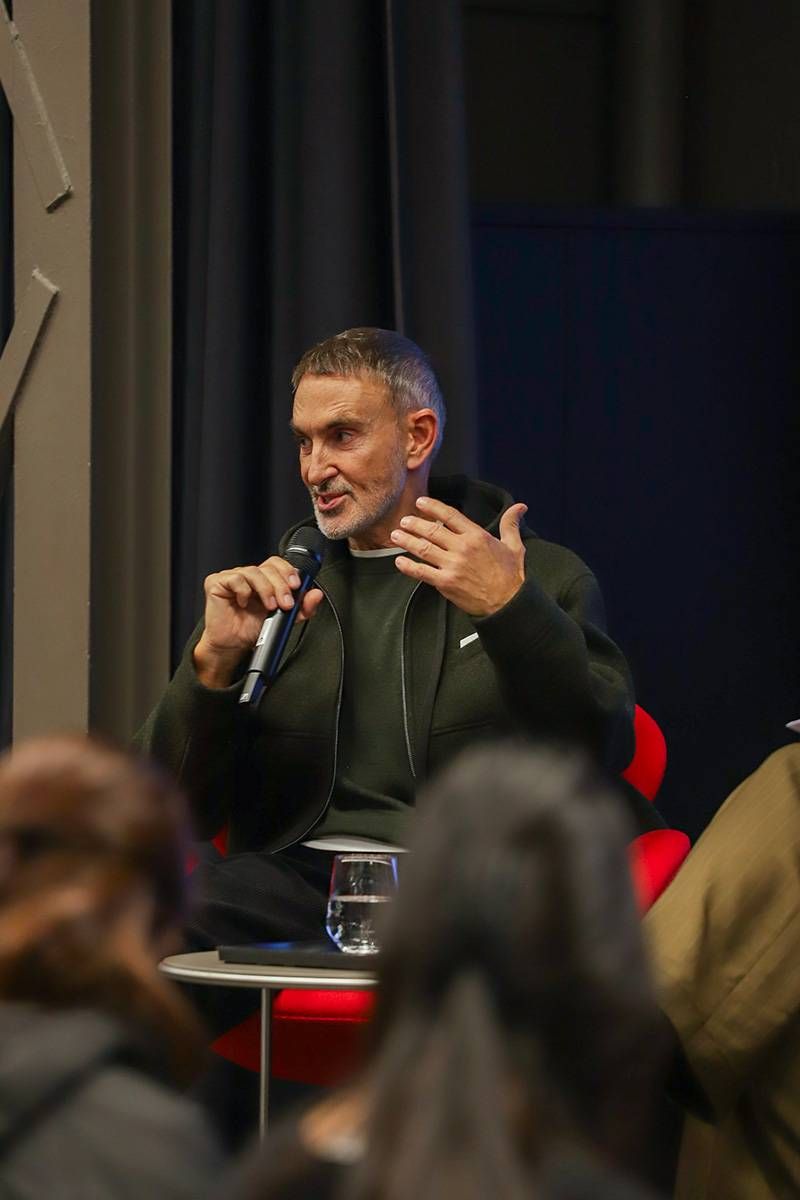
Neil Barrett speaks to students at Istituto Marangoni London, sharing insights on British menswear, creative discipline and building a long-term fashion career
British Tailoring Heritage and the Origins of Neil Barrett
Where did everything start for you in fashion?
From my grandfather’s tailoring job in Devon. It was an inspiration to see such perfection, and he expected a profession in his family, so it became quite normal for me. He made everything clean and perfect, and it was organised, so it was a great start for me.
Has fashion been a lifelong passion for you?
Yes, because my brother wasn’t interested, and I wanted to be a designer. Eventually, my grandparents would have had to close the tailoring business because there was no one to carry it on. But I wanted to go further, and I felt the need to reinvent myself far from home.
Fashion Education as a Tool for Creative Identity
How did studying away from home influence your personal growth?
I imagine that most students at Istituto Marangoni London are not from the city. Moving to another country or city gives you the opportunity to work on yourself: you can become another person, a better version of yourself. The wonderful thing about getting away and studying is that you can really lead yourself. That was my first big step: I became more confident when I moved out.
Why is studying fashion a life lesson?
Studying was everything for me. You have to study to understand what you want to do in life. Why do you want to study fashion? Is it because on Instagram you see designers living glamorous lives, or because you want to be recognised as a creative? Is it about being accepted by other people, or is it something inside you? Believing in what you do and being passionate about it is the most important thing. If you truly believe you can be a fashion designer, you have to understand what your talent is and actually try.
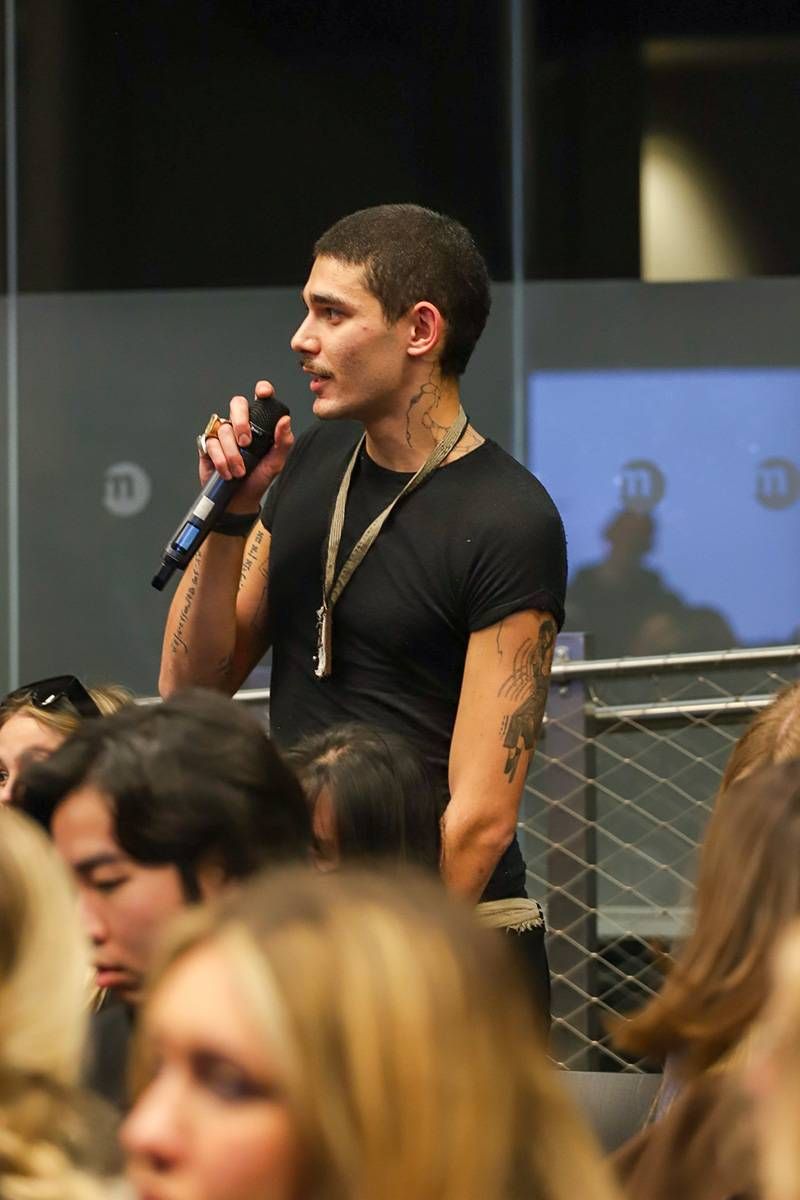
A student engages in discussion during Neil Barrett’s talk, reflecting the dialogue between fashion education, identity and contemporary menswear practice.
London Fashion Education in the 1970s and the Rise of a Creative Generation
What was your experience like at fashion school?
I had an incredible university experience. I was in my first year when John Galliano was in his fourth year. His genius was already evident. Fashion in London was vibrant: after class, everyone dressed up to go clubbing. The attitude was crazy. That time stays with you throughout your life. School opened my eyes, expanded my possibilities and showed me what I could potentially do. Those university years may be the most important of your life. By the way, I had no idea where I was going, and you don’t have to. At that age, you need to understand yourself. That is the main point of being in college.
Entering the Fashion Industry: Career Paths and Timing
How did you approach building your own brand?
You never know which opportunities will open up. You can dream of having your own brand, but you may also need experience. I don’t know many people who started their brand straight out of school. Most had family support or already had production businesses in place. That’s not always the case. Many designers move through different brands and gain experience by working for both big and small companies. There are many roads, and you don’t have to know which one you’ll take yet. As my grandfather once told me: “Aim for the stars.” I fell on the clouds, then I fell on my face—but I always aim for the stars.
What happened after you graduated?
I believe in the universe and that things happen for a reason. Gucci happened to be at my final show: they were looking for fresh talent and hired three people from my course. Timing was everything. They let the other two go after two years, and I stayed at Gucci for five years.
Is talent enough to succeed in fashion?
You need talent, consistency and the right attitude. You meet many people in fashion with a lot of attitude who think they are better than the person next to them. I don’t believe in that. You are only as good as the last thing you did. I have 30 years of experience, but working in a team with the right attitude is essential. Working alone is very different. The more people you speak to across different companies and levels, the better. That’s why schools that provide these opportunities are so important.
Gucci and the Tom Ford Era: Learning Inside a Fashion Powerhouse
What was it like working at Gucci during the Tom Ford years?
Working at Gucci was like a third university. I arrived with no experience and felt like a kid. Graduates were running menswear, sportswear and knitwear. At one point, everyone else left, and it was just Tom Ford and me sharing an office. That was incredible.
What did you learn from working with Tom Ford?
Tom Ford’s vision was very different from mine. He wanted to lead from day one. I just wanted to design clothes—patterns, fittings, fabrics. Tom wanted something beyond that. He knew exactly where he wanted to go and planned every step. I remember him rehearsing presentations over and over. I work more on instinct. Everyone is different. Tom was also humble and not pretentious. My dream was to be a design director working for someone else. I wanted to be number two.
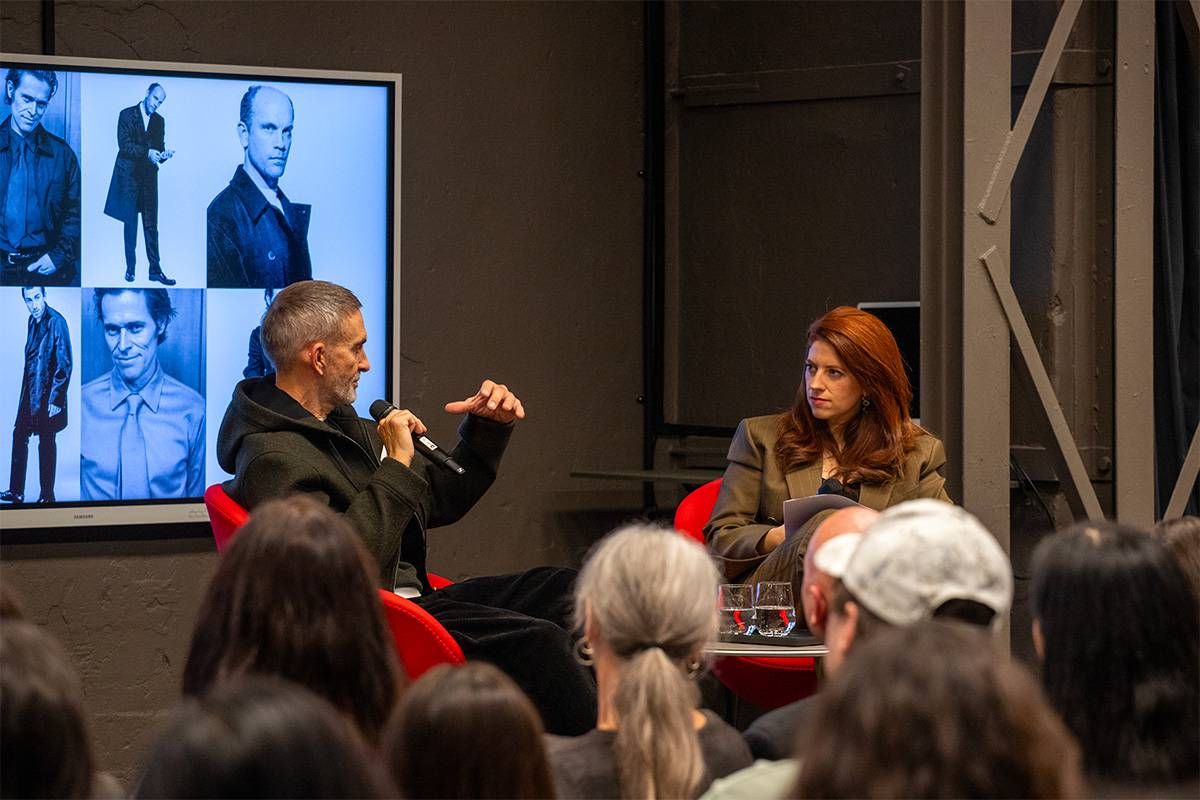
Neil Barrett in conversation with students, exploring tailoring heritage, modern menswear design and the role of education in shaping creative independence.
Creating Prada Menswear: Redefining Modern Tailoring and Luxury Sportswear
What was the challenge of launching Prada Menswear?
Prada already had a certain charm, but everything else felt a little bit dusty. At the same time, I was excited by the idea of creating something original and unique. Looking back, it is probably my greatest achievement and the work I am most proud of. Menswear didn’t exist. There was only the womenswear line, and Miu Miu. I kept asking why there was no menswear, and the answer was always the same: they just didn’t do it. So I stopped asking and wrote a letter instead, suggesting that if they ever wanted to launch a menswear collection, I already had a concept in mind. They didn’t reply for months. When Patrizio Bertelli eventually called me in for a meeting, I was offered the job the very next day. As soon as I left, he called everyone together and said we had to start building menswear from scratch: mentoring, business discussions, consulting on products and patterns.
What innovation did Prada Menswear bring?
The concept I had designed a year earlier became the starting point. I didn’t change anything, because I knew it was right. Menswear didn’t have to be the fashion equivalent of womenswear; it needed to exist as something entirely its own. That concept became the debut menswear collection in 1995. My idea was to bring sportswear into workwear, to redesign tailoring within ready-to-wear and expand it in a way that simply didn’t exist at the time. Sports fabrics, new silhouettes—that was the core of the project.
How did you approach designing Prada Menswear at such a young age?
That was my role, and I was only 21. I was on my own for two years, with some technical support from the womenswear team. I had to speak to producers and suppliers, even though I was dealing with something enormous and learning as I went. We travelled across Italy, visiting menswear suppliers, factories and pattern cutters. The producers were extremely proud of their work. I had to explain what Prada was and convince them of this new menswear concept, but at first they didn’t listen: they thought I was too young. I was polite and humble, but they didn’t take me seriously, partly because I was wearing a T-shirt and trainers. Eventually, I had to change how I presented myself and start wearing a jacket to make a better impression. And it worked—suddenly, they took me seriously. That moment was unforgettable.
Founding NEIL BARRETT: Designing Menswear for Real Lives
What defines your design process today?
When I design, I picture around seventeen people I know very well from different parts of the world. They are all different—short, tall, older, younger. I keep them in mind to try to balance body shapes across a collection. I start by asking myself what these people actually want. They already own a lot of clothes—I know most of their wardrobes. Whenever I visit friends, I always look through their wardrobes; that’s my way of understanding how people live and how they feel comfortable in clothes. I imagine dressing each person in my head. That gives me an overall vision, while some pieces are designed for very specific individuals. If more people can wear the same garment, I stay open to that.
How do fabrics, context, and function influence your creative decisions?
Next, I focus on the best idea and start designing, applying fabrics and considering context—time of year, day-to-night transitions, whether a piece is for a specific event or part of a daily uniform. Good design only works if it makes you feel good, even at home. When you design, you need to understand what you are creating and why. It may sound complex, but for me, design has become second nature. It leads me to research specific fabrics for specific functions, and that’s how my collections are born.
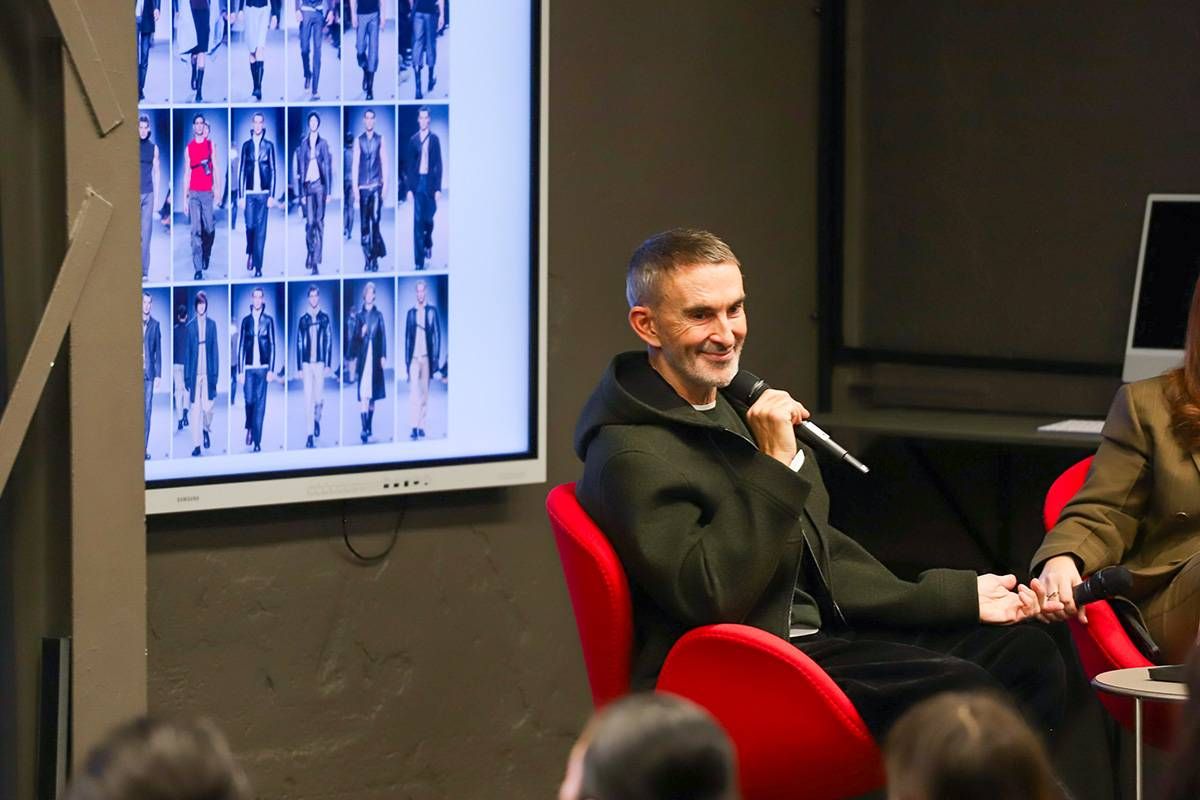
Neil Barrett presents archive imagery and runway references, illustrating how research, consistency and personal vision define British menswear today.
Originality, Influence, and the Cultural Future of Fashion Education
During one of his visits to Istituto Marangoni London, Neil Barrett met students in the studio, working closely with them and reviewing first-term projects.
We often hear that everything has already been done. Is originality still possible in fashion today?
This is very personal, but I believe you can still be original. I studied and learned to do things in a way that was original. I came from a small village near Plymouth, did a foundation course and then moved to London. I was always driven by the need to do something new, even something slightly crazy. At school, you still have the opportunity to be original, to express yourself and to find something that truly makes sense for you. You have to be true to yourself. What I did with clothes was very simple, but no one had done it before. Nobody had put that jacket over a T-shirt, or approached minimal sportswear in that way. It was still just an anorak, but the fabric and the details made it original. I truly believe you can still create something original today, if that’s what you strive for.
How should young fashion designers approach influence and innovation today?
The reality of the industry is that fashion constantly changes. Look at Martin Margiela: his originality often came from reworking ideas that had existed for decades. He is one of the greatest original designers precisely because of that. I’m not saying your design must always be completely original, but your use of fabric, your details, and your point of view matter. Look at the industry from different angles. Put on your own glasses and decide who you want to be within it. You need to be your own best critic.