
What can’t AI replace? Inside Milan Design Week with a new generation of designers

As AI transforms design, a new generation at Milan Design Week explores what remains uniquely human in creativity and innovation
What happens to creativity when machines can generate images, objects and ideas in a matter of seconds, compressing processes that once required time, uncertainty and iteration into immediate output? As artificial intelligence extends its reach across the creative industries, attention shifts towards a more difficult question: what, if anything, lies beyond its reach.
At Milan Design Week, a new generation of designers engages directly with that tension, working with advanced tools while bringing back to the fore elements that resist automation: emotional intelligence, cultural awareness and the human impulse to give meaning to form.
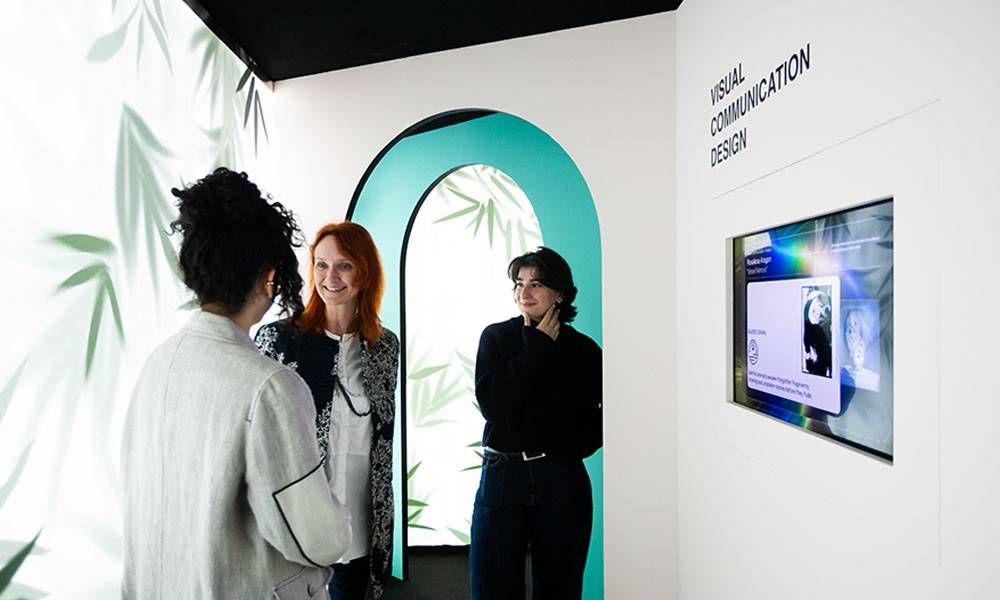
An open, multi-venue initiative uniting students, alumni, and industry collaborators to explore how technology and creative thinking converge in practice. This approach comes into focus at Istituto Marangoni Milano Design through a series of projects developed with international partners and presented throughout the city during Salone del Mobile Milano and Fuorisalone. Spread across multiple venues, the initiative brings together students, alumni and industry collaborators in an open exploration of how technology and creative thinking intersect in practice. Here, innovation is understood as a process of experimentation, grounded in personal expression and the capacity to create meaning.
It is not a rejection of technology, but its reinvention: technology as a tool for interpretation, extending what design can communicate.
What Makes Milan Design Week a Platform for Emerging Designers Today
At Istituto Marangoni Milano Design, the press conference introducing these projects opened up a broader idea of design as a shared, city-wide narrative. Over the following days, the programme extends across eight exhibition spaces—four within the school (Degree Show, Poltrona Frau, L’Astro and Rivatelier) and four across Superstudio, Superstudio Maxi and SaloneSatellite—alongside the Alumni Design District, tracing the presence of the Istituto Marangoni community throughout Milan.
It is a collective story, told through different voices and generations, in which students, alumni, faculty and industry partners come together to shape a common vision.
At Milan Design Week, visitors will encounter projects that reimagine the way we live, design and relate to space and objects: from Jhula, developed with Rivatelier within the Outside In project, where balconies and terraces become active extensions of living spaces, to the Crystal Dialogues capsule collection created by Prisma Project alumni for L’Astro, combining patented laminated glass with Swarovski crystals.
On the ground floor of the school, the Degree Show brings together the most forward-looking projects in Interior, Product and Visual Communication Design, while Soul of Space, developed with Poltrona Frau, explores total living concepts through the lens of interior architecture and luxury hospitality.
In each space, students are present, not simply as exhibitors, but as storytellers, sharing their processes and the emotions behind their work.
From Experimentation to Industry: How Design Education Reaches the Real World
Opening the conference, Barbara Toscano, School Director, described Istituto Marangoni Milano Design not only as a place of learning, but also as a living, creative ecosystem.
“Students, alumni and professionals who continue to work with us are part of a creative hub animated by passion and enthusiasm,” she explained. “It is a system made of research, experimentation and innovation. Innovation does not simply mean technology,” she said. “Technology is a tool. Innovation is something broader—a cultural process that may use technology, but is never defined by it alone.”
This long-term research, developed throughout the academic year, is what allows projects to take shape and find real-world relevance—a process that has helped position the school as a recognised international reference point for design education, growing in both scale and reputation.
What Gives Design Its Emotional Depth in the Age of AI
For Sergio Nava, Director of Education, this identity goes beyond the traditional school. “Istituto Marangoni is not a school. It is a laboratory of ideas,” he stated. “A place where students from 102 countries come together to collaborate, share perspectives and build projects collectively.”
In a world increasingly defined by artificial intelligence, Nava stressed the importance of another form of intelligence. “Alongside artificial intelligence, there is emotional intelligence,” he said. “The intelligence that allows us to express who we are, to tell stories, and to connect with others.”
A vision grounded in dialogue, cross-cultural exchange, and a deep awareness of design history—not as a romanticisation of the past, but as a foundation for imagining what comes next.
Is Design Entering a New Era? Rethinking Legacy, Craft and Future Narratives
The idea of transition and renewal was powerfully articulated by Giulio Cappellini, Art Director at Cappellini and Brand Ambassador at Istituto Marangoni, who framed this year’s research theme as a symbolic turning point.
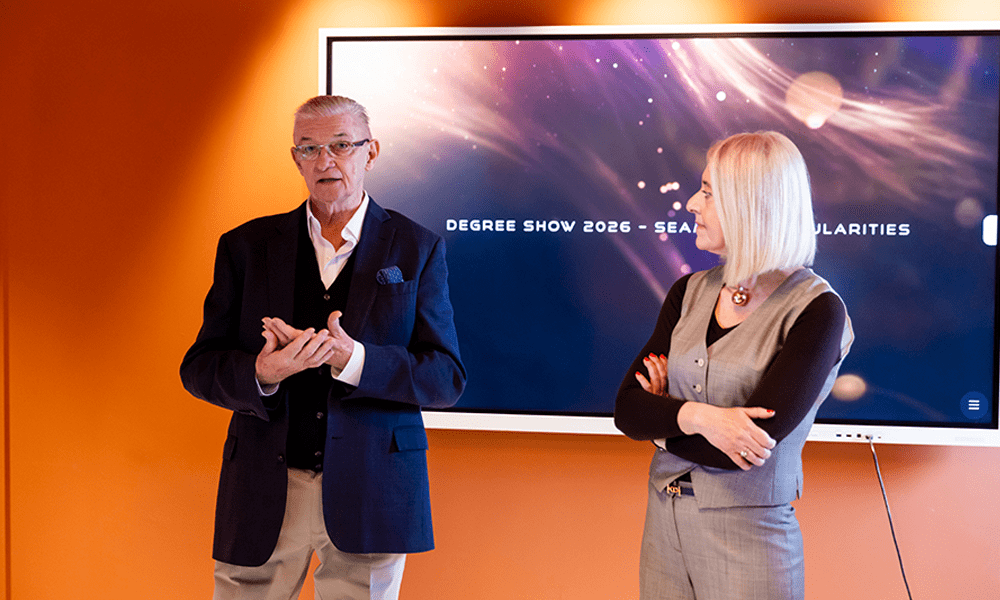
Giulio Cappellini, Art Director at Cappellini and Brand Ambassador at Istituto Marangoni, and Barbara Toscano, School Director, envision the future of design, between legacy, transformation, and new creative recipes.
“An era of design has come to an end,” observed Cappellini. “We have been slow to acknowledge it. This year is our Year Zero.”
For Cappellini, honouring the great design legacy of the past does not mean being confined by it. “New dynamics and new ingredients define the society we live in today,” he said. “These must become the materials for new recipes, new products, new spaces, and new forms of communication.”
At the heart of this renewal lies a delicate balance: between innovation and memory, future and craftsmanship, technology and emotional depth.
When Artificial Intelligence Becomes Object: Designing the Physical Form of Intelligence
Another key collaboration, bringing together Alessi and the Istituto Italiano di Tecnologia, challenged students to give physical form to artificial intelligence.
“The challenge,” explained Manuel Catalano (Supervisor of the Research Unit NuBots at the Italian Institute of Technology and coordinator of the JOiiNT Lab) and Gloria Barcellini (Assistant on the Alessi project from the Italian Institute of Technology), “was to reconcile technology with poetry—to preserve the emotional and poetic side of objects while integrating advanced systems.”
Here, intelligence becomes physical, relational and emotional. “The aim is not contrast but collaboration,” they said, “a constant dialogue between making and meaning.”
How Design Is Rethinking Living Spaces for New Ways of Life
Projects like Outside In, presented by architect Emanuele Missaglia, Artistic Director at Rivatelier, push this approach into the public and domestic sphere. Students from the bachelor’s degree in Product Design were asked to rethink and reimagine terraces and balconies, turning them into spaces for work, relaxation and socialisation.
“Jhula is conceived as a microcosm within the city,” he explained. “A protected yet open space where individuals can reconnect, relax and redefine their relationship with the outside world.”
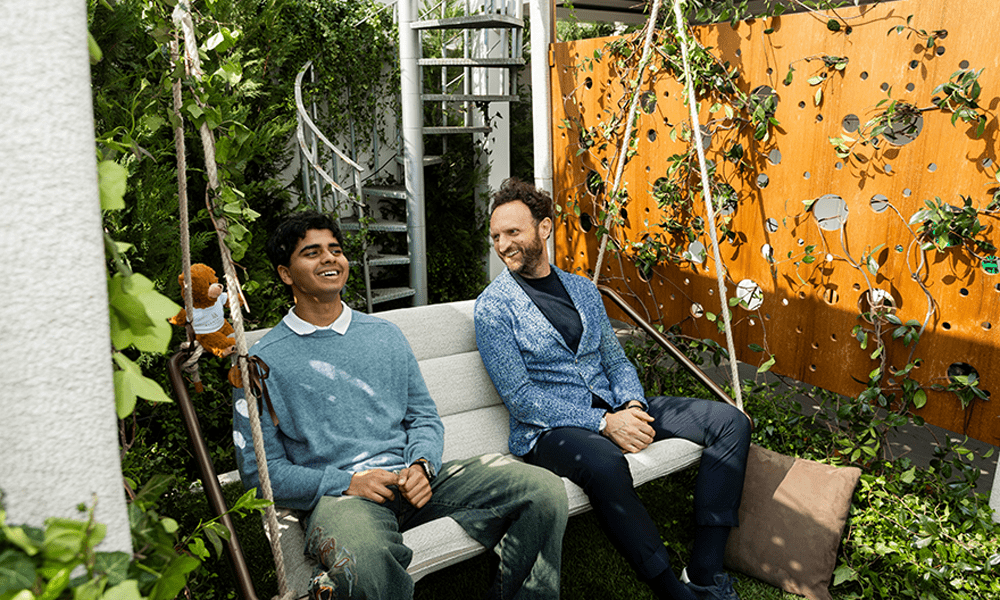
Developed in collaboration with Rivatelier, the project explores new approaches to outdoor living, redefining balconies and terraces as active extensions of the home.
Why Visibility Matters: How Emerging Designers Enter the Global Market
At Istituto Marangoni, teaching design means having an international network—not only of partners but also of schools within the group—where students can exchange ideas and develop their own creative voice. Nicola Paronetto, Chief Operating Officer Design at Istituto Marangoni, underlined the importance of opening the school to the city and to an international audience, with support from the Mumbai and Dubai schools.
“Visibility is crucial,” said Paronetto. “It allows students to experience design as something real, something that can enter the market, reach people, and become part of everyday life.”
From Milan to the World: How Designers Build Global Careers Today
Closing the conference, Anna Rogg, Country Italy Client Services, Alumni & Industry Relations Senior Manager at Istituto Marangoni, brought the alumni dimension into focus, presenting a decade-long mapping of graduates across five continents.
“Our alumni are everywhere,” she noted. “Some have returned to their home countries, others work with major brands or exhibit in galleries. Milan remains a magnetic centre, but the Community is truly global.”
This network reinforces the school’s role not only as an educational institution but also as a long-term platform for creative growth and professional continuity.
What Remains Human in Design as Technology Advances
Across voices, projects and collaborations, one message comes through clearly: technology will shape the tools of tomorrow, but creativity, emotion and human intelligence will give them purpose.
At Istituto Marangoni Milano Design, the future of design is already taking shape, and it starts from the human experience.
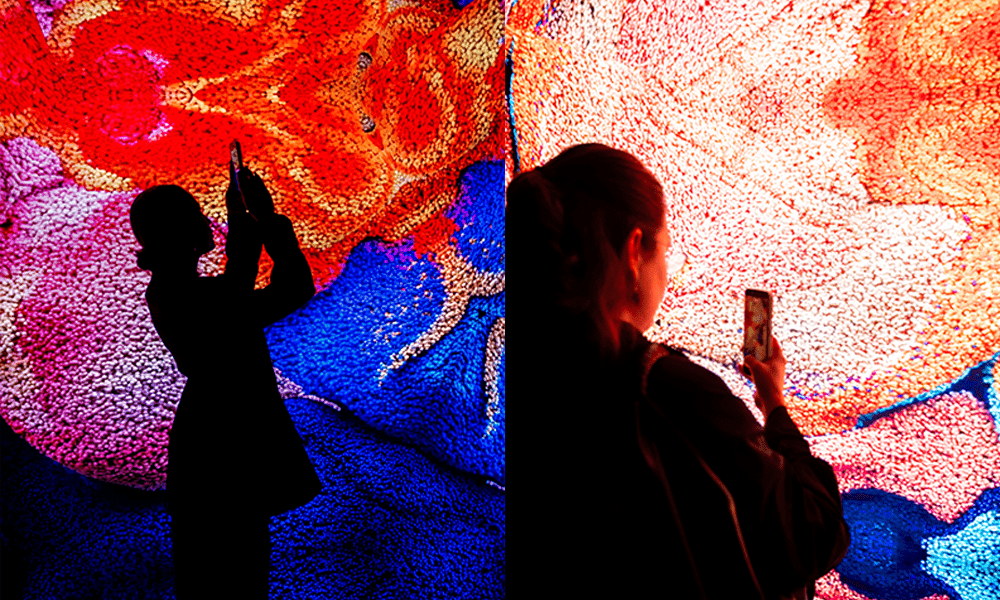
On the ground floor of the school, the Degree Show brings together the most forward-looking projects in Interior, Product and Visual Communication Design.