

Heritage workwear is making a powerful comeback—here’s why it matters now, and how Filson is writing its future across fashion and culture
Why is heritage workwear becoming one of fashion’s most relevant movements today? The resurgence of utility clothing is closely linked to a decisive shift away from fast consumption. As consumers move beyond disposable garments, Gen Z and Gen Alpha are increasingly drawn to durability and authenticity, fuelling a renewed relevance for brands rooted in purpose and built to last.
Among them, Filson stands as a defining case: a brand built on utility, craftsmanship and longevity, now leading an industry grappling with new audiences and their expectations.
In conversation with Istituto Marangoni London, Filson Creative Director Alex Carlton and Rocco Scazzariello, Filson Brand Director & Head of Product Strategy EU, explore how archive, function and storytelling converge to create a contemporary vision and a model for long-term success.
What Is Heritage Workwear Today? Meaning, Evolution and Relevance
For a brand like Filson—one of the most recognised American outdoor wear companies in the world—working with its legacy means holding two responsibilities at once: “protecting the past and remaining meaningful today for the future,” as Alex Carlton, Creative Director at C.C. Filson Company, told Nicola Favaron, Programme Leader at Istituto Marangoni London.
Focusing on the changing meaning of heritage workwear, Carlton explained: “We design functional pieces from rugged materials—outerwear, bags, flannels, and more—that perform seamlessly across environments”. A cityscape, such as rainy London streets, is therefore no less adventurous than a hiking trail. Straight to the point, modern utility wear is no longer limited to labour contexts but has become part of everyday urban dressing.
Istituto Marangoni students of Styling and Creative Direction will soon experience this first-hand, working on an industry project with Filson archive pieces—gaining new inspiration and broadening their creative perspective.

During the event, heritage workwear was discussed as a key movement shaping contemporary fashion and consumer values.
Filson: The Origins of an American Heritage Workwear Icon
“Being in the right place at the right time” was the lucky break for Clinton Filson, founder of Filson, whose story is inseparable from the ability to seize opportunity. Filson began in Seattle in 1897 as a hardware store and supplier of woollen goods for pioneers in the Pacific Northwest, riding the wave of the Alaska Gold Rush, when Seattle became the gateway for thousands of prospectors. Filson supplied travellers with wool blankets, outerwear, and the gear needed to survive in harsh northern environments.
Filson’s commitment to quality and exceptional customer service meant that when the Gold Rush declined after seven years, the company became the unofficial outfitter for forestry workers from Northern California to British Columbia. Signature proprietary materials, such as the now iconic Tin Cloth—a paraffin-soaked, water-resistant cotton imported from the UK—became essential for workers in extremely demanding conditions.
Since then, Filson has evolved from a pure workwear brand into one that serves both labour and outdoor recreation. Today, Filson is a hybrid brand: rooted in authentic heritage workwear, strong in outdoor recreation, and increasingly relevant for modern city living.
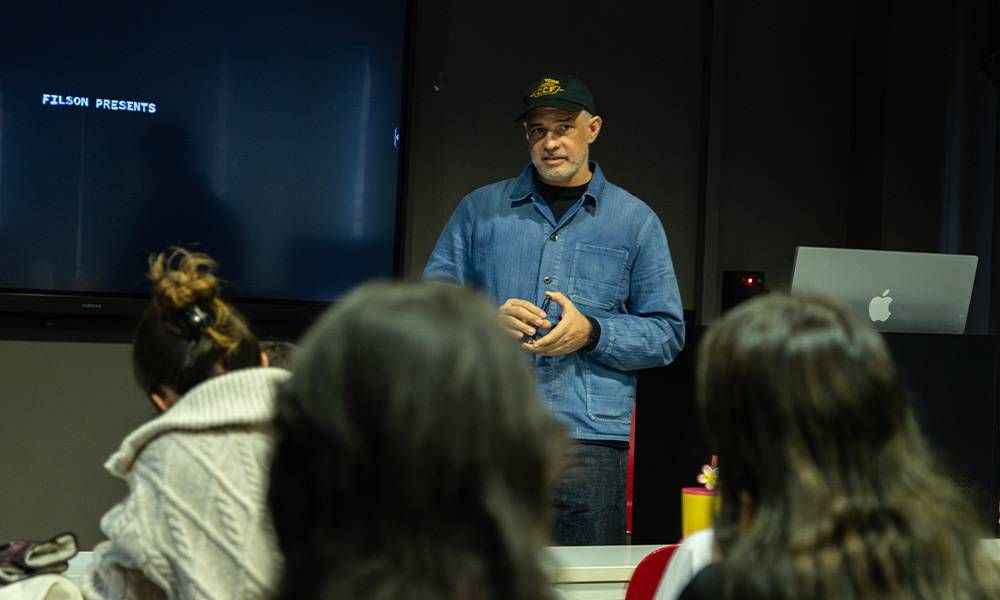
As highlighted in the talk, Filson’s archive plays a central role in redefining modern workwear design and brand identity.
How Filson Uses Its Archive to Design the Future
How does Filson use its archive to create new collections?
Alex Carlton: Filson is 128 years old, which means our archive is incredibly deep—time itself is part of our identity. Our job is to act as custodians of the brand, protecting the pieces that should never change while modernising others. Some items are treated like historic buildings: we preserve them exactly. Others can be refreshed through fit, colour, pattern, or fabric weight. The process is a constant balancing act: inspired by the past, made in the present, and mindful of the future.
How are archive garments reinterpreted for contemporary use?
Alex Carlton: Sometimes the archive is a starting point for a literal reproduction: for example, a 1940s cruiser jacket. Other times, it is a piece to be reimagined, such as an old equestrian duster that became a trench coat made famous by Jeremy Allen White. Inspiration can also be conceptual, such as developing colour palettes from 1890s black-and-white photographs of industrial Seattle or from 1970s mountain life aesthetics.
Rocco Scazzariello: Sometimes it’s simple: we walk into the archive, find a pocket from the 1950s, and apply that detail to a jacket we are developing today.
How do you balance simplicity with premium quality in workwear design?
Alex Carlton: Early Filson pattern-making was “meat and potatoes”: simple, functional, almost clumsy in its charm. We maintain that naivety. When factories return prototypes that are too perfect or too refined, we ask them to make them rougher. In heritage workwear, premium quality comes from material integrity and craftsmanship, not over-designed finishes.

During the conversation, authenticity emerged as a core element in building meaningful fashion storytelling and brand relevance.
Why Workwear and Outdoor Clothing Work in Cities
Why does authenticity matter in fashion storytelling today?
Alex Carlton: When I joined 11 years ago, there was no creative or marketing department. We began by documenting real people using Filson in real situations: bush pilots, guides, ranchers, or fishermen. Authenticity became our visual DNA. The process starts with the activity and location: are we shooting in Alaska at –15°C? In the swamps of Louisiana? In Wyoming during winter cattle drives? We avoid “modelling”; we photograph people doing real work.
Rocco Scazzariello: In Europe, these images are aspirational, as most customers have never seen Wyoming or Montana. That’s exactly why they work. They transport people into Filson’s world and help us stand out in a crowded market.
Where do designers find inspiration today?
Alex Carlton: Everywhere: the current market, boutiques, trade shows, cinema, archives, museums, travel, factories, vintage, and history. But inspiration must fit the brand’s thematic direction, the “Filson bucket.” I also need time alone to process it all, whether that’s walking in the woods, at the gym or with the dog. That’s when 90% of ideas come to me.
How can outdoor clothing translate to cities like London?
Alex Carlton: Once a brand’s tone is clear, it becomes transferable. We may shoot in an old gymnasium instead of a forest, but the tone remains Filson. If we shot in London, we would look for real craftspeople, brewers, boxers: real people doing real things. This is why functional clothing and outdoor garments are increasingly relevant in urban environments.
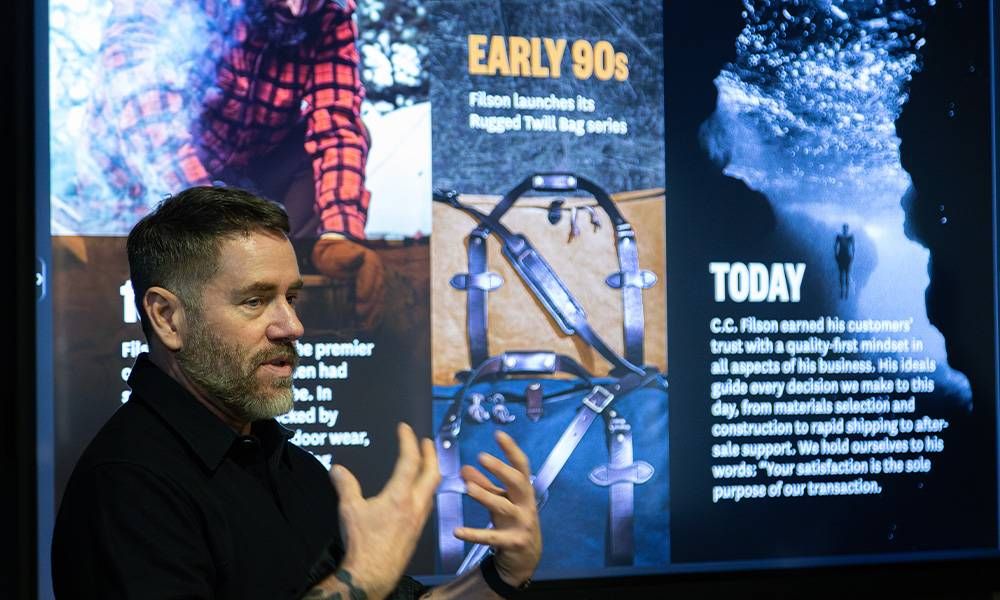
As explored during the event, utility clothing has evolved from functional garments to a defining element of urban fashion.
How Heritage Brands Reach New Generations without Losing Identity
How does Filson approach womenswear while staying true to its DNA?
Alex Carlton: When we introduced the women’s line in 2024, it was important to stay connected to the brand’s core values—quality, material integrity, and durability—while creating something with its own identity. We did not want to simply mirror the men’s line; we wanted womenswear to have its own characteristics, introducing an aesthetic rooted in heritage. Working with the archive in Bologna at WP Lavori in Corso, we studied historic patterns. The result is a modern, functional fit that is relevant and purpose-driven for today’s customer. Making an impact in the first season is easy; sustaining that energy five years in is the true marker of success.
How do heritage brands resonate with younger generations today?
Rocco Scazzariello: Our brand naturally resonates through vintage, flea markets, and sustainability—qualities valued by Gen Z. We also collaborate with contemporary designers (e.g. Aimé Leon Dore) to open new doors while maintaining integrity.
Alex Carlton: Internally, we use multi-generational casting and hire younger designers. I learn from their perspective. Working with students gives me insight into how younger generations view Filson, how they find inspiration and how they build relationships with a brand that is so historic.
What role do digital tools and AI play in fashion today?
Rocco Scazzariello: We do not chase hype. For asset creation, we remain manual and authentic, but AI is useful for briefing or visualising ideas between teams.
How do fashion markets differ between the US and Europe?
Rocco Scazzariello: In Europe, customers want heritage, craftsmanship and durability, with a degree of fashion sensibility. In Seattle, they shop for end use: fishing trips or ranch work. In Europe, we sometimes adapt US products—lighter weights, added zips—without losing the brand’s DNA.
Alex Carlton: Listening to store teams is critical. Customer feedback drives evolution.
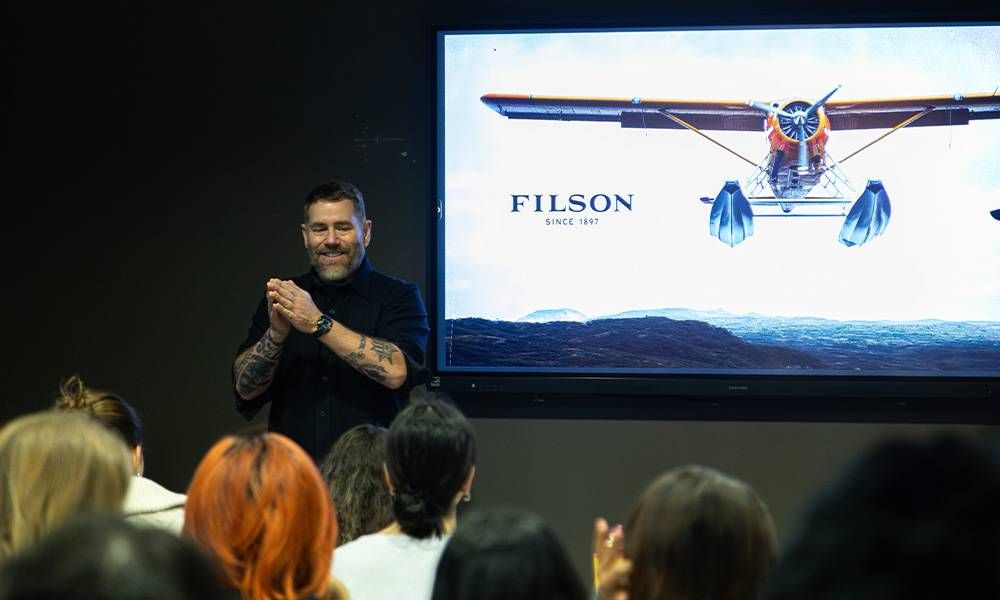
During the talk, Filson was presented as a leading example of durability, craftsmanship and long-term vision in heritage fashion.
The Future of Heritage Workwear: What Comes Next
What can young creatives learn from working with heritage brands like Filson?
Alex Carlton: Success is never guaranteed, even when you are at your peak. Working with Filson garments offers a unique perspective on craft, trade and utility. I hope Istituto Marangoni students discover new pathways where their skills and creativity can find purpose in industries they may not have considered. Stylists must understand a brand’s needs intimately. For Filson, subtlety and believability matter more than fashion theatrics. A good stylist knows what the client needs before the client does.
Rocco Scazzariello: Stylists today also build their own creative identity. A distinct point of view is valuable, provided it aligns with the brand.
How will heritage brands evolve in the future of fashion?
Alex Carlton: It is about balancing respect for our past with thoughtful innovation for the future—staying relevant today while planting seeds for tomorrow through ideas, materials, and design. Time will reveal how Filson evolves, but all the elements for long-term continuity are in place. My responsibility is to protect the core, introduce new ideas, and ensure the brand remains authentic, purposeful, and prepared for the future.
Silvia De Vecchi
Librarian, London