

Mozart, Riccardo Muti and Fondazione Prada reveal how classical music inspires fashion creativity, design precision and artistic vision
Mozart, Riccardo Muti and Fondazione Prada reveal the surprising ways classical music can influence fashion creativity. From precision and structure to emotion and inspiration, the maestro’s lessons and rehearsals demonstrate how sound can inform both artistic vision and design.
The Hidden Language of Mozart and Fashion at Fondazione Prada
There’s a very specific kind of electricity that floods a room when an orchestra exhales together. It’s the same raw tension you feel backstage before a runway show: lights humming, models poised, fabrics vibrating with possibility. That invisible charge—half fear, half magic—is the connective tissue between classical music and fashion.
I felt it intensely after attending two sessions of lessons and rehearsals led by Riccardo Muti at Fondazione Prada in Milan during the latest edition of the “Riccardo Muti Italian Opera Academy,” the institution’s third collaboration with the maestro, dedicated to Mozart’s Don Giovanni.
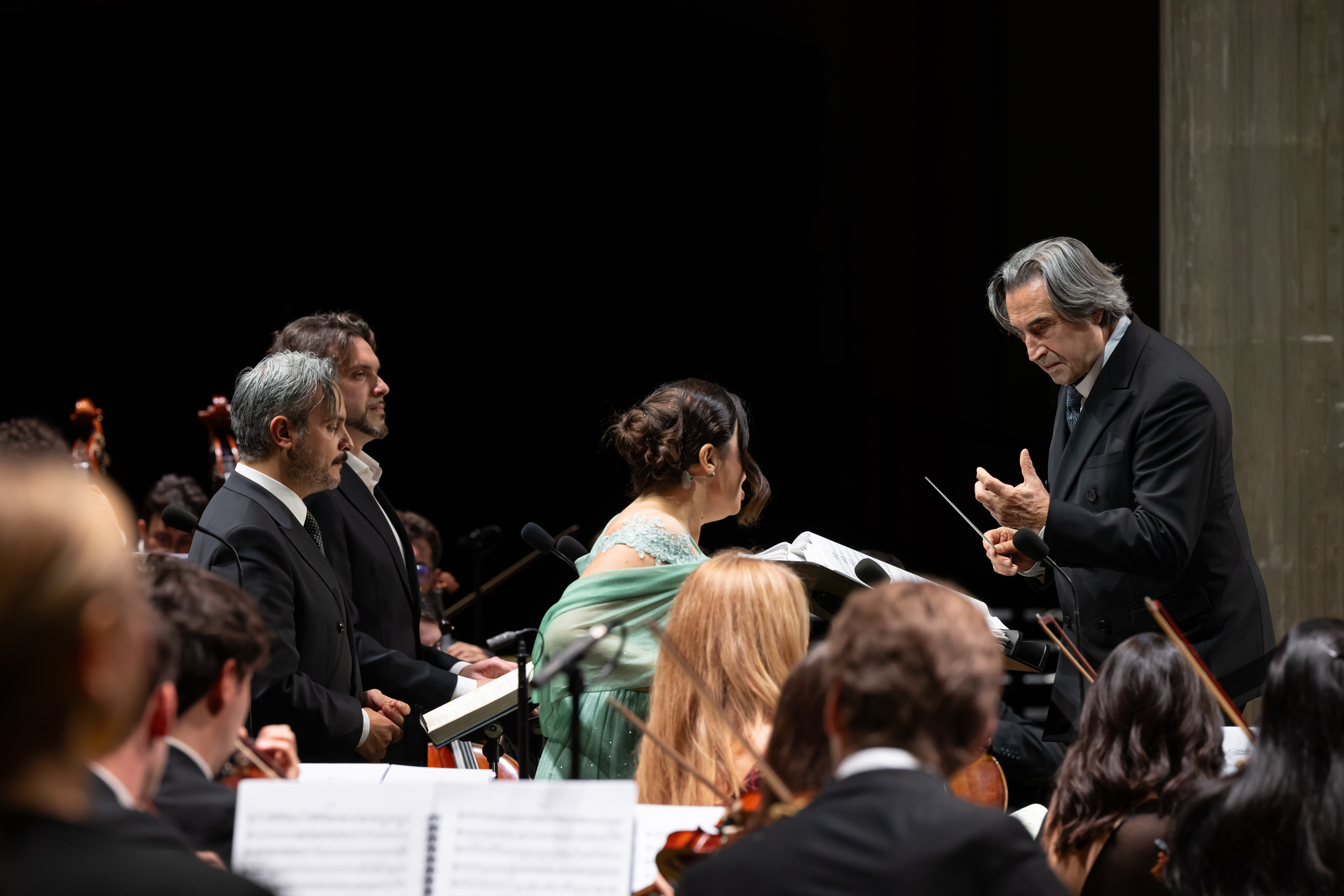
Riccardo Muti leads young soloists at Fondazione Prada, showing how Mozart’s discipline and emotional depth fuel creative thinking across music, fashion, and design. Photo by Patrick Toomey Neri, Courtesy Fondazione Prada Nestled within the stark, cinematic spaces of Fondazione Prada’s Deposito—transformed for the occasion into a concert hall—this experience revealed something I had always suspected but never fully articulated: classical music isn’t just inspirational background noise for creatives. It’s a training ground. A philosophy. A weapon. A compass. And for anyone working in fashion, where intuition meets architecture and emotion meets technique, classical music becomes a surprisingly essential lifeline.
How Classical Music Sparks Fashion Creativity
The first thing you notice watching Riccardo Muti guide young conductors, singers, and orchestra players is that classical music and fashion operate on the same invisible logic. Both build worlds that must feel effortless—yet are engineered with surgical precision.
A symphonic phrase is like a perfectly cut jacket: sharp, intentional, and impossible to achieve without mastery. A crescendo mirrors the mounting tension of a runway. A moment of silence carries the same weight as negative space in design.
Inside the converted hall at Fondazione Prada in Milan, these parallels felt almost tangible. The architecture of Mozart’s music spoke the same language as the architecture of the space itself. Everything was stripped to its core: no distractions, no theatrics—only craft and presence. It was a creative laboratory where sound and vision met in mid-air.
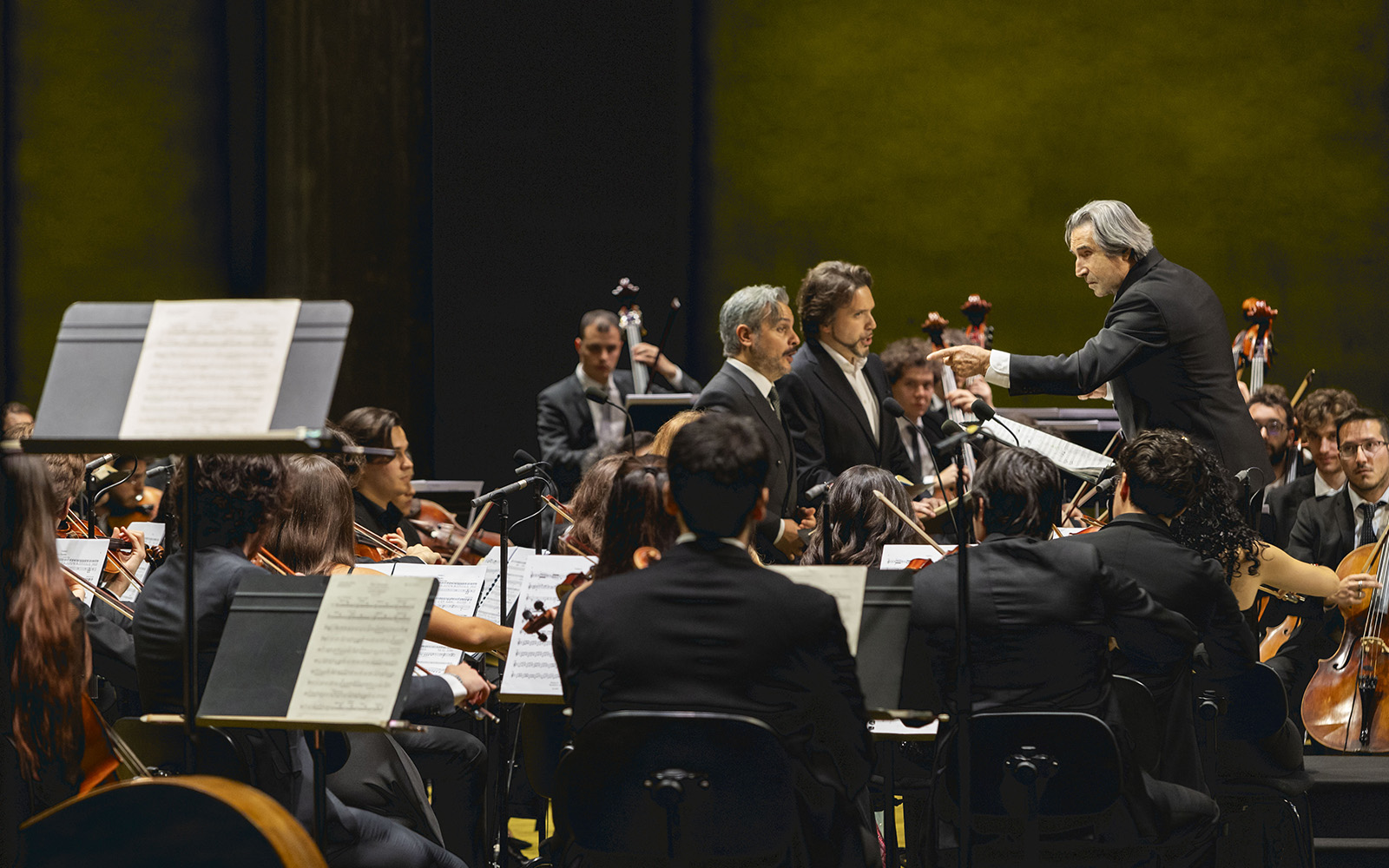
Inside Muti’s practice, precision and collective rhythm echo the same meticulous craftsmanship found in couture ateliers. Photo by Patrick Toomey Neri, Courtesy Fondazione Prada
Inside Riccardo Muti’s Lessons: A Creative Laboratory
The project brought together the Orchestra Giovanile Luigi Cherubini and the Coro della Cattedrale di Siena Guido Chigi Saracini, alongside young conductors and piano collaborators aged 18 to 35. Selected through an international call and evaluated by a commission led by Riccardo Muti himself, they gathered not to seek shortcuts but to strengthen their artistic backbone.
Riccardo Muti’s devotion to education is almost monastic. Through his Academy, he aims to pass down what he gleaned from his own mentors—not merely a list of rules but a system of thought. Technique, yes, but also integrity. Rigour. Emotional honesty.
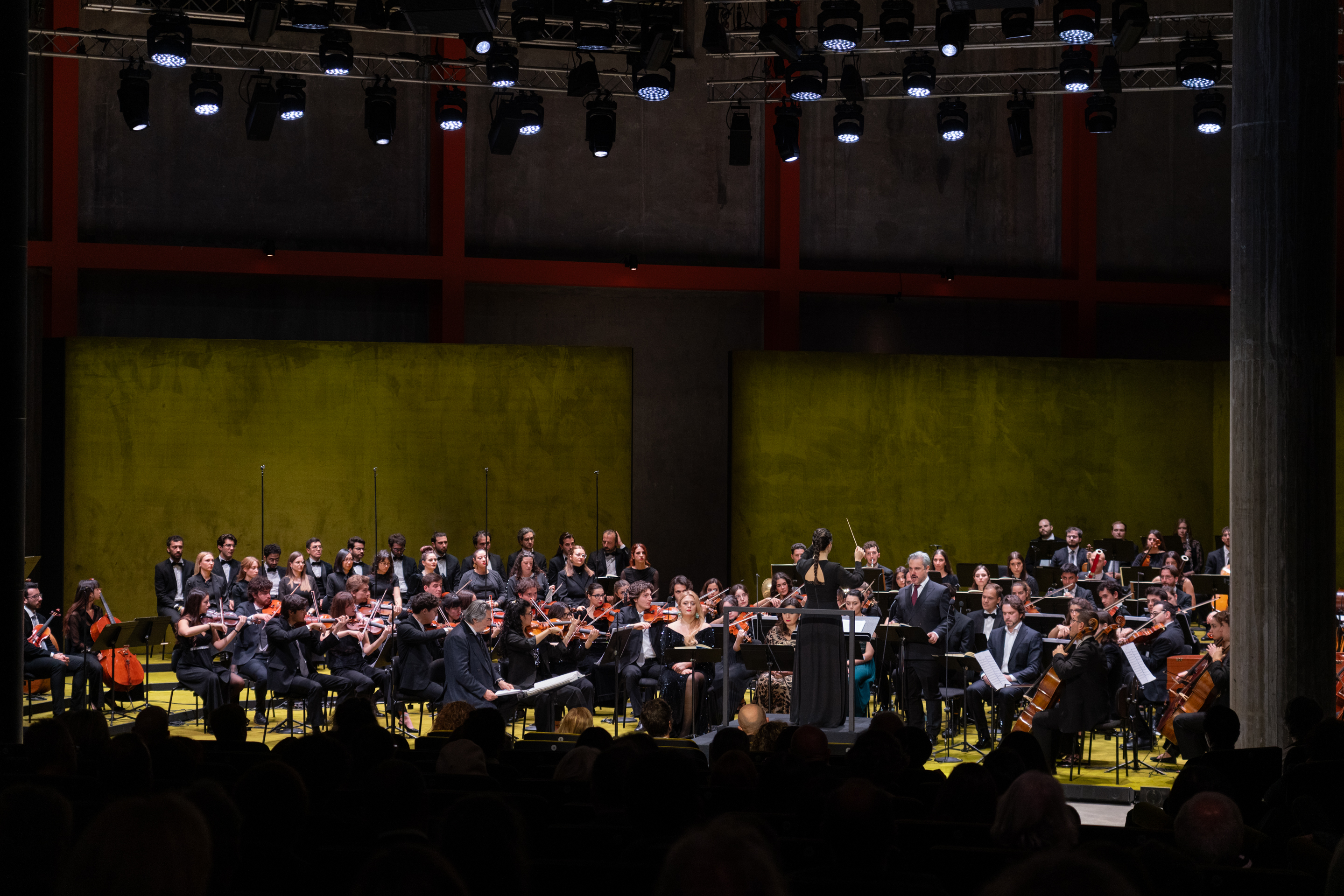
Inside Fondazione Prada’s hall, Muti sculpts sound with the same rigor and elegance found in high-fashion craftsmanship. Photo by Piercarlo Quecchia, Courtesy Fondazione Prada What made the experience even more powerful was the openness of the process: the lessons and rehearsals were public. Anyone could walk in and witness the construction of meaning through sound. It felt like a couture house flinging open its doors, inviting everyone to watch the draping, the debates, the minute adjustments that make the final piece breathtaking. It was, in essence, creativity unveiled.
Miuccia Prada put it beautifully: classical music remains one of the most vital languages for cultural and personal growth, and supporting this collaboration is a way to invest in the future of expression itself. As someone who has transformed the visual grammar of fashion, her belief in the relevance of classical music carries undeniable weight.
Mozart’s Music: Imperfection, Truth and Creative Inspiration
When Riccardo Muti spoke about Mozart, his tone changed—not softer, but deeper. “Mozart mette in musica l’uomo, così com’è,” he said. Mozart puts humanity into music exactly as it is. Not beautified. Not filtered. Not justified.
Mozart captures us—our flaws, contradictions, impulses, tendernesses—without ever judging. His music doesn’t judge. It reveals. And that is why it hits so hard.
For a fashion creative, this is the ultimate spark: truth without cruelty. Imperfection elevated to poetry. A kind of honesty that empowers rather than diminishes. Muti added that Mozart’s work becomes “the consolation of life,” echoing Rossini. Because when art names our vulnerabilities, it frees us from them. It turns emotion into structure. And structure into meaning.
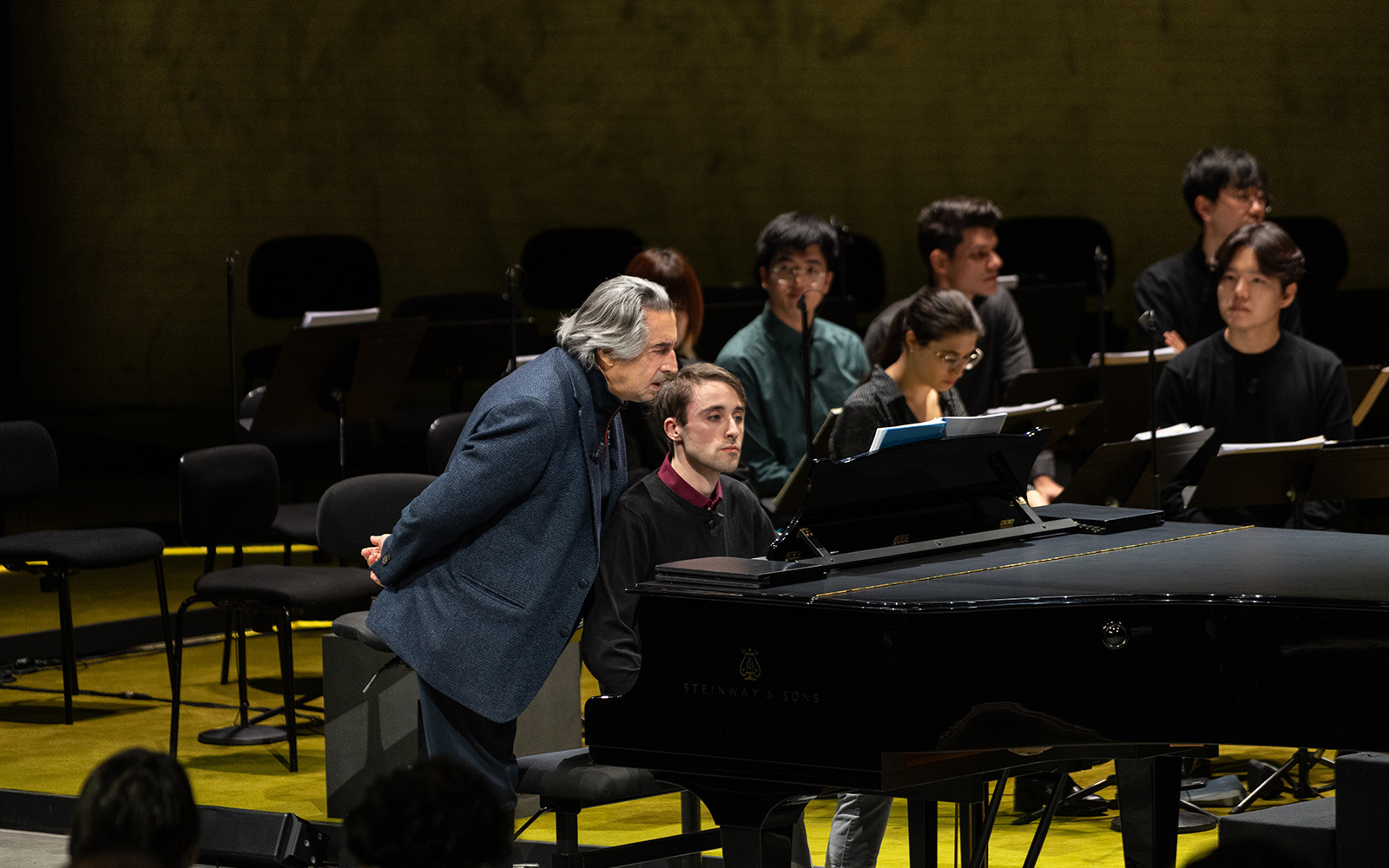
At the piano, Muti mentors young talent, showing how mastery, listening, and discipline underpin every creative practice. Photo by Lorenzo Capelli, Courtesy Fondazione Prada
The Art of Emotion: Where Classical Music Meets Fashion Design
Classical music isn’t about nostalgia. It’s about tension. Precision. Breath. It teaches the mind to recognise patterns, understand pacing, and sense the moment when energy should break or bloom. It trains you to think in arcs, not fragments.
This is exactly what fashion demands—whether you’re sketching silhouettes or directing an entire collection. Creativity isn’t chaos; it’s controlled ignition. And classical music is that discipline disguised as beauty.
Inside Riccardo Muti’s lessons, this became obvious. Watching a young conductor strive to capture Mozart’s phrasing was like watching a designer refine a cut until it finally clicks—not because it becomes perfect, but because it becomes truthful.
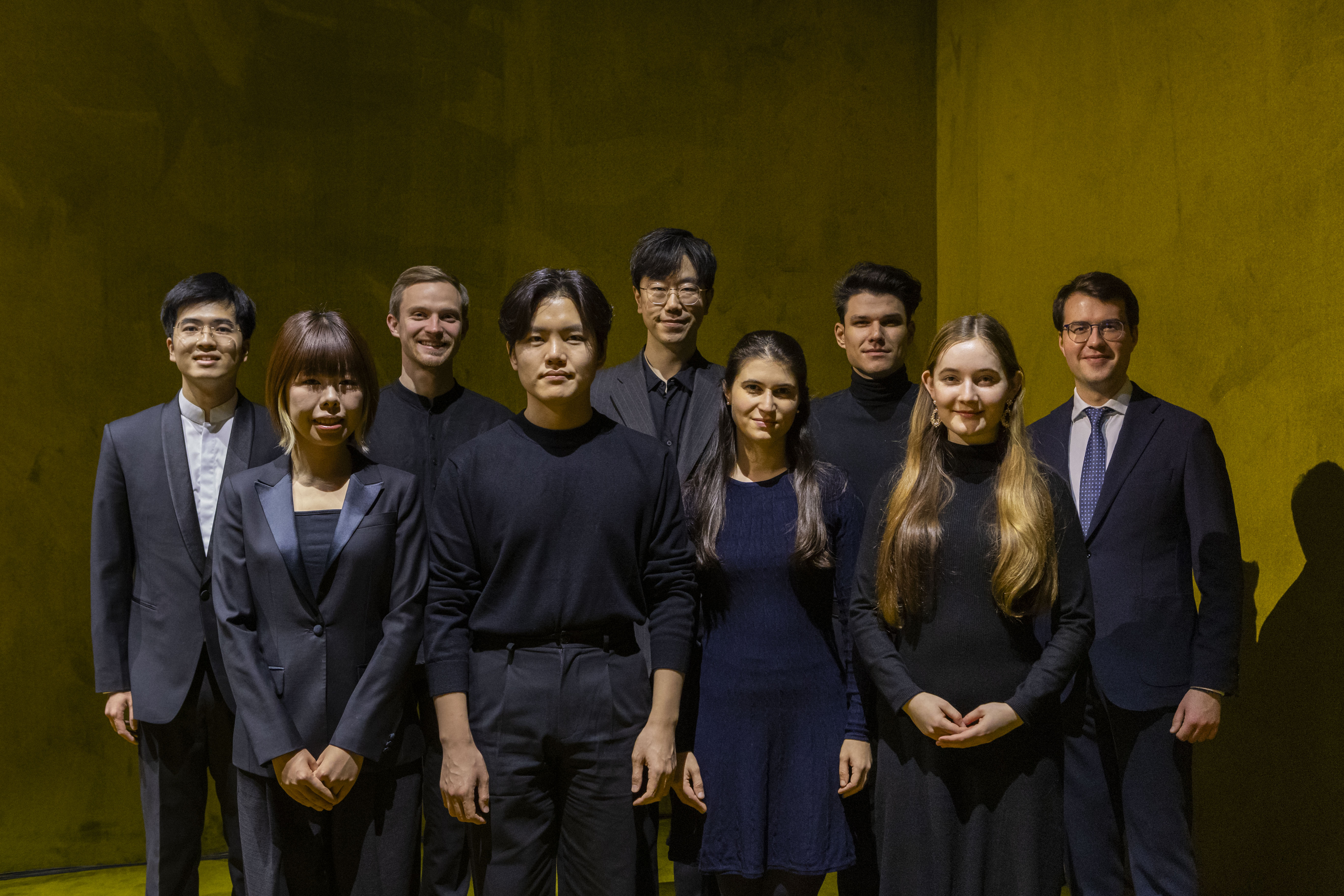
Emerging musicians at Fondazione Prada embody the next generation of classical talent shaped by Riccardo Muti’s rigorous approach to artistry and creativity. Photo by Patrick Toomey Neri, Courtesy Fondazione Prada
Why Classical Music Is the Secret Fuel Behind Fashion Creativity
The world is loud—too loud, too fast, too fragmented. Classical music creates a different kind of space, one where the mind can finally breathe. It slows your thoughts just enough for clarity to emerge. It clarifies emotional textures. It organises chaos. For a creative, this is oxygen.
Classical music doesn’t belong to the past. It belongs to anyone who needs depth in a shallow world. Anyone who builds meaning from silence and noise, colour and shadow, motion and pause. Anyone who dreams big and works hard. Fashion thrives on this. Creativity survives because of this. And in a way, we do too.
Inside Fondazione Prada, watching Riccardo Muti decode Mozart, I didn’t just witness a lesson—I witnessed a reminder: to create something powerful, you must first allow yourself to be moved—completely, unapologetically, with the same devotion that makes an orchestra breathe as one. Classical music gives us that devotion. Fashion transforms it into form. Creativity—across every discipline—comes alive where these worlds meet.
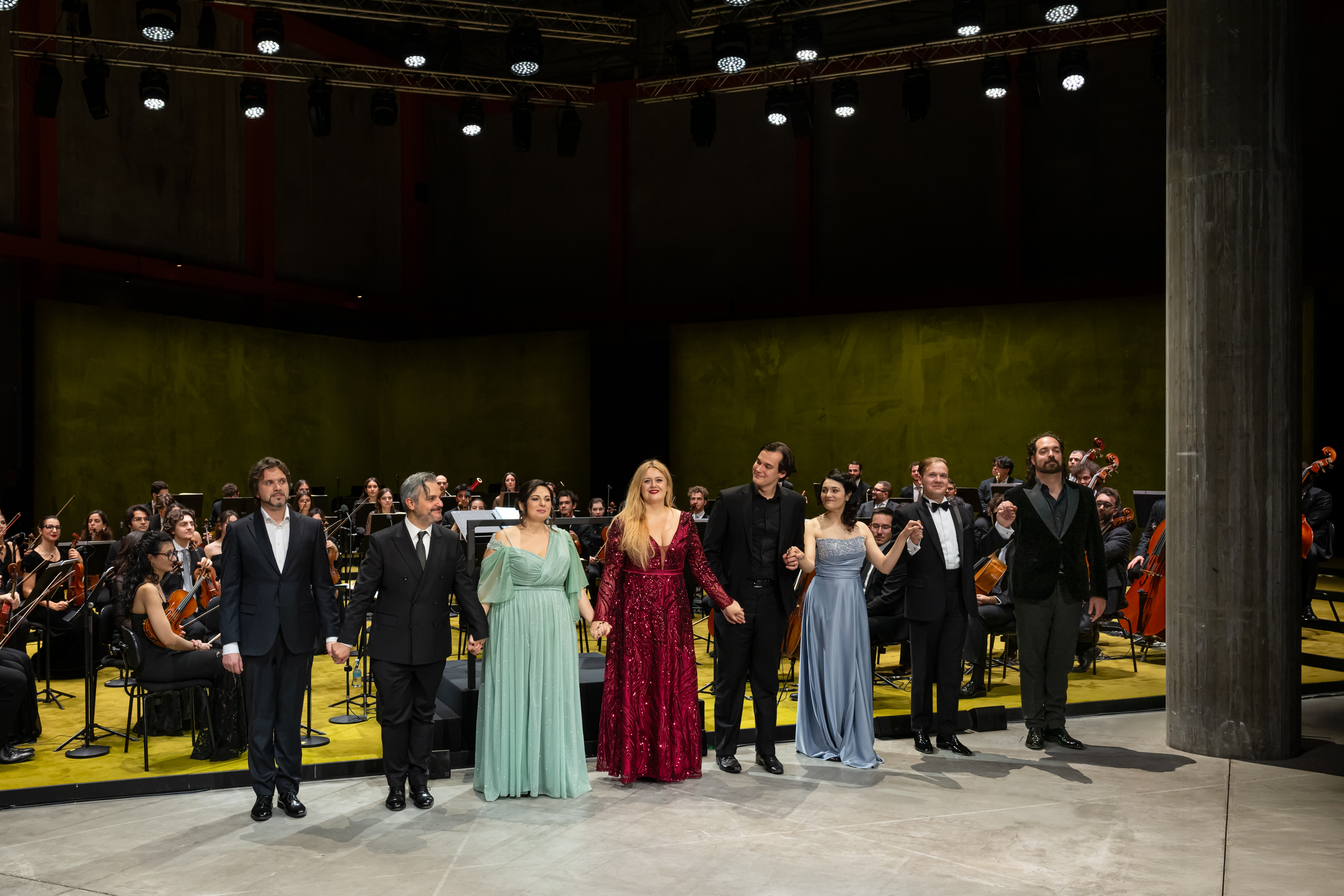
Soloists and conductor take their bow, celebrating a performance shaped by discipline, emotion, and Mozart’s timeless architecture. Photo by Patrick Toomey Neri, Courtesy Fondazione Prada