
Why Don’t Be Dumb is being talked about more than it’s being played
A$AP Rocky’s Don’t Be Dumb feels bigger as a cultural object than as an album: an essay on image, control, fragmentation and the absence of urgency
A$AP Rocky’s Don’t Be Dumb feels bigger as a cultural object than as an album: an essay on image, control, fragmentation and the absence of urgency
After nearly eight years of silence, Don’t Be Dumb arrived burdened by expectation long before anyone could judge it as music. Framed as A$AP Rocky’s long-awaited comeback album, a post-trial statement and a fashion-world flex, the project quickly became a cultural talking point, dissected and theorised far more than it was actually played.
Rather than functioning as a conventional rap LP, A$AP Rocky’s Don’t Be Dumb positions itself as something closer to a conceptual artefact—a fragmented self-portrait shaped by image, control and careful self-curation.
This piece examines why the album feels bigger as an idea than as a listening experience, how its collaboration with Tim Burton reinforces its cinematic logic, and what Don’t Be Dumb ultimately reveals about A$AP Rocky’s current relationship with legacy and visibility—one marked by a striking absence of creative urgency.
Don’t Be Dumb and the Weight of Expectation: Why This Album Could Never Arrive Clean
Don’t Be Dumb Isn’t an album; it’s a character study. After nearly eight years of waiting, expectation became part of the listening experience. That’s why Don’t Be Dumb arrived already overdetermined: the comeback album, the post-trial statement, the fashion-world flex, the proof that A$AP Rocky still mattered. In that sense, the project was never going to behave like a traditional rap LP—and it doesn’t. What A$AP Rocky delivers instead is something closer to a fragmented self-portrait: less a musical return, more a controlled act of self-mythologising.
Visualizza questo post su Instagram
How Eight Years of Silence Turned Don’t Be Dumb Into an Event
From the outset, Don’t Be Dumb signals its refusal to sit neatly in the album format. It unfolds episodically, leaning on atmosphere, pacing, and visual logic more than on song-to-song momentum.
The collaboration with Tim Burton makes this explicit. Burton isn’t here to decorate A$AP Rocky’s world; he helps structure it. The project behaves like a film broken into scenes, each one revealing a different mask, voice, or posture A$AP Rocky has inhabited across the last decade.
When A$AP Rocky Stopped Making Albums and Started Building Worlds
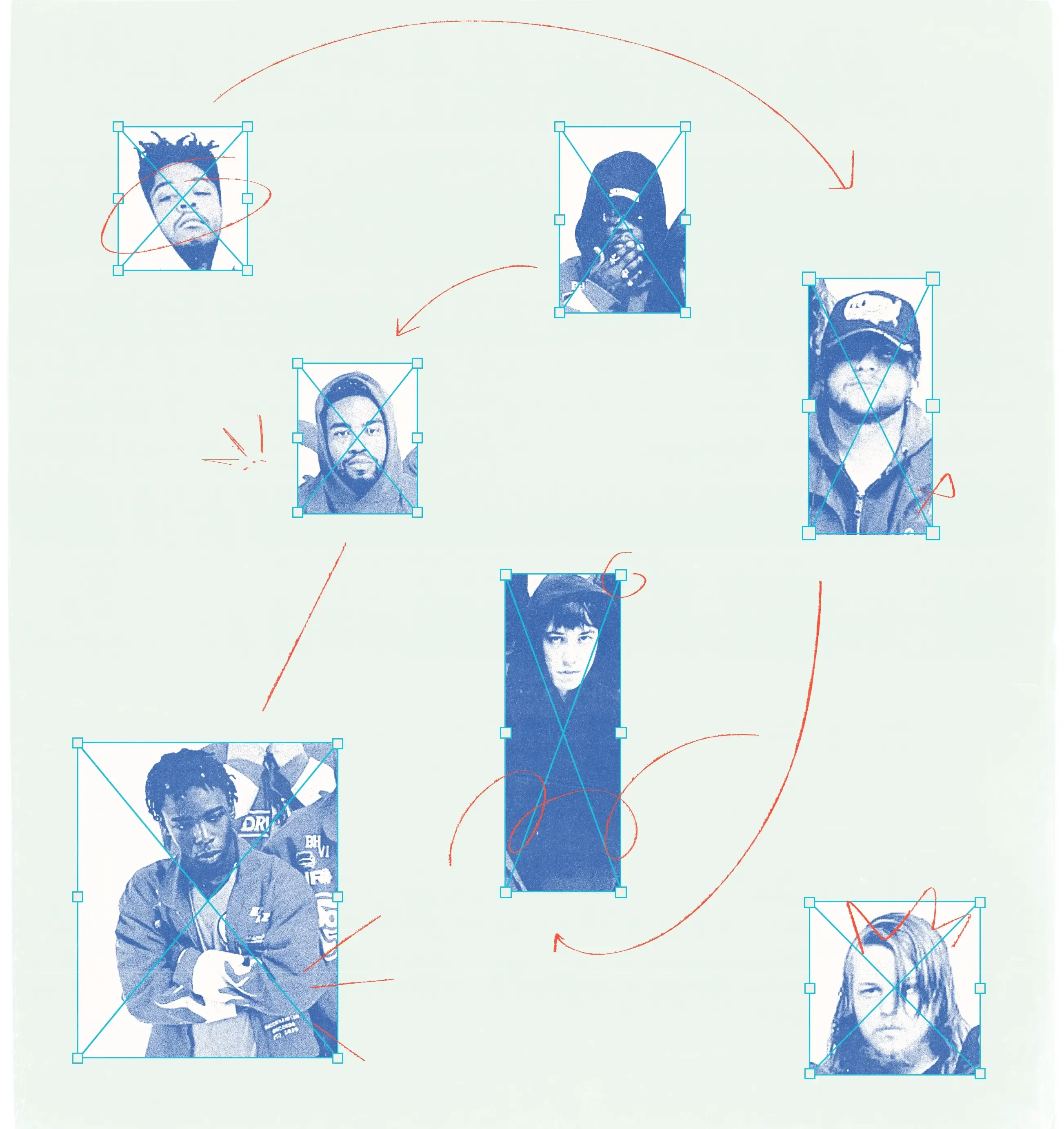
Fragmentation sits at the core of Don’t Be Dumb. A$AP Rocky has always thrived in multiplicity: Pretty Flacko, Lord Flacko, fashion-world auteur, Harlem traditionalist, experimental outlier.
Here, those identities are no longer blended. They’re isolated, exaggerated, and turned into characters—GR1M, Babushka Boi, Mr. Mayers. These aren’t costumes, but coping mechanisms. Each alter ego externalises a phase of his career: a response to pressure, expectation, or legacy.
Visualizza questo post su Instagram
Tim Burton’s New York: Turning A$AP Rocky’s Celebrity Into Something Uncanny
Tim Burton’s expressionist language amplifies this logic. His worlds are filled with outsiders, doubles, distorted selves, figures who look exaggerated because they’re emotionally overexposed. In the Whiskey/Black Demarco visuals, A$AP Rocky’s characters move through New York like misplaced drawings, deliberately artificial presences. The city feels less like a setting than a stage.
Tim Burton doesn’t celebrate A$AP Rocky’s image; he dismantles it, turning celebrity into something uncanny and fragile.
Alter Egos as Emotional Armour in A$AP Rocky’s Don’t Be Dumb
Musically, this fragmentation is both the album’s strength and its flaw. At its best, Don’t Be Dumb captures A$AP Rocky’s long-standing gift for mood and texture—the sense that a song is a space to enter, not just a performance to witness.
Tracks like “Whiskey (Release Me)” or “Air Force (Black Demarco)” feel intuitively assembled, carried by rhythm, cadence, and atmosphere rather than by lyrical exhibitionism.
A$AP Rocky has never been a maximalist lyricist. His power lies in control, in knowing when less does more.
Visualizza questo post su Instagram
When Control Starts to Drain the Urgency from Don’t Be Dumb
But that same restraint sometimes curdles into emotional distance. The album often feels more convincing as a concept than as a sequence of songs.
There are moments of ingenuity, sharp production choices, and unexpected vocal approaches, but they don’t always cohere into momentum. The energy dips just when the project needs the most urgency.
Why Don’t Be Dumb Feels More Complete as a Concept Than as an Album
This helps explain the album’s reception. Don’t Be Dumb is widely seen as good or very good, yet rarely framed as a definitive statement. It doesn’t collapse under its own ambition, but it doesn’t fully transcend it either.
The cinematic apparatus—Tim Burton’s visuals, the myth-making, even the orchestral flourishes—sometimes explains A$AP Rocky more clearly than the music itself. You understand who he has been, what he’s survived, how carefully he curates his image. You’re less certain about where he’s going next.
A Mirror, Not a Victory Lap: What Don’t Be Dumb Ultimately Reveals
That ambiguity feels intentional. Don’t Be Dumb isn’t a dominance play; it’s a document of transition. A$AP Rocky appears fully in control of his narrative, but rarely at genuine risk. The album circles legacy, visibility, and self-curation without quite puncturing them.
Fragmentation becomes both message and method—an honest reflection of an artist who no longer needs to prove relevance, but hasn’t fully surrendered to vulnerability either.
In that sense, Don’t Be Dumb matters precisely because it stops short. It captures a moment where visual clarity outpaces musical urgency, and where self-awareness replaces hunger. As a cultural object, it’s rich, referential, and deliberately constructed. As an album, it’s compelling but incomplete. And maybe that’s the point. Not a comeback. Not a victory lap. But a mirror held up long enough to show the cracks, then quietly lowered.
Edoardo Passacantando
Editor, Milan