

Why emerging designers are driving a material-led shift at Milan Design Week 2026
Emerging designers at Milan Design Week 2026: Emilia Tombolesi on material-led design, Fuorisalone and experimental practice
Emerging designers at Milan Design Week 2026: Emilia Tombolesi on material-led design, Fuorisalone and experimental practice
At Milan Design Week, the most radical ideas rarely come from the main stage. Alongside the Salone del Mobile, the event has become a platform for tracking where design is heading. Yet beyond headline installations and established names, much of the real innovation happens in smaller venues, independent exhibitions, and material-led practices driven by emerging designers.
As part of Fuorisalone 2026, this new generation approaches design as a process defined by research, tactility, form and interaction. Among them is Emilia Tombolesi, whose work moves between sensory design and material experimentation, presented this year at the Brera Design District.
From London to Milan: The Making of an Emerging Design Identity
When we last spoke with Emilia Tombolesi, she had just completed her final project for the BA in Product Design at Istituto Marangoni London, showcased at the Design Museum London during the Momentum collective exhibition for the London Design Festival in September 2024.
Her project, Picasso, was a sensory construction toy designed to connect therapists, families, and neurodivergent children through tactile exploration. Blending wood, plastic, sand, and textured surfaces, it was featured in Wallpaper magazine in 2025—a remarkable achievement for a young designer.
Since then, her practice has grown beyond the academic sphere, evolving into a more reflective and socially attuned exploration of how design and materials resonate in everyday life—and now ready to be unveiled in Milan.
Why Milan Design Week 2026 Marks a Turning Point for Material-Led Design
Next week, Emilia Tombolesi returns to the spotlight in Italy, unveiling her latest series, Calypso and Etna, during Milan Design Week 2026, which encompasses both the Salone del Mobile.Milano and the Fuorisalone events held across the city. As one of the most dynamic platforms for emerging designers, the Fuorisalone in particular offers Tombolesi the ideal opportunity to present new ideas, test concepts with a global audience, and bridge creativity with the realities of industry and the market.
Ahead of the showcase at the Sounds of Design installation in the Brera Design District, we were curious to learn more about the path that led Tombolesi to Milan Design Week 2026 and what she expects from the opportunity as an up-and-coming designer.
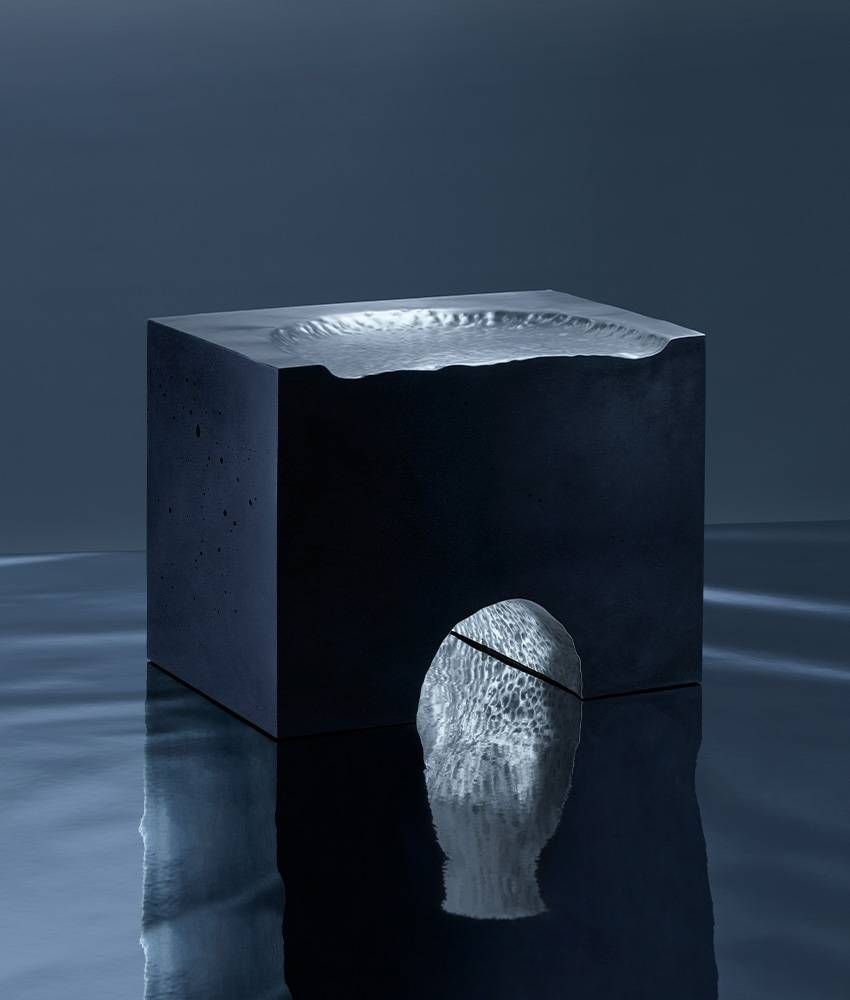
Iddu - Stool. Aluminium and Jesmonite. 49(W)cm x 34(H)cm x 37(D)cm. Designed by Emilia Tombolesi (2025). Courtesy Mattia Maestri
Building a Practice Without Briefs: What Design Looks Like After Graduation
After graduating in product design, where did your work take you, and what influenced your direction most in those early stages?
Emilia Tombolesi: After graduating, I took part in the Grymsdyke Farm workshop programme in London, which was a key experience for me. It really shifted my understanding of design, as I began to see it less as a rigid process and more as a kind of game, or even a form of self-expression. Being immersed in materials, experimentation, and research allowed me to develop a much more intuitive and playful approach to making.
What experiences did you deliberately seek out after university, and how have they informed the way you approach making today?
Emilia Tombolesi: After that, I actively sought out experiences that combined making with innovation and research, rather than just execution. I completed a mentorship at Studio Workshop South, managed by designer and lecturer Desmond Lim, and later an internship at Hot Wire Extensions in Zurich. These experiences deeply shaped my practice and reinforced an approach to making driven by curiosity, using materials and processes to ask questions rather than simply produce outcomes.
Starting Without Permission: The Mindset Behind Independent Design
What really changes when you move from university projects to independent design practice?
Emilia Tombolesi: At university, I remember constantly wondering how tutors even came up with briefs. I genuinely thought that without that external structure, I wouldn’t know where to start or how to develop a project. What surprised me was how natural that process becomes once you’re out of that environment. If you let curiosity and a desire to learn guide you, ideas start to emerge quite organically. The real shift was understanding that you don’t need permission or a predefined brief to begin: you just need a question, or even a small spark of interest. The hardest step, though, is admitting that you don’t know what you’re doing, which is not easy at the start.
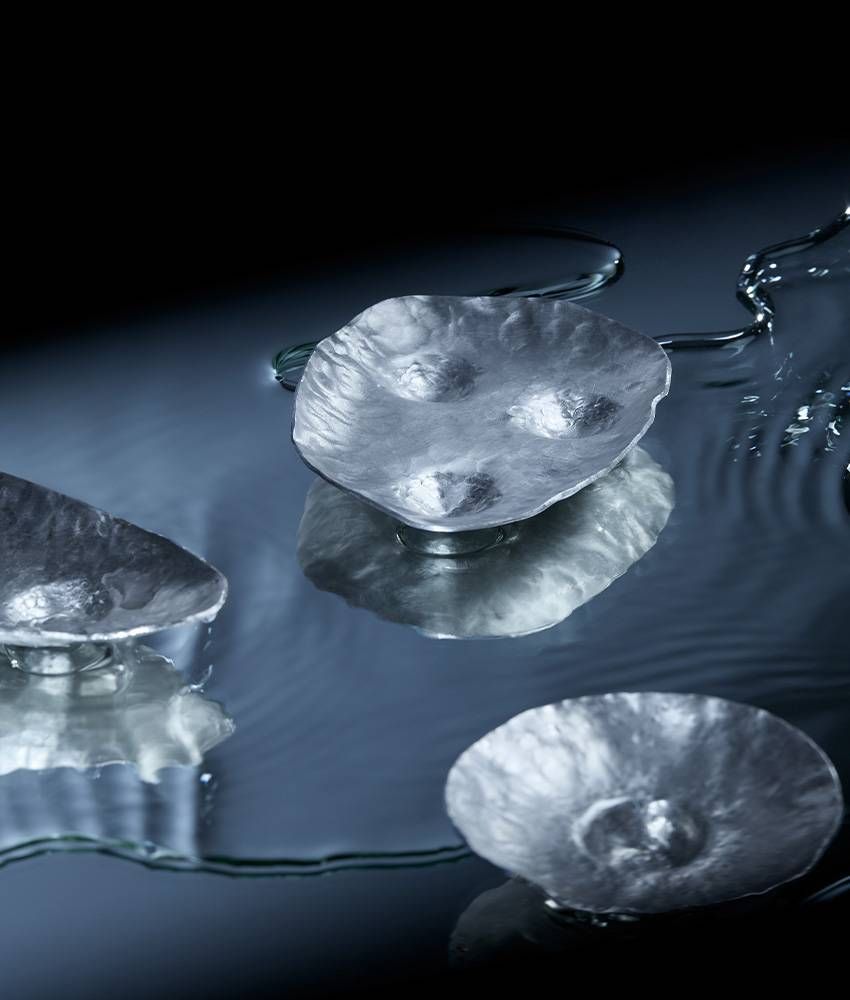
Calypso is a series of cold-hammered sculptural objects exploring the use of expressive form and repussè to create sculptural feet. Designed by Emilia Tombolesi (2025). Courtesy Mattia Maestri
How did you realise that uncertainty could become part of your design process rather than something to overcome?
Emilia Tombolesi: I can be quite stubborn and ego-driven—definitely still working on that—but once you accept uncertainty, you open yourself up to genuine learning and exploration. That’s when things start to get exciting.
When Materials Take the Lead: Rethinking Process in Contemporary Object Design
What are you exploring through your work right now, and how does material-led design guide that process?
Emilia Tombolesi: Recently, I’ve been working on a series of material-led experiments that explore transformation through heat and force, particularly with metal. The process is quite raw, pushing materials to their limits and observing how they react, deform, and stabilise.

Cratere - Tray. Aluminium and Jesmonite. 13(W)cm x 2.5(H)cm x 13(D)cm. Designed by Emilia Tombolesi (2025). Courtesy Mattia Maestri
Your work sits between sculpture and design—how do you define that balance in your practice?
Emilia Tombolesi: The outcome is not entirely predetermined—it emerges through interaction with the material itself. It’s less about control and more about negotiation with the material, allowing the process to shape the result.
Fuorisalone 2026 as a Launch Platform: How Emerging Designers Gain Visibility During Milan Design Week
What will you present at Fuorisalone 2026 during Milan Design Week, and how did this opportunity take shape?
Emilia Tombolesi: I’ve been invited to present my work as part of the immersive installation Sounds of Design, which explores the relationship between sound, space and matter, during the Salone Internazionale del Mobile in Milan. I’ll be showcasing my two series, Calypso and Etna, in the Brera Design District as part of the Fuorisalone events, and I couldn’t be more excited.
Calypso and Etna: Where Sculptural Form Becomes Functional Object
The Etna series draws on Sicilian volcanic landscapes—how do materials and process come together in these works?
Emilia Tombolesi: Etna is inspired by my heritage. The pieces are made using hammered aluminium moulds to shape cast Jesmonite, a versatile and eco-friendly two-part material. They capture a moment of tension within the material, almost as if frozen mid-eruption. The work embraces unpredictability, allowing the physical behaviour of hammered metal to guide and “freeze” the process. It’s also an homage to the mould itself, a tool usually hidden, visible only through its outcome, but here brought into the foreground as the protagonist.
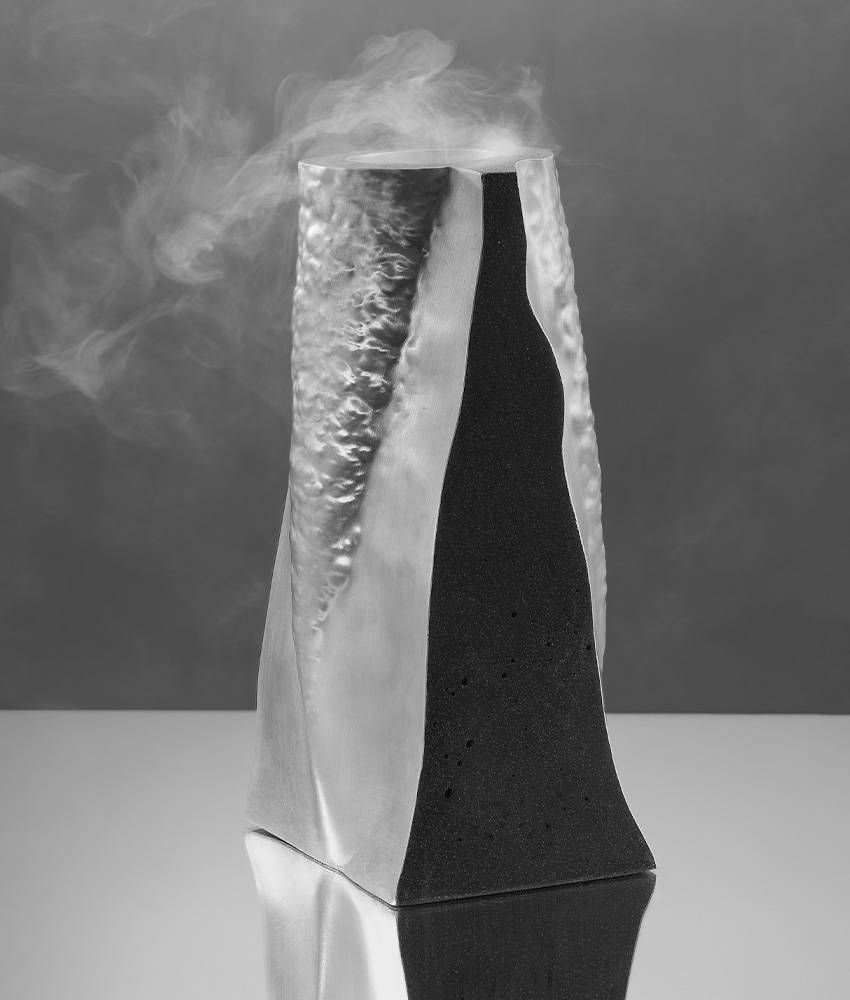
Bedda, vase. Hammered aluminium, Jesmonite and white sand. Dimensions: 8 cm (L) × 13 cm (W) × 31 cm (H). Part of the Etna collection of sculptural objects inspired by Sicilian volcanic landscapes. Hammered aluminium moulds shape cast Jesmonite. Designed by Emilia Tombolesi (2025). Courtesy Mattia Maestri
In what ways does the Calypso series diverge from Etna, and what are you exploring through these sculptural objects?
Emilia Tombolesi: Calypso is a series of smaller cold-hammered sculptural objects that explore repoussé techniques to create functional pieces with expressive forms, playing with shapes drawn from our collective visual memory.
Beyond Exposure: What Fuorisalone Reveals About the Future of Design Careers
As an emerging designer, what do you hope to gain from Milan Design Week?
Emilia Tombolesi: For me, events like the Fuorisalone, during Milan Design Week, are less about immediate outcomes and more about exchange. It’s an opportunity to place your work in a broader context, to see how people respond, and to have real conversations with other designers, studios, and audiences.
At this stage of your career, what does visibility actually mean to you?
Emilia Tombolesi: As an emerging designer, I think the most valuable thing is visibility, not just in terms of exposure, but in being part of a broader design dialogue. Events like this help you understand where your work sits, what resonates, and where it might go next, which is both terrifying and thrilling, in equal measure.
How important are connections and collaborations in determining what comes next for your work?
Emilia Tombolesi: Fuorisalone 2026 is an opportunity to build connections and explore future collaborations. But more than anything, I see it as a moment to test ideas in the real world, to step outside your own bubble and see how your work lives and breathes among others. And maybe get a few drinks while talking about design, which, let’s be honest, is the best part of Milan Design Week.
Silvia De Vecchi
Librarian, London




 EMERGING DESIGNER What makes Pineapples Don’t Have Sleeves the Colombian fashion brand to Know? Meet Johanna Nodier 30/09/2026
 .jpg)


-copy-3.gif)