

Inside Paris Fashion Week: he unseen reality of working backstage at a luxury fashion show
What does it really mean to work backstage at Paris Fashion Weekespecially when a show a creative chapter? In January 2026, Patou unveiled its Autumn/Winter 2026–27 collection, the final runway designed by Guillaume Henry after seven years redefining the historic Maison founded in 1914 and owned by LVMH.
In this first-hand account, Alberto Carmona Gutiérreza Fashion Design MA student at Istituto Marangoni Parisreflects on his role as a dresser during Henry’s last show, offering an insider perspective on how a luxury fashion house operates under pressure. Beyond the runway spectacle, the piece examines garment construction, quick changes, the mechanics of creative direction and the disciplined choreography that defines the reality of the Paris runway—particularly at a moment of transition for one of France’s established brands.
Inside the Backstage of a Creative Director’s Final Show
What does it take to sustain creative authority within a luxury fashion house, particularly during the Paris shows, when a runway carries both the weight of brand history and the uncertainty of transition? Backstage at Patou’s Autumn/Winter 2026 presentation—Guillaume Henry’s final collection for the house—I that this question is not resolved in theory, but in practice. It was no longer a authorship, but something resolved in real time through timing, coordination and responsibility.
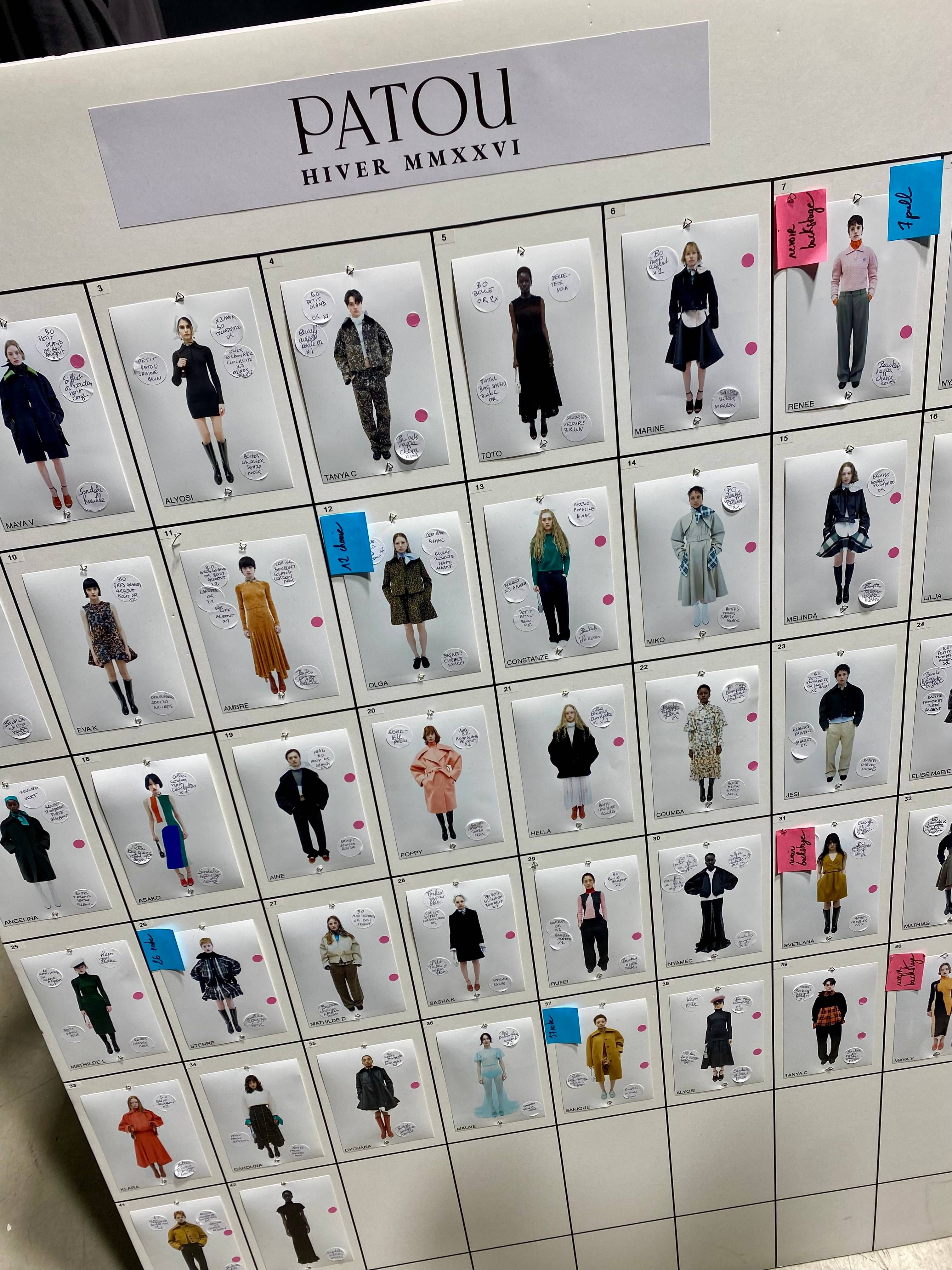
Backstage lineup at Patou Autumn/Winter 2026–27, Paris Fashion Week. Each look mapped, timed and rehearsed—where Guillaume Henry’s final runway begins long before the spotlight. Courtesy of the author. Working as a dresser a French maison owned by LVMH, I found myself in an environment where creative direction and operational demands . What as composure is preceded by fittings, recalibrations, last-minute adjustments and a chain of decisions that must align without hesitation. Behind the scenes, the discipline of the fashion industry reveals itself through method rather than spectacle.
How a Luxury Fashion Show Actually Comes Together Backstage
From the first moment backstage, it was clear that a fashion show is less an event than the visible outcome of months of hard work. My role involved assisting with the preparation and sequencing of garments, ensuring each look was ready before stepping onto the runway and supporting the team during quick changes. Transitions unfolded in seconds, yet those seconds depended on anticipation and coordination, not speed alone.
What struck me most was not the intensity, but the interdependence. Backstage functions as a network: stylists, dressers, production teams and designers operate with distinct responsibilities yet remain acutely aware of one another. As models lined up before the show, I watched Guillaume Henry’s ideas move from rail to body, from concept to form. In that space between rehearsal and presentation, fashion felt less abstract and more accountable to its own construction.
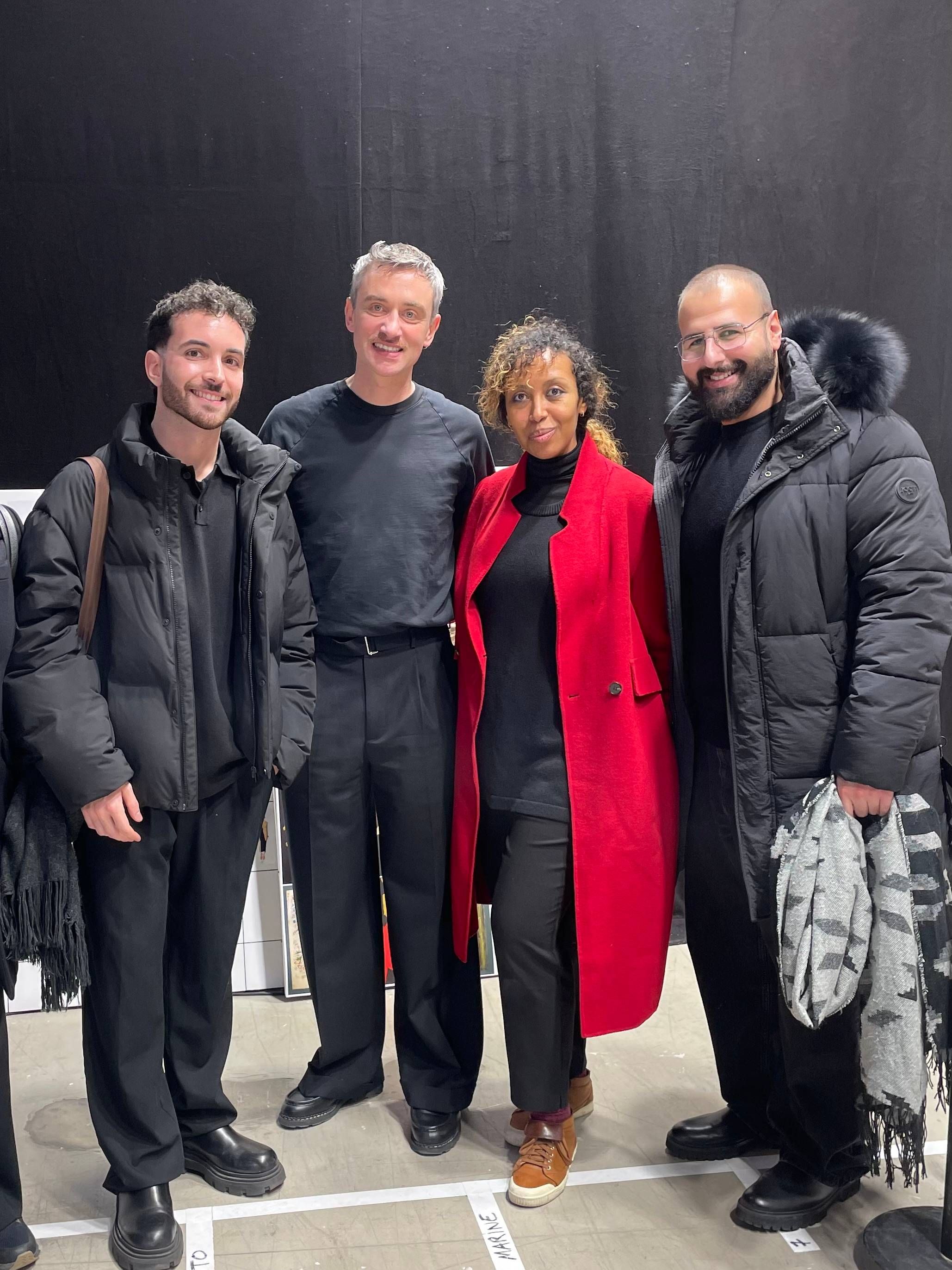
Guillaume Henry backstage at Patou Autumn/Winter 2026–27, Paris Fashion Week—captured in a moment of transition, where creative direction meets the immediacy of the runway.
Atelier vs Maison: Does Scale Change the Discipline of Making?
Standing backstage in Paris, I couldn’t help but think of the small ateliers in Spain where I first learned to cut and construct a garment. This meaning felt personal because of where I come from: the environments could not have been more different in scale or visibility, yet the logic of the work was unexpectedly familiar. In those modest workshops, limited resources demanded ingenuity and precision; within a Parisian maison owned by LVMH, the structure is more complex, but the discipline is no less exacting.
Studying in Paris is a privilege I once regarded as distant. Yet witnessing the inner workings of a major luxury house made one thing clear: commitment to craft and sustained effort can extend beyond its origin. Whether in a local studio or a global brand, a garment still depends on patience in process, clarity in execution and respect for construction.
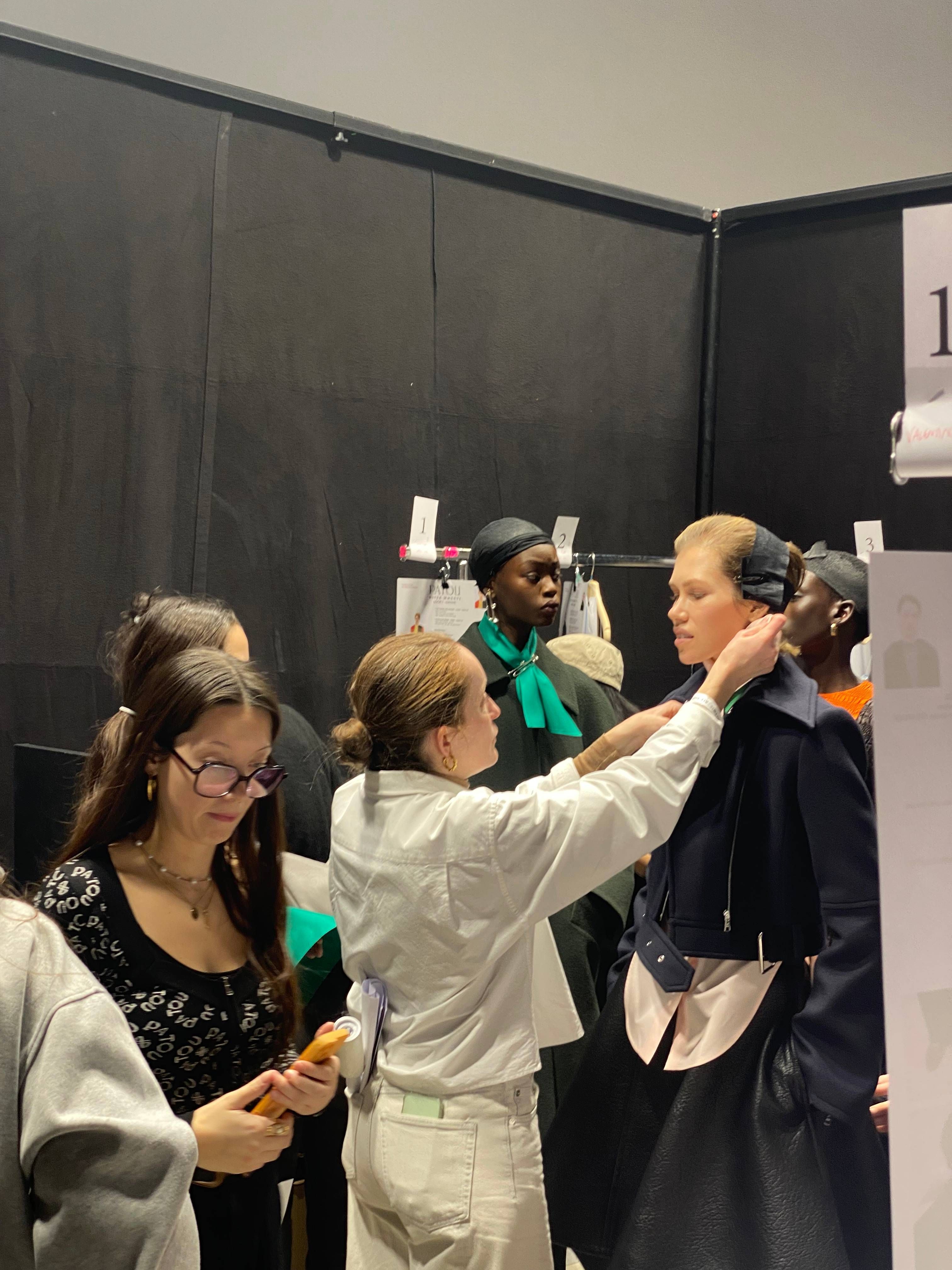
Minutes before the runway at Paris Fashion Week, fittings and final adjustments define the discipline behind Patou’s Autumn/Winter 2026–27 show.
Design Under Pressure: What the Runway Demands from a Garment
Professionally, the experience reshaped how I approach design. Observing garments under the pressure of timing—how they respond to movement, how construction speed, how styling perception—reinforced the idea that aesthetics alone insufficient. A runway look must hold its structure in motion and communicate without hesitation. This approach now informs my Master’s projects, guiding the development of garments that are not only formally resolved, but structurally functional and expressive.
Working backstage also clarified my understanding of the industry. Fashion’s public image often centres on visibility, yet its credibility depends on process. Participating in Patou’s Autumn/Winter 2026–27 show allowed me to observe that process close, particularly as the house approached a moment of transition.
Creative leadership now shifts more frequently across luxury brands, but standing backstage at the final show before that change drew my attention to what keeps a house steady: rehearsals, adjustments and the quiet coordination that persist beyond any single collection. Contributing to the presentation revealed the discipline required to sustain a label of that scale on the Paris runway.
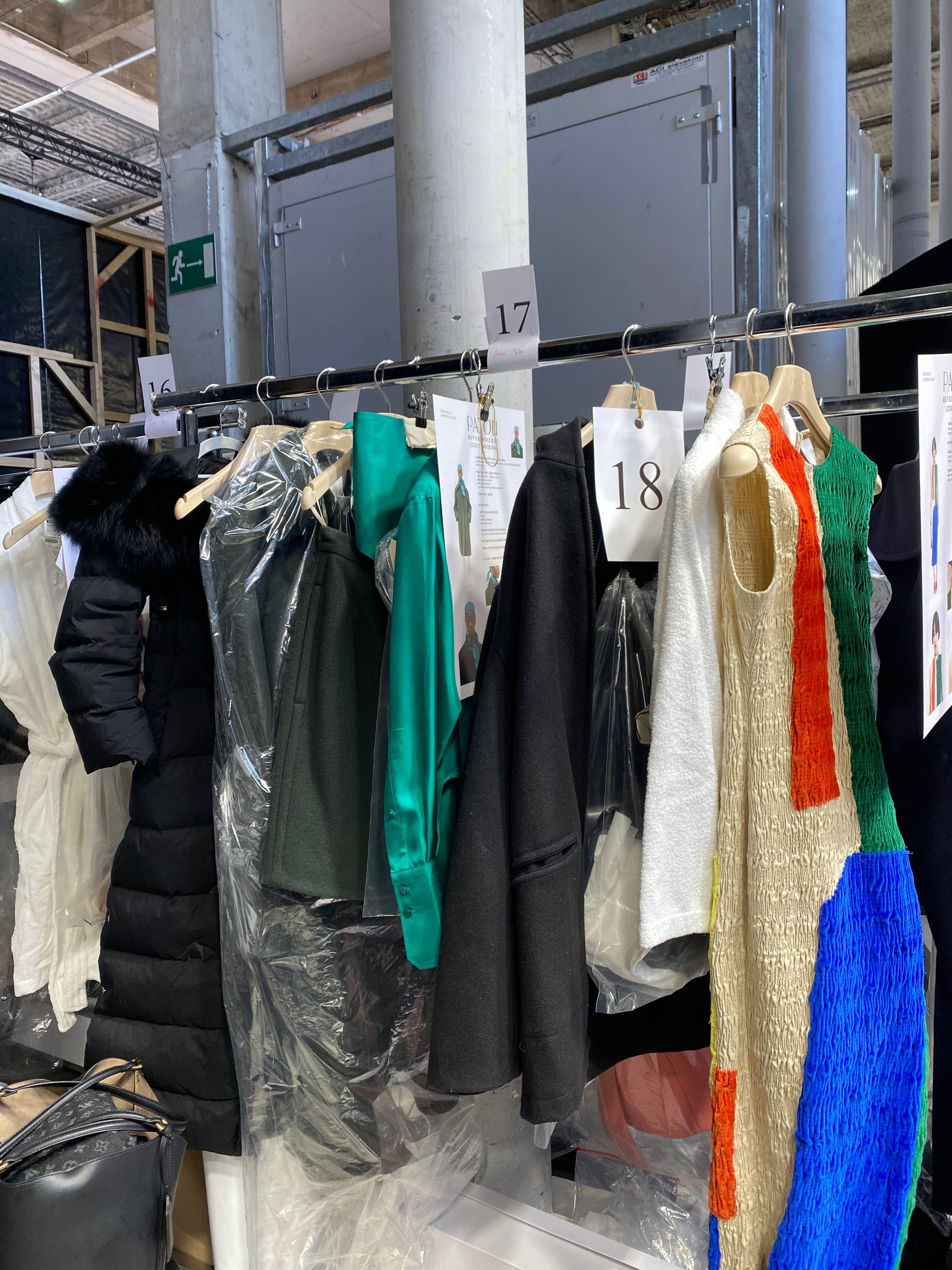
Garments on standby backstage at Patou AW26–27, Paris. Construction, sequencing and precision underpin the reality of a luxury fashion show under pressure.
From Fashion School to the Luxury System: Where Practice Becomes Professional
Experiences this undere the role of education in preparing emerging fashion designers for the realities of the industry. Studying at Istituto Marangoni in Paris has meant engaging not only with academic training but with opportunities that place students in direct contact with professional environments.
Bridging the between study and practice is essential in a field where creative ambition must coexist with operational understanding. Integrating real-world experience into my Master’s programme has therefore been less an addition than a necessary extension of the work itself.