
Palazzo Turati reborn: Milan’s historic palace transformed into the ultimate fashion school

Milan’s Palazzo Turati was reinvented by Architect Andrea Grassi as Istituto Marangoni’s cutting-edge fashion school, blending history with modern design
How Palazzo Turati Became the New Home of Istituto Marangoni Milano
A historic Milanese palace has been transformed into the ultimate fashion school. But how do you reinvent one of the city’s most beautiful and culturally significant buildings—Palazzo Turati—while preserving its timeless charm? This challenge inspired architect Andrea Grassi, who was entrusted by Istituto Marangoni to oversee the sensitive transformation of this architectural gem into the new home of its Milano school.
September 2025 marked a major milestone for Istituto Marangoni Milano: not only did the school relocate to Palazzo Turati, but the move also coincided with the institution’s 90th anniversary—a celebration of nine decades where fashion and luxury heritage have seamlessly blended with innovation and contemporary creativity.
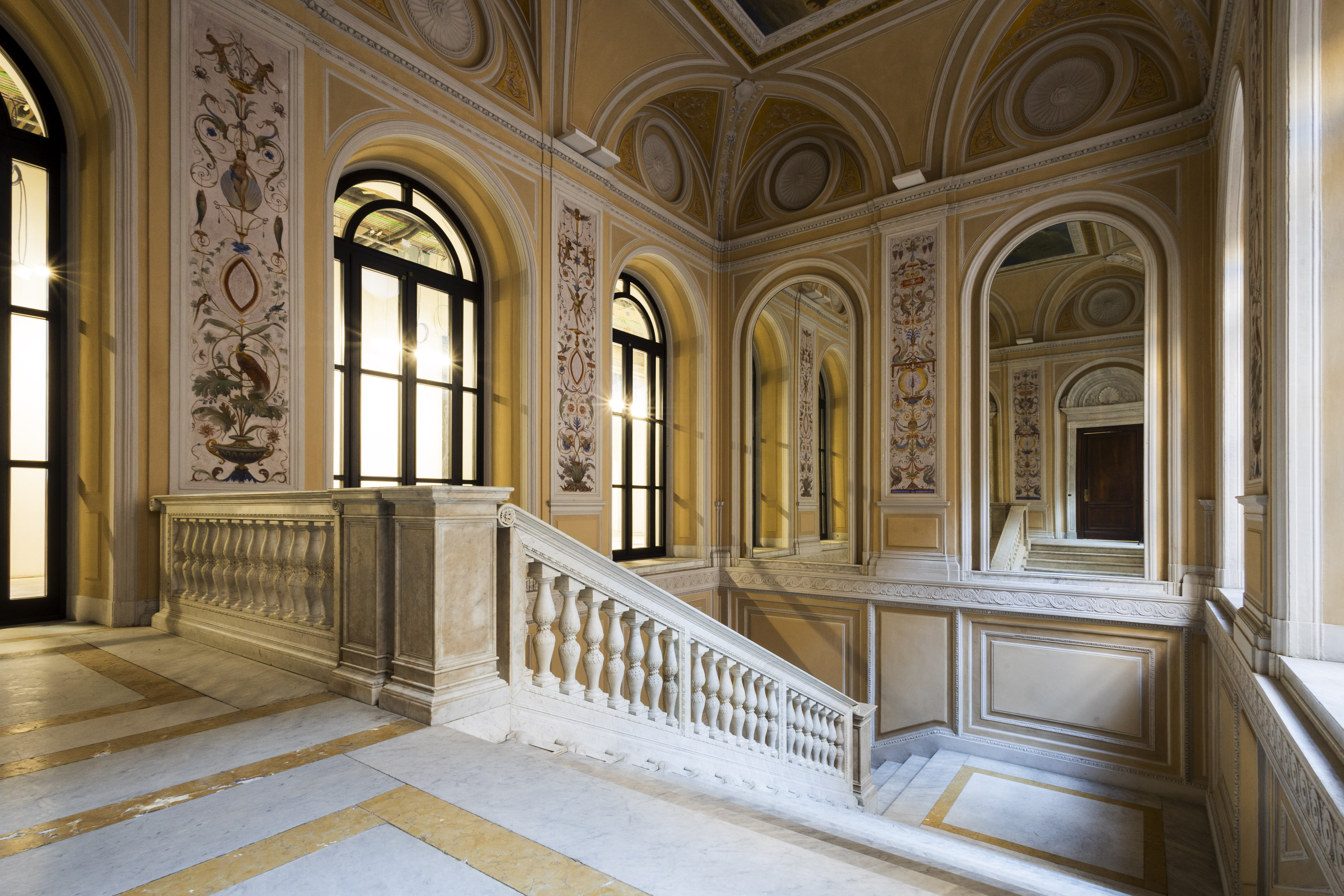
A Neo-Renaissance Masterpiece Reimagined for Modern Fashion Education
Originally built in the late 1800s for Count Francesco Turati, the palazzo stands as a masterpiece of neo-Renaissance grandeur. Its distinctive diamond-point façades, sweeping granite colonnade, and elegant central courtyard embody Milan’s architectural legacy. Inside, frescoed ceilings, intricate parquet floors, and sculptural details reflect centuries of Italian craftsmanship and design culture.
Today, the building has been reimagined to accommodate state-of-the-art studios, workshops, and collaborative spaces, providing an inspiring environment for the next generation of global talent destined to become professionals in the fashion, beauty, and luxury hospitality sectors. From the rooftop, students enjoy sweeping views spanning from the Duomo’s spires to the contemporary skyline of Porta Nuova—where historic Milan meets the future.
Meet Andrea Grassi: The Globetrotting Architect Who Reinvented Palazzo Turati
Architect Grassi—founder of the acclaimed Milan-based design studio Genius Loci Architettura (GLA), along with colleagues Enrico Santi and Stefano Boninsegna—brings a distinctly international sensibility to the project.
A self-described globetrotter, Grassi launched his career abroad, collaborating with prestigious hospitality design studios from Boston to Honolulu, London, and Seville. Leading major projects across the Pan-Pacific, North Africa, and the Red Sea, he cultivated a solid and widely recognised global network—a defining hallmark of his career and a key asset in restoring a landmark as iconic as Palazzo Turati.

Andrea Grassi, founder of the GLA studio, has managed the ambitious renovation project of Palazzo Turati
Balancing Milan’s Historic Charm with a Cutting-Edge Fashion School
Designing interiors or undertaking architectural interventions—especially within historic buildings—requires meticulous attention to both function and aesthetics. From the outset, Davide Riva, Architectural Design & Operations Manager at Istituto Marangoni, played a pivotal role. He tackled logistical challenges like space organisation and delivery, while also focusing on what he describes as the “stylistic balance between the institution’s brand identity and the artistic grandeur of the building.”
Riva notes that the design approach was anchored in “continuity and innovation,” two guiding principles that shaped the dialogue between the palace and the school. The project sought to “harmonise two strongly characterised identities”: the historic essence of Palazzo Turati and the contemporary educational spirit of Istituto Marangoni. The intention, he notes, was to enhance the palace’s historic and artistic features while integrating elements inherent to “the fashion, luxury, and educational world.”
Architect Davide Riva also reflects on the visitor experience, emphasising how students and guests were guided through what academics would define as a “promenade architecturale” during the recent FAI Days. As he puts it, anyone entering Palazzo Turati today is “immersed in a whirlwind of beauty from every perspective and angle,” a testament to the design vision’s success.
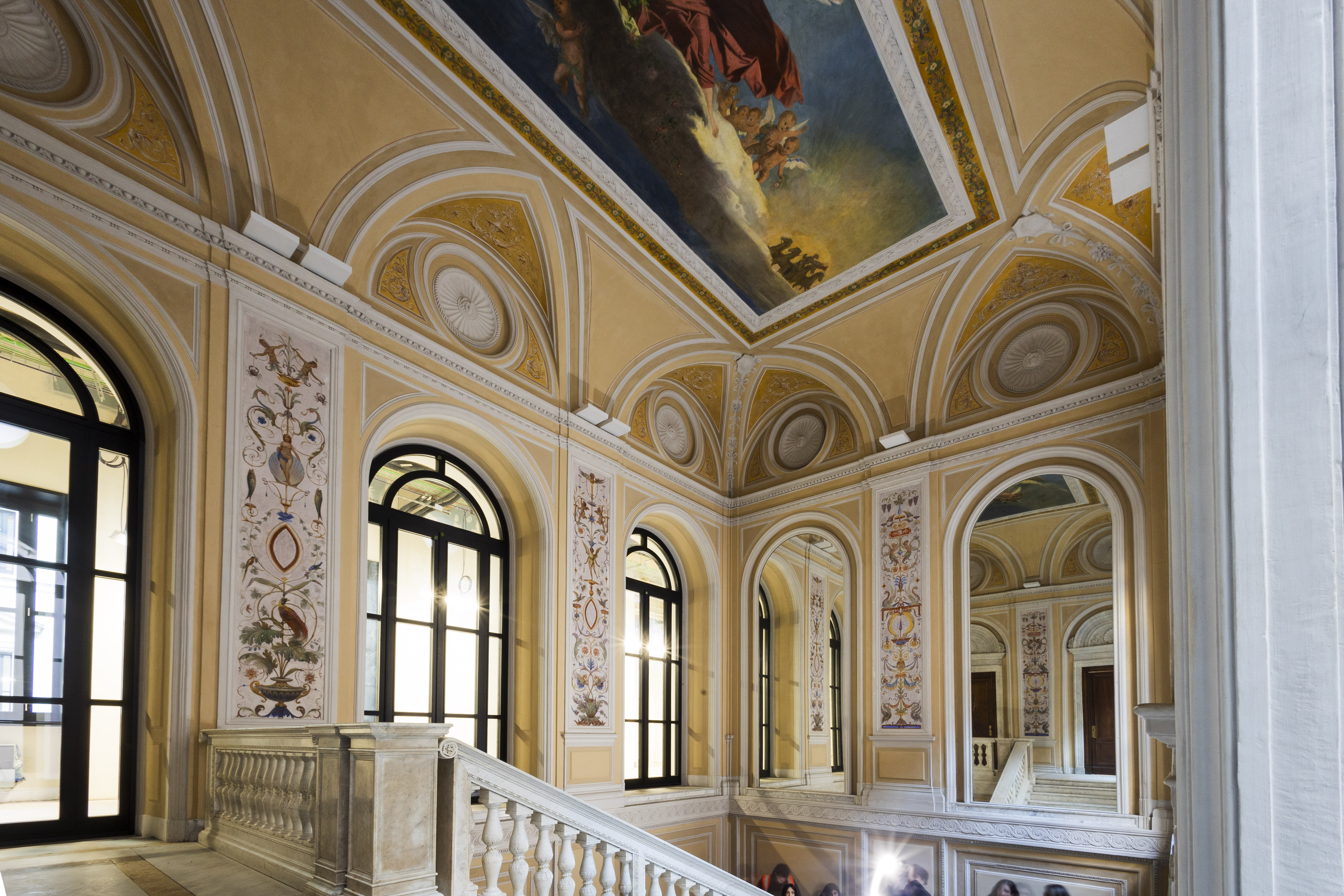
Details of the sumptuous interiors of Palazzo Turati, the new home of Istituto Marangoni's Milan Fashion School
Reviving a Milanese Icon: The Monumental Renovation of Palazzo Turati
Culminating in the inauguration of the new Istituto Marangoni Milano school, the project proved to be a monumental undertaking—one that restored a neo-Renaissance palace to its rightful prominence in the cityscape. The building’s diamond-point rustication, reminiscent of Ferrara’s Palazzo dei Diamanti, has been revitalised, breathing new life into this corner of the metropolis. Architect Andrea Grassi shared his insights with us.
Architect Andrea Grassi Reveals the Secrets Behind Restoring Palazzo Turati
How was the historical essence of the building preserved while balancing the Istituto Marangoni brand and the requirements of a historic palace?
Andrea Grassi: Before undertaking any renovation plans, we carefully considered the palace’s historical value, deeply rooted in Neo-Renaissance classicism. Our approach to the spaces was guided by a deep respect for their heritage—we essentially ‘tiptoed’ into the building. Our main goal was to restore and enhance the original volume, which had suffered significant damage in the mid-1940s. In alignment with Istituto Marangoni’s brand, we worked hand in hand to create spaces that balance educational needs with opportunities for social interaction. We also opened the entrance adjacent to the Galleria Meravigli, unveiling a previously hidden gem for the entire city.
If you had to describe the project in one word or key concept, what would come to mind?
AG: Beauty. Istituto Marangoni Milano is the most beautiful fashion school in the world. Studying fashion in a prestigious historic building in the heart of this city—there is nothing more to add.
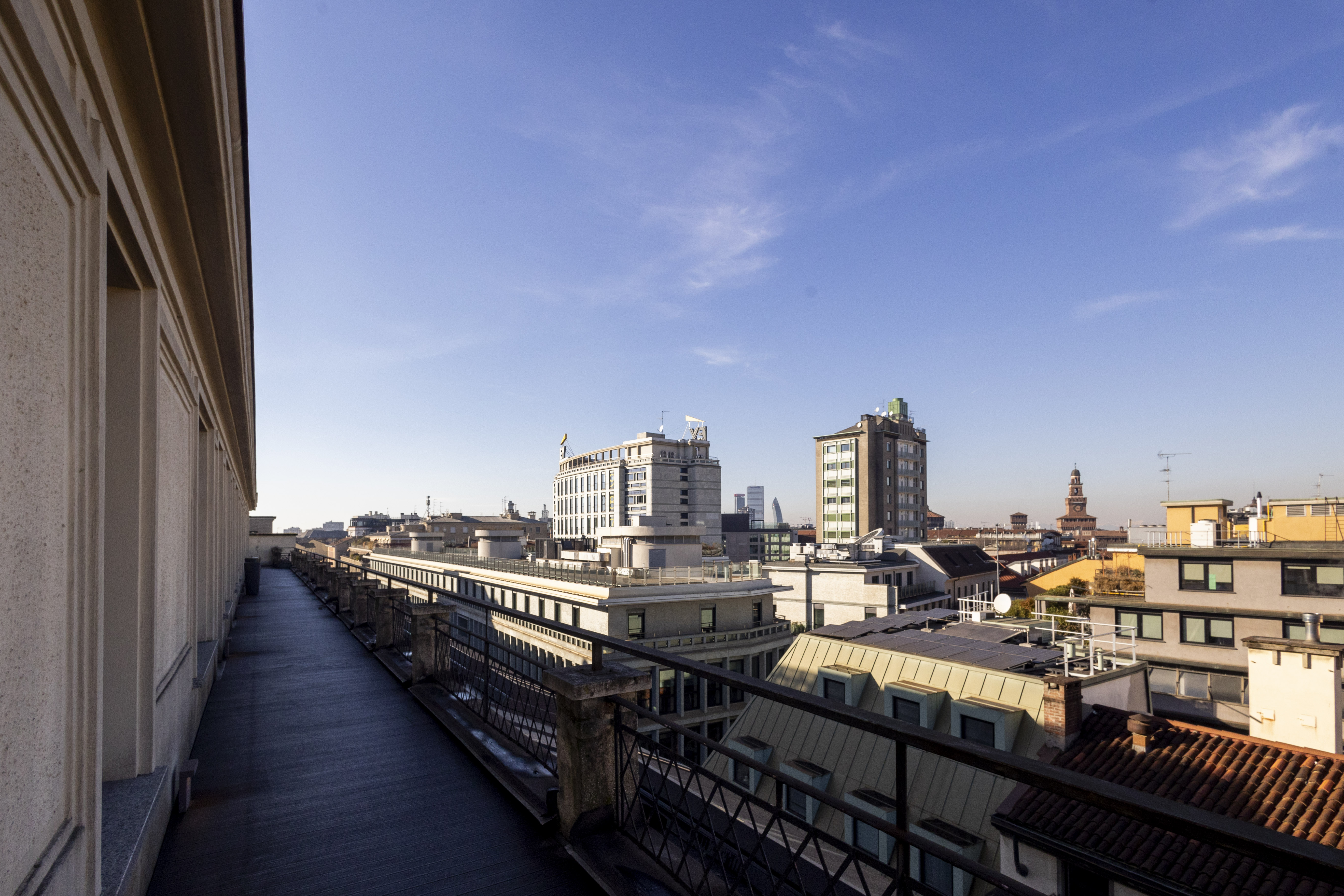
Stunning view of the Milan skyline from the new school building
Andrea Grassi’s Expert Advice for Aspiring Global Designers
During the project, were there any sudden changes or quick decisions required?
AG: We began work on the building’s renovation in April 2025. Transforming 9,000 square metres from a raw structure into its present state, all between April and September, was far from simple.
What advice would you give to students studying design who aspire to manage major projects like yours? What kind of mindset is needed?
AG: First and foremost, travel and gain experience abroad. From my perspective, exposure to different cultures, countries, and working methods is invaluable. Staying in one place can genuinely limit professional growth in today’s interconnected world. An architect’s work also relies heavily on relationships and networking, which open doors both locally and internationally. Having spent ten years abroad, I can personally attest to this. My sincere advice: cultivate your network and explore the world.