
-copy-2.jpg)


.jpg)

.png)



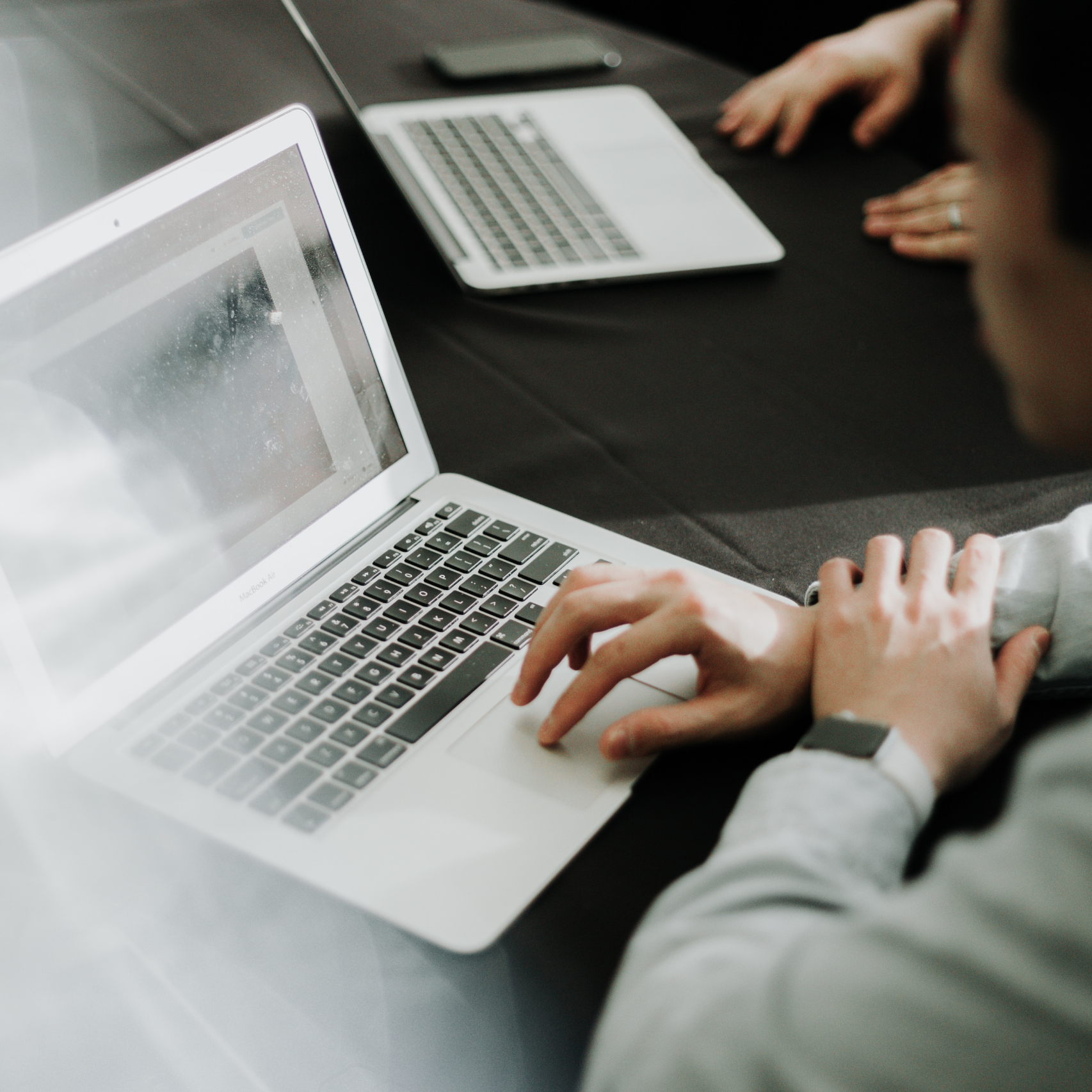



Vision and creativity remain fundamental. Today, however, the fashion industry demands new skills from designers: a strong command of digital design and 3D pattern-making platforms, now central to how collections are developed. Tools such as Clo3D—among the first taught at Istituto Marangoni—allow designers to create three-dimensional garments and test fit, weight, drape and movement before a single physical prototype is made. This approach saves time, reduces waste and paves the way for more sustainable, conscious design.
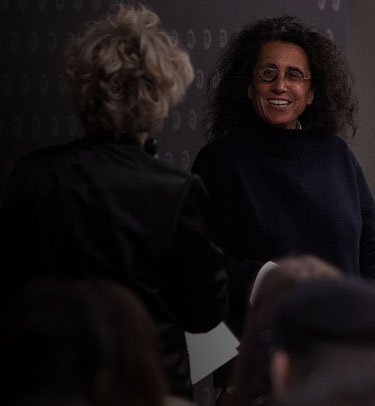
Irene Festa, Fashion Design Programme Leader and author of Moda Illustrata, explains in this interview why mastering digital pattern making is no longer an alternative to creative talent, but a way to enhance it and stay competitive.
How do you see the role of artificial intelligence in the future of fashion design? Is it changing the creative process, or is it simply integrating into it?
Today, design is no longer about pure execution; it’s about “hacking” traditional workflows to bring the idea back to the centre of everything. There is no need to relearn what design is; rather, to evolve how it takes shape. Our goal is to bridge the gap between established skills and the new digital landscape.
Which AI tools do you consider the most revolutionary and effective for designing and modelling collections?
The most common mistake is to think of AI as a “magic button”. People are often disappointed because they expect the tool to have taste. In reality, AI is a powerful amplifier: without solid foundations in proportions, materials and fashion history, the output will be empty. The real challenge is to become an even more knowledgeable designer, one who can guide the machine towards a professional result without falling into generic aesthetics. One of the biggest time-savers today is the ability to render a technical drawing instantly across multiple fabrics and colourways.
What are the main AI tools currently used in the classroom, and how are they applied throughout the design process?
We mainly use the Adobe suite, which integrates both Firefly (proprietary) and Google’s Nanobanana. These AI tools deliver highly targeted and professional results. With Firefly, for instance, you can upload a flat technical drawing and visualise it in different variations, seeing straight away whether a jacket works better in blue denim or red corduroy, with very realistic outputs. That said, tools evolve constantly: we are currently working with The Fabricant to integrate their specialised AI fashion tool.
Can you explain the practical applications of these AI tools?
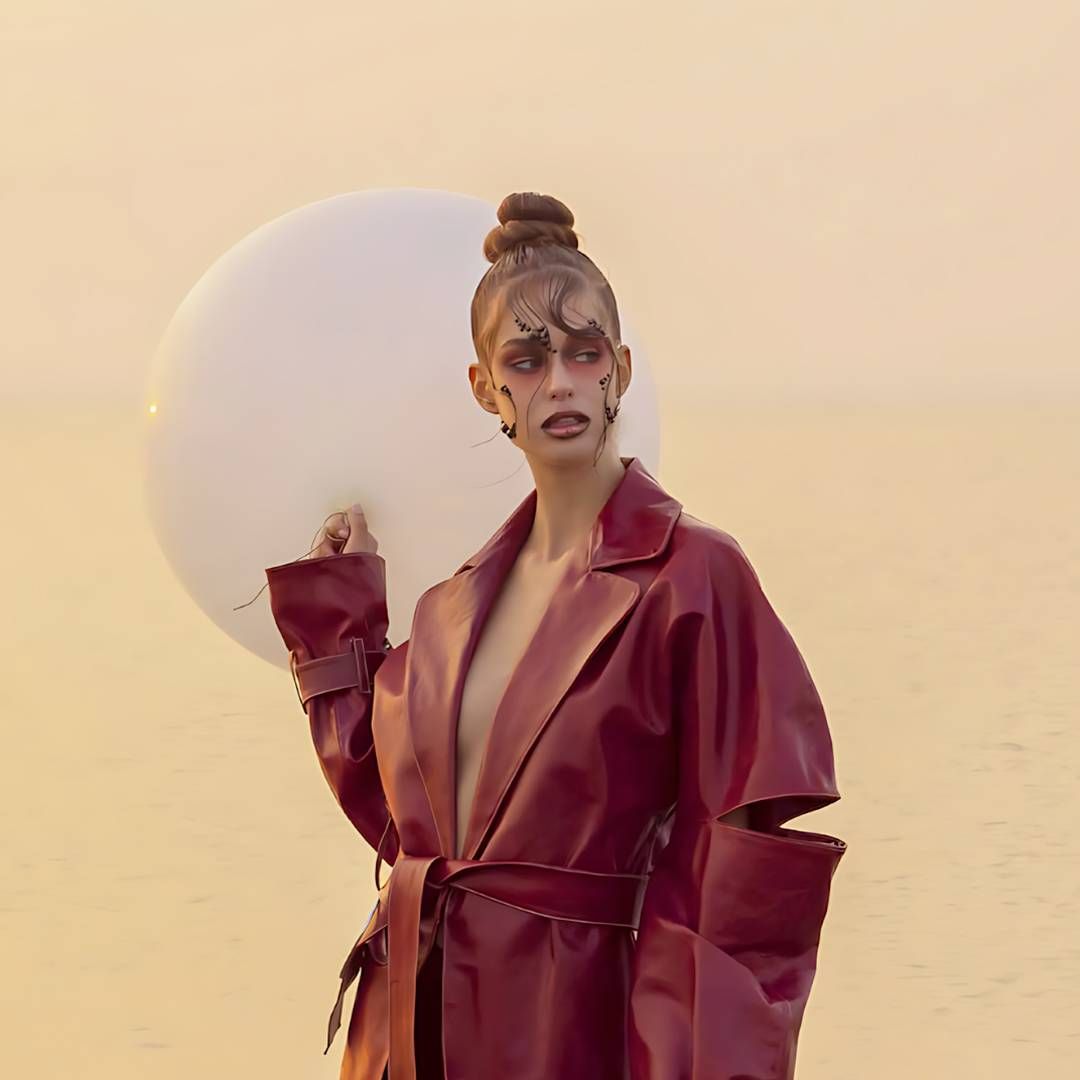
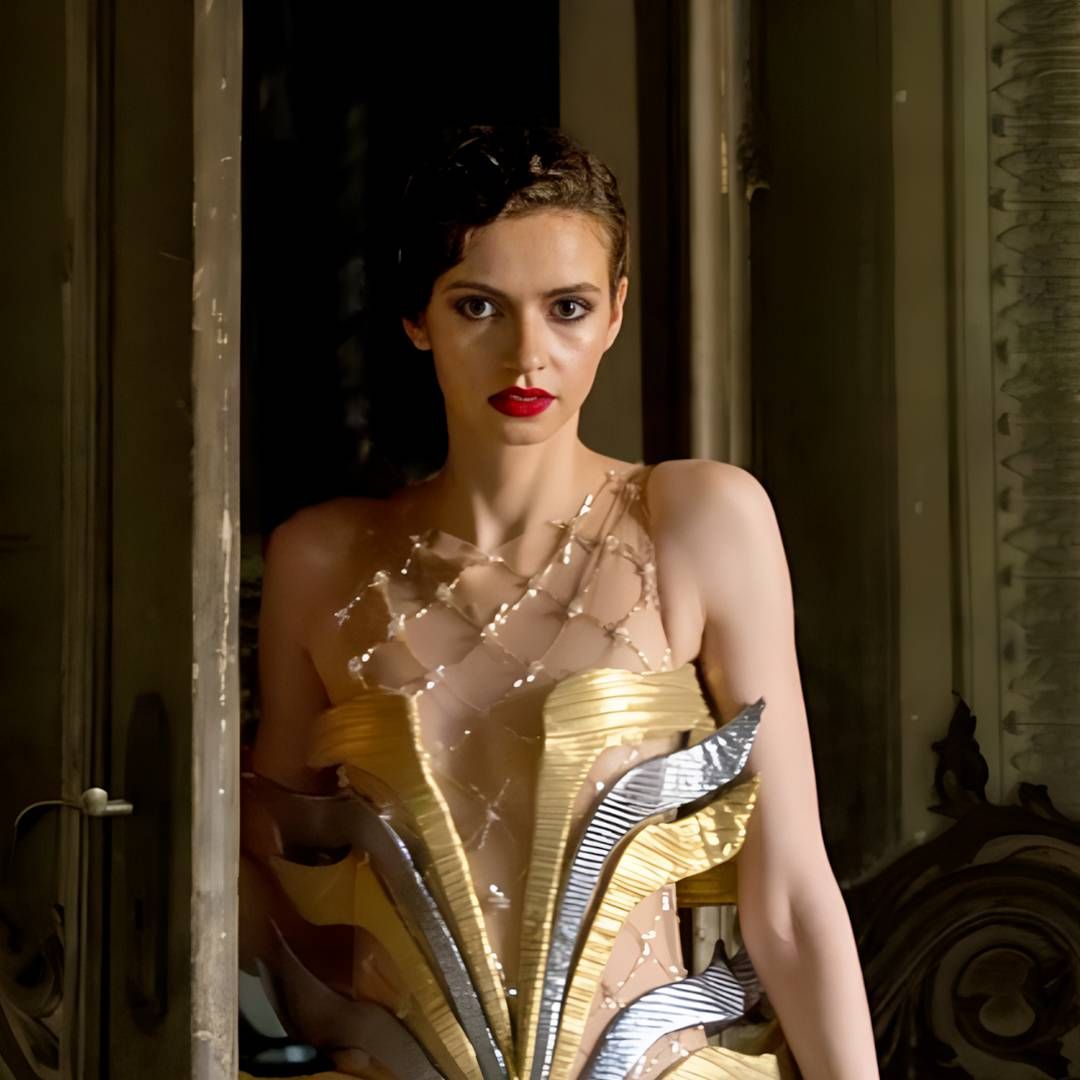
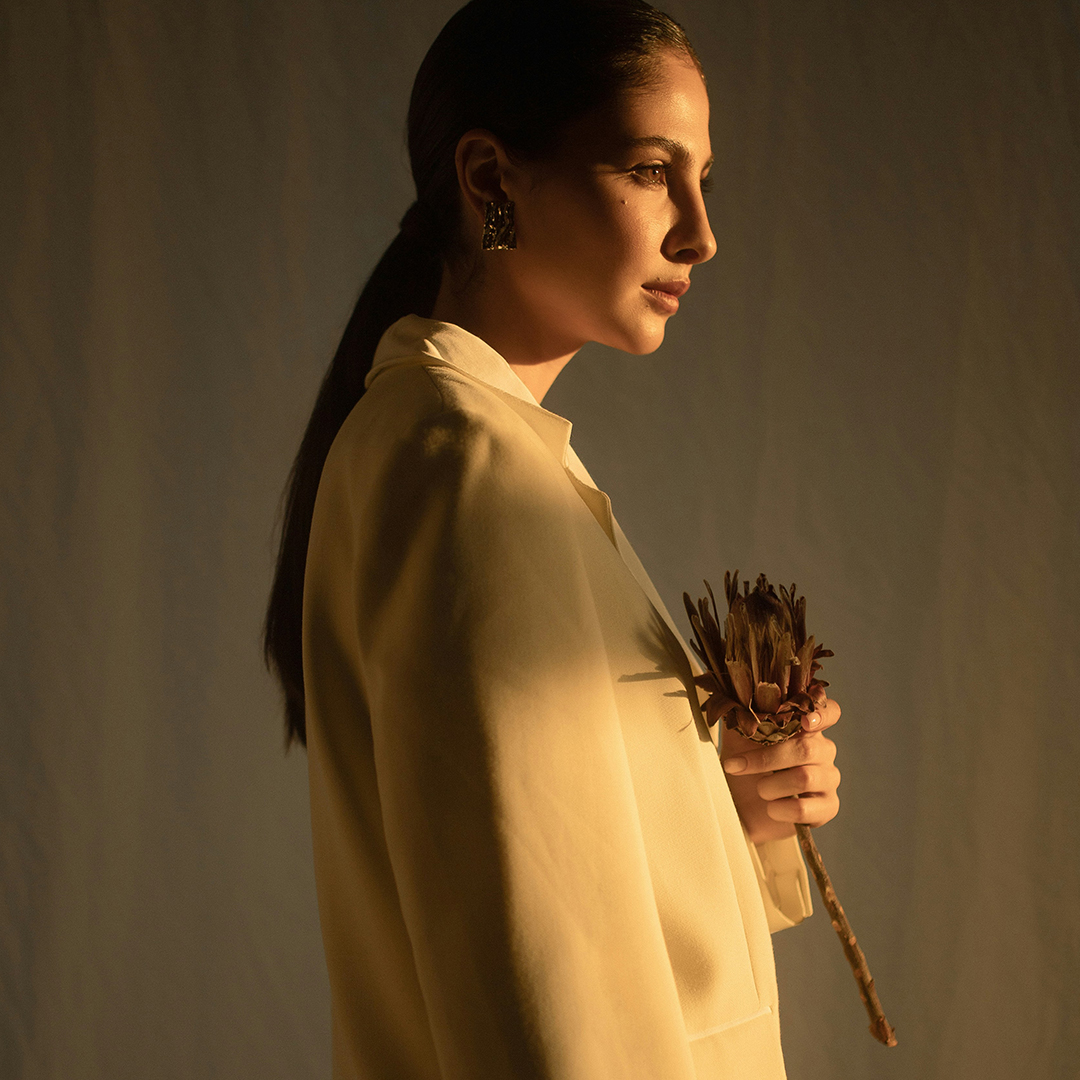
Nanobanana is particularly effective at generating images and moodboards from scratch, using more detailed, descriptive prompts. Midjourney remains the standard for creative photoshoots, starting from static, e-commerce-style images. For example, a basic image of a model facing the camera under soft lighting can be transformed into a high-fashion editorial shot—with a different model, setting, lighting and composition—ready for a magazine like Vogue. The Fabricant excels in fashion-specific accuracy, ensuring the correct placement of buttons, pockets and structural elements. With these tools, we create virtual garments and highly realistic images tailored for e-commerce platforms.
Is AI also useful for tasks such as completing missing elements or identifying emerging trends?
Let’s say we start from a reference image of wallpaper: the pattern may be incomplete, with discontinuities that make it unsuitable for repetition. Look AI, another platform we use, can reconstruct the missing elements—such as floral or leaf motifs—and generate a perfectly seamless tile for modular repetition. For trend forecasting, we have partnered with Heuitech and Luxury Insight to deliver AI-driven insights across fashion, luxury and beauty. We also explore new AI platforms for both still and moving images almost every week.
How can AI help designers explore materials and textures in previously impossible ways?
We have moved from a linear execution process to something far more open-ended. Where a designer once needed days to produce a single high-fidelity render, today they can visualise ten variations in minutes. This does not replace talent—it elevates it. The designer becomes the Creative Director of their own work. The focus has shifted from the manual effort of “making it look real” to the intellectual challenge of “making it meaningful”.
How does work happen in the classroom? How can designers balance creativity with AI-generated proposals?
At the undergraduate level, we still focus heavily on traditional techniques, building strong foundations in hand drawing and rendering with markers and pencils. In the third year and especially at the Master’s level, students begin experimenting with AI across various platforms. Pure prompt-writing has limited application in fashion design; instead, AI tends to work best when generating variations from existing sketches or references. The goal is not to work more, but to work more deeply. Streamlining execution does not diminish creativity—it frees it from technical constraints.
Can you share a real case where AI generated a garment that proved impossible to produce?
The most striking—and often most challenging—examples tend to involve knitwear. AI frequently proposes volumes or stitch combinations that simply cannot be translated into physical garments.
Do audiences perceive differences between traditionally created collections and those supported by AI?
When used well, AI functions like a highly skilled assistant, so the external perception remains unchanged. And AI is never used in isolation: it is integrated into standard software. Firefly and Nanobanana, for example, are embedded within the Adobe suite. In Photoshop, you can select specific areas of an image—such as the cuff of a shirt—and apply a prompt to that selection. The same applies in Adobe Illustrator, where AI can generate detailed elements for technical drawings. The real magic happens in this hybrid space: AI accelerates prototyping, while traditional tools ensure the technical precision that only a professional can refine. However, attempting to reproduce “impossible” AI-generated garments often leads to technical limitations familiar to industry professionals.
How do you move from an AI-generated image to a real pattern? Who corrects what—the AI or the pattern maker?
These functions belong to Clo3D, which is not an AI tool but a virtual pattern-making platform. Starting from pattern-making fundamentals, it allows designers to recreate garments and test fabrics and finishes, simulating gravity and movement. AI is used alongside Clo3D mainly at the rendering stage, enhancing the realism of avatars. Deeper integration between AI and Clo3D is likely on the horizon, but not yet available. We were among the first to teach Clo3D and have helped establish dedicated departments within major Italian fashion houses.
What skills will future designers need, considering AI as part of the creative process?
Above all, future designers must be critical curators.
In a world where AI can generate endless options in seconds, value lies not in execution speed but in the ability to select, edit and give meaning to what comes out. Taste alone is not enough; deep knowledge of volumes, materials and fashion history is essential. The designer becomes an architect of processes, knowing when to integrate AI to save time and when to trust human judgment to ensure excellence. Without a cultural compass, AI produces only “aesthetic noise”. The more powerful the machine, the more skilled its operator needs to be.
How is fashion design education changing with the introduction of AI?
The goal is to optimise productivity in order to reclaim creative time. At first, that meant rethinking some deeply ingrained habits to integrate these tools effectively.
Which habits?
The belief that a designer’s value lies primarily in their “beautiful hand”—their ability to render ideas on paper. We must move beyond the idea of AI as a shortcut for disengaged students. While many brands still require strong hand-drawing skills, digital tools have become inclusive instruments for those with less manual ability but strong ideas and a sharp aesthetic sensibility. It is important to remember that AI is not a substitute for foundational skills. Without them, designers risk creating garments that simply cannot be made.
Do students submit both their process and the outcome?
Yes, students are required to declare their use of AI and present all original sketches and concepts.
What do brands expect today from students who can use AI?
They expect them to train teams and introduce new workflows that optimise processes and shorten timelines. Rendering a denim garment by hand may take an hour; with Photoshop, around 15 minutes; with AI, just one minute.
Will we soon see new models of AI Fashion Week?
Without a doubt. However, we must not reduce them to mere “virtual shows” or "technological curiosities". The AI Fashion Week, launched in New York in 2023, revealed a new paradigm for scouting and visibility. The future will not be “physical versus digital”, but a full hybridisation of the two. Designers will present highly creative digital collections, and only the pieces that generate the strongest community response will move into production. This revolution reduces sampling costs, minimises waste and gives emerging talents without initial capital a platform for bold visions. AI Fashion Weeks could become a critical filter between pure imagination and industrial production, making the fashion system more democratic, sustainable and—paradoxically—closer to what consumer actually want.
In this hybrid landscape, where creativity and technology are increasingly intertwined, education becomes essential for interpreting and leading change. It is at the intersection of traditional skills and digital innovation that Istituto Marangoni Milano has developed its academic approach, with programmes designed to meet the evolving demands of the industry.
From the short course Digital Pattern Making with CLO3D to the undergraduate degree in Fashion Design & Accessories and the professional programme Generative AI for Fashion Designers, the aim is to train designers who can navigate seamlessly between ideation, simulation and product development. In particular, the AI-focused programme explores how generative artificial intelligence is reshaping the creative process, enabling the transformation of sketches and images into three-dimensional outputs, while fostering innovative, ethical and sustainable design practices.
Because today, more than ever, designing the future of fashion means holding vision and tools together—culture on one side, experimentation on the other.