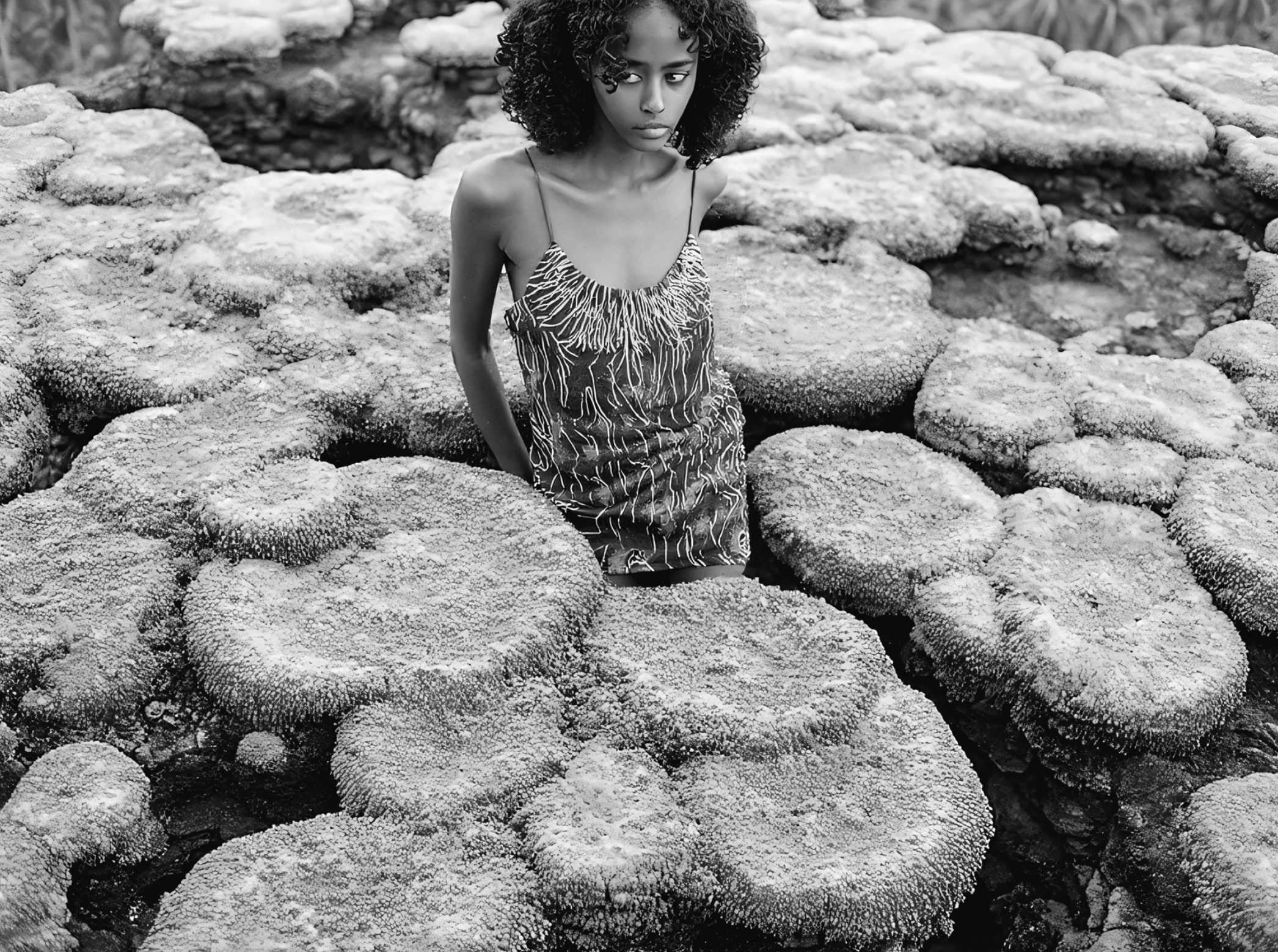
Dafni Babanaszi - Holiday Magazine AI Editorial
Communication Design
Dafni Babanaszi’s Holiday Magazine editorial uses AI to reinterpret remote landscapes through fashion, culture and atmosphere, transforming inaccessible places into emotionally driven visual narratives rather than literal destinations.
HOLIDAY MAGAZINE AI EDITORIAL - FASHION REIMAGINES REMOTE LANDSCAPES
Inspired by Holiday Magazine’s location-led storytelling, the project explores the Amazon, Socotra, the Danakil Depression, Mount Everest and Wulingyuan as moods, memories and cultural narratives. AI supports the creation of fashion imagery in environments that are difficult to access, while casting, styling and composition preserve a clear editorial identity across the series.
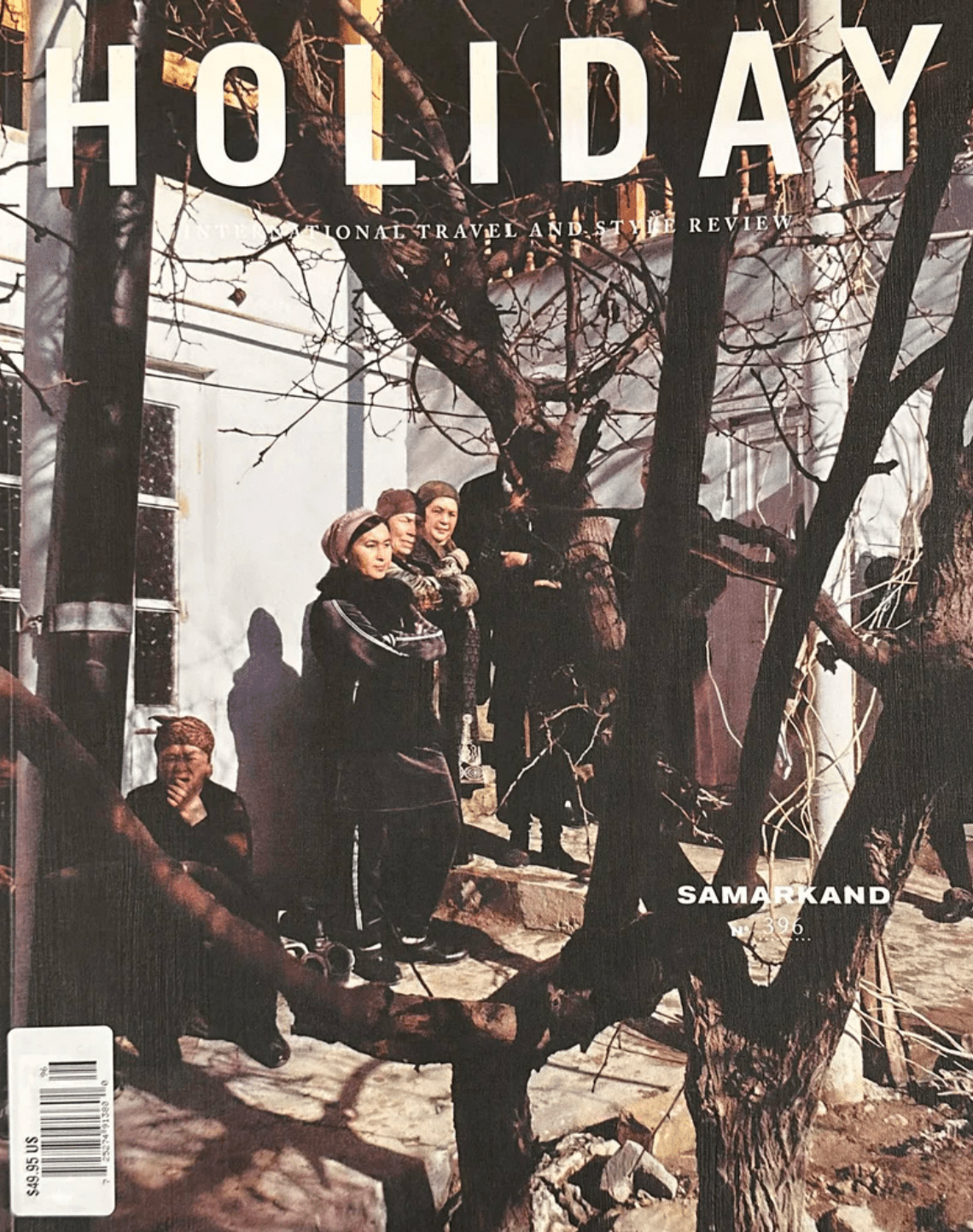
From Visual Research to Creative Direction
The project starts from Holiday Magazine and its distinctive intersection of travel, fashion and culture. Rather than approaching destinations as collections of landmarks, the research identifies the magazine’s ability to interpret place through mood, memory and emotional storytelling. Babanaszi adopts this principle for a series focused on extreme or difficult-to-access environments, including the Amazon, Socotra, the Danakil Depression, Mount Everest and Wulingyuan. These locations are selected for their visual identity, remoteness and symbolic power rather than conventional tourist appeal. Each becomes the basis for an individual fashion composition informed by landscape, cultural context, casting and styling. Case studies of previous Holiday issues establish the desired balance between location and fashion, while the project explicitly considers responsible representation and the need to avoid reducing cultural references to decorative or Westernised imagery. Fashion is instead positioned as a bridge between place, design and storytelling.
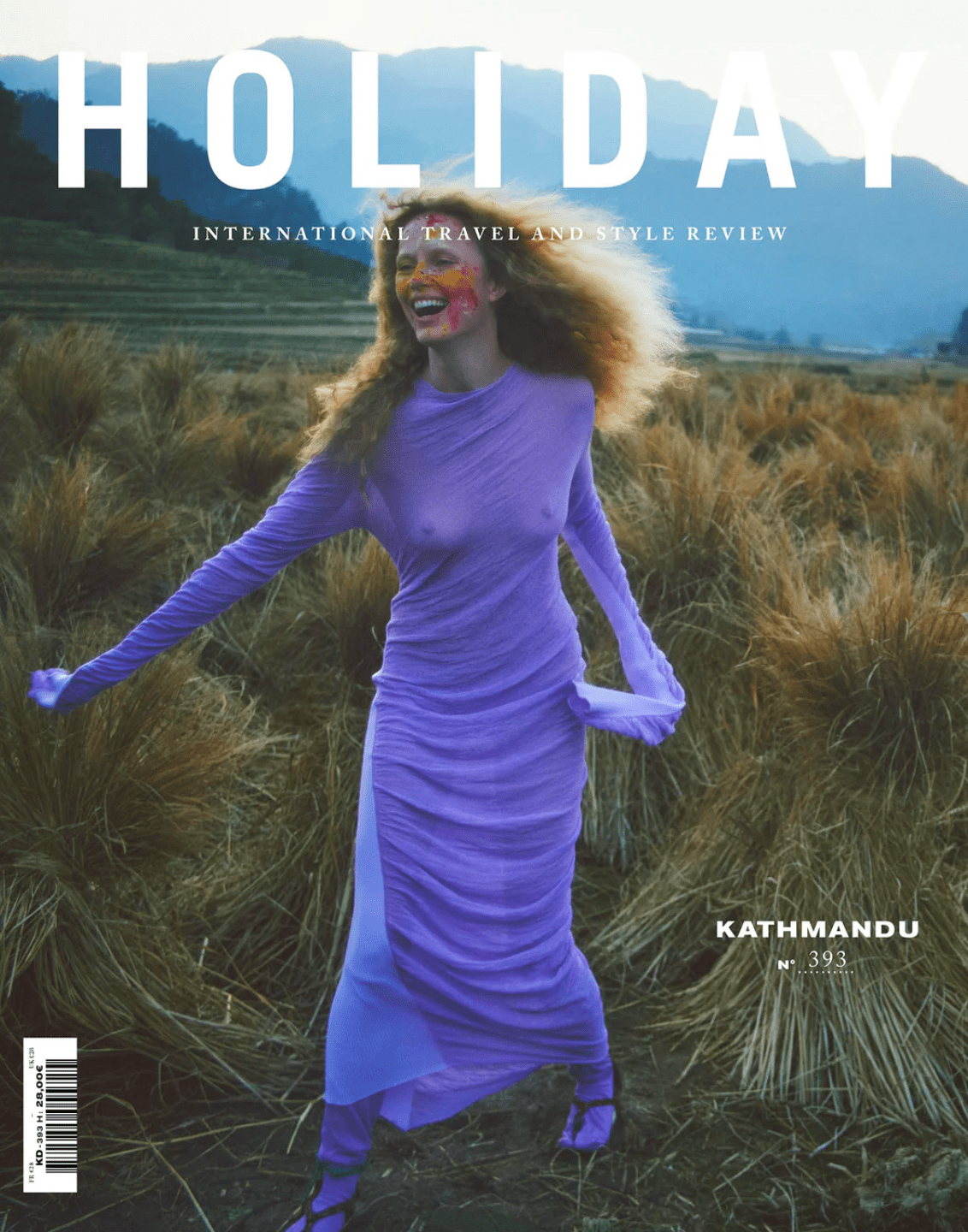
AI as an Editorial Design System
AI enables the project to work with environments that are remote, inaccessible or challenging to use as conventional fashion locations. MidJourney and Caimera are used to generate the final compositions, combining location references, casting, fashion looks and stylistic cues within a coherent editorial language. Prompts address photographic characteristics such as analogue grain, contrast, cinematic composition, organic softness and the vintage travel-magazine sensibility associated with the concept. Yet the process is not simply about placing a model into an exotic landscape. Each location requires decisions about who appears, what is worn and how the figure relates to the environment. Amazonian vegetation, Socotra’s distinctive landscape, the mineral terrain of Danakil, the scale of Everest and the vertical formations of Wulingyuan each demand different visual relationships. AI functions here as a tool for testing how geography can become atmosphere while retaining consistency across a single editorial identity.
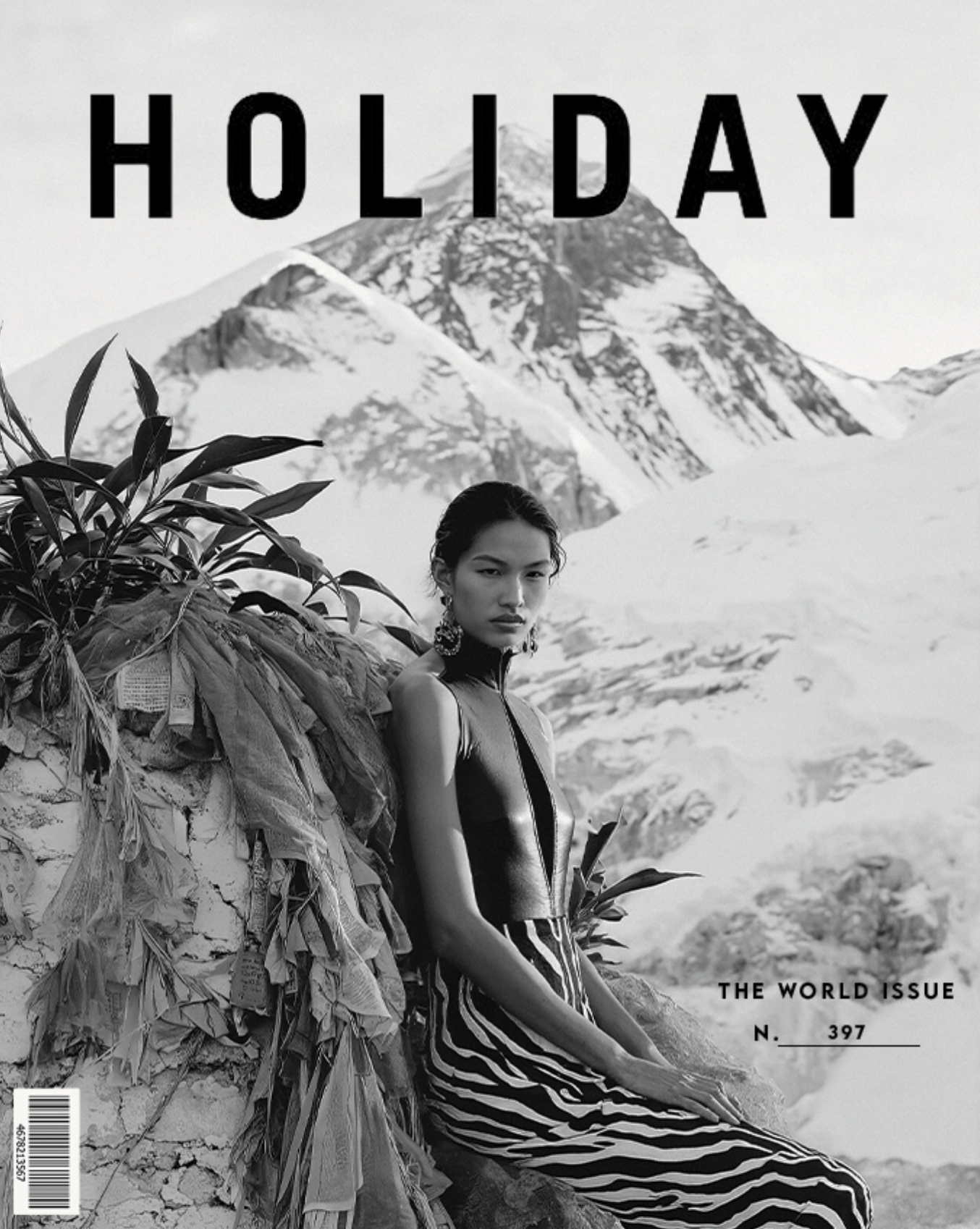
From Creative Direction to Editorial Output
The individual compositions are ultimately assembled into a final Holiday Magazine-inspired layout and cover mock-up, shifting the project from a collection of AI experiments into a structured publishing proposal. The visual sequence preserves the editorial premise that place can be experienced emotionally rather than documented literally. Fashion, casting and landscape operate together, allowing each spread to establish its own atmosphere while contributing to a larger narrative about curiosity, distance and the desire to encounter places beyond ordinary experience. The project also demonstrates an important dimension of AI-assisted fashion communication: generative systems can give creative teams access to impossible visual scenarios, but the credibility of the outcome depends on the research and decisions that frame them. By connecting location analysis, cultural awareness, styling, image generation and magazine design, the project uses technology to extend travel-fashion storytelling while keeping editorial direction at the centre of the work.