
Li Sik Yi - Atlas of Sin
Fashion Design & Innovation
Atlas of Sin examines judgement, control and identity through symbolic textile prints, combining historical references, generative tools and dark painterly imagery to translate complex narratives into distinctive contemporary fashion applications.
ATLAS OF SIN — SYMBOLIC NARRATIVES BECOME DARK TEXTILE LANGUAGES THROUGH AI
Atlas of Sin uses fashion print to examine how bodies and identities are shaped by judgement, control and inherited cultural narratives. Li Sik Yi develops a sequence of symbolic themes—including blood, flesh, hysteria, submission, muteness, surveillance, loneliness and refusal—through a dark visual language informed by historical imagery and contemporary generative tools.

From Research to Visual Language
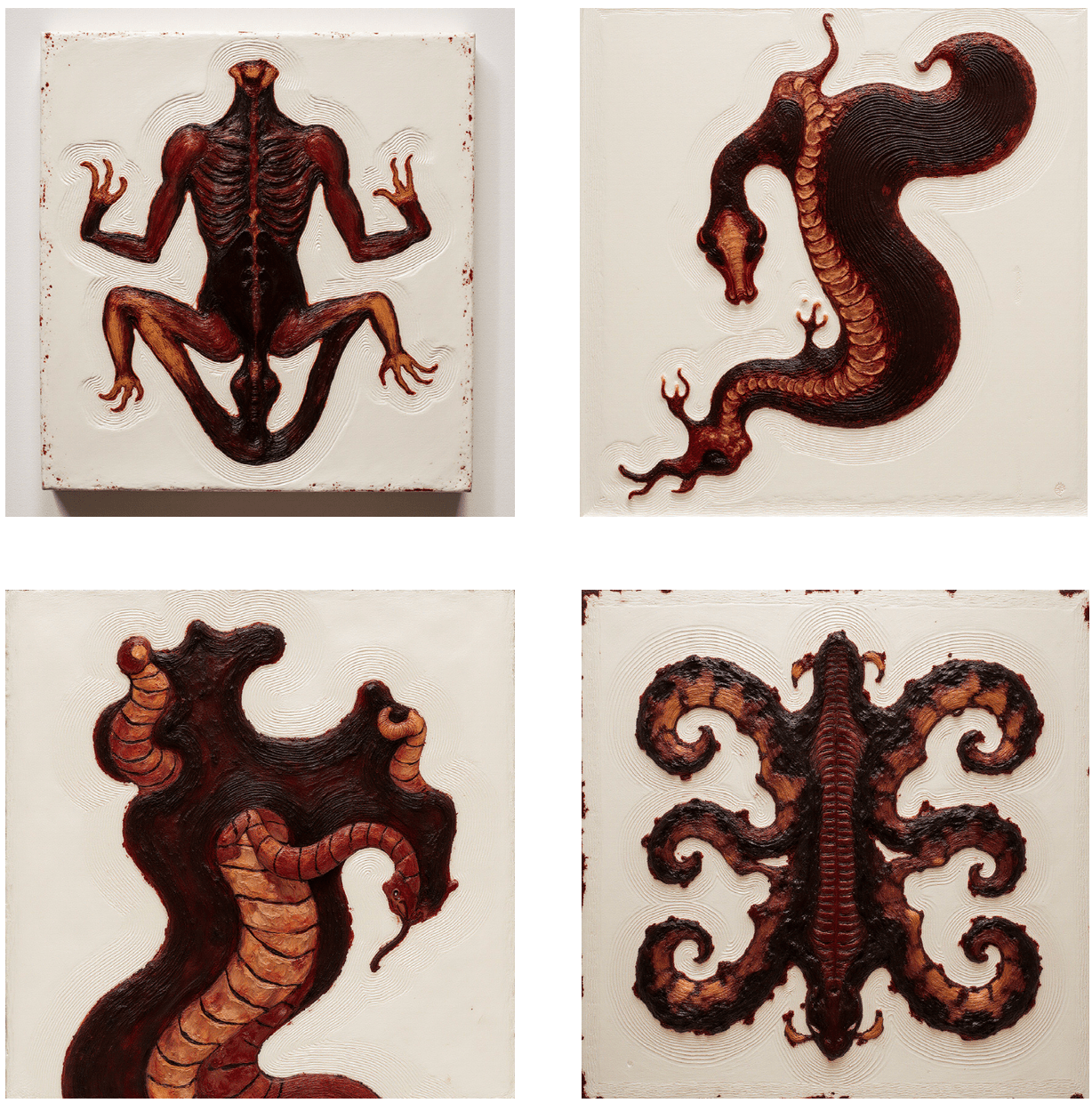
The project begins with artworks, photographs and symbolic references connected with femininity, diagnosis, vulnerability, restraint and observation. Serpents, eyes, animal forms, organic silhouettes, keys, fragmented light and painterly bodily shapes recur throughout the collection. These motifs are not used as direct illustrations. Instead, they form an evolving visual atlas in which each print represents a psychological or social condition. Oil-painting textures, muted reds, bruised pinks, black grounds and pale mineral tones create continuity across the different chapters while allowing every theme to retain its own emotional register.
Discover The Course
Discover the Fashion Design & Innovation course and other Istituto Marangoni programmes exploring the intersection of technology, creative research and contemporary fashion.
AI as a Creative Design System
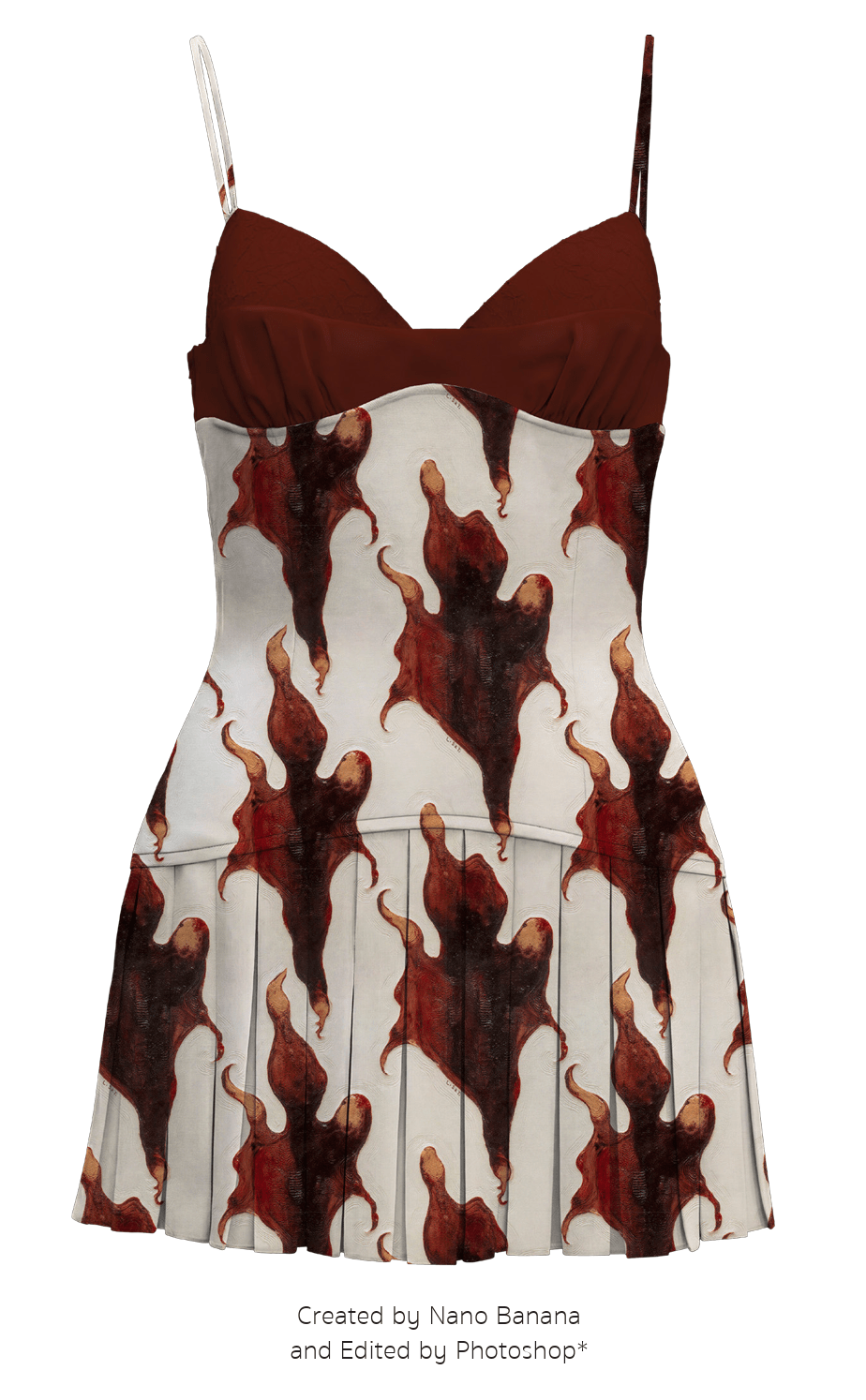
Krea AI, Nano Banana, Midjourney and Photoshop are used at different stages of image generation, pattern development, editing and garment visualisation. Prompts define not only content but also material qualities, composition, edge continuity and the behaviour of motifs within a repeat. The student also specifies what the system should avoid, including literal anatomy, overly digital finishes, visible seams and flattened garment surfaces. This combination of positive direction and technical constraint turns prompting into a form of design specification rather than a simple request for imagery.
From Digital Print to Fashion Application
The generated motifs are transformed into repeat modules and applied to dresses, tailoring, skirts, footwear and transparent garments. Particular attention is given to how prints respond to wool, organza, drape, seams and three-dimensional volume. The final applications demonstrate how a conceptually complex image can become a controlled fashion surface without losing its narrative intensity. Atlas of Sin therefore connects critical visual research with pattern construction, material simulation and fashion communication.