Lolie Bernard - Design with AI
Fashion Design & Innovation
Design with AI explores how generative tools translate randomness, repetition, bodily textures and invisible signals into textile prints, combining conceptual research, critical prompting and fashion-focused pattern development within fashion practice.
Design with AI explores how generative artificial intelligence can support an experimental textile design process, from visual research to digital print and fashion application. Through five conceptual territories — randomness, repetition, sublimation, mismatch and the unseen — Lolie Bernard investigates how abstract ideas can become patterns, repeat systems and garment-based visual languages.
From Research to Visual Language
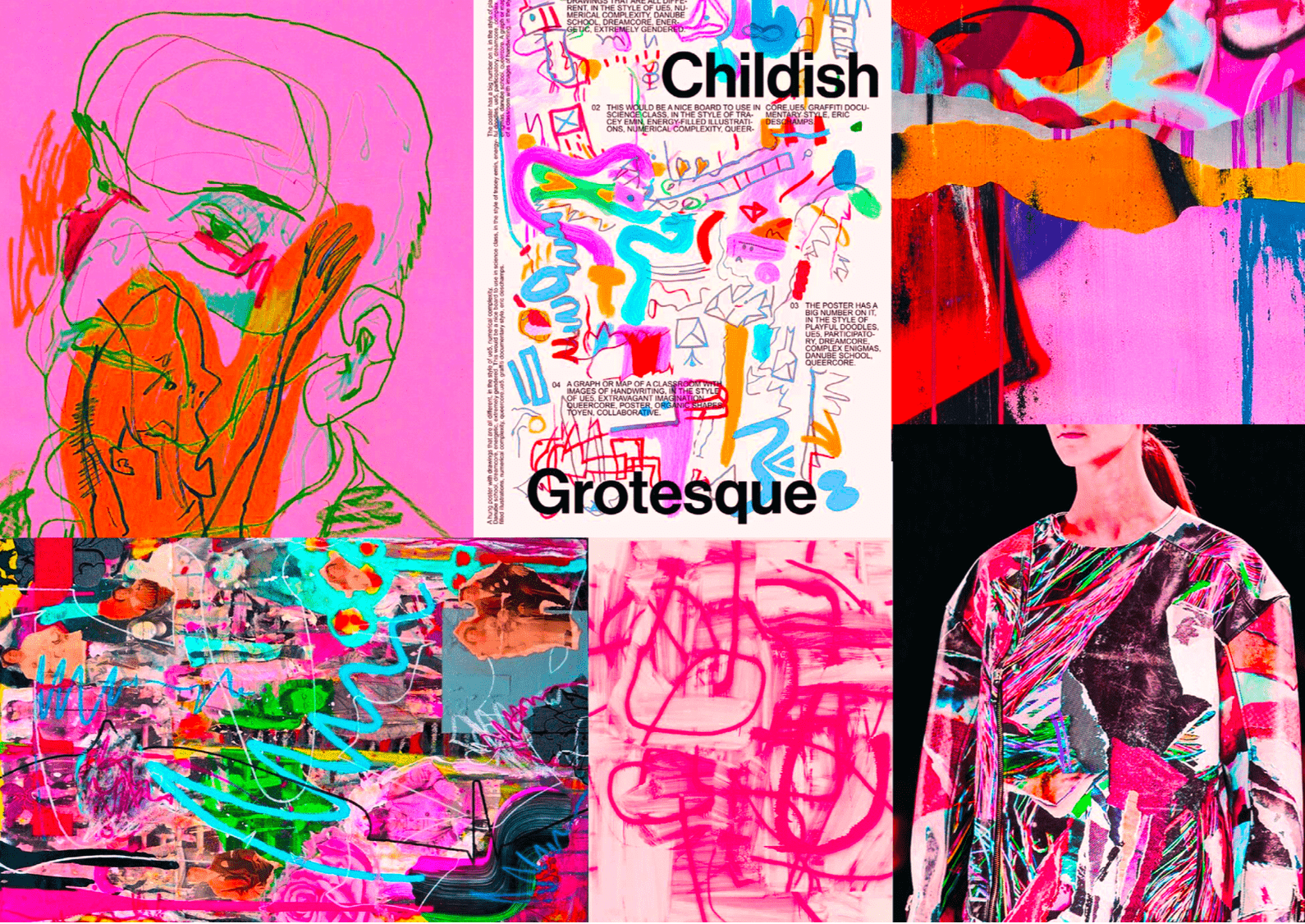
The project begins with research into artistic, cultural, scientific and visual references, using them as the foundation for each design direction. Abstract expressionism, childlike mark-making, microscopic imagery, bodily textures, spectrograms and contrasting graphic systems inform the project’s visual vocabulary.
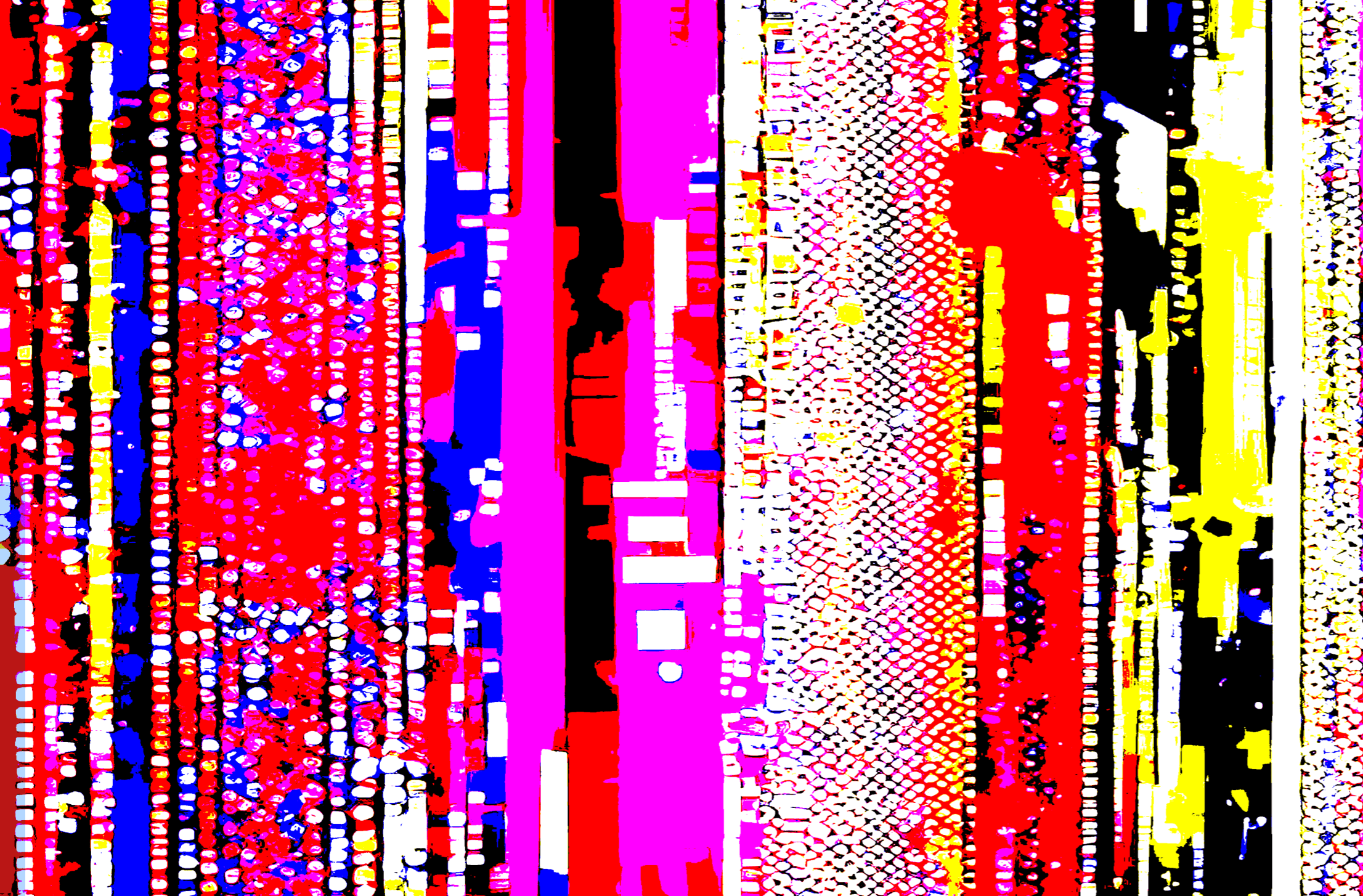
Each theme becomes a distinct field of exploration. Randomness is translated into playful disorder; repetition questions how a single form can generate rhythm while reflecting the recursive logic of generative AI; sublimation reveals hidden bodily details; mismatch searches for balance between apparently incompatible visual elements; and the unseen turns signals, waves and digital interference into visible textile compositions.
Discover The Course
Discover the Fashion Design & Innovation course and other Istituto Marangoni programmes exploring the intersection of technology, creative research and contemporary fashion.
AI as a Creative Design System
AI operates as a space for testing the boundaries of each concept. Through iterative prompts, the student explores whether generative tools can create genuine unpredictability, transform scientific or organic imagery and combine colour, texture and composition in unexpected ways. The results are not treated as definitive outputs: they are compared, selected and redirected according to the project’s conceptual intention. The process highlights both the creative potential and the structural limits of AI, particularly its tendency to repeat, reorganise and reinterpret existing patterns.
From Digital Print to Fashion Application
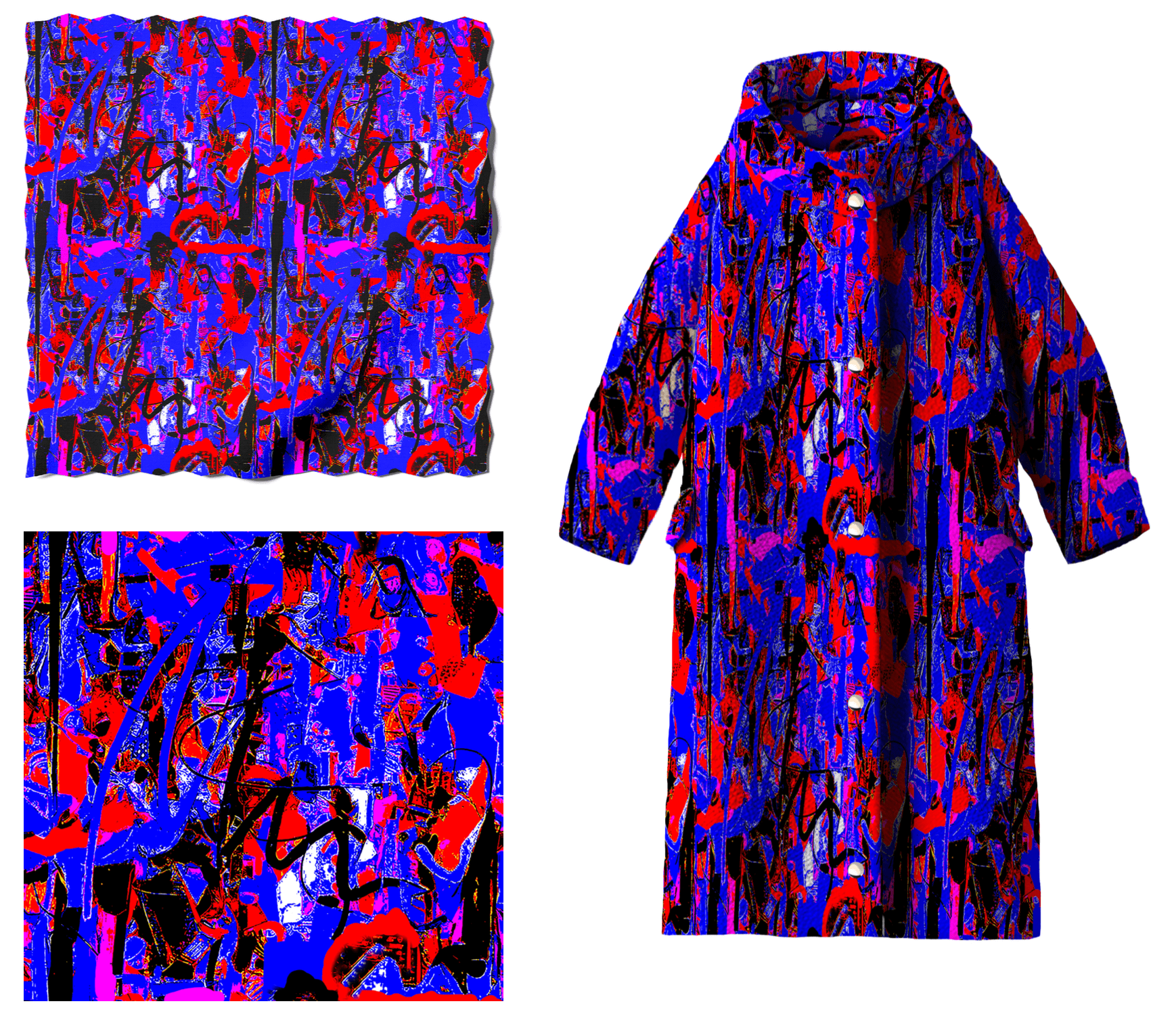
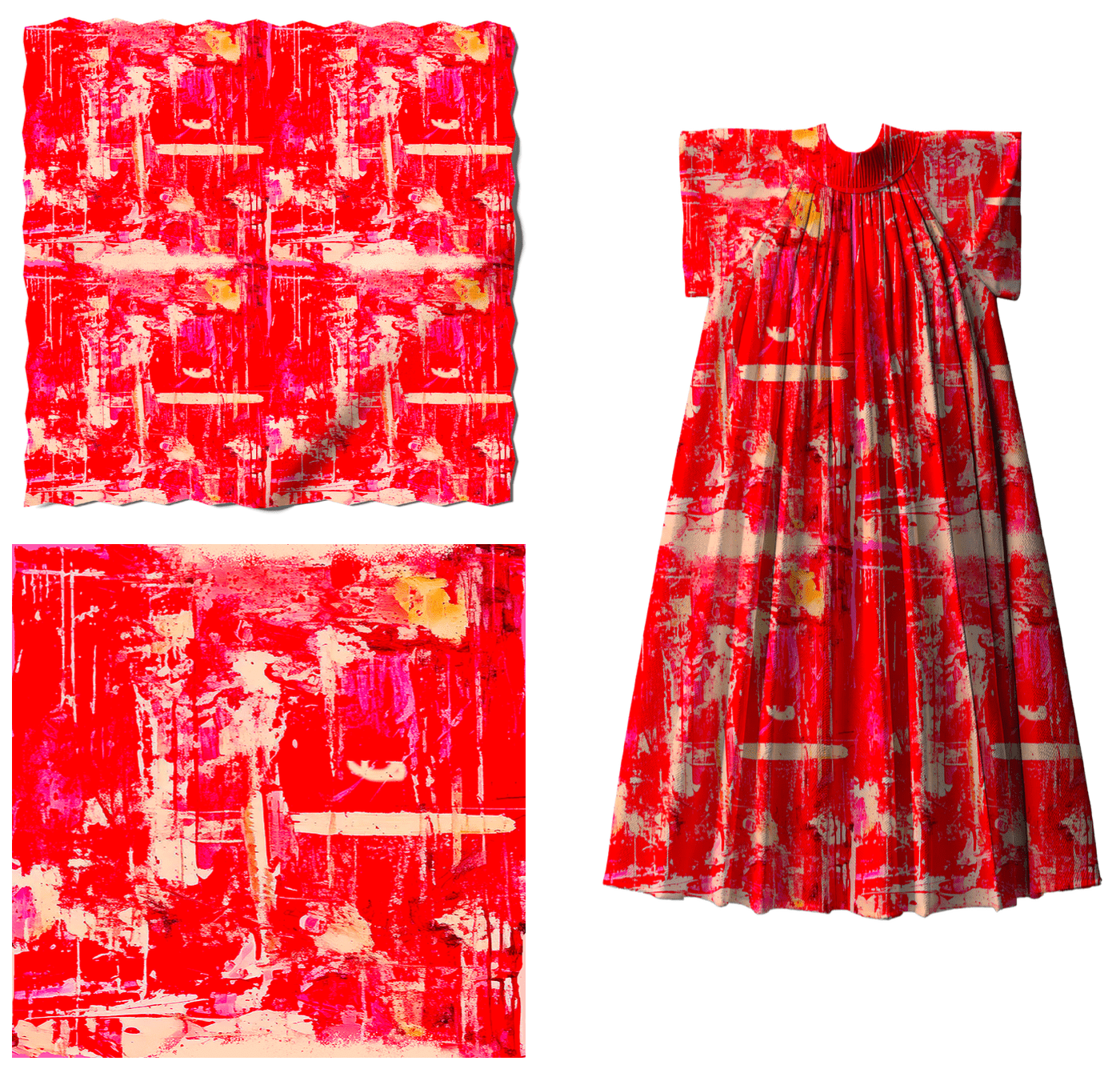
Selected images are developed into modules and seamless reports before being applied to garments. Prints such as Rage Rouge, Iris, Electro, Sweet Blood, Cellules, Clashflow, Multiverse, Grésille and Flaw demonstrate how digital experimentation can evolve into textile systems with scale, rhythm and visual continuity. By connecting conceptual research, prompting, repeat construction and garment visualisation, the project positions AI within a broader fashion-design workflow directed by human judgement and technical decision-making.