Andrea Besenzoni - Here, Floating in the Time Forever
Communication Design
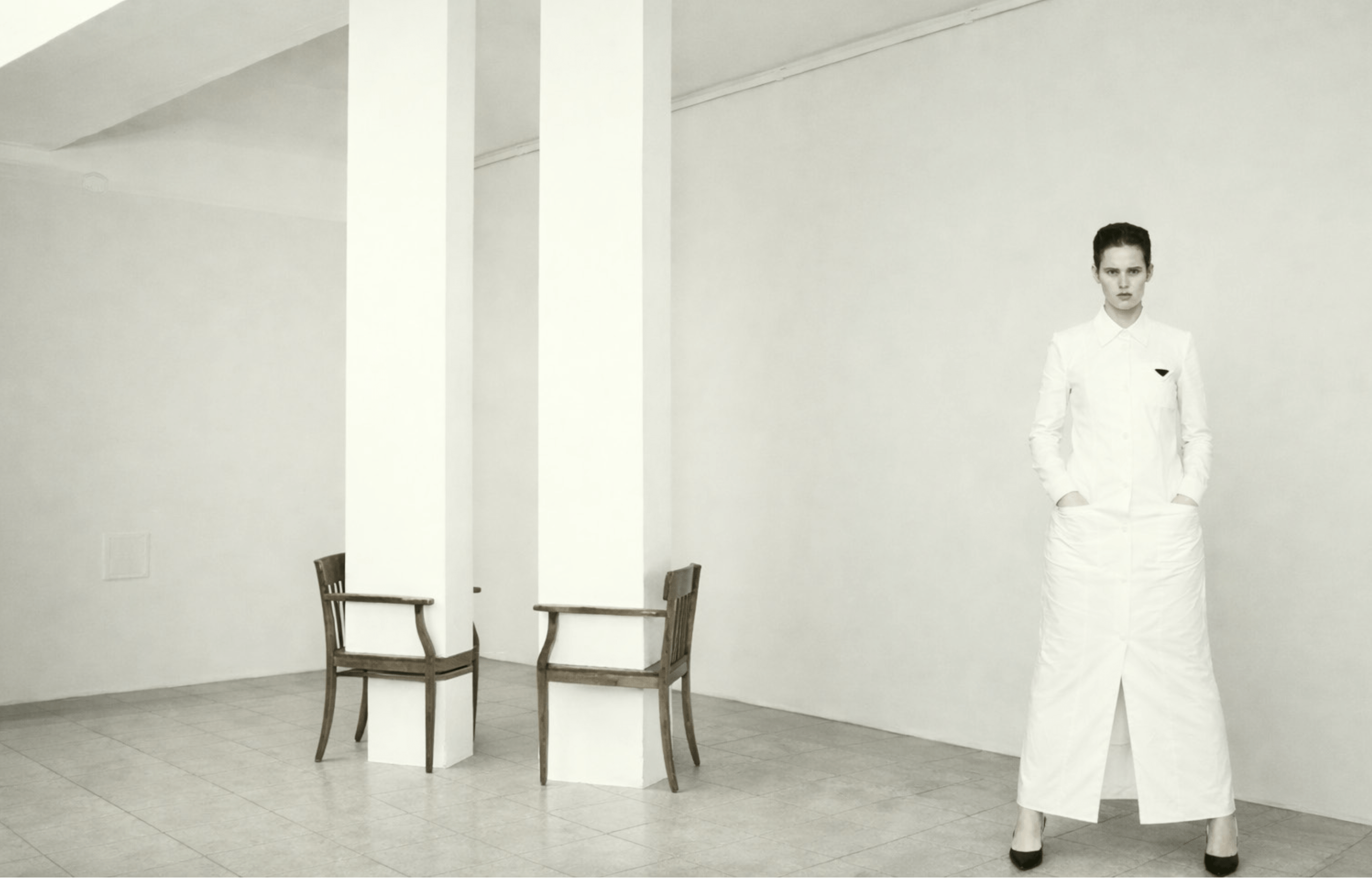
Here, Floating in the Time Forever uses AI to suspend bodies and objects beyond gravity, exploring stillness, movement and temporal ambiguity through a minimal, conceptual fashion editorial.
HERE, FLOATING IN THE TIME FOREVER - FASHION SUSPENDED BETWEEN WEIGHT AND TIME
Andrea Besenzoni’s project begins with the idea of suspension as an alternative to speed and progression. Influenced by Self Service Magazine, contemporary art, design and philosophical references, the editorial uses AI to remove ordinary physical rules, creating restrained images where bodies, chairs and balloons inhabit a quiet state between movement, stillness, presence and absence.
From Visual Research to Creative Direction
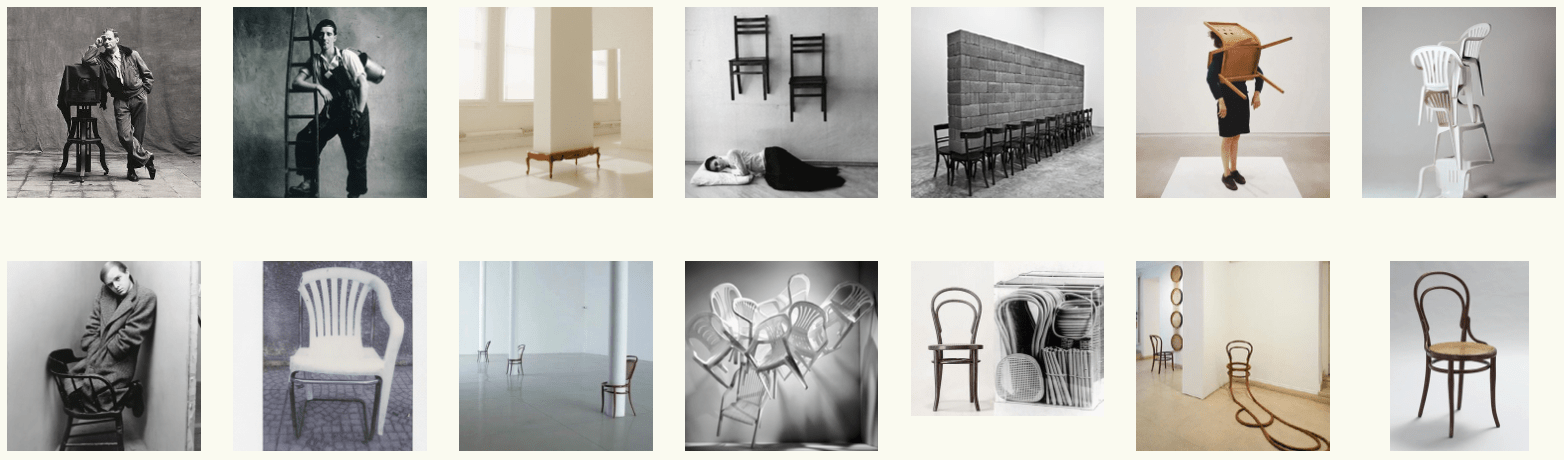
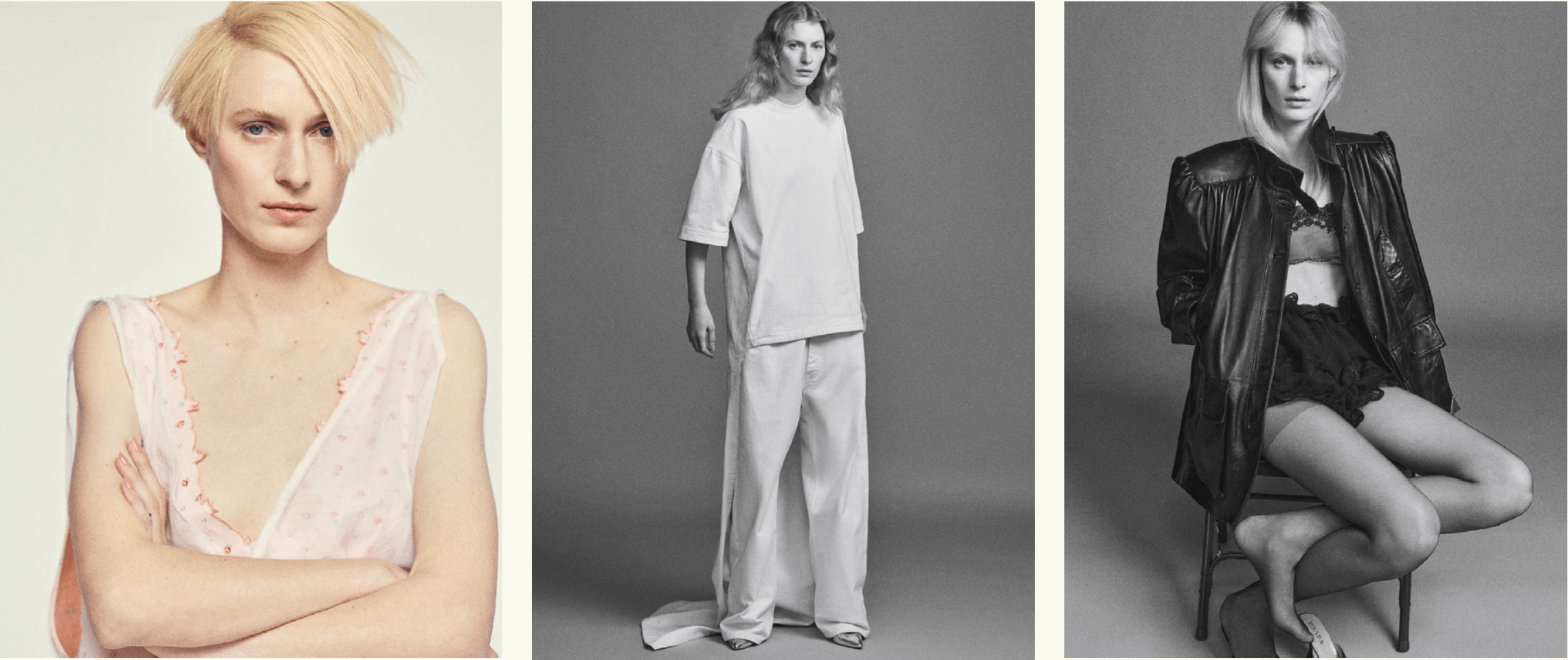
Andrea Besenzoni develops the project around a conceptual question: what happens to movement when time and gravity stop behaving as regulating forces? Rather than interpreting movement through acceleration, the editorial explores suspension—a condition in which an action exists without reaching completion. This idea is connected with architecture, contemporary art and design, and with the restrained visual language of Self Service Magazine. The research also draws on themes associated with Maurice Blanchot, particularly fragmentation, waiting and states that resist clear oppositions between presence and absence. Styling follows the same logic of control and reduction through precise tailoring, clean silhouettes and structured garments. Chairs and balloons become recurring props because they embody opposite relationships to gravity: one represents weight, function and stability, while the other suggests lightness and departure. Black-and-white photography, moderate contrast, grain and extensive negative space establish an editorial atmosphere of silence and temporal distance.
Discover the Course
Discover the Communication Design course and explore how creative research, visual storytelling, AI and emerging technologies are shaping new approaches to fashion imagery, editorial design and contemporary visual communication.
AI as an Editorial Design System
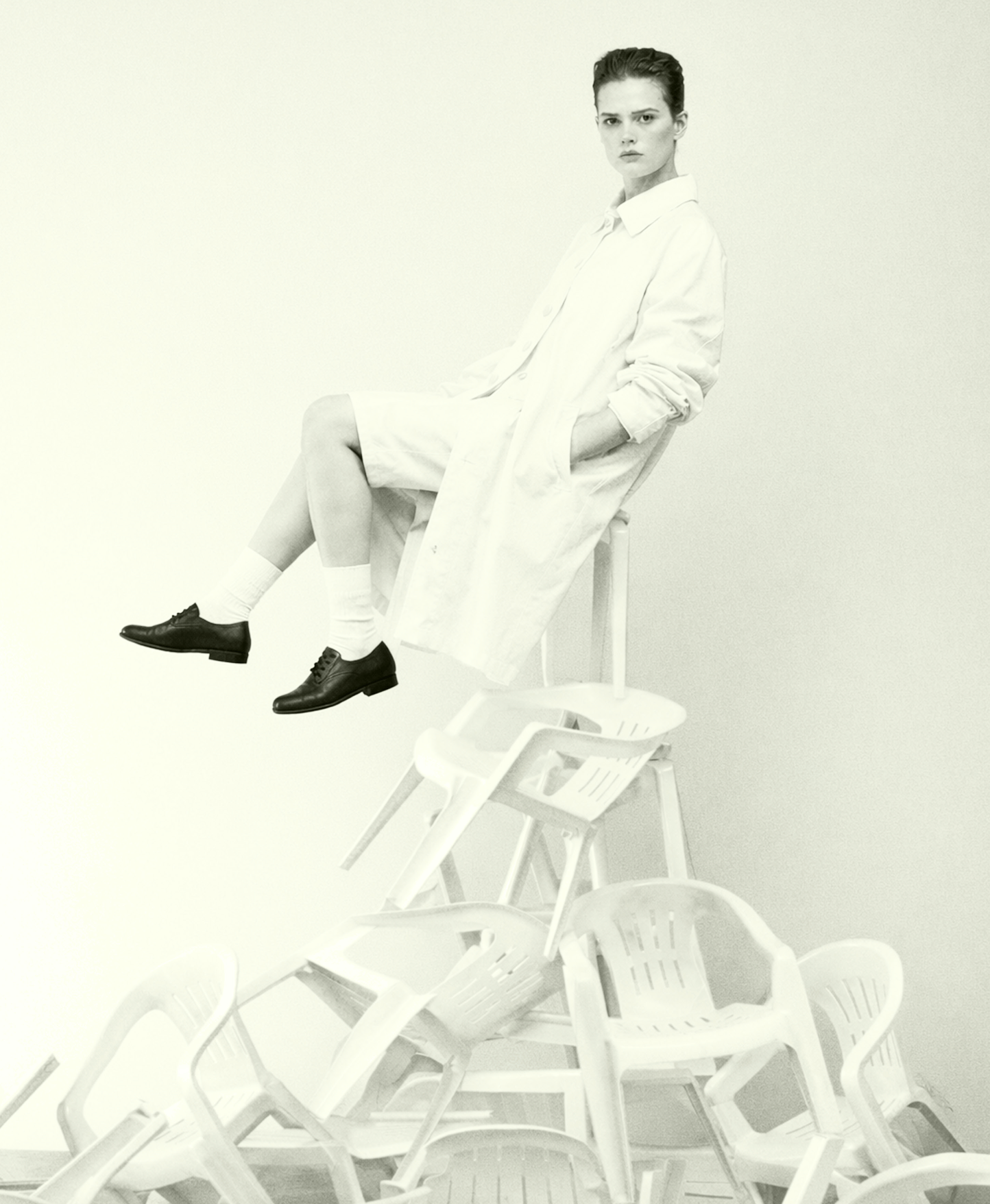
AI makes the project’s conceptual premise physically visible. Bodies float horizontally, chairs remain suspended above the ground and everyday objects occupy impossible states of balance. The prompts operate with photographic precision, specifying posture, tailoring, props, tonal range, camera framing, negative space and the degree of realism required. Instead of celebrating visual excess, the generated images are deliberately minimal: the impossibility is often limited to one displaced object or one suspended body, making the alteration of physical rules more psychologically present. AI is also used beyond image generation; the project states that both images and text were created through artificial intelligence, while AI-generated handwriting is considered as part of the storytelling system. This expands the role of the technology from image production to the broader construction of the editorial language, while the student establishes the conceptual boundaries that keep the different outputs visually and intellectually connected.
From Creative Direction to Editorial Output
The final sequence turns suspension into a repeated editorial grammar. Models, empty chairs, balloons, fragmented portraits and isolated objects move between presence and absence without resolving into a conventional narrative. Fashion contributes through controlled silhouette and proportion rather than spectacle, allowing garments and bodies to exist within the same system of balance, weight and interruption. The editorial structure mirrors the visual concept through sparse layouts, isolated compositions and deliberate pauses between elements. Text becomes another suspended component, appearing as a poetic rather than explanatory layer. By connecting philosophical research, fashion styling, object design, photographic references and AI-generated imagery, Here, Floating in the Time Forever demonstrates how artificial intelligence can be used to construct a conceptual space rather than merely an unusual picture. The technology makes the impossible condition visible; creative direction gives that impossibility a coherent meaning.