

ADCE Awards 2026: Maximilian Gatev Wins Bronze with The Vigil
ADCE Awards 2026: Maximilian Gatev Wins Bronze with The Vigil
 SHARE
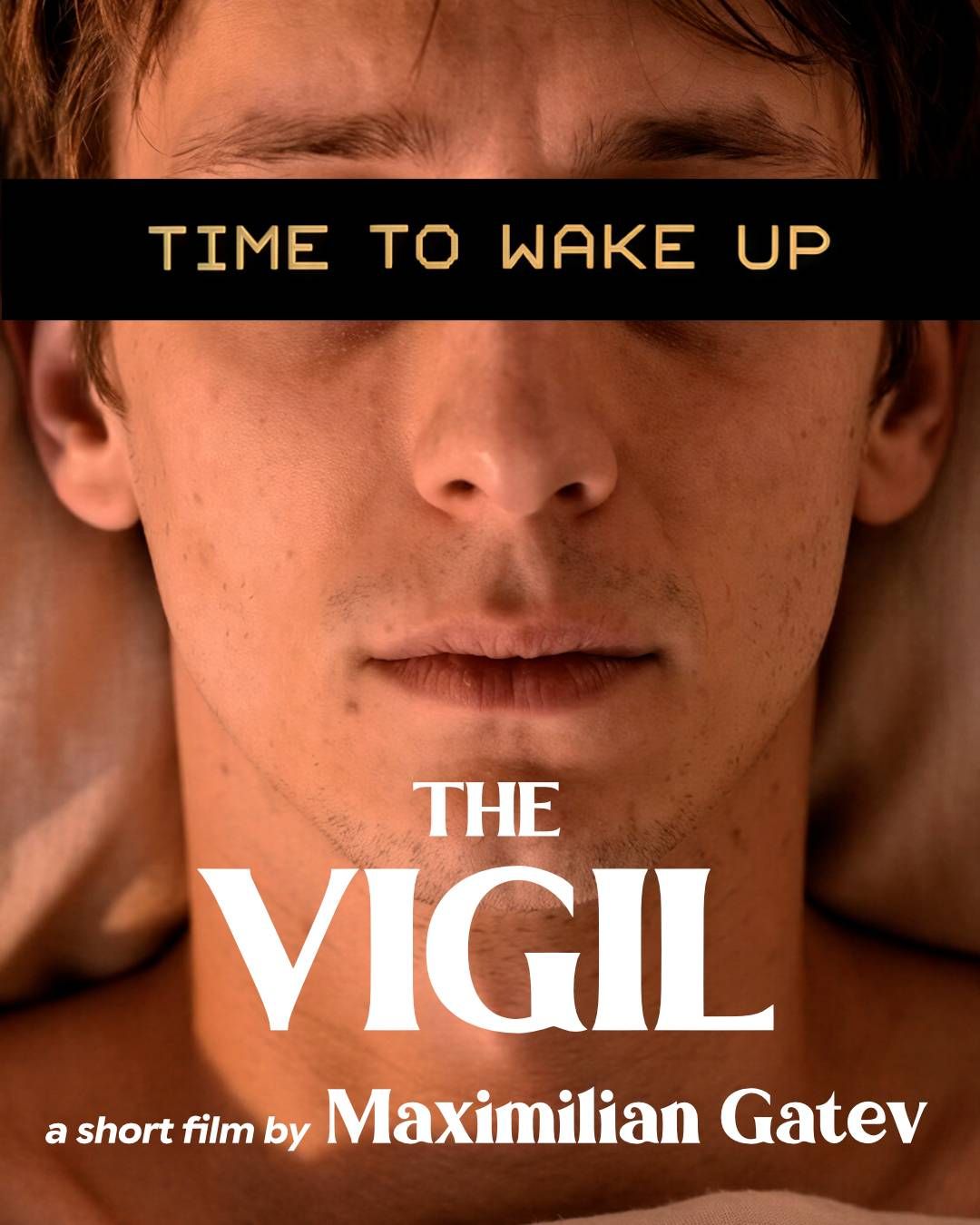
A world suspended between dreams and reality, a society that has forgotten how to sleep, and a young scientist searching for a solution that could change the fate of humanity. This is the universe imagined by Maximilian Gatev in The Vigil, the short film that won the Bronze Award at the ADCE Awards 2026 in the Student Artificial Intelligence category.
Selected as a finalist in the international competition, the project was recognised during the awards ceremony held in Barcelona on 18 November, receiving an important distinction for its ability to combine artistic vision, cinematic storytelling and generative artificial intelligence.
The achievement highlights the exploration of new visual communication languages and the opportunities offered by emerging technologies, which are playing an increasingly significant role in the evolution of creative professions.
The Vigil: When Sleep Becomes Humanity's Last Hope
Created in response to the brief Architecture of Fear / Design for Better Life, The Vigil begins with a question that is as simple as it is unsettling: what would happen if the world suddenly lost the ability to sleep?
The short film imagines a reality affected by a global insomnia pandemic, where the boundaries between perception, hallucination and everyday life become increasingly difficult to distinguish.
The story follows a young scientist through his seemingly ordinary daily routine in a version of Helsinki that feels familiar, yet where every detail reveals something deeply unusual. A cockatiel replaces his morning alarm, sand flows from the taps instead of water, light bulbs and paperclips become an ordinary breakfast, and an elephant serves as a means of transportation.
These paradoxical situations, presented through an apparently ordinary narrative, create a visual universe suspended between irony, absurdity and unease.
Meanwhile, the protagonist is developing mnem-os, a technological device designed to induce sleep. What initially appears to be a scientific experiment gradually turns into a discovery capable of completely overturning his perception of reality.
When the scientist finally tests the device on himself, he awakens in a devastated world. Everything he had experienced until that moment was a hallucination: civilisation has been destroyed, and human beings, trapped in a permanent state of sleepwalking, continue to mechanically repeat the gestures of everyday life.
The protagonist is the only person who has managed to sleep again and, with it, regain awareness of what has truly happened. However, his attempt to share his discovery is interrupted before he can reach anyone else, leaving the surviving device and an unknown hand reaching for it as the possibility of a new beginning.
Through this narrative, The Vigil explores the relationship between consciousness and perception, transforming sleep from a basic biological necessity into a symbol of awakening, awareness and potential salvation.
Two Realities, Two Cinematic Languages
One of the most compelling aspects of the project is the creation of two profoundly different visual universes, guiding the audience through the gradual revelation of the truth.
The first part of the short film features warm atmospheres, geometric compositions and static shots, inspired by the cinematic tableaux of Roy Andersson and the carefully controlled colour palettes of Wes Anderson.
The result is a surreal yet visually reassuring world, where even the most absurd events are presented with complete naturalness, creating a subtle sense of estrangement.
As the protagonist awakens, the cinematic language changes radically. The images become desaturated, the framing adopts a more unstable, documentary-like aesthetic, and the atmosphere suddenly turns darker.
Elements that initially appeared fantastical return in an entirely different light, revealing their true nature. The elephant used as a means of transportation, for example, becomes a broken-down bus, while the characters' seemingly absurd gestures take on a completely different meaning.
This visual contrast becomes an integral part of the storytelling: the aesthetic transformation of the images mirrors the protagonist's psychological journey, making the transition from hallucination to reality even more powerful.
Artificial Intelligence as a Tool for Creative Vision
What makes The Vigil particularly significant is also its production process. The short film was created entirely using artificial intelligence tools, without real actors, locations or live-action footage.
Even the protagonist was digitally created from scratch, through a process that required particular attention to visual consistency and continuity across the cinematic sequences.
GPT Image 2 and Nano Banana Pro were used to create the still images, while Seedance 2.0 was employed to generate the video sequences, using visual references to maintain consistency across environments, characters and details. The AI tools were accessed through the Higgsfield platform.
Post-production represented another essential stage of the creative process. Editing, colour grading and compositing were carried out in Adobe Premiere Pro, while the sound design was developed directly by the filmmaker, combining sound effects generated alongside the video sequences with audio materials sourced from Pixabay.
The project demonstrates how artificial intelligence can be integrated into a complex audiovisual production process, in which art direction, narrative development, aesthetic choices and technical expertise continue to play a fundamental role.
Rather than simply serving as a tool for generating images, AI becomes a technology capable of expanding the expressive possibilities of cinematic language, making it possible to bring to life scenarios and visual worlds that would be difficult to achieve through traditional production methods.
International Recognition for Emerging Creativity
The Bronze Award received at the ADCE Awards 2026 represents an important milestone for Maximilian Gatev and his exploration of visual communication.
Recognition in the Student Artificial Intelligence category highlights the growing interest within the international creative industry in projects that use emerging technologies not merely as production tools, but as an integral part of an original artistic vision.
With The Vigil, artificial intelligence becomes the medium through which a complex narrative universe takes shape, addressing universal themes such as fear, loss of control and the need to regain awareness.
The project reflects the importance of a multidisciplinary approach to creativity, where design, technology and storytelling come together to explore new forms of communication and imagine the future of audiovisual production.
Newsroom


 GET IN TOUCH VIA WHATSAPP