
Ethics, Authorship & Sustainability in the AI Era
SCIN Conference - Intelligent Archives 2026
What happens to creativity when artificial intelligence challenges authorship, cultural heritage and sustainability? At the SCIN Intelligent Archives conference, Li Edelkoort and four academic researchers explored how human imagination, traditional craftsmanship and responsible innovation can shape fashion's future.
Rethinking Creativity in the Age of Artificial Intelligence
How can artificial intelligence transform fashion, design and the creative industries while preserving human creativity, authorship and cultural heritage? As AI reshapes image generation, product development and the interpretation of historical archives, its impact extends beyond technology, raising fundamental questions about creative responsibility, sustainability and the future of human expertise.
These challenges were at the centre of “Ethics, Authorship & Sustainability in the AI Era”, the opening session of the SCIN Intelligent Archives conference, organised by Istituto Marangoni and IEREK. The discussion examined how technological innovation can reshape creative practices while respecting cultural memory and ethical responsibility.
The session opened with a keynote by internationally renowned trend forecaster Li Edelkoort, who challenged established models of fashion, consumption and creative education through her vision of Beyond Fashion. Four academic researchers offered complementary perspectives: Mevin Murden explored the preservation of traditional Indian craftsmanship; Raffaele Gradoni questioned whether social media can function as living cultural archives; Simona Murialdo examined human authorship in AI-generated fashion imagery; and Belén López Vázquez investigated responsible AI governance and cultural heritage in luxury fashion.
Together, their contributions addressed a central challenge for contemporary creative industries: how to embrace artificial intelligence and technological progress while safeguarding human creativity, cultural identity and ethical responsibility.
Li Edelkoort: Beyond Fashion and the Future of Creativity in the AI Era
What comes after fashion as we know it? This question shaped the keynote delivered by Li Edelkoort, internationally renowned trend forecaster, at the SCIN Intelligent Archives conference. More than a decade after her influential Anti-Fashion Manifesto, which questioned the structures and values of the global fashion industry, Edelkoort presented her Beyond Fashion Manifesto, shifting the discussion towards new creative models, cultural transformation and the future of fashion.
According to Edelkoort, fashion no longer operates as an independent driver of cultural change. Instead, it increasingly reflects wider social, political and economic transformations. Clothing becomes a way to interpret collective anxieties, evolving identities and changing attitudes towards consumption, revealing how fashion responds to the values and uncertainties shaping contemporary society.
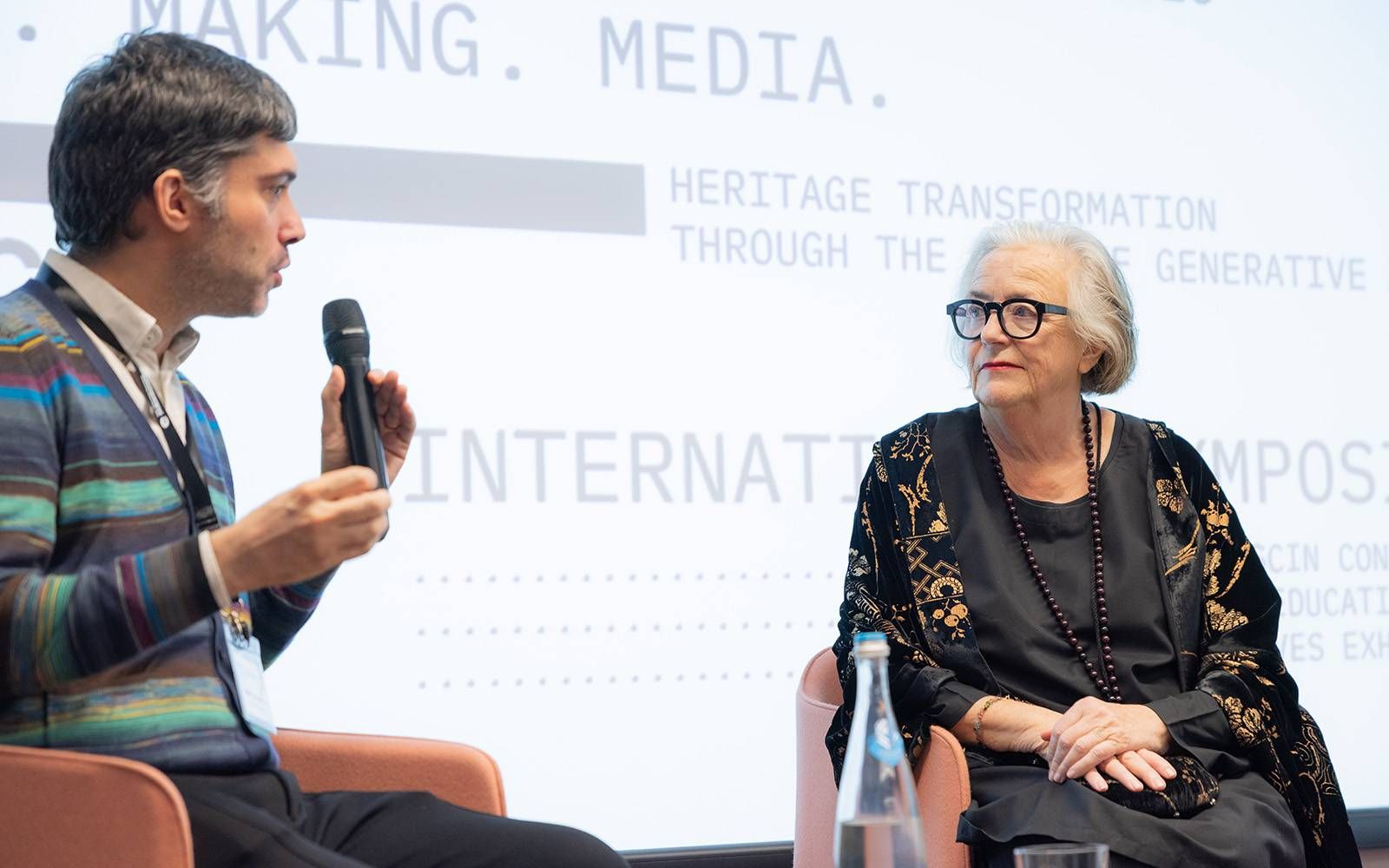
Among the emerging trends she identified was a renewed interest in traditional clothing, conventional silhouettes and ancestral dress codes. Rather than interpreting these developments as a rejection of progress, Edelkoort connected them to a growing search for cultural continuity, belonging and collective identity. Regional garments, historical references and established rituals become sources of inspiration for contemporary designers, challenging the idea that innovation must always involve breaking with the past.
Her Beyond Fashion perspective suggests that understanding the future of fashion requires looking beyond seasonal trends, recognising the influence of cultural memory, social behaviour and historical knowledge on contemporary creative practice.
The Return of Craft, Cultural Heritage and Collective Creativity
For Edelkoort, rethinking the fashion industry's future also means questioning its dependence on overproduction, excessive consumption and constant novelty. Rather than continually creating new products, she proposed rediscovering the cultural, emotional and material value of existing objects, encouraging an approach to fashion based on longevity, craftsmanship and more considered creative processes.
A central element of this transformation is the renewed importance of analogue creativity and traditional craftsmanship. Regional techniques, artisanal knowledge and material experimentation offer alternatives to increasingly automated production and digital design processes. In Edelkoort's vision, cultural heritage is not simply a source of nostalgic inspiration, but a living repository of skills, traditions and creative knowledge that can inform contemporary design.
She also challenged the fashion industry's emphasis on individual creative directors and the pursuit of personal recognition. Instead, Edelkoort envisioned more collaborative models of creativity, bringing together designers, artisans and communities to develop shared ideas and processes. This shift places collective knowledge and craftsmanship at the centre of creative innovation.
Her reflections extend beyond fashion to reconsider how people interact with garments, materials and objects. Clothing, she suggested, should communicate values beyond its commercial purpose, expressing the human relationships, cultural references and creative decisions involved in its development.

Artificial Intelligence, Human Intuition and the Future of Fashion Education
As artificial intelligence reshapes fashion design and creative production, Edelkoort questioned how human imagination can retain its originality when generative technologies can produce seemingly unlimited visual possibilities. Rather than simply opposing technological innovation, she emphasised the importance of human intuition, independent thinking and cultural awareness as essential qualities in the creative process.
During the discussion following her keynote, Edelkoort acknowledged AI's potential to support research and design development, while expressing concerns about its environmental impact and the visual uniformity of AI-generated imagery. She argued that access to advanced technologies does not necessarily produce meaningful creativity. Original ideas still depend on critical judgement, cultural understanding and the ability to develop a distinctive creative perspective.
These questions also have important implications for fashion education and the future of creative careers. Edelkoort challenged fashion schools to reconsider educational models centred primarily on producing celebrated runway designers. She called for greater recognition of collaborative practices, industrial design and alternative professional pathways, reflecting the diversity of skills and roles required by the contemporary creative industries.
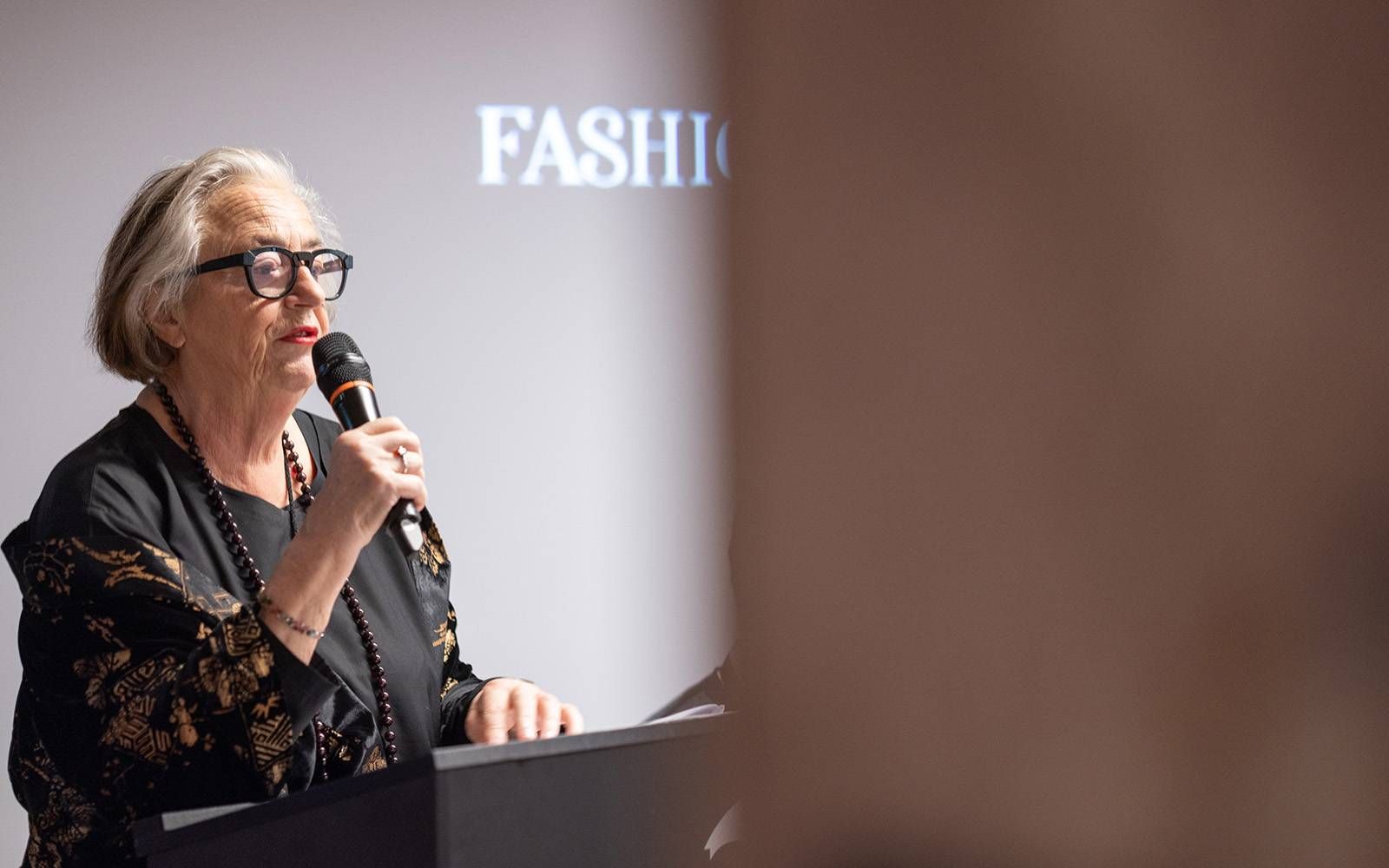
Another central theme was the importance of patience and long-term cultural observation. Although fashion is often associated with rapid change, Edelkoort highlighted how significant transformations in creative behaviour, social values and cultural identity develop gradually over time.
Her perspective positions fashion education as a space for critical thinking, experimentation and independent creative development. In an industry increasingly influenced by artificial intelligence and technological acceleration, preparing future designers means nurturing their ability to question established systems, interpret cultural change and develop original ideas rather than simply following the immediate demands of technology and the market.
RESEARCH SHAPES LEARNING
Discover Istituto Marangoni’s courses across fashion, design, art, beauty and business, and explore how research, innovation and international learning support new skills, ideas and creative directions for tomorrow’s industries.
Mevin Murden: Preserving Indian Craft Heritage Through Responsible Innovation
His research examined how traditional craft techniques and cultural heritage can inform contemporary creative practices while maintaining their historical and social significance. Through collaborations involving students, designers and local artisans, including a project documenting the weaving and dyeing traditions of Kotpad, India, Murden investigated the opportunities and challenges of translating traditional knowledge into new design and commercial contexts.
A central finding was that responsible craft innovation requires more than cultural sensitivity. Artisan communities need adequate infrastructure, resources and fair compensation, alongside recognition of their collective ownership of traditional techniques and knowledge. Without these conditions, creative collaborations risk separating cultural heritage from the people responsible for sustaining it.
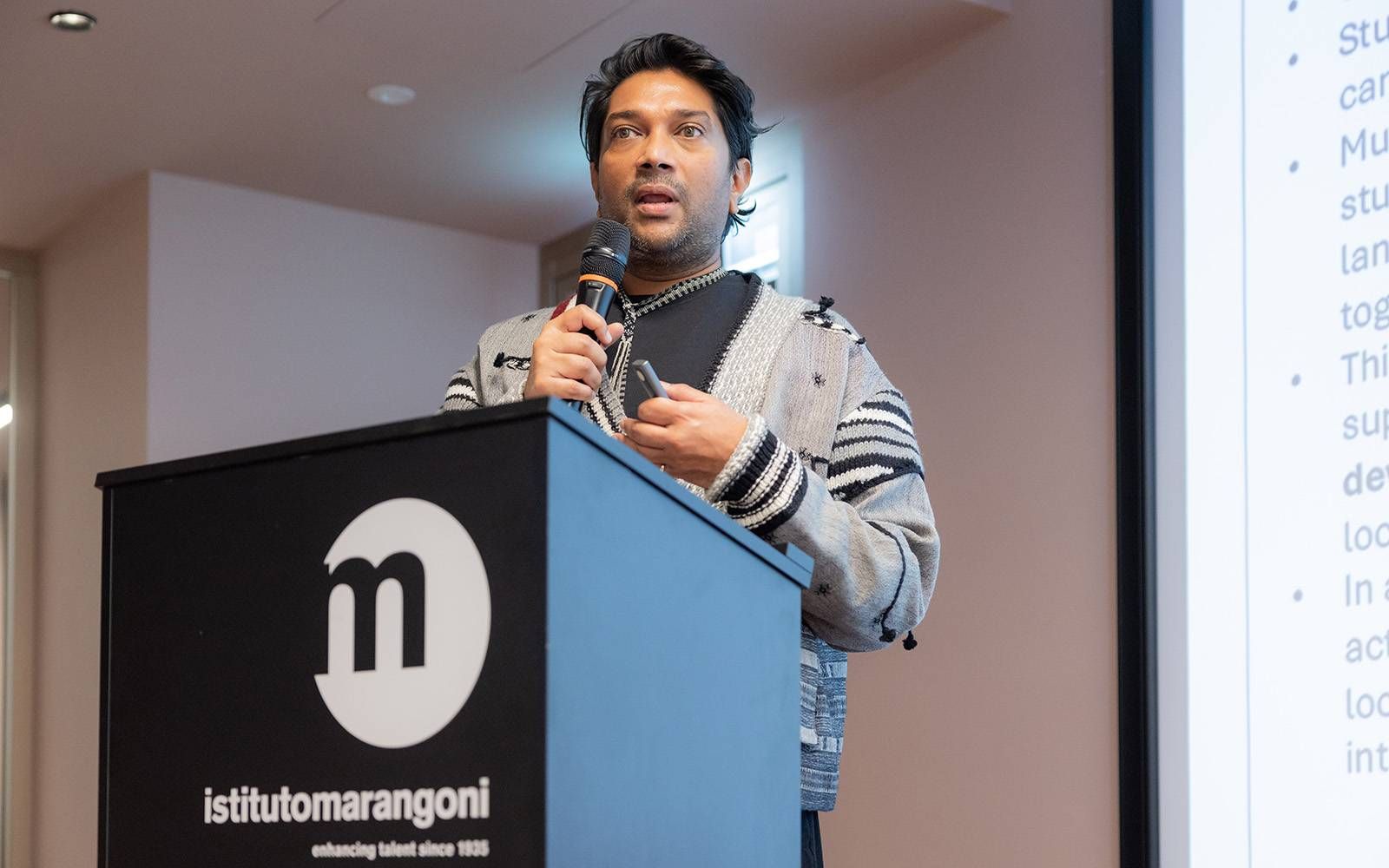
To address these challenges, Murden proposed a strategic framework for responsible craft innovation that prioritises feasibility, followed by stakeholder acceptance and cultural suitability. His contribution positioned craft preservation as a question of social responsibility, demonstrating that meaningful innovation must consider not only how traditional practices can evolve, but also who participates in and benefits from their transformation.
How can traditional Indian craftsmanship evolve through contemporary fashion and design without compromising its cultural identity or the communities that preserve it? Mevin Murden explored this challenge through research on craft preservation, responsible innovation and collaboration with artisan communities in India, drawing on educational projects developed at Istituto Marangoni Mumbai.
Raffaele Gradoni: Can Social Media Platforms Function as Living Archives?
His analysis explored how platform algorithms and attention-driven economies reward visibility, publishing frequency and content volume, often prioritising these metrics over originality and cultural relevance. The growing accessibility of generative artificial intelligence intensifies this dynamic by enabling the rapid production of synthetic material, contributing to the phenomenon known as AI slop: repetitive, derivative and low-value content generated at scale.
Gradoni argued that this transformation cannot be explained solely through individual creative choices or technological developments. Instead, it reflects the economic incentives embedded in digital platforms, where competition for attention increasingly influences what is produced, distributed and preserved.
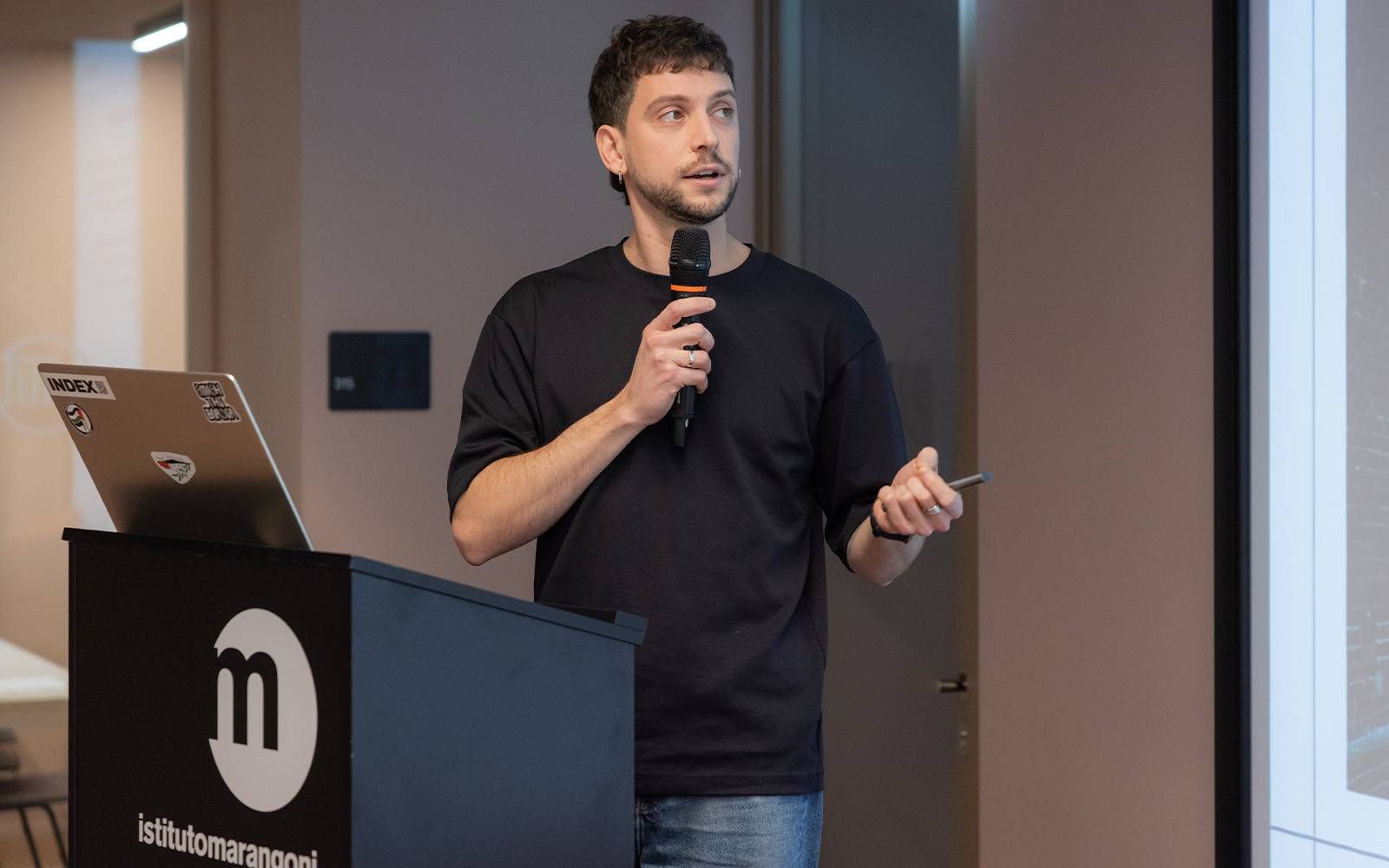
He also considered the implications for AI systems trained on online content, including the potential risks of repeatedly recycling machine-generated material and progressively weakening the originality and diversity of available information.
His research challenged the assumption that accumulating digital content is equivalent to preserving cultural memory. For Gradoni, understanding the future of digital archives requires examining the infrastructures, economic interests and human labour behind content production, as well as the conditions necessary to maintain its cultural relevance over time.
Can social media platforms genuinely preserve cultural memory, or do their economic models undermine the value of creative content? Raffaele Gradoni examined the concept of social media as living archives, questioning whether digital environments primarily designed to maximise engagement can effectively preserve, organise and transmit cultural knowledge.
Simona Murialdo: Rethinking Human Authorship in AI-Generated Fashion Imagery
Drawing on I Remain Suspended, a fashion imagery project developed in collaboration with fashion designer Maricia Cristini, Murialdo introduced the concept of decision authorship. This approach locates human authorship not exclusively in the execution of an image, but in the creative decisions that shape its development: defining the brief, establishing visual rules, setting boundaries and critically evaluating AI-generated results.
Her research explored how these decisions can be documented through a structured creative workflow, creating a traceable archive of the creative process behind AI-generated images. Rather than focusing solely on the final visual output, this methodology makes the reasoning, choices and responsibilities of the human creator more visible.

This perspective has significant implications for fashion communication, creative direction and design education. Moving beyond the idea of prompting as a purely technical skill, Murialdo proposed an approach centred on visual research, critical judgement, creative intention and transparent documentation.
Her contribution reframed human authorship in the age of generative AI as a deliberate, accountable and traceable process. As artificial intelligence expands the possibilities of visual production, the creative professional's role increasingly involves defining meaning, making informed decisions and maintaining responsibility for the resulting imagery.
Who owns the creative process when artificial intelligence generates the final image? Simona Murialdo explored this question through practice-based research into AI-generated fashion imagery and creative authorship, examining how artistic responsibility changes when visual content can be produced without traditional photographic sets, physical garments or models.
Belén López Vázquez: Responsible AI Governance and Cultural Heritage in Luxury Fashion
How can luxury fashion brands use artificial intelligence to reinterpret their historical archives while protecting the cultural heritage and brand identity that define them? Belén López Vázquez addressed this question through research into responsible AI governance in the luxury industry, developed in collaboration with fellow researcher Amanda Díaz.
Based on a comparative analysis of publicly available documentation from Louis Vuitton, Dior, Gucci and Burberry, the research examined how heritage preservation, technological innovation, intellectual property and sustainability intersect as luxury brands explore the potential of artificial intelligence.
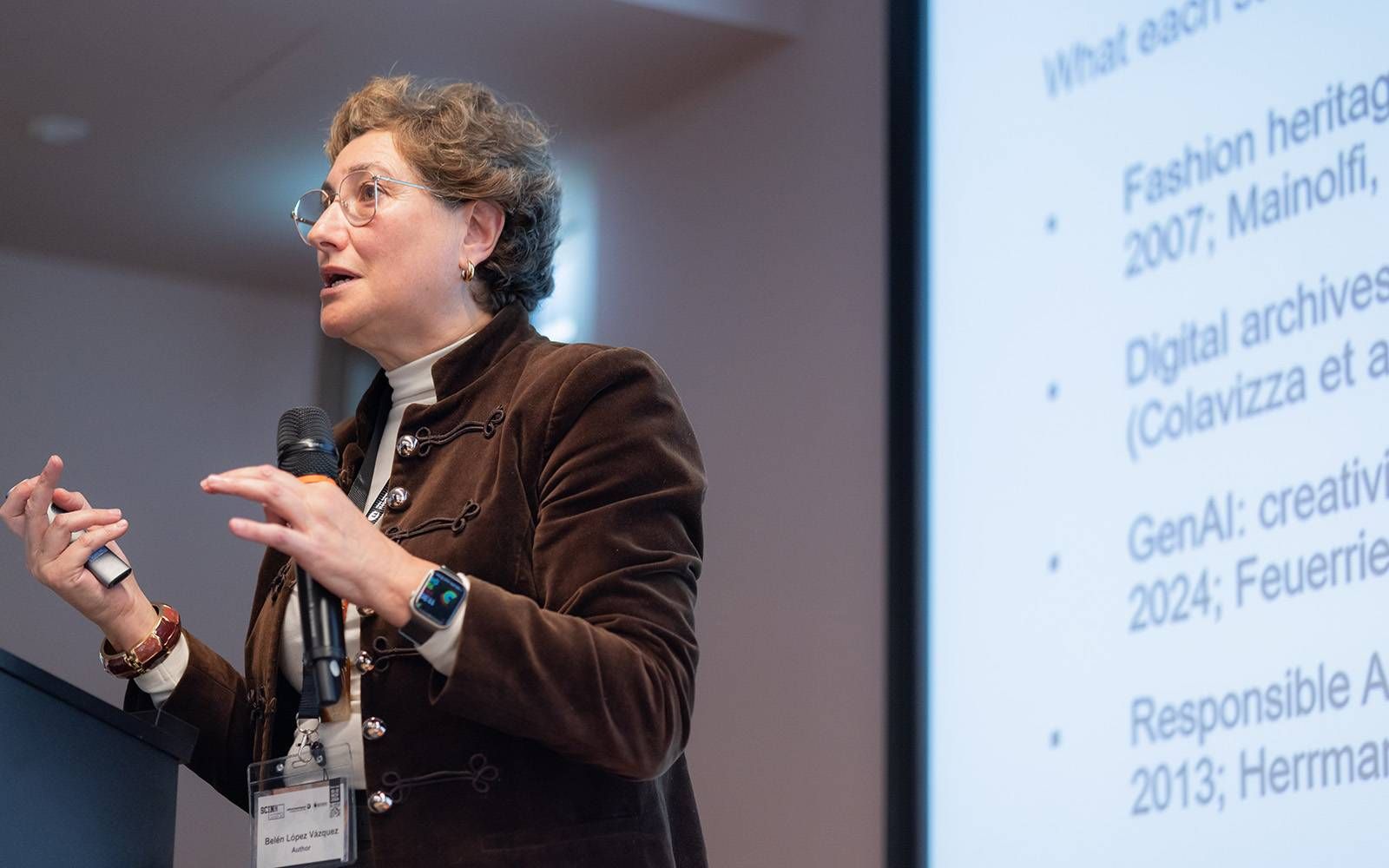
The findings highlighted a fundamental distinction: owning extensive historical archives does not automatically mean being prepared to use them responsibly with AI. Transforming cultural heritage into digital assets introduces complex questions involving intellectual property rights, transparency, accountability and regulatory compliance, alongside the need to preserve the authenticity and meaning of brand heritage.
To address these challenges, López Vázquez presented a five-dimensional framework for responsible AI governance in luxury fashion, integrating heritage assets, legal readiness, responsible AI, environmental and social sustainability, and strategic value creation. Together, these dimensions provide a structured approach to assessing the organisational capabilities required for responsible technological innovation.
Rather than ranking luxury brands, the framework examines how these interconnected capabilities can support informed decision-making and long-term development. Her contribution positioned responsible AI governance as a foundation for sustainable luxury innovation, demonstrating that protecting cultural identity, ensuring accountability and creating strategic value should be complementary objectives rather than competing priorities.
What These Perspectives Mean for the Future of Creative Education
Together, the five contributions highlighted a central challenge for the creative industries: how to embrace technological innovation while preserving the cultural knowledge, human creativity and ethical responsibilities that give it purpose.
From Li Edelkoort's vision of a more collaborative and conscious fashion system to research exploring traditional craftsmanship, digital archives, creative authorship and responsible AI governance, the session demonstrated how different disciplines can contribute to a deeper understanding of creativity in an increasingly technological world.
For creative education, these perspectives reinforce the importance of developing not only technical capabilities, but also critical thinking, cultural awareness and the ability to question emerging technologies.
Through initiatives such as the SCIN Intelligent Archives conference, Istituto Marangoni contributes to the international academic dialogue on the future of fashion, design and creative practice, connecting research with the challenges facing contemporary industries and the next generation of creative professionals.