
MĪRĀBĬLIS
Fashion Show 2025
Istituto Marangoni Firenze
At Istituto Marangoni Firenze, MĪRĀBĬLIS Fashion Show 2026 presents eight student collections inside Sale del Ninfeo of Palazzo Corsini, exploring perception, trompe-l’œil, body and nature through material research, while opening the school’s tenth-anniversary journey toward contemporary textile innovation in Florence and design education.
MĪRĀBĬLIS FASHION SHOW 2026: FASHION AS A LANGUAGE OF PERCEPTION
Presented on 2 July inside the Ninfeo of Palazzo Corsini, MĪRĀBĬLIS is the Fashion Show 2026 of Istituto Marangoni Firenze and a reflection on how fashion can shape the way reality is seen, experienced and interpreted. The title comes from the Latin mirari, meaning “to look”, and places the act of seeing at the centre of the project. From this starting point, the show develops a dialogue between perception, illusion and representation, using the visual language of trompe-l’œil as a design device rather than a decorative effect.
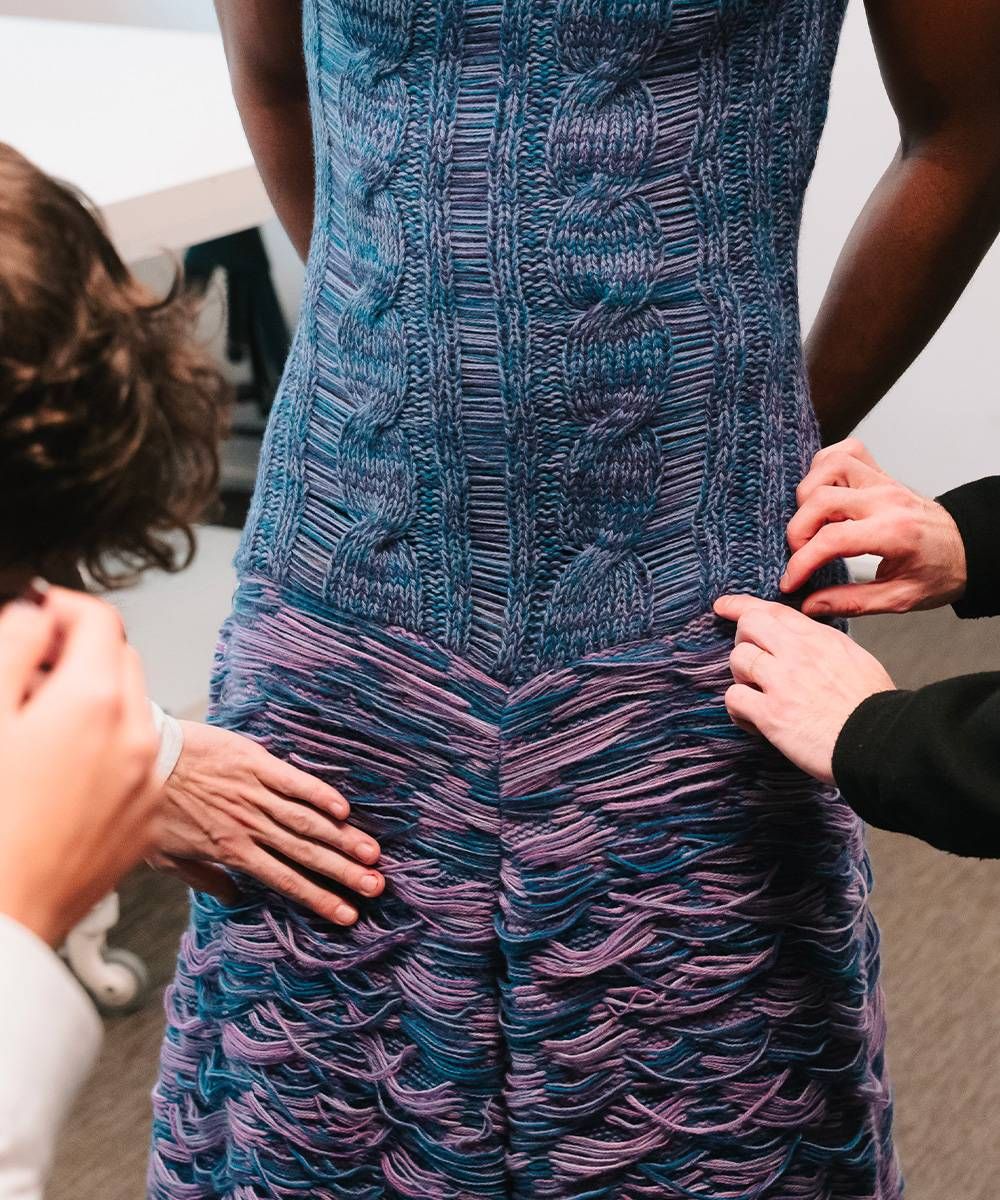
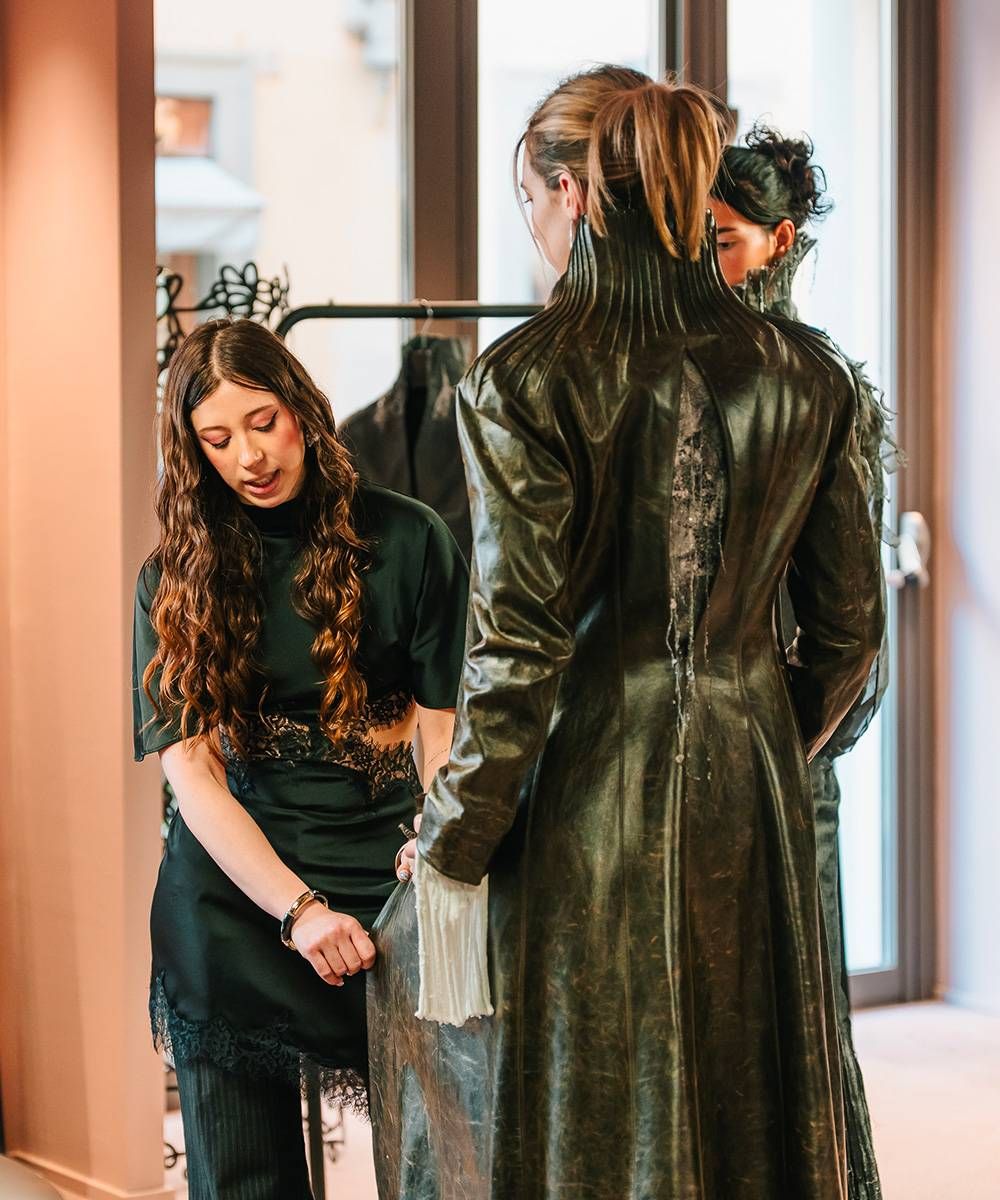
The choice of Palazzo Corsini reinforces the concept. Its frescoed rooms and immersive architectural setting create a space where nature, decoration and perspective already challenge the viewer’s perception. Within this context, the eight student collections — four menswear and four womenswear — explore the relationship between body, identity, memory, nature and material transformation. Through different silhouettes, construction techniques and visual approaches, MĪRĀBĬLIS presents the runway as a cultural experience: a place where garments do not simply appear, but invite the audience to question what they see and how they perceive it.
PALAZZO RICASOLI: A NEW CHAPTER FOR ISTITUTO MARANGONI FIRENZE
MĪRĀBĬLIS is not conceived as an isolated fashion show, but as the opening moment of a wider journey for Istituto Marangoni Firenze. The Fashion Show 2026 introduces the path toward the school’s tenth anniversary, which will continue in autumn with an exhibition dedicated to projects from all departments. In this sense, the show becomes the first chapter of a broader institutional narrative: one that connects fashion, art, education and the evolving identity of the Florence school.
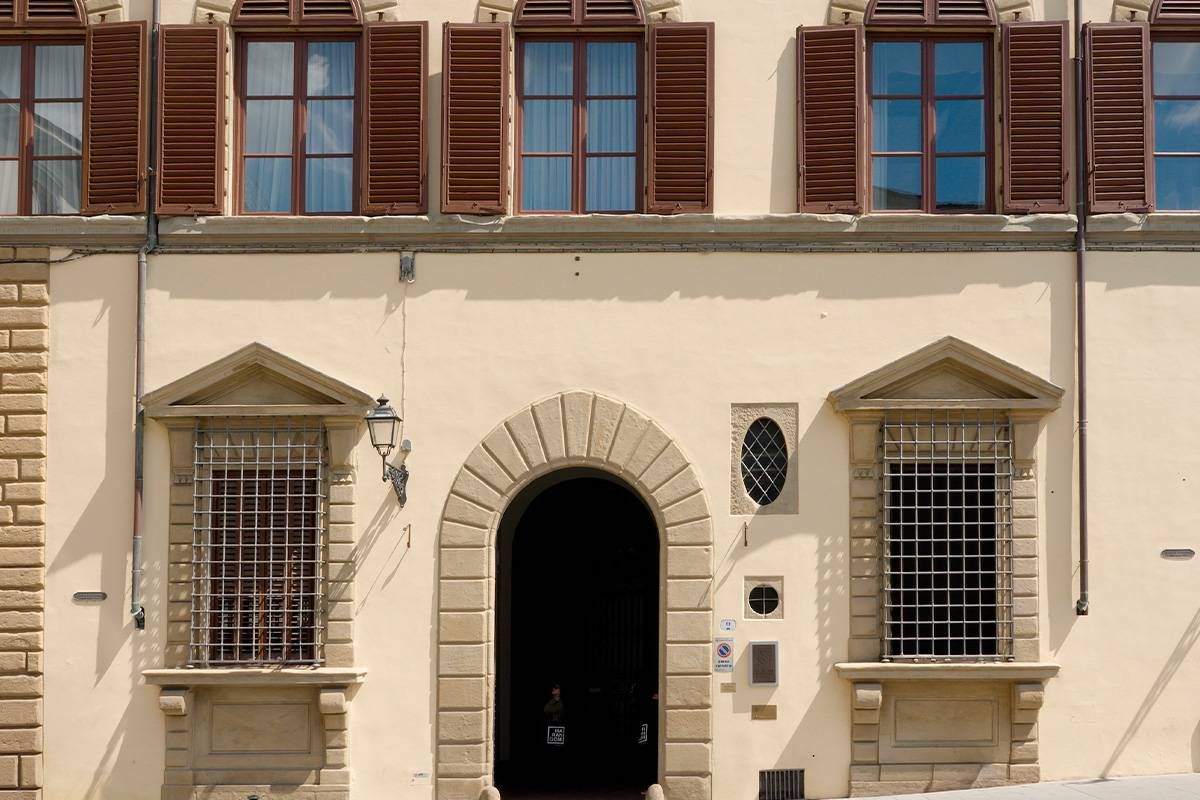
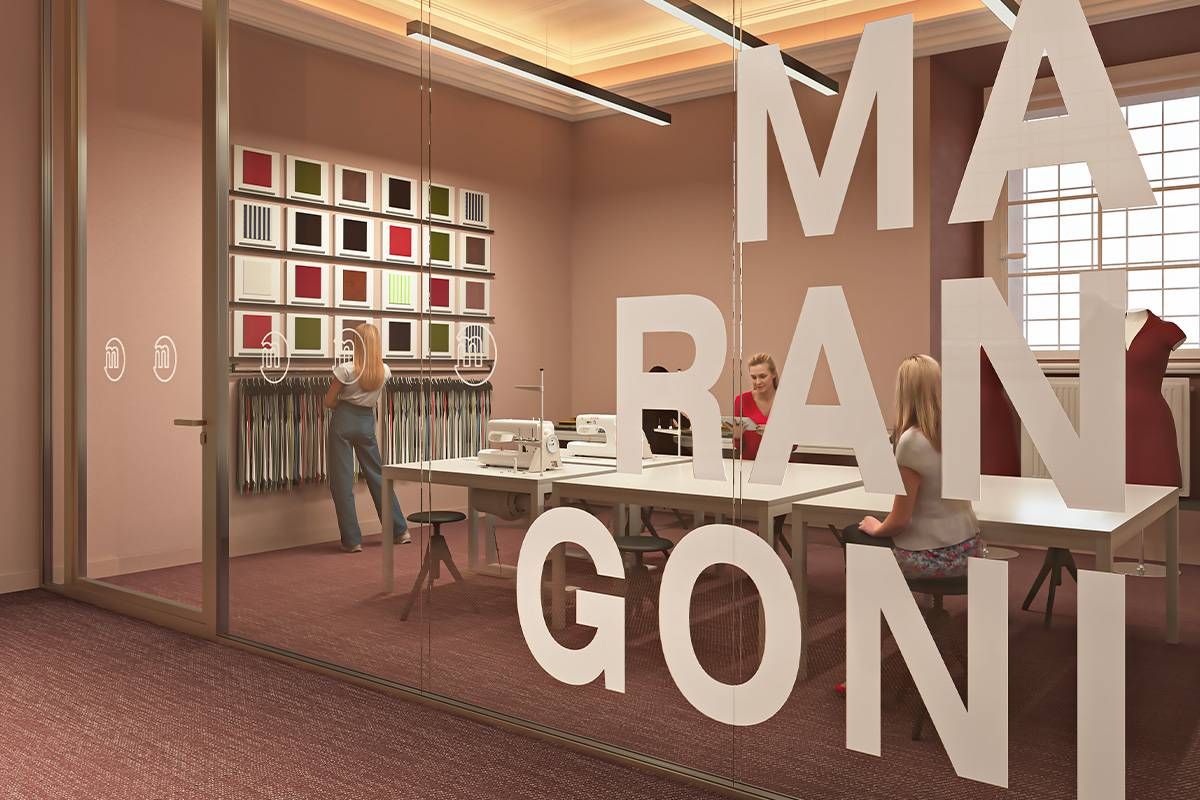
This journey also looks ahead to a new phase of development through the future Palazzo Ricasoli hub, opening from December 2026 in Piazza Goldoni, a few steps from the main school. Dedicated to contemporary textile arts, the new space will extend across approximately 300 square metres and will focus on knitwear, embroidery, textile experimentation, prototyping and interdisciplinary research. Its location inside a historic Florentine building, including spaces with original architectural features and a frescoed ceiling, creates a direct dialogue between heritage and innovation. Palazzo Ricasoli express a precise vision: fashion education as a meeting point between cultural research, craftsmanship, contemporary experimentation and the future skills of the fashion industry.
FROM IL SENSIBILE TO THE ATELIER: THE ACADEMIC RESEARCH BEHIND MĪRĀBĬLIS
The academic foundation of MĪRĀBĬLIS begins with a shared reference: il sensibile, developed from Emanuele Coccia’s reflection on perception, experience and the construction of reality. Within the students’ creative process, this concept becomes a common field of investigation. It invites each designer to consider how human beings inhabit sensory experience, how perception becomes language, and how fashion can translate invisible states of awareness into material form.
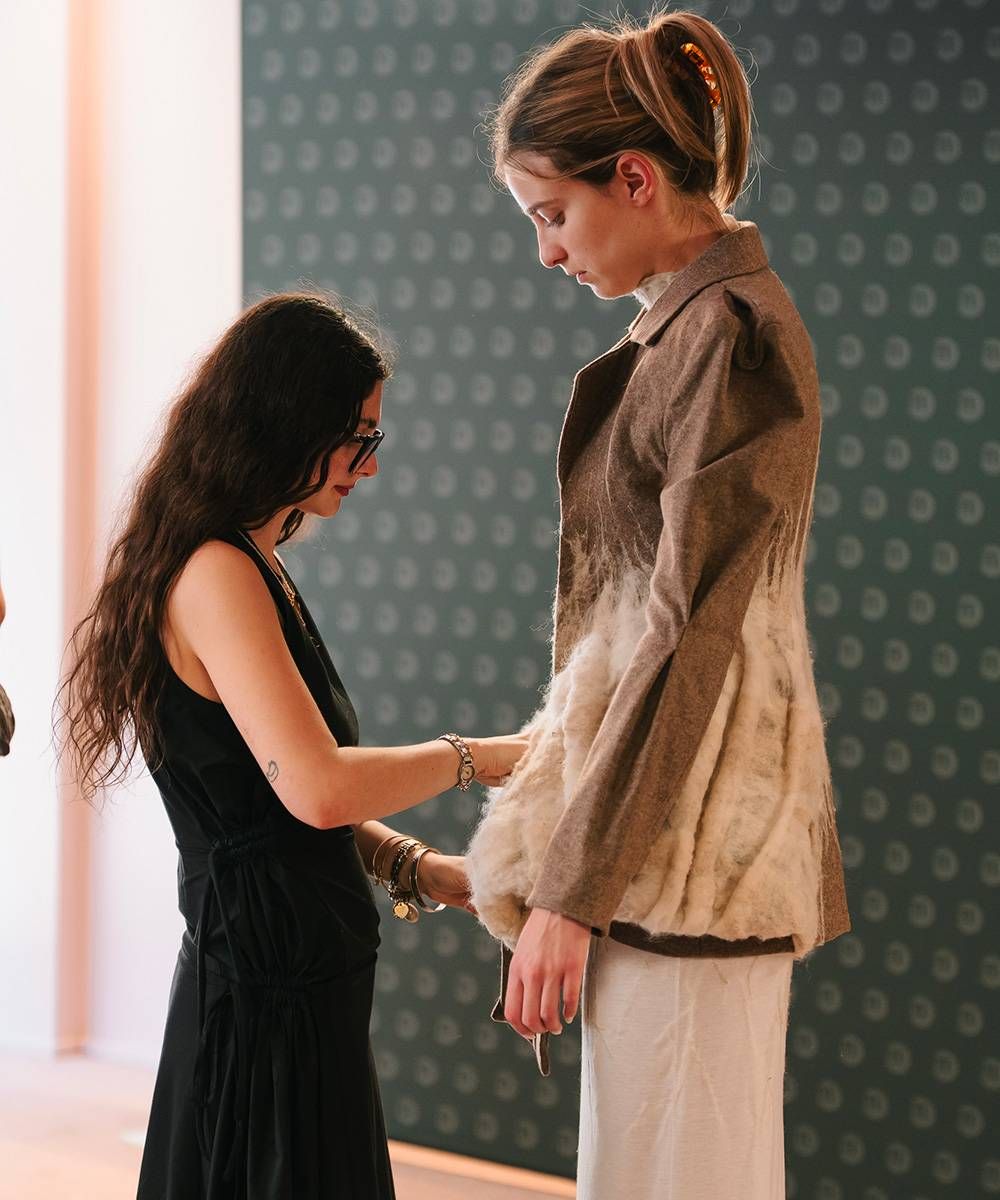
The result is an educational project that combines theoretical research, design development and laboratory practice. The eight collections presented in the Fashion Show 2026 are the outcome of experimentation with materials, sartorial construction and the relationship between body, identity and nature. Guided by Francesca Giulia Tavanti, Director of Education, the project reflects an academic approach in which creative thinking is inseparable from making.
This method also connects to the future Palazzo Ricasoli hub, where laboratories for pattern making, sewing, textile work, embroidery, prototyping and interdisciplinary collaboration will strengthen the school’s hands-on dimension. In this framework, MĪRĀBĬLIS shows fashion education as a process where philosophical speculation, craft knowledge and contemporary design research meet inside the atelier.
The MĪRĀBĬLIS Fashion Show is supported by partners who reflect the values of excellence, research and savoir-faire at the heart of Istituto Marangoni Firenze. For the event, Santoni L’Aperitivo takes part as Beverage Event Partner, accompanying the cocktail experience, while Fabio Colucci and Monacelli join as Technical Sponsors, contributing their expertise in grooming and make-up to the overall visual identity of the show.


ARIANNA CORRIAS
MATER
Arianna Corrias’ Mater is inspired by the figure of the Sardinian mother, understood as a symbol of strength and as a pillar of society. The collection also connects to the work of artist Costantino Nivola, particularly his Madri Mediterranee series.
The material research evokes Sardinian folklore through the use of fabrics such as velvet, combined with decorative elements including Sardinian filigree. These references are not treated as simple ornaments, but as direct expressions of cultural memory and identity.
Through Mater, the designer transforms heritage into a contemporary fashion language. The collection reflects on motherhood, protection and social continuity, while translating the visual codes of Sardinian tradition into garments that speak of belonging, resilience and collective memory.
KANGSAN LEE
I:N
Kangsan Lee’s I:N takes inspiration from Carl Gustav Jung’s concept of the “persona”, interpreted as a garment in itself.
Through the language of tailoring, the collection unfolds in three phases: tension, adaptation and release. These stages are expressed through garment construction and the way each piece interacts with the body. Materials such as horsehair canvas play a central role because of their ability to gradually take shape around the wearer, while classic fabrics including wool, cashmere and cotton gabardine contribute to a rigorous and controlled aesthetic.
At its core, I:N reflects the desire to preserve one’s essence while modulating its expression. The collection suggests that clothes do not transform the individual, but translate them. In this vision, tailoring becomes a tool for revealing identity without erasing it.
KARLA MUSLADIN
OPASANA
Karla Musladin’s Opasana takes inspiration from the Republic of Dubrovnik, where clothing functioned not only as a visual sign, but also as an integral part of the social system. Rather than approaching this historical context as a purely iconographic reference, the collection interprets it as a cultural structure.
Developed as a menswear collection, Opasana is built around the idea of wrapping the body. The title refers to the traditional belt worn at the waist, while also carrying a symbolic meaning connected to protection, structure and control.
Through this concept, the collection investigates how garments can define the body, regulate movement and express social identity. Opasana transforms a historical reference into a contemporary reflection on menswear, using construction, layering and restraint to explore the relationship between clothing, authority and self-representation.
KENDALL LEA SPITZ
EWE
With EWE, Kendall Lea Spitz explores how fashion can become an act of gratitude rather than exploitation. The title refers to the Hawaiian word for “sheep” and pays tribute both to the animals whose wool gives shape to the collection and to the landscapes they inhabit.
Inspired by pastoral clothing, rural environments and the interdependence between humans, animals and the land, the collection brings together references to sheep, hay, flowers and working animals, interpreting them as symbols of care. Through felting techniques applied to wool gathered from rescued sheep, the fibre becomes a material narrative that preserves the trace of the animal.
The result is a living archive of texture, memory and responsibility. EWE invites viewers to reconsider the role of animals and the environment within the fashion system, proposing a design language rooted in respect, reciprocity and ecological awareness.
MATILDE BONECHI
LA FORMA DEL SENTIRE
Matilde Bonechi’s La Forma del Sentire begins with a theoretical reflection inspired by Umberto Eco’s essay Pensiero Lombare, then develops into a study of menswear silhouettes between the late nineteenth and early twentieth centuries.
The collection focuses on denim as an everyday material capable of changing over time, while also drawing from the clothing of fishermen from the Aran Islands, a reference that opens the project toward knitwear research. By working with the loom, the designer creates a hybrid textile that combines denim and knitwear, reconstructing the texture of denim through wool yarns.
This dialogue between material memory and contemporary experimentation gives the collection its distinctive identity. La Forma del Sentire investigates how traditional manufacturing techniques can be reinterpreted through a new textile language, where fabric becomes a bridge between history, gesture and perception.
MATILDE GORI
OLTRE IL FILO
Matilde Gori’s Oltre il Filo is a menswear knitwear collection that explores regeneration as a continuous process of transformation, both of matter and identity.
The project begins with a personal memory linked to the designer’s grandfather, who worked as a textile rag dealer in the Prato textile district. From this memory, the collection takes shape through the use of a single regenerated yarn, composed of 98% cashmere and 2% wool. This material becomes the symbol of a tradition that transforms previously used fibres into new creative resources.
Textures, techniques and colours are inspired by Fiber Art. The palette is built through contaminations, chromatic transitions and contrasts that reflect the idea of matter in constant evolution. Through knitwear and regenerated cashmere, Oltre il Filo questions traditional codes of menswear, proposing a more sensitive, vulnerable and emotionally expressive vision of masculinity.
MONICA BEDUZZI
UNEXPECTED ARMOR
Monica Beduzzi’s Unexpected Armor is inspired by time as an uncontrollable force acting on objects and bodies. The collection investigates processes of transformation, decay and the gradual alteration of matter.
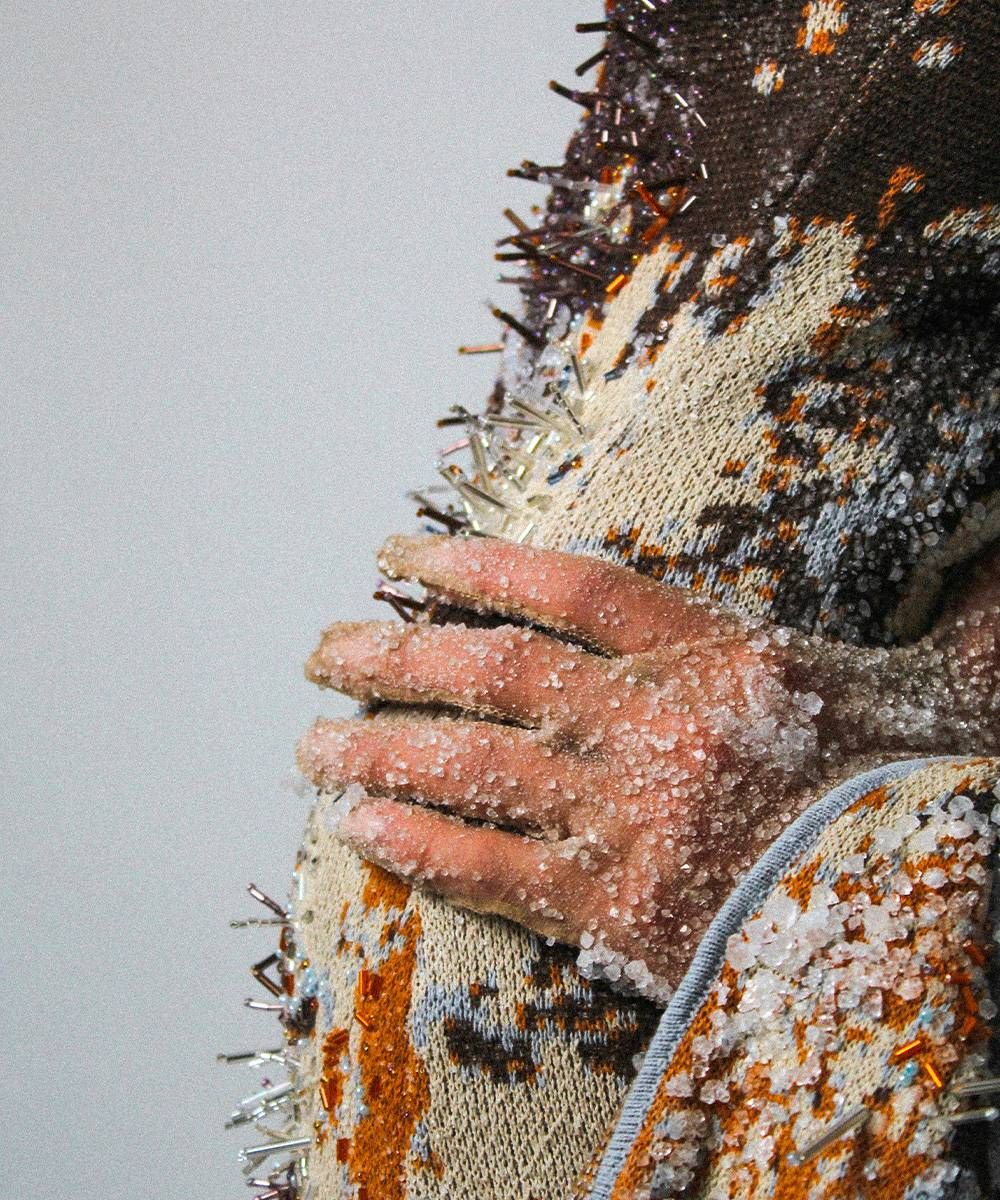
This tension is translated into a material language made of textures, fabric manipulation and experimentation, where deterioration becomes a generative element rather than a sign of loss. The crystallisation technique is used to create effects of accumulation and surface layering, evoking the formation of mould.
Through this process, decay is transformed into protection, giving rise to the idea of an “unexpected armor”. The collection reflects on fragility, resistance and the passage of time, turning damaged or altered surfaces into symbols of defence. In Unexpected Armor, matter becomes both vulnerable and powerful, revealing beauty through transformation.
SARA PENG
THE PERFORMED SELF
Sara Peng’s The Performed Self explores a psychological condition that is increasingly visible in contemporary society: the tendency to please others at the expense of one’s own identity.
The project draws inspiration from the work of artist Philippe Soussan and his experiments with optical illusion. The garments are built through a double layer. The inner layer is uniform and represents the social mask, while the outer layer is distorted and expanded, visually revealing the repressed dimension of the self.
Everyday materials such as cotton, wool and poplin are combined with structural elements such as metal wire, creating an amplified three-dimensional effect. Through this visual and material construction, The Performed Self reflects on identity, performance and emotional suppression, transforming the garment into a space where the visible self and the hidden self coexist.