

Is sustainability really why Gen Z buys vintage fashion?
Why has Gen Z turned vintage fashion into a status symbol? A researcher and upcycling expert asks whether sustainability is the reason, or just part of the story
Why has Gen Z made vintage fashion a status symbol? What they want from second-hand fashion is the one thing their feed doesn’t have: a past. Their fascination with pre-loved garments stems from the traces of use, memory, and identity these pieces carry—qualities no production line can replicate. Francesca Vigna, Professor at Istituto Marangoni Paris, has spent years working between vintage curation, fashion research and artistic practice. She has assembled collections for stores and boutiques in Milan, Paris and Amsterdam, runs upcycling projects using old clothes and deadstock fabrics, and regularly leads workshops and lectures for Fashion Design students, including Research Fundamentals and Sustainable Design and Upcycling. In this article, she asks whether sustainability really explains Gen Z’s fascination with vintage, and considers why old pieces—with their wear, history, and imperfections—have become a form of creative research.
There’s a unique intelligence in reading objects that have already lived a life. Gen Z, a generation raised in the accelerated churn of fast fashion and endless digital feeds, has paradoxically developed a fierce appreciation for the slow, the worn, and the second-hand. It could be nostalgia. But it’s also resistance, and a form of research.
Visualizza questo post su Instagram
I’ve spent years navigating vintage curation, fashion research and artistic practice, and what I see in this generational shift is less a trend than a return to instinct.
Gen Z didn’t invent the love of old things; they rediscovered it out of necessity: ecological, economic, and emotional.
Visualizza questo post su Instagram
Why Does Gen Z Want Fashion That Cannot Be Mass-Produced?
Fast fashion promised novelty but delivered sameness. Vintage offers the opposite: garments with an identity, a history, a texture that can’t be mass-produced. In a culture saturated with infinite, identical options, uniqueness is the new luxury. A worn hem, a hand-repaired seam, a slightly faded colour. These flaws are becoming badges of individuality.
Visualizza questo post su Instagram
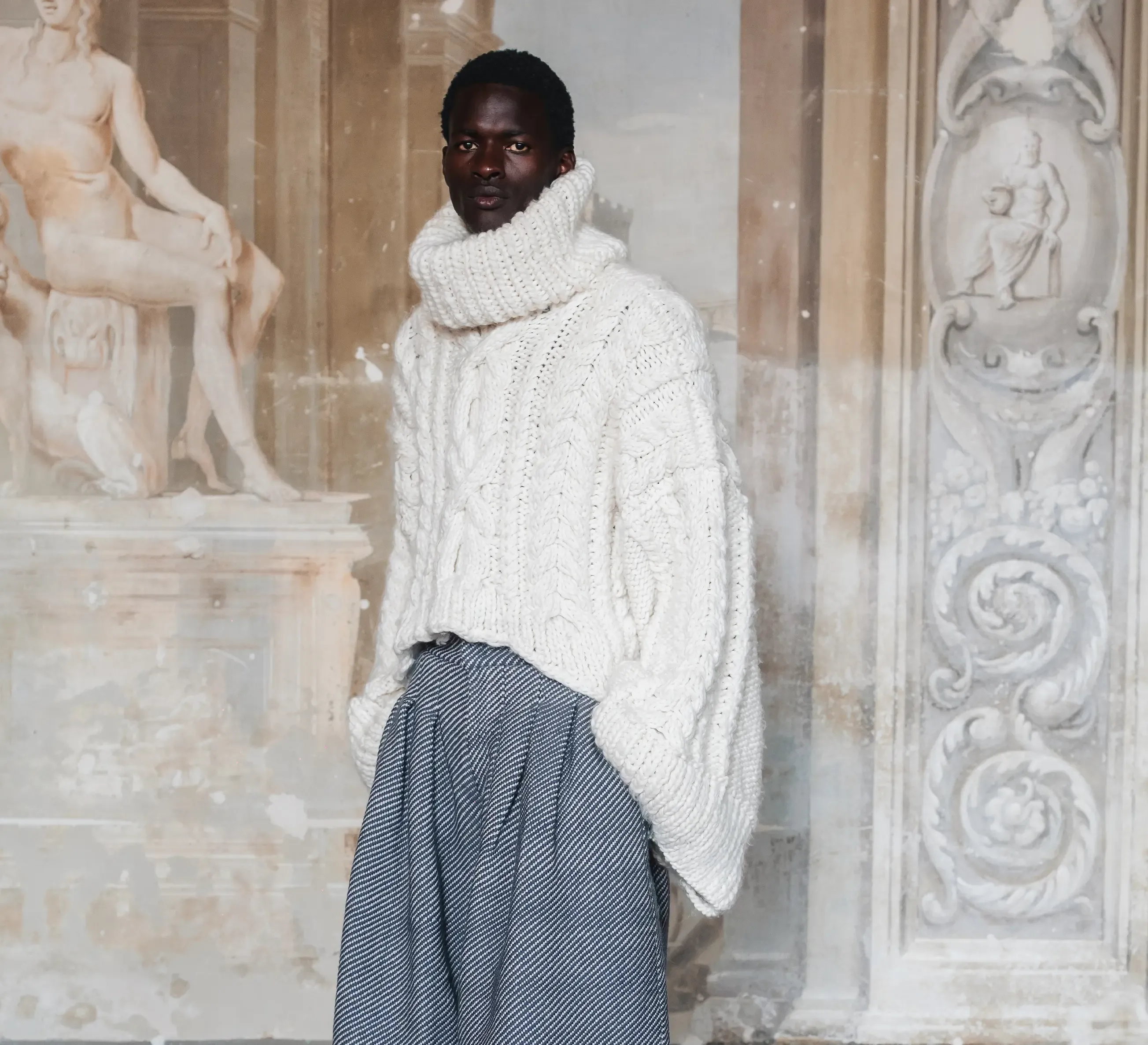
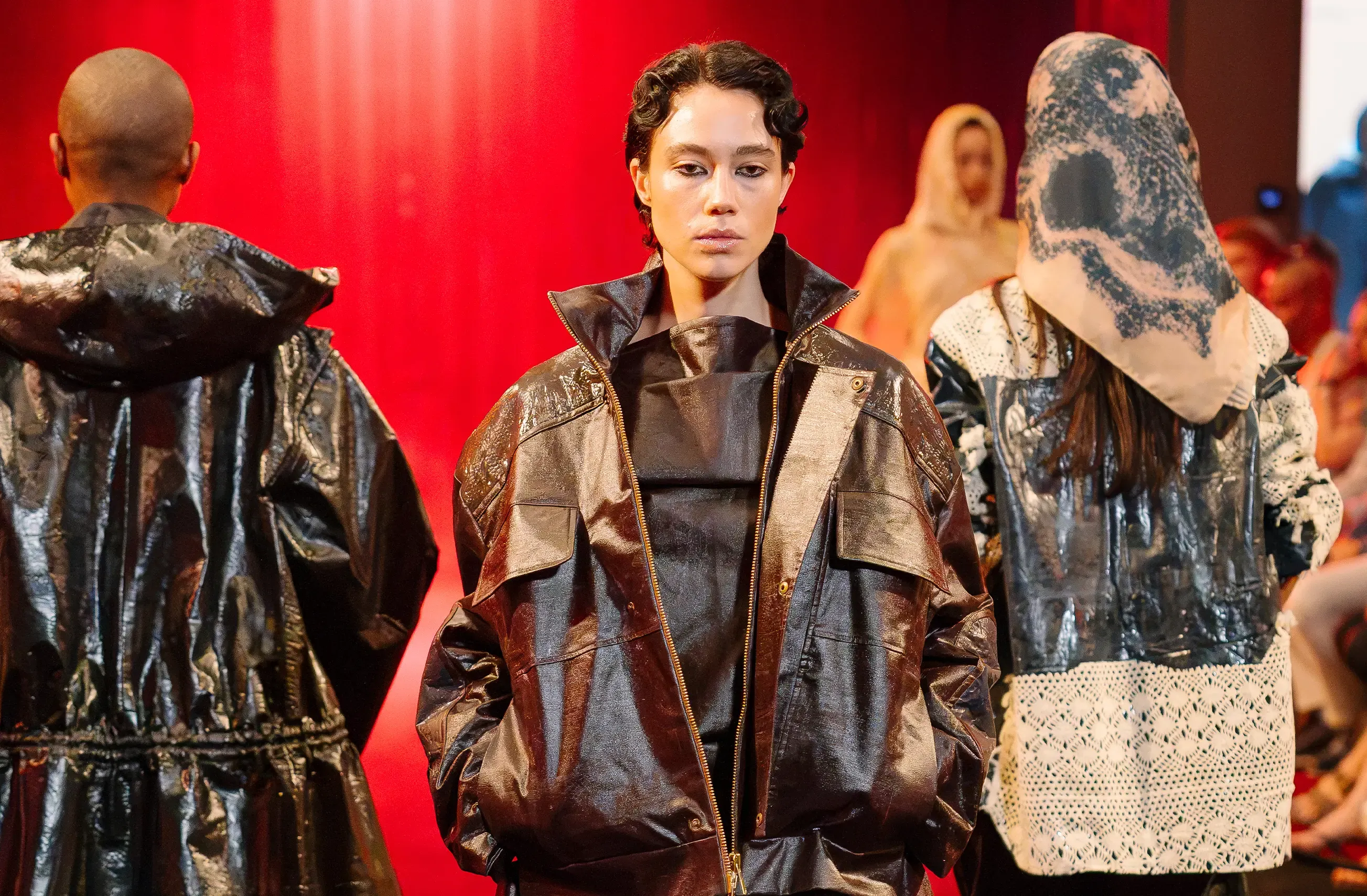
Even the highest tiers of fashion have embraced this sensibility: Prada’s Fall/Winter 2026-27 menswear collection, presented by Miuccia Prada and Raf Simons in Milan, staged garments as if they had already lived a life, with stained cuffs, crumpled leather, creased trenches peeling away at the seams, in what Raf Simons called “a kind of archaeology.”
How Vintage Clothing Became a Form of Creative Research
My own work has always started in the same place: the pile. A pile of found photographs, discarded fabrics, old garments, and objects that once belonged to someone’s daily life and are now poised between memory and disappearance.
Growing up close to elderly relatives and the objects they left behind taught me early on that a stack of clothes or letters can be a site of possibility. Cutting, pairing, collaging, and reassembling these fragments became my main language, a way of giving new form and movement to things that already carry another life within them.
Visualizza questo post su Instagram
I started collecting objects, textiles and clothes above all, since I was very young, and that early instinct has shaped the way I think and work today.
Visualizza questo post su Instagram
Over the years, this grew into a professional practice: I’ve curated vintage selections for stores and boutiques in Milan, Paris and Amsterdam, learning to read garments the way one reads archival documents, tracing provenance, condition, and the story stitched into every seam.
Visualizza questo post su Instagram
That same sensibility later inspired me to create new design products from old clothes and deadstock fabrics, transforming what had been dismissed or forgotten into something with a purposeful second life. I document much of this research and process on Instagram, @inmemoryofthingstocome, a kind of open archive in progress. One project born from this practice, Fou l’Art, was produced in limited edition and sold at 0FR and Lung in Paris, two of the most culturally and creatively influential spaces in the city. Both embrace the same ideal: that what already exists is often more valuable, and more honest, than what is yet to be made.
Why Does Gen Z Still Shop for Vintage in Person?
This is exactly the sensibility I try to pass on when I teach.
Archival practice: real, offline, hands-in-the-material research is something younger designers are hungry for, even if they didn’t grow up with it.
Scrolling through a bunch of images is not the same as sitting with a physical archive, touching fabrics, smelling a garment, noticing a repair made decades ago out of necessity rather than for aesthetics.
Visualizza questo post su Instagram
I encourage students to explore flea markets, family attics, textile archives, and second-hand shops. Physical searching is something that digital abundance cannot replicate. You cannot stumble upon a scar in a fabric through an algorithm; you have to go look for it yourself.
Visualizza questo post su Instagram
Why Are Fashion’s Imperfections Suddenly So Valuable?
Working with used garments and objects also means engaging with materials that already have a story. Instead of starting from a blank canvas, I begin with traces of damage, structures that carry emotional weight, and I build outward from there, mending to extend their past.
Visualizza questo post su Instagram
That, I think, is what Gen Z understands so well: old or dismissed objects are far from empty; they are dense with meaning. Choosing them over something new is both an ethical and aesthetic statement.
Vintage can be a method, one this generation is learning to practice with unexpected seriousness.
Vintage Fashion Is Moving From Flea Markets to Museums
This renewed attention to what already exists goes beyond the runway or Gen Z’s wardrobes; it’s reaching institutions, too.
Visualizza questo post su Instagram
From September 30, 2026 to April 4, 2027, the Musée des Arts Décoratifs in Paris celebrates the 40th anniversary of the Musée des Arts de la Mode with the exhibition “Look! 40 ans de mode au musée,” retracing four decades of fashion through 40 iconic silhouettes. A further sign that vintage and archival study are no longer niche pursuits, but the very lens through which our present moment examines itself.
Francesca Vigna
Professor, Paris






.jpg)
.jpg)