
How do you break into photography without connections? The Dazed & Confused co-Founder’s theory
Rankin, co-founder of Dazed & Confused, on starting a photography career, making work before anyone asks and facing rejection – plus his five minutes with the Queen
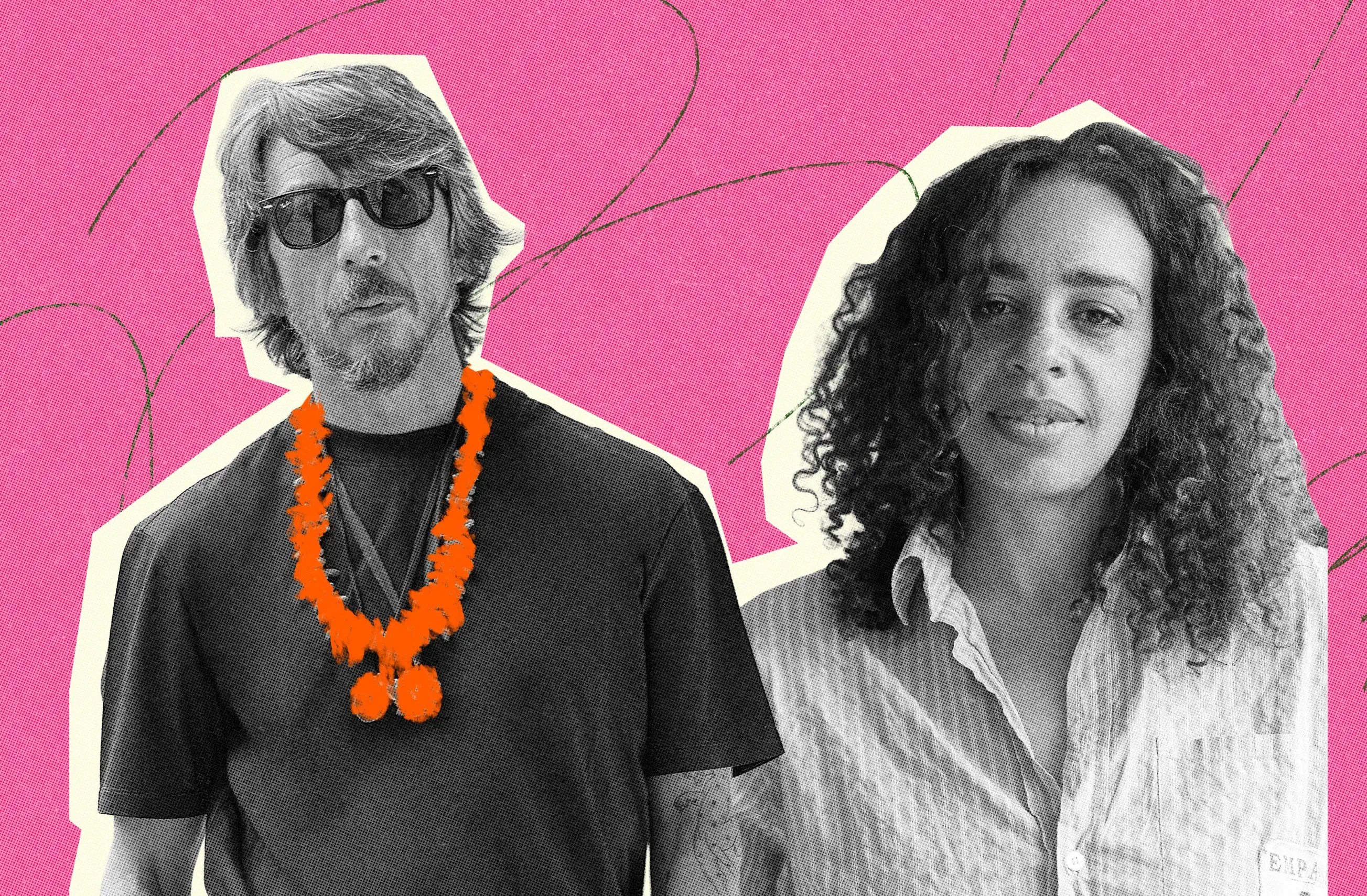
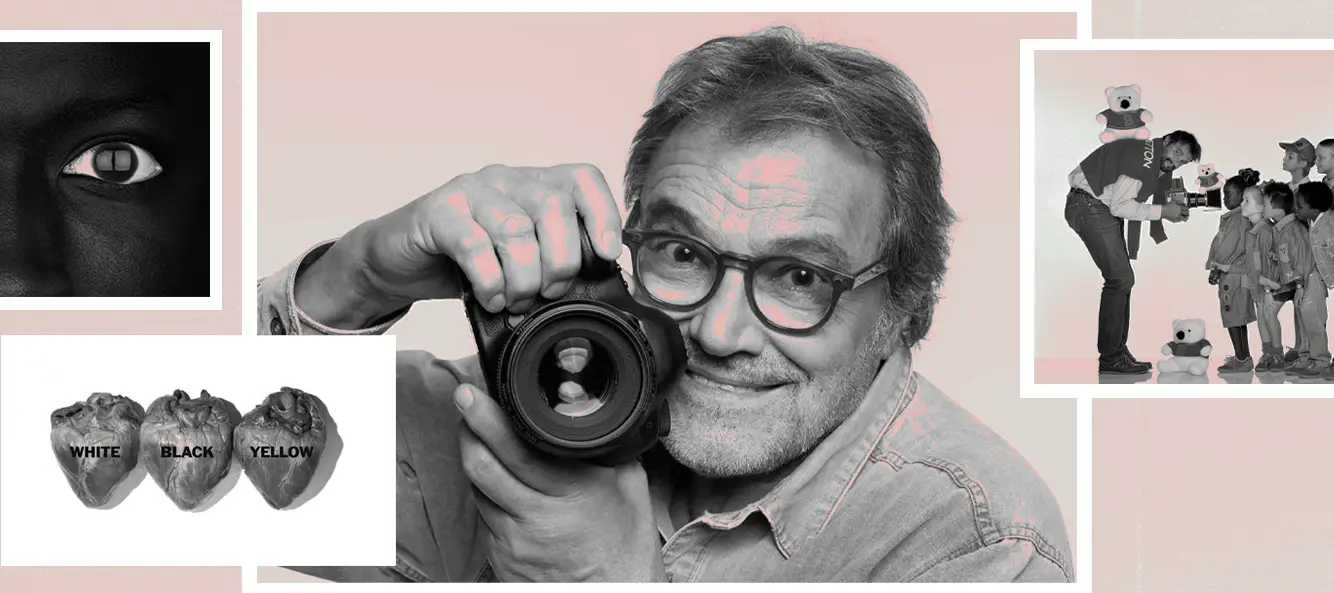
One photograph of a child drinking from a cup made Rankin reconsider accountancy. Before co-founding Dazed & Confused in 1991 and launching Hunger magazine in 2011, the Glasgow-born photographer had been steered towards a more traditional path. In this conversation with students at Istituto Marangoni London, he reflects on early fashion shoots that unsettled convention, the difficulty of breaking into photography and the rejections that accompany creative work.
“That’s what happens in rooms: people argue, people fight, and then something great happens” – Rankin, photographer, co-founder of Dazed & Confused and founder of Hunger magazine
View this post on Instagram
Rankin has his own opinion on creativity. It is a matter of collaboration, not just individual work. In photography, creating is tentative while pushing against the commercial norm. Part of the game is accepting rejection.
Rankin has shot everyone from Queen Elizabeth II to David Bowie in a wolf mask, from Kate Moss sprayed like a canvas to Madonna, yet he insists the real lesson of his career is that nobody is who you expect them to be.
If in the 90s, Dazed & Confused defined a transformative cultural era in photography and the fashion industry, then in the 2000s, Hunger fed the appetite for up-and-coming talent and trends. The question is, are you ready to show something uncomfortable now to make it acceptable later?
Students led this conversation with Rankin. Three generations apart, creatives meet on common ground with the same query: what matters in creativity? Let’s meet the man behind the myth of Rankin.
From Accountancy to a Career in Photography
How do you know if photography is the right career for you?
Rankin: I’m from a very working-class family in Glasgow. I was good at maths, so the careers teacher said, “You should be an accountant.” So I went to Brighton Polytechnic to study accountancy and ended up in halls with loads of art students constantly asking me, “Why are you becoming an accountant?” It made me wonder what else I could do. Once I went out with a friend’s camera. In a park by a pool, I photographed a little kid drinking from a cup and thought, “That’s it.” It captured how I felt about what I wanted to do with my life to understand the world. I processed the film in my mate’s bathroom darkroom and looked at the negative: “That’s magic.” Because I’m a proper nerd, I bought every photography book I could find and taught myself in about two weeks. I didn’t turn up for the third term, and my dad wouldn’t talk to me for a year. However, accountancy was still useful when I started a magazine. I wish I’d finished it, because we’ve been ripped off a few times. But when you’re young, and you find something you love, it’s the biggest gift you can be given.
View this post on Instagram
Dazed & Confused and Rankin’s Early Conceptual Fashion Photography
How did your first shoots for Dazed & Confused challenge fashion photography?
Rankin: As an art photographer, I was very influenced by conceptual art. So I thought: what if I combined commercial fashion photography with conceptual ideas? You seduce the audience with something that’s aesthetically sexy and immediate, but slip in ideas that might be more challenging. My first fashion shoot, in the first issue, was The Emperor’s New Clothes. The models weren’t wearing clothes. I wanted to ask: what if fashion really is just in the viewer’s mind? Then came Weep, because nobody cries in fashion, and Hungry, with models eating at a time when many were told not to. These things felt really wrong at the time. Being a contrarian, I thought: if I did something wrong, it could become right. Nothing changes if you don’t talk about it. If you put something in front of people that makes them uncomfortable, it’s only the beginning of them feeling comfortable with it. But be realistic: a few years ago there was a big push for diversity in fashion. Where did that go? We left it at the commercial door, because it didn’t sell. Commerce always wins. So I can’t help but keep prodding it.
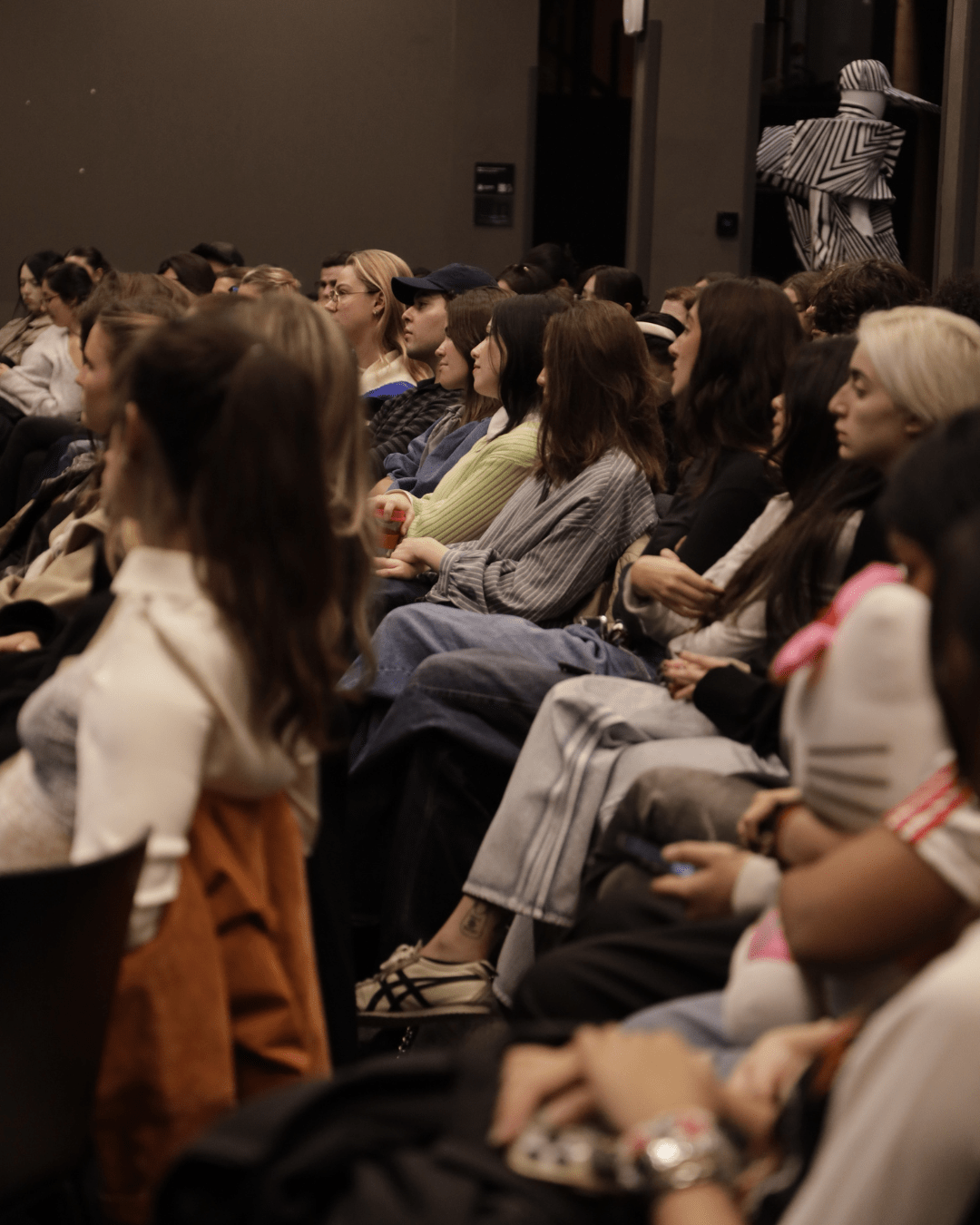
Moderated by his students, the talk with Rankin offered a unique opportunity to explore the evolution of photography and the discipline required to develop an authentic creative voice. “Nothing changes if you don’t talk about it. Putting something in front of people that makes them uncomfortable is the first step towards making them comfortable with it. But be realistic: a few years ago, fashion made a big push for diversity. Where did that go?” – Rankin
Portrait Photography, Collaboration and Improvisation
How do you photograph someone who knows exactly how they want to look?
Rankin: Most people, even celebrities, are nervous of a photographer. You’re under a microscope, and people on set scrutinise you, out loud or in their heads. So you’ve got to make someone feel comfortable. David Bowie came in with a wolf mask. I was thinking, “Mate, you’re David Bowie, I don’t want you in a mask.” But I said, “All right, let’s put you in a mask and make some art.” We were collaborating. Once we got past the mask, he started to feel comfortable. A shoot is like bobbing on an ocean of ideas: if the wind changes, you move with it. I thought Bowie would be cold and aloof. He was like Tigger from Winnie the Pooh, with a wolf mask. Since then, I’ve never presumed anyone would be a certain way. So don’t be put off by a single vision, yours or theirs. Put the two visions together, and a new one comes out. Preparation is everything, but you’ve got to be ready to go with their ideas as well as your own. Go with the flow. Flow is a big word in creative businesses. And respect the team – the stylist, the make-up artists…. When your vision and their vision come together, another vision comes out of it.
View this post on Instagram
“David Bowie came in with a wolf mask. I was thinking, “Mate, you’re David Bowie, I don’t want you in a mask.” But I said, “All right, let’s put you in a mask and make some art.” We were collaborating. A shoot is like bobbing on an ocean of ideas: if the wind changes, you move with it” – Rankin
What should you do when a photoshoot goes wrong?
Rankin: I got five minutes with the Queen. I’d researched her and wanted her smiling. My sync lead fell out, she started laughing, and by the time my shaking assistant got it back in, she’d stopped. So I said, “Ma’am, can you smile, ma’am, please?” again and again until she did. Only three frames were any good. I spent a long time wanting everything on set to be perfect and getting angry when it wasn’t. When I realised I couldn’t control it, that was one of the best days of my life.
“I got five minutes with the Queen. I’d researched her and wanted her to smile. For a long time, I wanted everything perfect on set and got angry when it wasn’t. Realising I couldn’t control it was one of the best days of my life” – Rankin
Photography Careers: First Breaks, Rejection and Commercial Success
How do you break into photography without industry connections or the means to work unpaid?
Rankin: You’re going to hate this answer: s**k it up. Get a part-time job, make some money, do an internship. Even the rich kids in the ’90s had to clean toilets and make tea. As an intern, you learn through osmosis. The best thing I can teach a young assistant is how to handle rejection. You get it again and again. Learn to let it slide off your back and move on, because that’s what creativity is. Being a creative isn’t an office job. If you can’t be told your work is rubbish, you’ll never learn what good is. In real life, people just ghost you. Brands say, “We’ve decided to go in another direction,” and tell me nothing. But you get back up and move on to the next one. And do free work; it pays off. If nobody’s calling you, make work. If you’re any good, it will become work. If it doesn’t, the world is telling you your work isn’t good enough yet.
View this post on Instagram
“Rebellion has always been marketable. Subcultures have been part of marketing since marketing was invented in the ’50s. For me it’s in my DNA. I can’t just do projects that are facile and shallow” – Rankin
Can a creative business still challenge the mainstream and succeed commercially?
Rankin: Rebellion has always been marketable. Subcultures have been part of marketing since marketing was invented in the ’50s. For me it’s in my DNA. I can’t just do projects that are facile and shallow. Someone once asked me whether a climate project I worked on was doing any good. I said, “I don’t know, but I’m not going to stop doing it.” What works for me is starting with my own idea. I did a project called Alive in the Face of Death, photographing people who were terminally ill. Each image was their idea, something they could use on their coffin or as a memorial. The idea came from me not being able to deal with the loss of my parents. Then I realised there are trillions of books on being born and none on dying. So I got a brand to fund a book on how to face the end of life.
Photography Ethics, Beauty Standards and Representation
What responsibility do photographers have for beauty standards and representation?
Rankin: It’s a question you have to ask yourself every day. You have to admit, “Yes, I’m part of that,” and try to balance it by having the debate. Occasionally you have to take the money. I do have a line I won’t cross, and you’ve got to be able to sleep at night. The problem is that a lot of the finger-pointing has no critical thinking in it at all. We’re living in a polarised society, polarised by the very companies we should be criticising.
Gen Z, Social Media Algorithms and Emerging Artists
How do social media algorithms affect Gen Z’s creativity?
Rankin: It’s too early to tell what we’re gaining. We’re like gerbils in a massive experiment. AI working with a human can create incredible things. But people talk about losing jobs. I think it’s the loss of society, the social contract breaking down. The good news is there’s a reaction toward reality. We’re getting together in rooms. It’s a risk to look someone in the eye and say something they might disagree with, and that’s where creativity happens. Live events are going crazy because people are sick of their phones. So be bored. Treat every day like the weekend, when you don’t check your emails. Go to the cinema, a poetry reading, an exhibition that’s really pretentious, and enjoy debating. You can’t create a new style, but you can create an approach, a body of work with a difference. That happens in rooms where people argue, and then something great comes out of it.
“Be bored. Treat every day like the weekend and don’t check your emails. Go to the cinema, a poetry reading or an exhibition that’s really pretentious, and enjoy debating. You can’t create a new style, but you can create an approach, a body of work with a difference.” – Rankin
Which emerging artist has caught your attention?
Rankin: I recently met a figurative painter, Charlotte Rose (@char.lotteroseart), and her work is absolutely amazing. She’s doing the whole social media thing because she’s charismatic on camera and uses the medium of her moment. I hate that people have to do that, but I can’t hate on people who use it. The work is great. Don’t you want to be surprised, even shocked? That’s where great art comes from. And of course we’re on social media promoting it all the time.
Contrarian Thinking and Creative Practice
How has your contrarian mindset changed with experience?
Rankin: You can’t be a contrarian unless you question yourself. It’s like having massive empathy. It’s in your DNA, and you can’t switch it on and off. If anything, I’ve got worse at it, because I now enjoy being challenged. A better word for it is plurality: seeing things from different perspectives. The best part is that you’re always a blank canvas. But I’m not an absolutist. I do it in a pragmatic way. My dad taught me that you can’t change the world from the outside. You’ve got to get inside something to change it.
Smartphone Photography and the Democratisation of the Camera
Are phone cameras ruining photography or making it more accessible?
Rankin: God, no, it’s not ruining it. There was a blip around 2009 to 2011, when it democratised photography to an embarrassing level. But since lockdown in 2020, people have realised that a camera lets you show the world how you see it, and that empowers you. Photography used to be gatekept by technology, by money, and by snobs like me. Now anyone can do a great shoot tomorrow, and it comes down to how creative you are. People say AI will kill photography, but everyone has a camera in their pocket. You can make a feature film on a phone now. You could write one, shoot it in three weeks and edit it yourself. I’m surprised there isn’t more of that. I call them pub people: “I’ve had this idea for 20 years.” Stop talking about it and make it.
“Photography used to be gatekept by technology, money and snobs like me. Now anyone can do a great shoot tomorrow; it comes down to how creative you are. I call them “pub people”: they say, “I’ve had this idea for 20 years.” Stop talking about it and make it” – Rankin
Art and Fashion Education for Photography Careers
Do you need to study art or fashion to become a photographer?
It’s really special with the right educator. On my first day at the college, I met a girl handing out a magazine she had made herself. From then on, I learned how to be a magazine editor, designer and publisher alongside my course. I actually failed my degree, but without college I’d never have learned any of that. So it’s not about what you study. It’s about studying in the right place, one that gives you a platform for what you want, and then adding to it. Nothing is singular any more.
“You can’t just say, “I’m only going to be a photographer.” Use your formative years to think about what creativity really is. Don’t just tick a box on an essay. Hand in a papier-mâché sculpture and see what happens” – Rankin
Silvia De Vecchi
Editor, London
Special contributors:
Kim Jacqueline Boisseau, BA Fashion Business, 3rd Year, London
Ananya Shoor, BA Fashion Business, 3rd Year, London
Alina Harris Freile, BA Fashion Business Communication and Digital Media, 3rd Year, London