
Hand-drawn animation is back at Prada and Dior. But stop calling it a reaction against AI
Prada and Dior revive hand-drawn animation, often read as anti-AI. With AI embedded in fashion’s business and creative work, must we choose sides?
Prada and Dior have placed hand-drawn animation at the centre of their 2026 festive campaigns, even as generative AI makes image production faster and easier. The choice has been read as a rebuke to AI, but that view may oversimplify the situation for two key reasons. First, Prada’s woodland creatures and Dior’s couture fable appeal as much to our collective nostalgia for animated films as they do to the idea of handcrafted artistry. Second, while both campaigns foreground the artists’ labour, we also need to consider the questions surrounding the tools used in Dior’s film, as well as Prada’s earlier public acknowledgement of using AI in post-production—though not for this campaign. Taken together, these factors make “anti-AI” too simplistic a label. More importantly, as AI becomes ubiquitous in fashion, from predictive business tools to devices that support creative work, is “made by hand” still a point worth making and defending when it comes to communication? Or perhaps we’re looking at something more nuanced: traditional techniques deliberately woven into the present, moving the conversation beyond the usual debate of whether fashion loves or hates AI. Journalist and professor Angelo Ruggeri reflects on this.
Why Are Prada and Dior Using Hand-Drawn Animation in Their 2026 Festive Campaigns?
Animation is everywhere: impossible creatures, dreamlike landscapes, glossy characters, all conjured up with a prompt. Yet, as artificial intelligence makes images faster and easier to produce, fashion is falling for something beautifully old-school: hand-drawn work.
Prada has just launched “Drawing Prada: Animated by Hand”, around the same time as “Christian Dior’s Night in Color”. In a world full of AI-generated content, with ongoing debate over whether to embrace or reject these tools, it’s no surprise that many see these films as reminders of the magic of a pencil mark, a textured line, and those imperfections that prove a person was there. But is that really all there is to it?
View this post on Instagram
How Was Animation Made Before Computers?
Before animation went digital, artists built every second on screen one drawing at a time. A sequence could require 24 individual frames per second, or 12 if the action was less intricate. Artists traced drawings in ink onto transparent sheets of celluloid, painted the reverse by hand, then layered them over painted backgrounds. Each image was photographed individually with a rostrum camera, a vertical device designed to capture still artwork. A stack of drawings became a world that could move.
Work on Bambi began in 1936 and was released in 1942. Pocahontas followed a similarly long journey, with production running from 1990 to 1995. Technology has transformed the tools, but animation remains an art built frame by frame. Digital workflows create astonishing movement, yet can make us forget the hands behind the image.
What Is Prada’s “Drawing Prada: Animated by Hand” Campaign?
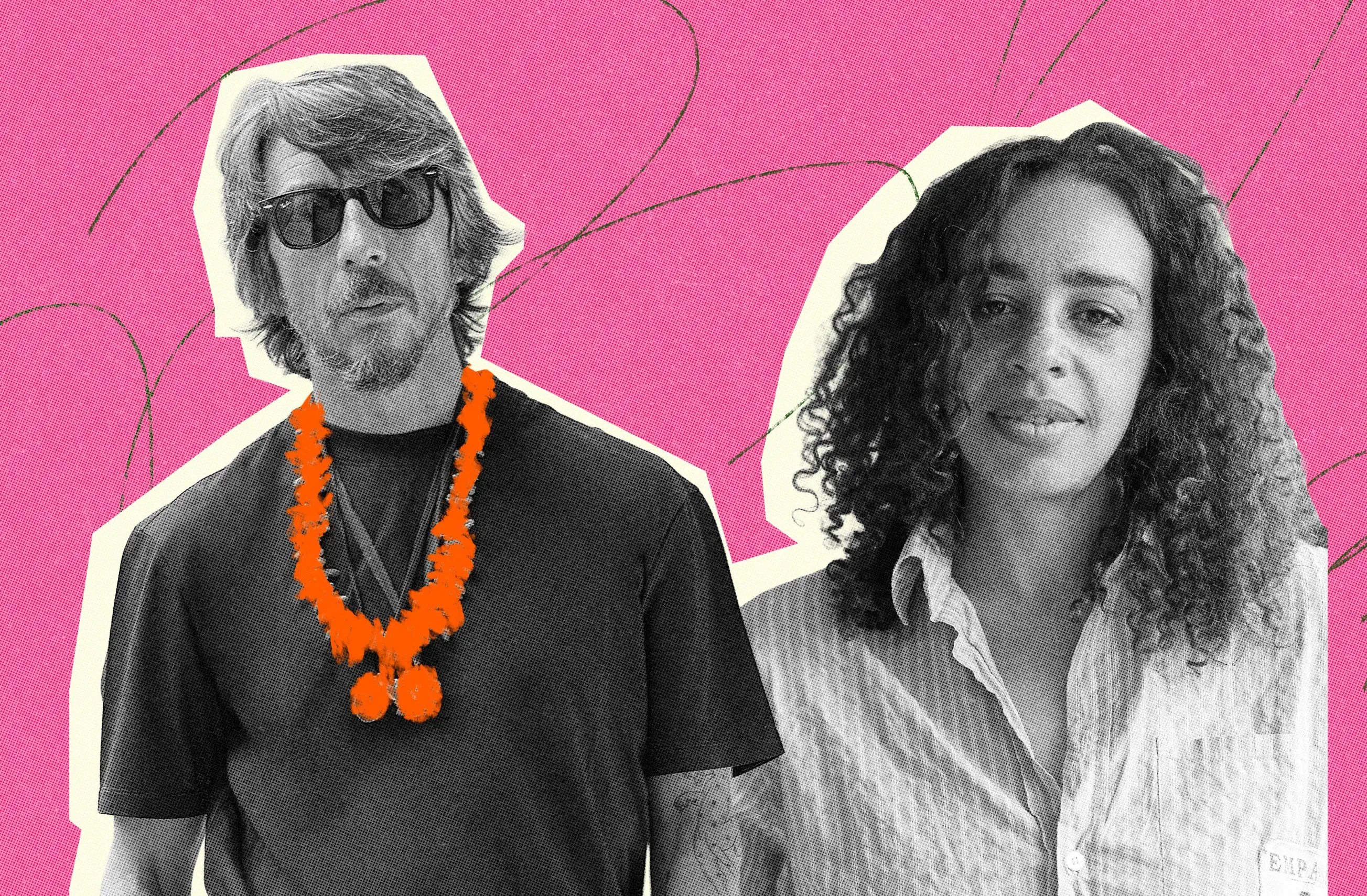
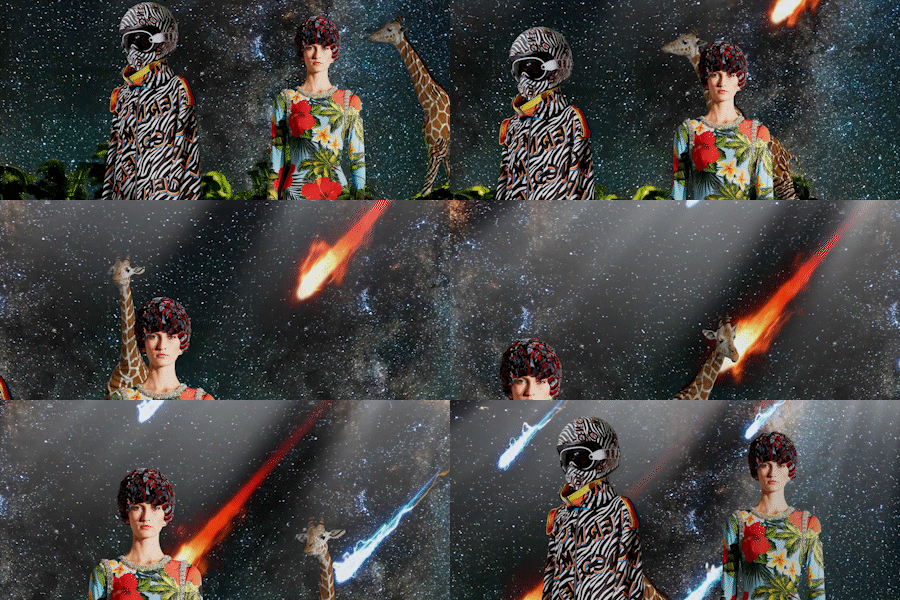
Prada’s Holiday 2026 campaign brings the wonders of hand-drawn animation back into focus. “Drawing Prada: Animated by Hand” feels like a storybook slipping into real life: Chen Haoyu, Luther Ford, Kelvin Harrison Jr., Maya Hawke and Sadie Sink lead the cast in a whimsical world shaped by campaign creative director Ferdinando Verderi.
View this post on Instagram
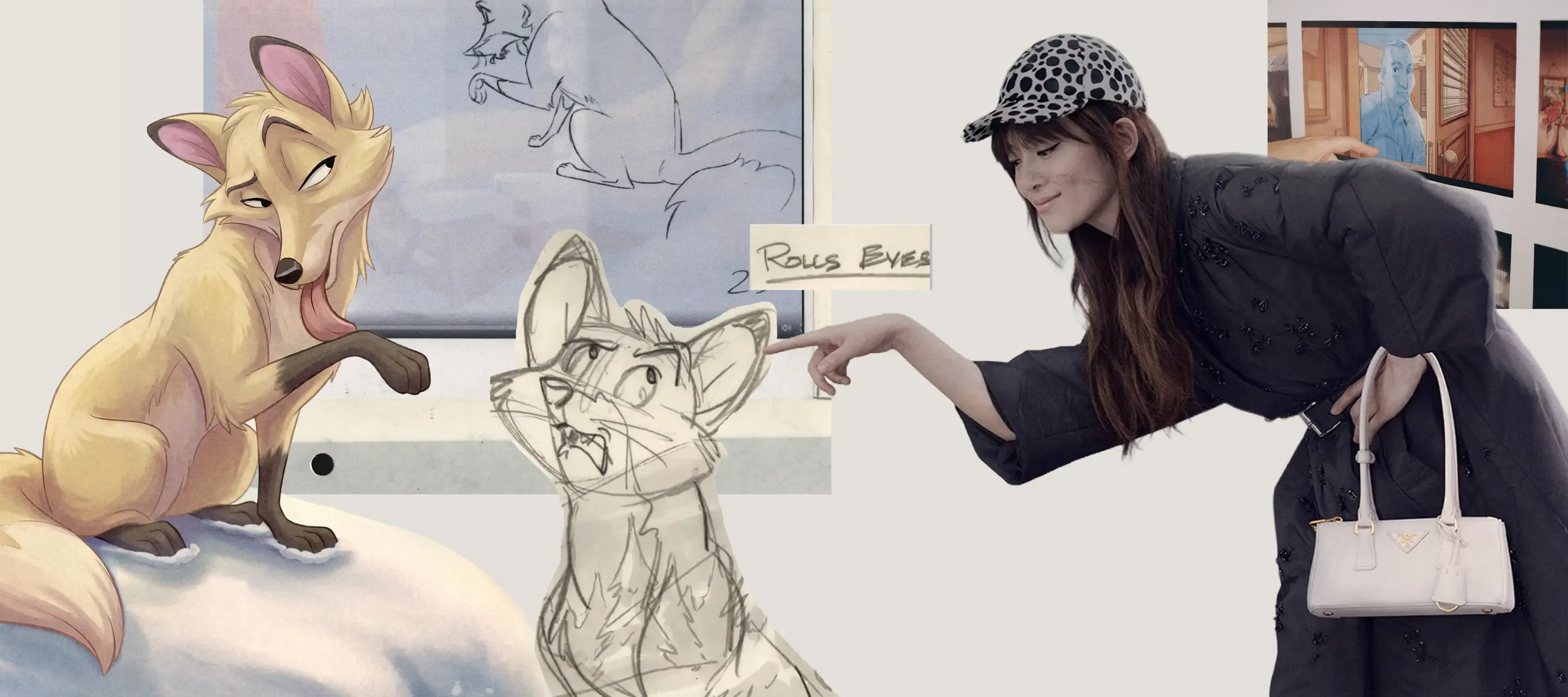
Tiny mice scamper around pony-hair loafers, calling to mind Cinderella’s helpers — Jaq, Gus, Perla, Suzy and Mary. A snow-covered forest and its woodland animals whisper of Bambi, while a playful creature throwing snowballs has the mischievous energy of the Cheshire Cat from Alice in Wonderland. The references are familiar but fresh, placing Prada’s pieces in a fantasy where imagination makes every object precious.
Verderi said the concept and creative direction took shape through the deliberately anachronistic technique of hand-drawn animation. The project brought together artists from the golden age of cartoons, led by animation veteran John Pomeroy. The campaign does not imitate classic animation; it calls on the people and craft that created it. A handmade line carries its maker’s rhythm: it can wobble, breathe, and surprise. Its beauty lies in what cannot be perfectly repeated.
What Is Dior’s “Night in Color” Film About?
Dior explores similarly enchanting territory with “Christian Dior’s Night in Color (La Nuit en Couleurs),” a short film directed by French filmmaker Sylvain Chomet. Where Prada turns its campaign into a woodland fairytale, Dior revisits couture history, imagining the friendship between Christian Dior and Marlene Dietrich and celebrating the bond between fashion and Hollywood. At its heart is the Junon dress, the 1949 creation whose petal-like embellishments feel otherworldly.
View this post on Instagram
Chomet sets the story at the threshold between black-and-white cinema and Technicolor. When a message arrives from Hollywood—Dietrich needs a colourful dress for her next film—Dior’s petites mains in Paris, the skilled sewists whose work gives couture its soul, spring into action. Working through the night, they create a look inspired by Junon. In Chomet’s imagination, these artisans become tiny winged bees, a tender nod to the affectionate nickname Monsieur Dior used for his sewists. Their nocturnal mission turns the atelier’s precision into a universe of movement, humour, and poetry.
With creative direction by Jonathan Anderson, the film is narrated by Robert Pattinson, with Rihanna, Louis Garrel, and Josh O’Connor among the voices bringing its characters to life.
Did Dior Use Generative AI in Its 2026 Christmas Advert?
After its release, viewers questioned whether apparent irregularities in some frames pointed to AI. Chomet and producer Aton Soumache denied using generative AI to create the film’s illustrations, while saying that automated interpolation had been used for a very small part of the process. It is an important distinction: an image may be drawn by hand and still pass through digital tools.
What Counts as “Made by Hand” in Fashion’s AI Era?
We live in a culture obsessed with speed, instant images, and tools that promise effortless creativity. The digital world overflows with cartoons, avatars, filters, and animated alter egos. But hand-drawn work reminds us that a moving image can be more than an effect: it can embody patience, memory, personality, and touch.
However, that does not make these campaigns a rejection of technology. The debate is no longer simply about loving or hating AI: having glimpsed its potential and begun to test it, we are shifting our focus elsewhere. It is no coincidence that Ferdinando Verderi, the creative director behind “Drawing Prada,” has resisted describing it as an anti-AI statement, calling it instead a traditional technique reframed for a new world. Prada has also openly said that AI was used in post-production for its Spring/Summer 2026 campaign. Rather than fixating on whether fashion uses AI, we should do everything we can to understand where its tools enter an image, which decisions remain in the artists’ hands and how openly the process is described.
Returning to these films specifically, those who know how to bring a character to life draw the line between fashion and fantasy. The artists’ process sits alongside the finished image, with the time spent on each frame becoming part of the story. These are precisely the aspects the campaigns invite us to notice. And beyond the questions we must always ask—because we can never lower our critical guard—we can also appreciate what is dreamlike, artistic, and deeply emotional about these works, along with their gentle note of nostalgia: qualities that, we must admit, AI cannot replicate today.
Angelo Ruggeri
Journalist and Tutor for Styling, Business and Design Courses and Master’s Programmes, Milan