
Can AI create a perfume without a perfumer? What the experts say
AI in perfumery is one of the questions raised at Istituto Marangoni Milano’s Olfactory Lab, where experts also discuss perfumers, brand briefs, bottle design and fragrance creation
How is AI used in perfumery? It was one of the topics discussed at the talk held for the inauguration of Istituto Marangoni Milano’s new Olfactory Lab at Palazzo Turati. The conversation moved from a perfumer’s brief and raw materials to notes and accords, bottle design, branding, consumer habits, and the elements that contribute to a fragrance’s success. Lucrezia Spina—an Istituto Marangoni alumna and the author of this piece—follows the people and decisions behind a scent, which is rarely the product of a single individual, and asks what technology changes and what it leaves untouched.
Can AI replace a perfumer? To answer that question, it helps to follow a perfume’s journey from concept to market and to consider everyone involved along the way. How perfume is made is only part of the story: the finished scent also reflects the choices of the perfumer, the brand, the bottle designer, and the professionals who bring it to the public. AI is now entering this already collaborative process as a new tool, but it will never replace human judgement, creativity, discernment, or expertise.
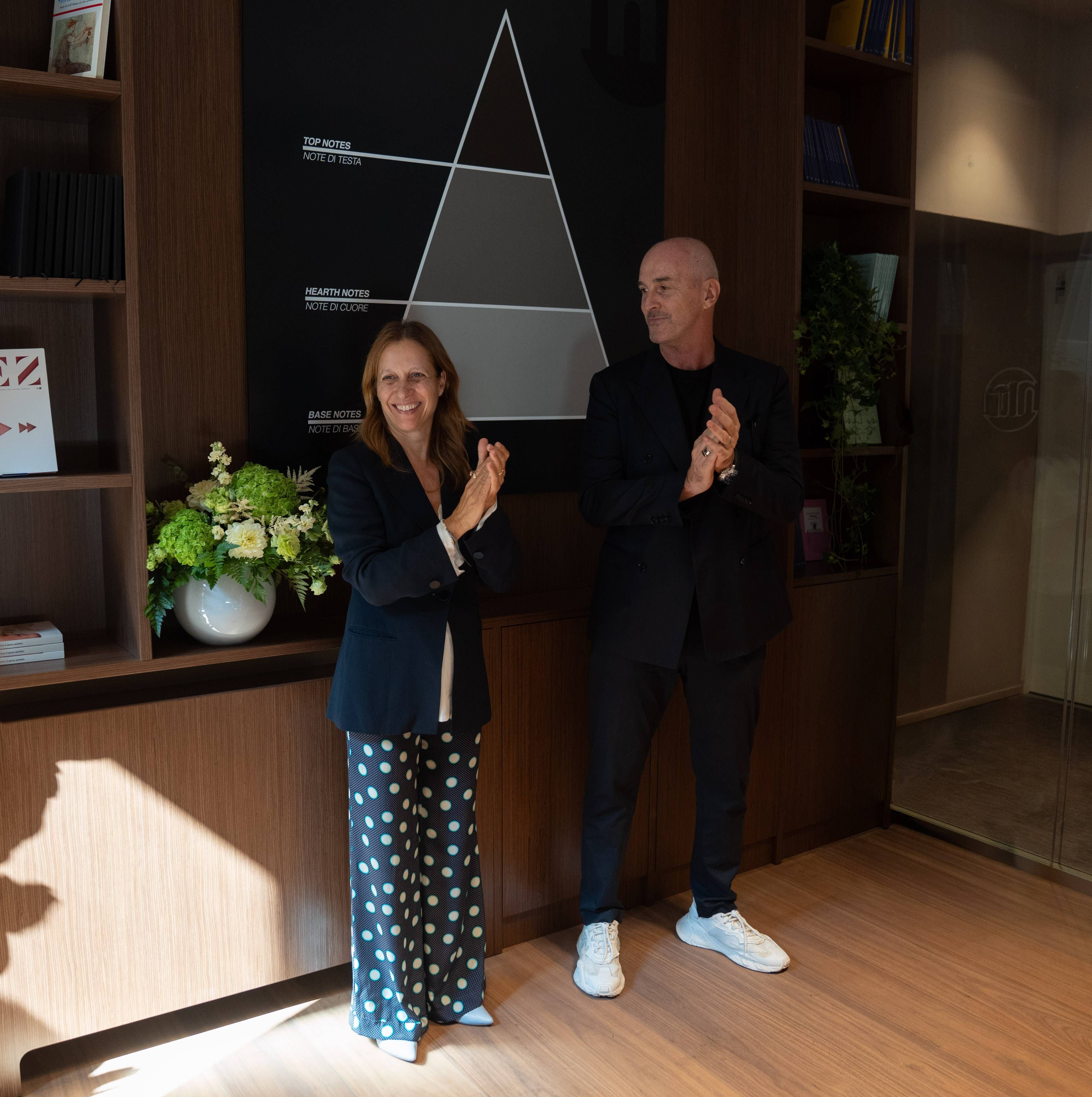
Stefania Valenti and Gianluca Toniolo inaugurate Istituto Marangoni Milano’s new Olfactory Lab during Milano Beauty Week 2026
What Is Istituto Marangoni Milano’s Olfactory Lab?
During Milano Beauty Week 2026, Istituto Marangoni Milano inaugurated its new Olfactory Lab, a project developed in collaboration with Accademia del Profumo. Located within the historic frescoed halls of Palazzo Turati, the space is a permanent educational resource for Undergraduate and Master’s students in Fragrances & Cosmetics. Dedicated to olfactory facets, raw materials, and the culture of perfumery, the Lab is intended for learning and in-depth exploration, not a formulation laboratory, and serves as a bridge between education and industry.
As Stefania Valenti, Managing Director of Istituto Marangoni, emphasised, the Olfactory Lab was conceived as a place where students can engage directly with every stage of the fragrance value chain, fostering ongoing opportunities for dialogue between education and industry.
Gianluca Toniolo, President of Accademia del Profumo, noted that interest in the fragrance industry is growing rapidly, particularly among younger generations. Reflecting on Milano Beauty Week 2026, he recalled the strong turnout at events, with long queues of young visitors eager to discover perfumery firsthand.
The opening was followed by a talk exploring the evolution of the perfumer’s profession and the dynamics shaping the fragrance industry. Alongside Gianluca Toniolo, the panel featured Luca Maffei, Founder of Atelier Fragranze Milano; Davide Martini, Artistic Director and Co-founder of RITO; and Gabriella Minari, Events Manager at Bormioli.
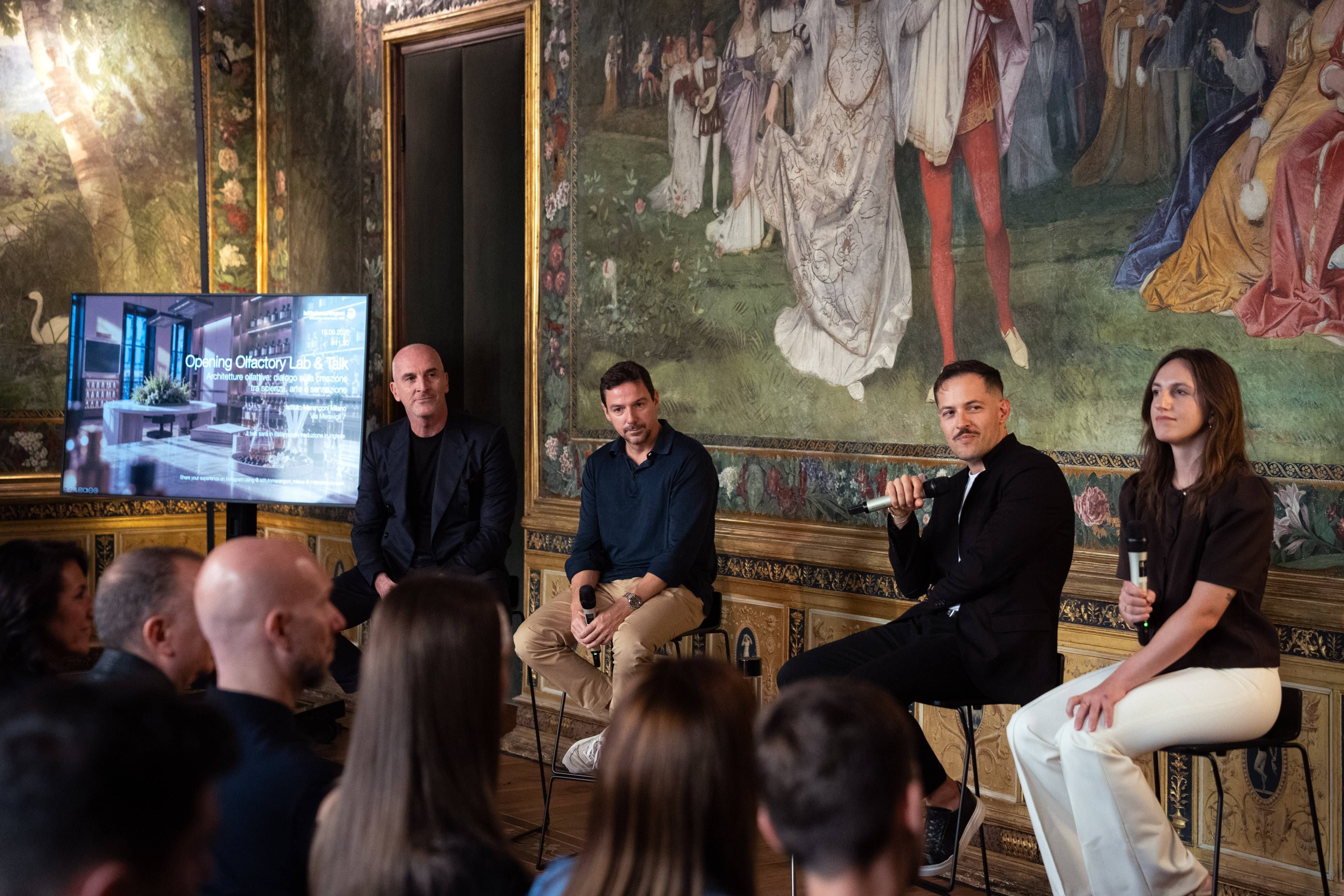
Gianluca Toniolo, Luca Maffei, Davide Martini and Gabriella Minari discuss the evolution of perfumery and the future of fragrance creation.
What Can AI Do in Fragrance Creation?
The discussion also turned to artificial intelligence. The experts agreed on one point: while AI can accelerate the process, it cannot replace the perfumer’s creative role. Emotion, intuition, sensitivity, and the ability to interpret a story through scent remain rooted in lived experience.
New technologies are also expanding the possibilities available to professionals, enabling experimentation with new olfactory nuances and innovative ingredients. The final act of judgement, however, remains human.
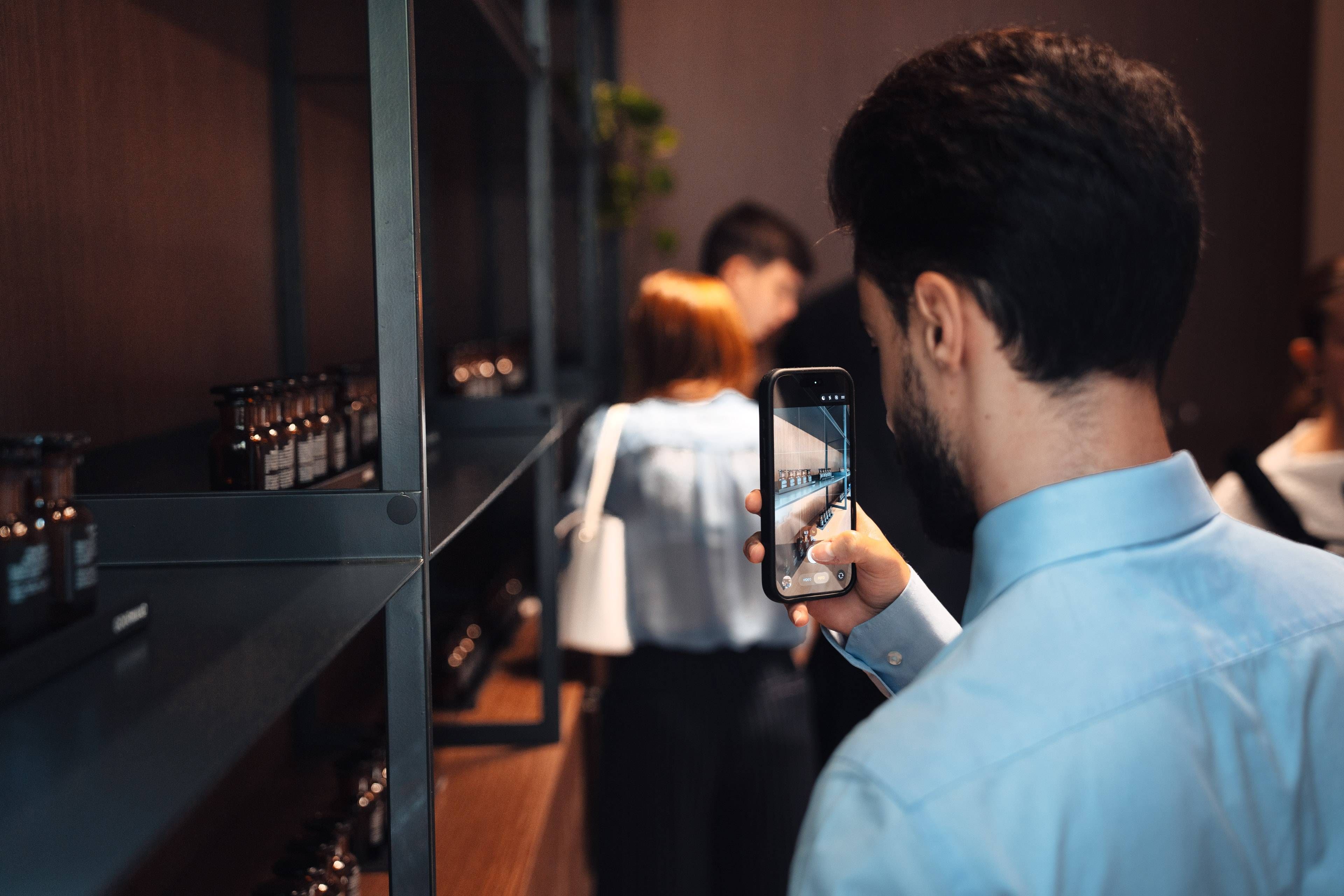
Visitors explore the Olfactory Lab, where fragrance education meets new technologies, experimentation and human sensibility.
How Do Fragrance Notes and Accords Work?
“The first time a fragrance is created, it exists in the perfumer’s mind. They know the raw materials and notes just as a musician knows musical notes” – Luca Maffei, Founder of Atelier Fragranze Milano
Every perfume begins here: with an idea, an image, an emotion, or a sensation that the perfumer translates into an olfactory composition through a combination of natural and synthetic raw materials.
Listening to Maffei highlights the close relationship between the language of perfumery and that of music. Many terms used in fragrance creation are borrowed from the musical world.
There are notes, the scented impressions associated with ingredients such as bergamot, rose or sandalwood. Then there are accords, which function much as they do in music: multiple notes come together to create something new, generating harmony, tension, balance, or contrast.
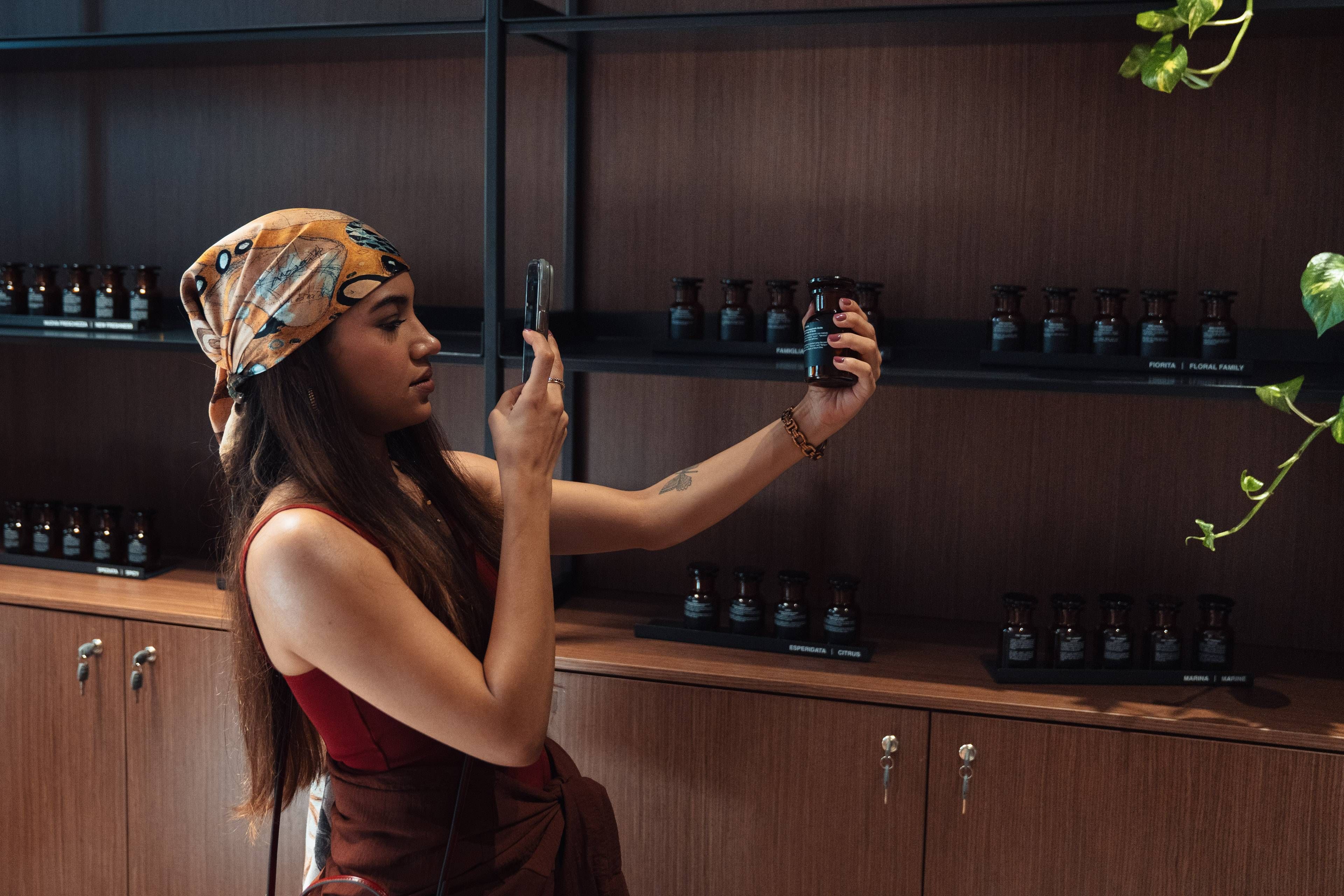
A visitor explores the Olfactory Lab, where fragrance notes and accords become a language of emotion, memory and composition. Even the famous top notes resemble a musical overture. They appear immediately, capture attention, and introduce the composition before gradually giving way to deeper developments.
Another distinctive tool is the so-called perfumer’s organ, the semi-circular workstation where dozens of fragrance materials are arranged. It inevitably recalls the keyboards and registers of a grand musical organ.
“Playing with smells becomes an endless source of creativity” – Luca Maffei
Why Isn’t the Perfumer’s Name Usually on the Bottle?
One metaphor stood out during the talk: “Creation is a performance: the perfumer interprets a script written by the brand’s creative director.” The comparison draws on both theatre and fashion, offering a glimpse into how fragrances are developed. While perfumers once enjoyed greater creative independence, contemporary fragrance creation has become a collaborative effort among specialised professionals.
“At the end of the nineteenth century, the perfumer created whatever they wanted and put it on the market. Today, marketing teams, researchers, quality-control experts, and often multiple perfumers work on the same formula,” Maffei explained.
At the centre of the process is the brand, whether a fashion house or an independent company. It defines the initial vision, finances the project, and guides its development to ensure the final product remains aligned with the brand’s identity.
The perfumer, often referred to as the “nose”, then translates the creative brief into a composition by selecting and combining raw materials.
For much of modern perfumery, the bottle carried the brand’s name, leaving the perfumer out of the consumer-facing story. When a brand now names the “nose” behind a fragrance, it makes authorship visible and gives the perfumer a role in presenting the scent to the public.
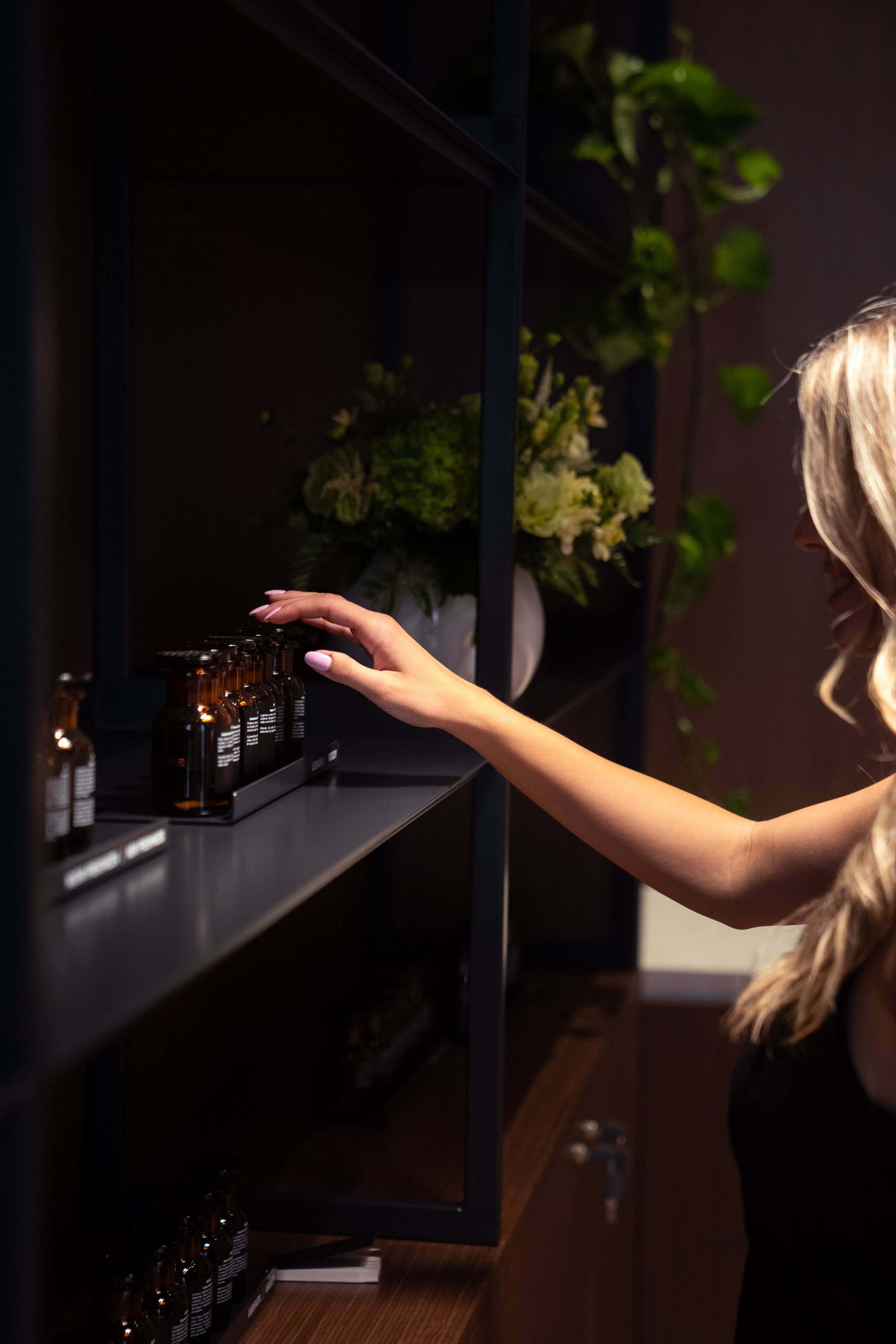
A visitor explores the Olfactory Lab’s raw materials, discovering how perfumers translate creative briefs into scented compositions. This shift has brought the “noses” into the public eye, as their position within the industry has changed significantly in recent years. “Today, many perfumers have become rock stars,” Maffei observed. Once operating largely out of sight, anonymous in white lab coats, perfumers are now highly visible figures, often engaging directly with audiences through social media.
“People used to buy the product. Today, they walk into a store asking for a fragrance created by a specific perfumer” – Luca Maffei
What Does a Perfume Bottle Tell You Before You Smell It?
If the perfumer gives a fragrance its olfactory identity, the bottle and packaging designer creates its first point of contact with the consumer.
“Very often, the first interaction with a fragrance happens through the bottle” Gabriella Minari, Events Responsible at Bormioli
Packaging plays a crucial role in sensory marketing. Before a fragrance is smelled, it is first seen and touched. In that instant, expectations and associations begin to form.
A bottle can communicate luxury, lightness, elegance, romance, or boldness long before the first spray. Baccarat Rouge 540 is one example: its deep red and gold design evokes exclusivity, warmth, and opulence. Delina by Parfums de Marly offers another, with an iconic matte pastel-pink bottle adorned with tassels and neo-classical details that conveys a softer, more romantic femininity.
The challenge, however, lies in balancing design, sustainability and industrial production without compromising aesthetics or functionality, as Gabriella Minari emphasised during the discussion.
Why Do People Wear Perfume Every Day?
“Perfume celebrates the small gestures we make every day” – Davide Martini, Artistic Director and Co-founder of RITO
The idea reflects the philosophy behind RITO, a brand founded in 2017 whose name refers to the concept of ritual.
Fragrance has moved beyond the occasional luxury purchase. For many people, it is a form of personal expression. Much like choosing what to wear each morning, we select a perfume that reflects our mood, our intentions, or the particular moment we are in.
What Makes a Perfume Successful Beyond the Scent?
“Consumers are becoming increasingly demanding, informed and curious” – Gianluca Toniolo, President of Accademia del Profumo
The abundance of perfume-related content on social media, along with growing interest in perfumery and ongoing innovation in raw materials, has created a more knowledgeable audience than ever before. As a result, understanding the market, identifying emerging trends, and anticipating consumer desires have become essential. According to Toniolo, the success of a fragrance can be broken down into a simple formula, showing how creativity, branding and strategy have become inseparable:
“A perfume’s success is 50% the fragrance itself, 25% communication and 25% what the market is looking for” – Gianluca Toniolo
What Does It Take to Work in Perfumery?
The talk marking the inauguration of Istituto Marangoni Milano’s Olfactory Lab made one point clear: the fragrance industry is broader and more complex than the finished bottle suggests. Behind every perfume is a network of professionals, including perfumers, designers, marketers, researchers, product developers, sustainability specialists, and communication experts.
“Enter this world and be as curious as possible,” Luca Maffei encouraged. Gabriella Minari shared a similar view, inviting students to be determined, look more closely at every aspect of their work and never be afraid to ask questions. That became the common thread: curiosity, passion and a willingness to learn—qualities that all speakers identified as essential to building a career in perfumery, an industry that continues to evolve.





.jpg)