
90s fashion at Tate Britain: We got the look. Did we miss the rebellion?
At Tate Britain’s The 90s: Art and Fashion, a young fashion editor asks whether her generation can create a culture of its own from a borrowed look
Born too late to remember the 90s, a young fashion editor visits Tate Britain in distressed Levi’s and a leather jacket borrowed from her father. At The 90s: Art and Fashion, she instantly recognises the clothing, but wonders: “Can my generation make a scene of its own, or are we only wearing someone else’s rebellion?” The answer she finds is more complex than she expected.
What Can You See at Tate Britain’s The 90s: Art and Fashion?
On 8 October, The 90s: Art and Fashion, curated by Edward Enninful, opened at Tate Britain in London. Running until 14 February 2027, the exhibition explores the relationship between art, fashion, and visual culture in 1990s Britain, bringing together clothing, photography, artworks, magazines, and archival material from a decade that played a crucial role in shaping London’s creative identity.
The exhibition looks beyond the period’s fashion and examines the wider cultural context from which it emerged. From photography and painting to music, magazines, and subcultures, the 1990s saw a unique intersection of different creative disciplines, reflecting a changing Britain and a generation of artists, designers and image-makers who challenged established conventions.
As I walked through the exhibition, I couln’t help but notice how much of that decade’s aesthetic has found its way back into contemporary wardrobes.

Edward Enninful by Adama Jalloh. Courtesy of Tate Britain
Why Does Gen Z Dress Like It Remembers the 90s?
Halfway through my visit, I stopped looking at the works for a moment and started observing the people around me. What were they wearing? What were they listening to through their headphones? Then I looked at myself: distressed Levi’s, a leather jacket borrowed from my father’s wardrobe, and an outfit that, without much thought, owed quite a lot to the decade displayed on the walls around me.
I was born too late to properly remember the 1990s, which has never stopped my generation from dressing as though we do. Denim, leather jackets, slip dresses, tiny sunglasses and endless Kate Moss references have become familiar features of contemporary fashion.
Yet walking through the exhibition, I started wondering whether we had inherited the easiest part of the decade: its look, rather than the cultural moment that produced it.
The Political Forces Behind Britain’s 90s Art and Fashion
What surprised me most was the sheer volume and variety of creative work on display. Not just clothes, but photography, painting, installation, magazines, and music, all layered almost on top of one another. The more I walked, the less interested I became in separating these disciplines, and the more I started thinking about the people creating them and the London they lived in.
Many of the artists and creatives featured in the exhibition came of age during a period marked by recession, Thatcherism, the AIDS crisis, punk, and successive youth cultures built around their own music, clothes, and codes. By the 1990s, these experiences had helped define a creative landscape where fashion and art could question the status quo and imagine alternatives.
At the same time, Britain seemed to be moving towards something new. Looking back at the decade through the work and recollections of those who experienced it, what emerges is not just rebellion but also optimism. There was plenty to fight against, but there was also a sense that culture could help build something better.
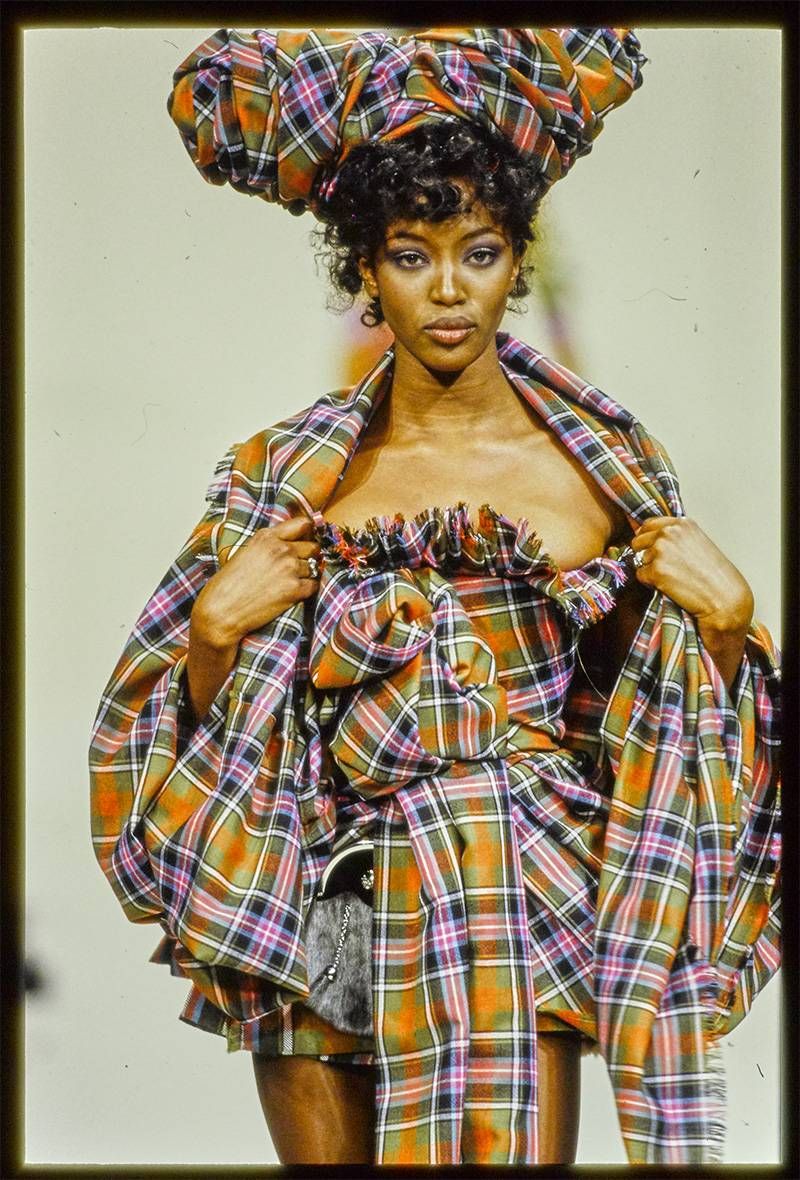
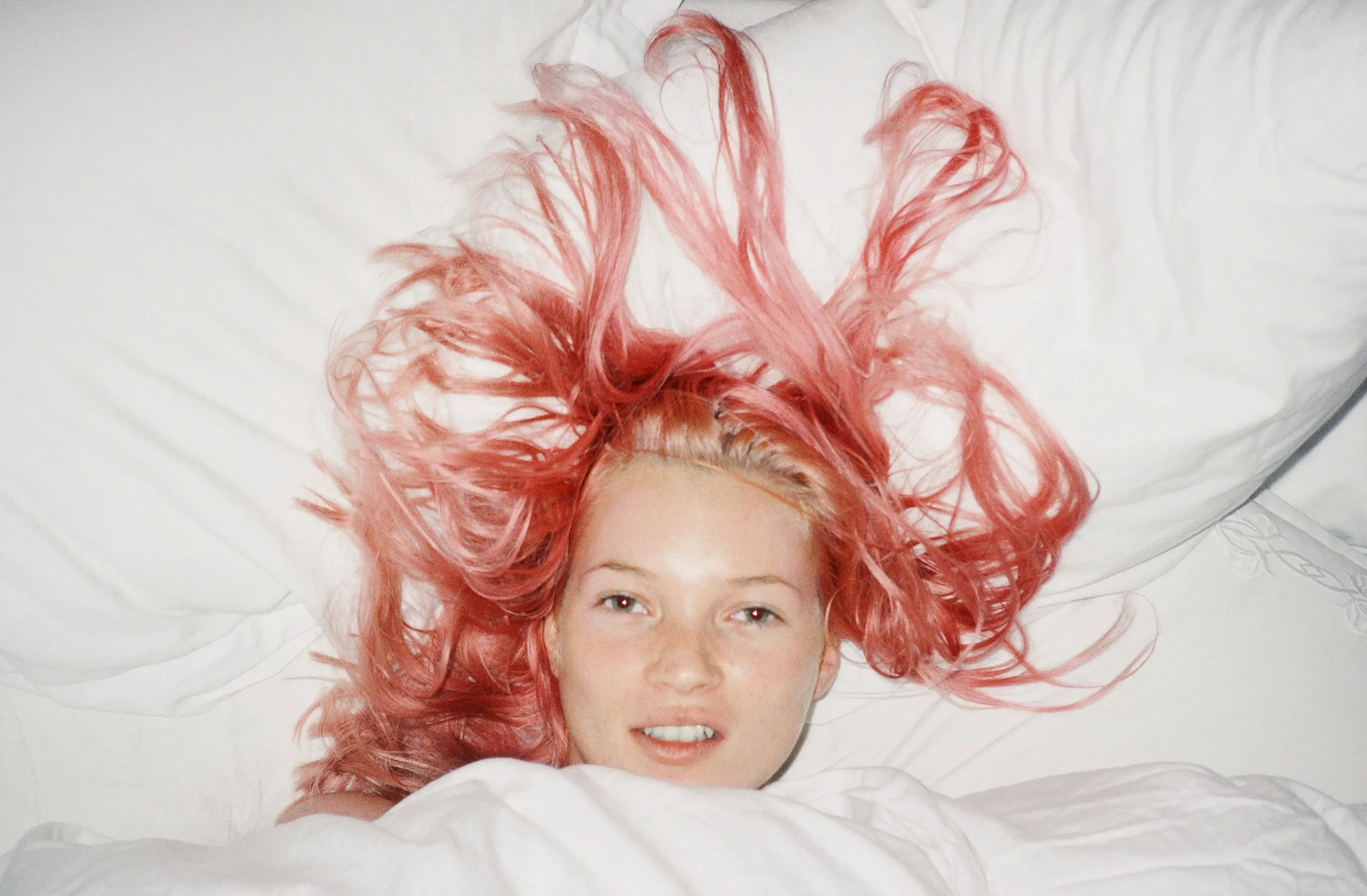
Naomi Campbell models in Vivienne Westwood AW94 'On Liberty’ Guy Marineau, Vogue, © Condé Nast. Courtesy of Tate Britain You notice it immediately in the photography. Juergen Teller photographed young models without turning them into untouchable creatures—you can spot a very young Mariacarla Boscono and then Kate Moss in bed with pink hair, looking less like one of the most referenced women in fashion history and more like somebody’s friend who just happened to be there that morning. The image is so familiar now that it almost belongs to Pinterest rather than to a real moment in somebody’s life, but seeing it inside Tate Britain made me think about how young they all were, and how much of what later became iconic was still happening almost casually.
Sophie Dahl’s story takes that idea even further. At 18, after an argument with her mother about what she was going to do with her life, she found herself sitting on a Belgravia doorstep, smoking a Marlboro Light. The doorstep happened to belong to Isabella Blow, who arrived wearing one of her extraordinary hats, invited her in, and eventually helped change the course of her career. It sounds almost too perfect, but it also says something important about that creative world: being talented mattered, obviously, but so did being there. Being in London, going to the right club, knowing someone who knew someone, or simply bumping into a photographer, stylist, or designer could change everything. Culture was being made through physical proximity as much as individual genius.
What Can’t We Copy from Club Culture?
I had the opportunity to have Nick Clements as a lecturer at Marangoni, and he was particularly interested in subcultures and counterculture. He made us consider how style develops within groups before the mainstream catches on, with clothes, music, and behaviour becoming a language that fashion later notices, then borrows from and eventually sells back. He often explained how resistance becomes attractive and how, once that happens, it can also become commercial.
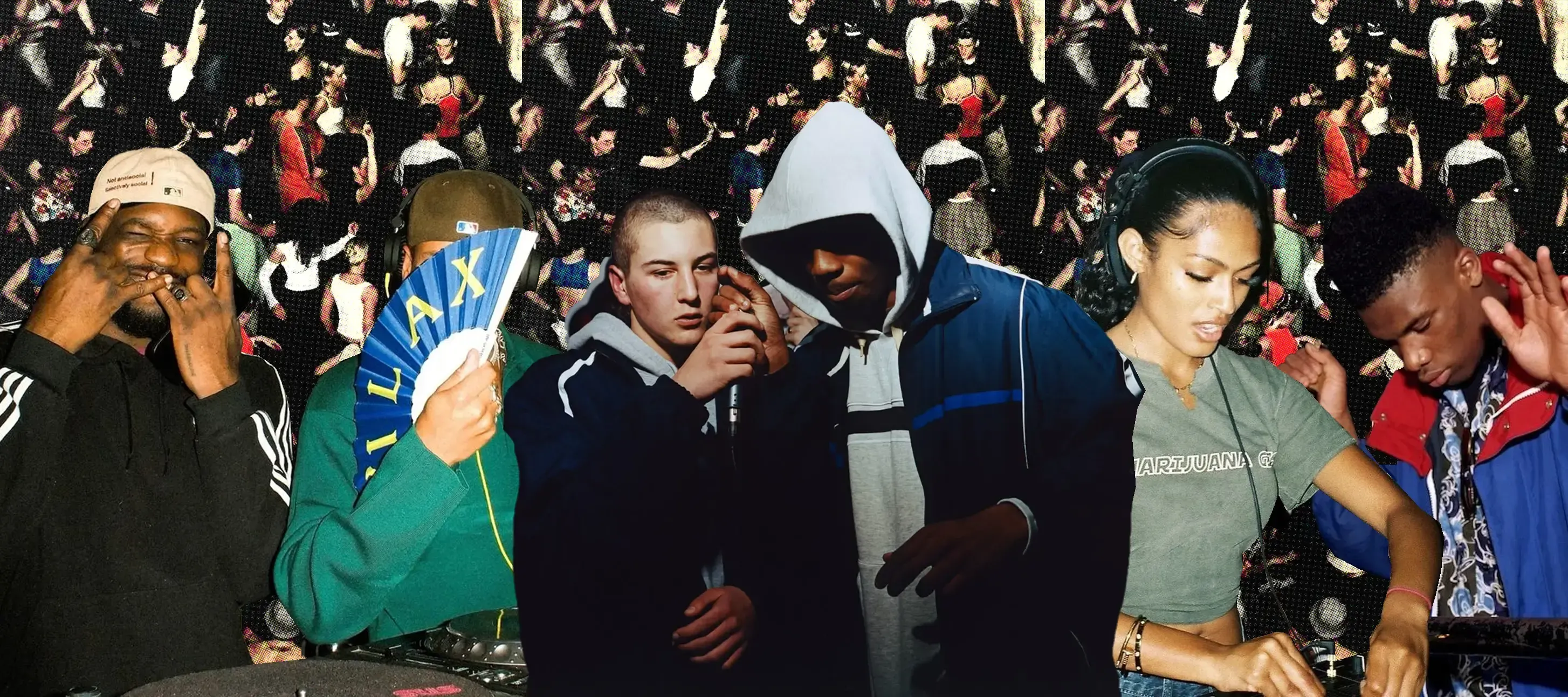
That idea came back to me naturally in the nightlife room, I CAN’T GET NO SLEEP, where the photographs are sweaty, crowded, and full of people who absolutely cared about how they looked. Some dressed hoping to be photographed for The Face or i-D, so I don’t think the difference between them and us is that they were somehow pure or unconcerned with image. They wanted to be seen too, but what feels different is that the image came after the scene—because they actually belonged to something first. Normski photographed club culture because he was inside it, and the people in those pictures had music, clubs and communities around which they built their identities.
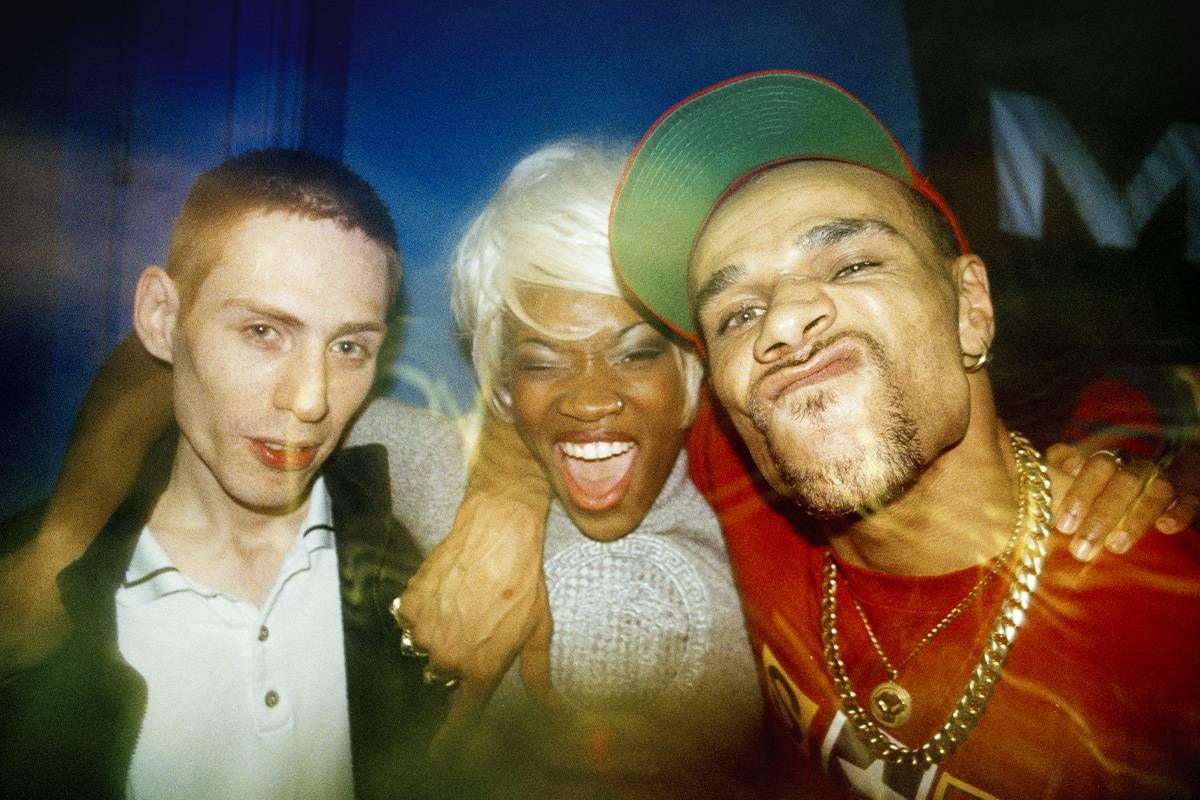
Eddie Otchere Metalheadz Sunday Sessions in the Blue Note, Hoxton Square 1995-1996 (c) Eddie Otchere. Courtesy of Tate Britain
Does Our Instagram Style Match Our Lives—or Are We Just Posing?
Looking at them, I started thinking about my own generation and the strange reversal created by Instagram, where we sometimes choose the image first and then build our lives around it.
We can make the clean girl aesthetic viral and, five minutes later, repost pink-haired Kate Moss because we also want to look as though we’ve never cared about looking perfect. While I was thinking about this, I noticed a woman next to me who must have been in her seventies, with perfectly styled white hair, studying the same nightlife photographs. I had never lived any of this, while she had lived through the decade as an adult, perhaps from a completely different world, yet there we were, looking at the same dance floor thirty years later.
Tracey Emin, Alexander McQueen and the Art of Provocation
Moving into the art section didn’t feel like changing the subject, because the impulse behind it seemed similar. Think of Abigail Lane and Tracey Emin. I’d already seen Emin’s My Bed in a show dedicated to her, so seeing her work here again reminded me how immediate and direct so much of this art was. The ideas weren’t always complicated, but they were specific: someone was angry, scared, amused, or simply trying to say something before it became more acceptable.
Fashion operates in much the same way inside the exhibition. Alexander McQueen’s Autumn/Winter 1998 Joan collection isn’t rebellious simply because it looks dark; Joan of Arc, persecution, religion, violence, and death are the reasons the collection exists. The original show ended with a model surrounded by flames, and standing in front of that red beaded look, it was difficult not to feel the urgency of his work. Then you find the opposite kind of gesture, something playful enough to look almost effortless. In the 1996 image of Kristen McMenamy, VERSACE is written across her body in red lipstick and enclosed inside a heart by Enninful himself. It’s such a simple intervention that explaining it too much almost spoils it, because you see it and immediately understand why it works.
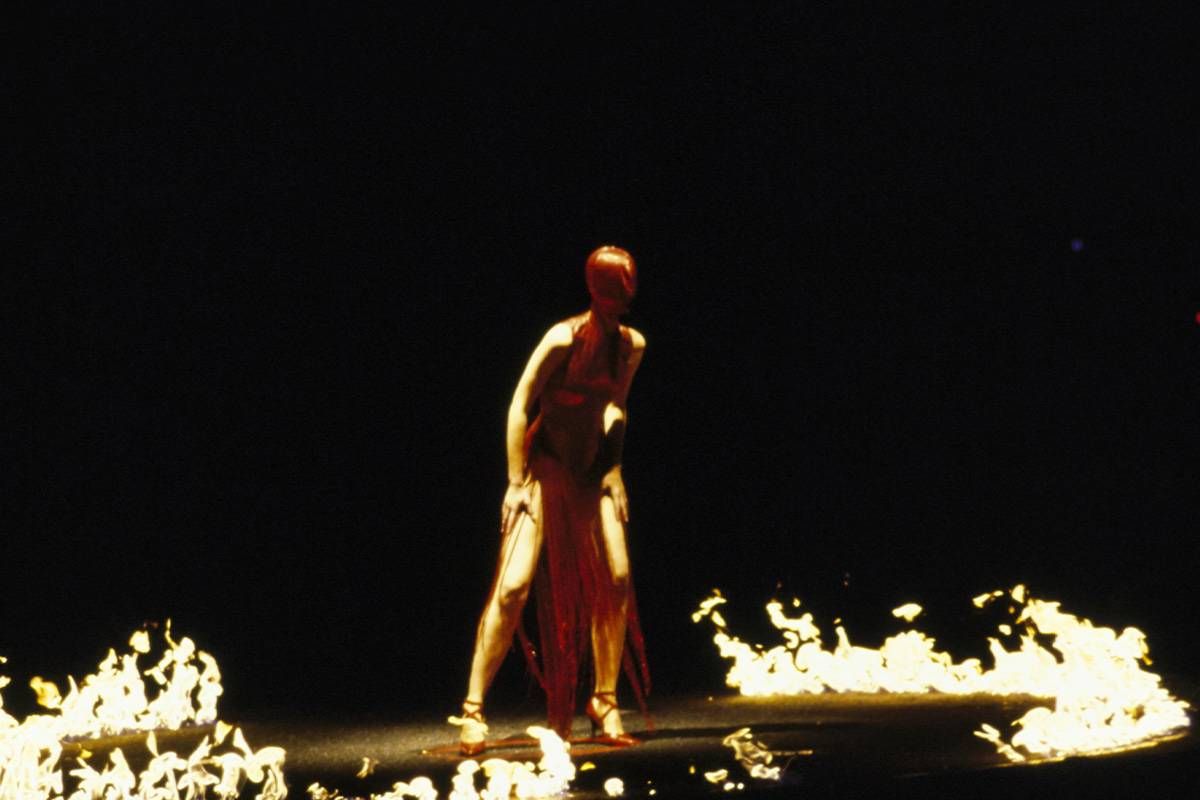
Alexander McQueen, AW 1998 Guy Marineau, Vogue, © Condé Nast. Courtesy of Tate Britain
The Network Behind London’s 90s Fashion Scene
Vivienne Westwood does something similar on a much larger scale, taking corsets, tartan, and British history, and rearranging them until they belong entirely to her. Naomi Campbell appears in the Autumn/Winter 1994 On Liberty collection, and throughout the exhibition Naomi and Kate keep reappearing, not just as famous models, but as members of the same creative circle moving between designers, photographers, and magazines.
Near the end of the exhibition, I saw Isabella Blow again, this time photographed by Steven Meisel. I’ve written about her before, and she’s been on my moodboards for years alongside Westwood and McQueen, so seeing her return at the end somehow completed the picture. Blow discovered people, introduced them, and brought them together, which made me realise that although the mythology around the 90s is full of individual geniuses, this exhibition is just as much about networks.
What Could Gen Z Create That Isn’t a Revival?
That’s also where I started thinking differently about our endless 90s revival. We’ve inherited the visual language almost perfectly: we know how to recreate the denim, the leather jacket, the grainy photography, and even the idea of rebellion itself. We can watch every McQueen runway online, buy a Westwood-inspired corset, and save Teller photographs to a moodboard all in one afternoon. Still, those people were responding directly to the world in front of them, rather than reproducing someone else’s version of rebellion.
Walking out of Tate Britain in my Levi’s and my father’s leather jacket, I was no longer wondering whether their generation was cooler than mine because that comparison suddenly felt too easy. I became more interested in why they had so much to say and how each of them managed to find such a unique way to express it. Maybe being in the right place at the right time mattered, or maybe economic uncertainty, nightlife, politics, magazines, and real communities gave them something to react against and other people to react alongside. It made me wonder what being cool even means for us now, especially when counterculture can become pop culture almost overnight. More than anything, I left asking myself what our generation will create that could only come from us.
Note from the Editor. The 90s: Art and Fashion is supported by McQueen, with additional support from The 90s Exhibition Supporters Circle, Tate International Council, Tate Patrons, Tate Members and Tate Americas Foundation. Dazed is the media partner. The exhibition is curated by Edward Enninful, OBE, alongside Jessica Vaughan, Curator, Contemporary British Art; Helen Little, Curator, Contemporary British Art; Dominique Heyse-Moore, Senior Curator, Contemporary British Art; Alex Farquharson, Director, Tate Britain; and Celeste McEvoy, Assistant Curator, Contemporary British Art, Tate Britain.
Carolina Lecce
Fashion Promotion, Communication and Digital Media alumna, London