

TEMPO—A Reflection on the Moleskine Foundation’s Journey
From Folios Nº8, the fifth entry in Maze35’s new series featuring articles, writings and essays from Moleskine Foundation’s cultural publication
Folios is the cultural publication of Moleskine Foundation showcasing the theme of creativity for social change through the stories of the Creativity Pioneers around the world that are part of Creativity Pioneers Fund. Through its new editorial column featuring a selection of articles from the latest, eight edition of the publication, Maze35 presents its fifth installment.
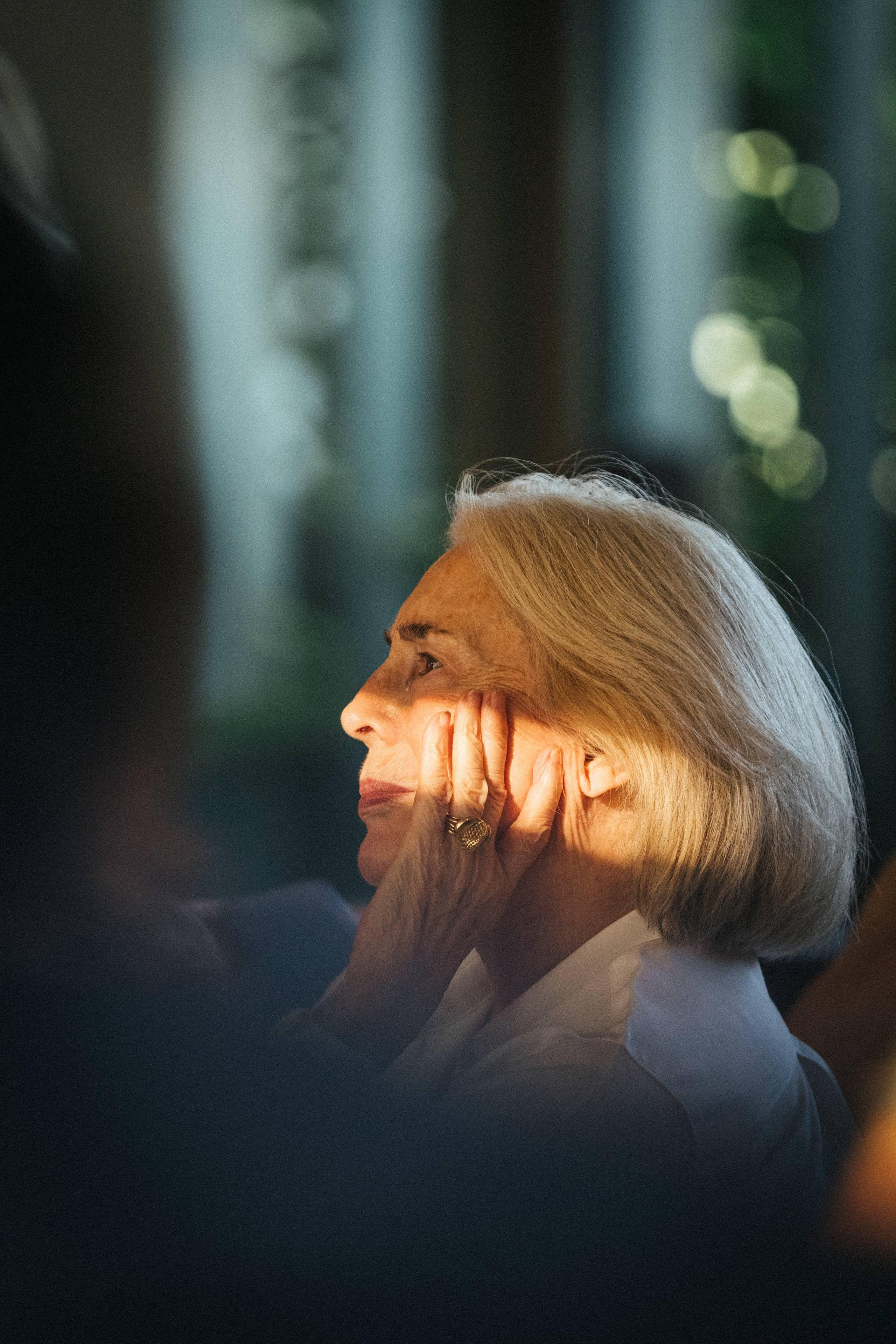
Maria Sebregondi, President of the Moleskine Foundation. Photo by Cartacarbone. I always wear a watch.
An old gold watch, older than I am.
It is analog, with a large round dial, in its own way, a sun marking a circular sense of time. Two hands, one longer and one shorter, move across it at different speeds: one slow, the other quicker. Within the large circle there is a much smaller, off-centre one, where a very thin hand runs even faster.
Twelve equidistant marks punctuate both circles, tracing their perimeter. There are no numbers, only signs and cyclical movement: a large sun and a small sun marking the course of the day, its different tempos and its different forms.
Sometimes time appears as a line, a path, a story—direct or winding, a segment or an arabesque. At other times it feels more like a substance, an elastic matter that stretches in imagination and contracts in action. It can also resemble a sedimentary rock made of layers, attempts, encounters, and experiences, that mark, with their fractures, a here and there, and which separate a before from an after.
Perhaps my watch does not measure hours so much as density. Or at least I like to imagine that it does. It measures the space available for reflection, for listening, for care, and for action.
Looking back, I could say that the journey of the Moleskine Foundation has been precisely this: thought; encounters; exchange; and constant experimentation.
Twenty years ago, from a sliver of light, an opening that once searched for the twenty-seventh letter of the alphabet¹, the one still to be discovered and drawn through collective creativity, we gradually opened a much wider window onto the alphabets of the world: its languages, its chiaroscuro, its desires, conflicts, solitudes, and encounters.
Also turning 20 years old is the Moleskine Foundation Collection: an extraordinary collection of unique notebook artworks that are a tangible testimony to the creativity that lies at the heart of our mission.
The idea of the Collection did not emerge as a predefined project. It took shape gradually as the Foundation itself was beginning to take form. Among our friends and early supporters were many artists and authors in different domains who were already using Moleskine notebooks in their daily creative practice. In those blank pages they sketched ideas that would later become film storyboards, recorded travel notes that would grow into essays or novels, jotted down drawings for architectural or design projects, observations for future reportage, or explored combinations of flavours and aromas for new recipes.
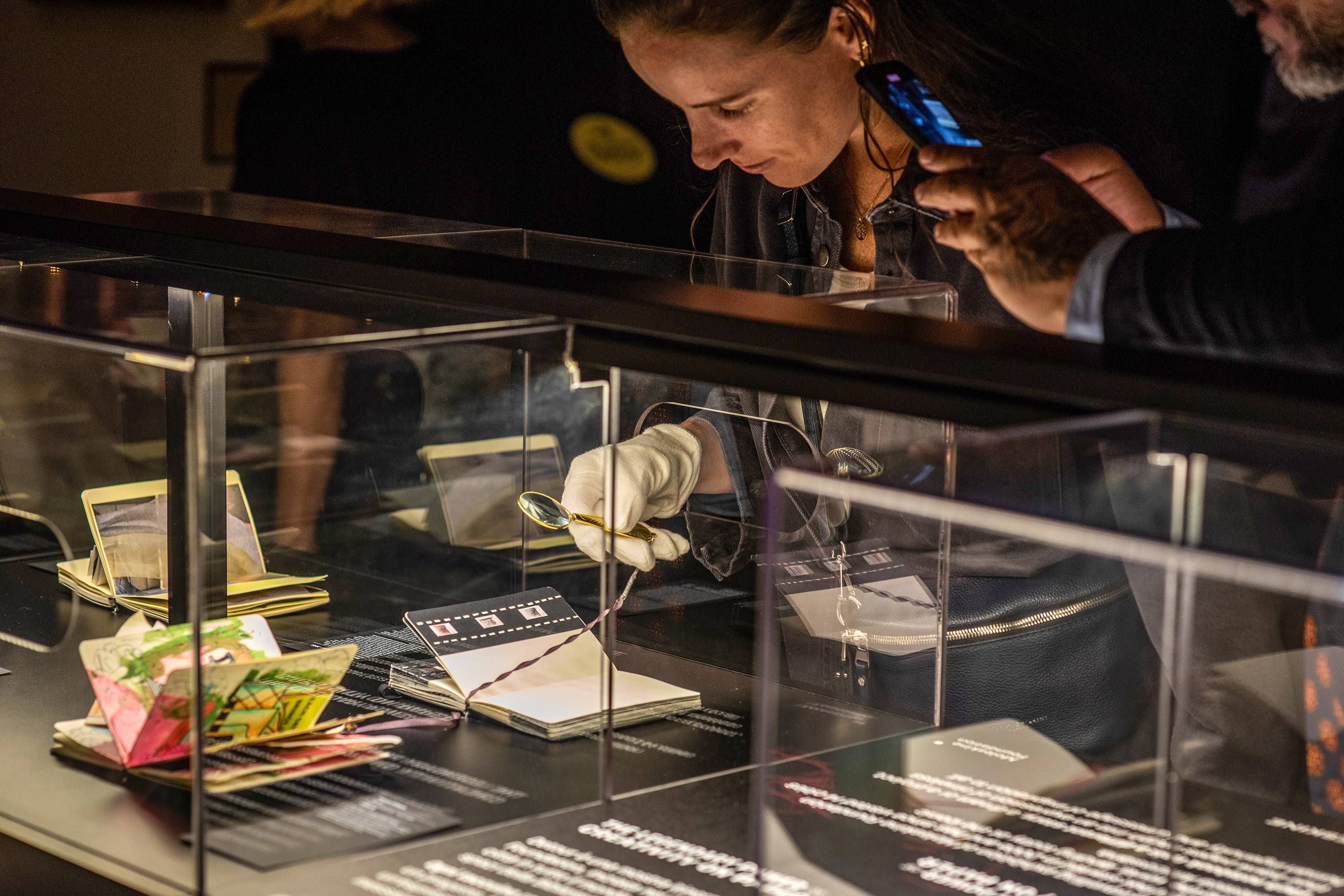
Detour Milan 2024, Moleskine Foundation Collection exhibition at Pinacoteca Ambrosiana. Photo courtesy of ZetaLab These notebook artworks showcase a creativity still in motion, not yet crystallised into finished works. They embody the alliance between culture and creativity that the Foundation sought to promote, while also inspiring younger generations of creative talents. We invited our creative friends and collaborators to donate their notebooks so they could be exhibited as artworks around the world as a message of shared creativity and generosity. When we had 50 notebooks, we were ready for the first exhibition. Today the Collection is a small but powerful nucleus that has grown into more than 1,600 notebooks. These exhibitions are made possible through a collaboration with the Moleskine Company, which recognises the collection as an important cultural asset for its mission.
Born at the remarkable intersection of creativity and generosity, the Collection consists of gifts from artists, architects, designers, musicians, writers, chefs, perfumers, photographers, filmmakers and international cultural figures, alongside activists who use art and culture to transform their communities and the often-difficult contexts in which they live.
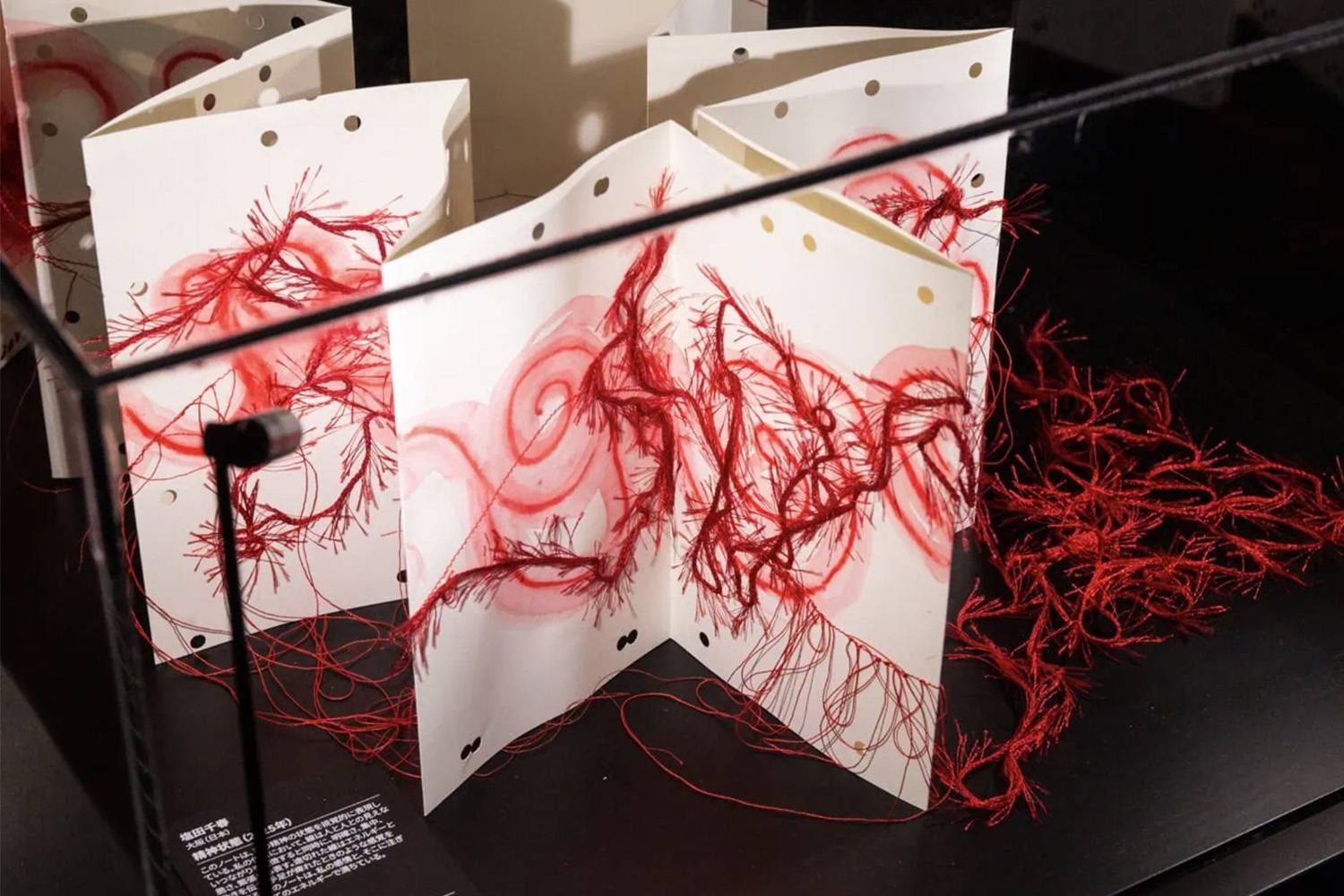
Chiharu Shiota, State of Mind, 2025. Photo by GENYA, courtesy of the Moleskine Foundation Collection. Part of the strength of the Collection lies in the notebook itself as a remarkably simple cognitive artefact, yet one that offers immense freedom of interpretation. It is a space where thinking and making meet and where ideas can remain tentative, exploratory and unfinished. Sometimes the notebooks are transformed into objects beyond themselves, into micro-sculptures, with the inside and outside interacting in an almost infinite game. At the same time, every blank page carries a long tradition of notebooks used by writers, artists and thinkers across generations.
Perhaps this is also what a notebook ultimately preserves: traces of time in the making.
This immense heritage remains open to exploration. It supports the activities of the Moleskine Foundation, continues to inspire new interpretations, and has been growing steadily for twenty years.
The time that truly matters is not the time that passes, but the time that leaves traces. Perhaps twenty years are exactly this: a trace that becomes ground on which others can walk, imagine, and build. A space, even a landscape.
Enough time to see a generation emerge. Enough also to cross crises, paradigm shifts and cultural transformations, and to understand that meaningful change rarely arrives as an explosion. More often, it takes the form of a practice.
Milestones matter not because they celebrate the past, but because they allow us to recognise its force. They invite us to question it and transform it into resilient ground—a kind of springboard from which new energy can emerge.
They are vantage points. They allow us to pause and look back without nostalgia, and forward without illusion. Twenty years matter because they offer depth. And depth is what distinguishes an idea from a process.
Time, after all, is not something we possess—something we have, or more often, lack. It is a way of being, a way of inhabiting impermanence. It is something we cultivate within change.
For this reason, the past interests me little in an archival sense, as an inert accumulation of experiences or a nostalgic memorial. I try instead to approach it as a generative heritage—though this is not always easy. The urgency of the present and the rush toward the future can easily obscure the importance of this reserve of learning, built through successes and mistakes alike.
Yet it is precisely this living ground that allows visions to become effective actions in the present, and enables us to take responsibility for the future—not as something that will simply happen, but as an unfolding weave, something we are building by intertwining the known and the unknown, choices and opportunities, old friendships and new encounters.
¹ lettera27 Foundation was the cultural incubator established in July 2006 to support the right to education and access to knowledge and information, particularly in contexts marked by scarcity and inequality. In 2017 lettera27 became the Moleskine Foundation.
Maria Sebregondi
President of the Moleskine Foundation






 COLLAB & PARTNERSHIPS Top 7 Beauty Careers in 2025 and how to get started, finally unveiled 28/05/2025

 COLLAB & PARTNERSHIPS 5 Dominican interior design trends that will shift the vibes in 2024 02/05/2024
 COLLAB & PARTNERSHIPS Planning to create a niche fragrance brand? Here’s what you need to know 27/12/2023