
British country style is back. But who gets to wear the old-money uniform?
Burberry at the V&A, Barbour at London Fashion Week and The Gentlemen on Netflix take British country style beyond the estate. Does its old-money code travel too?
British tweed comes with an old-money punchline: you don’t buy it; you inherit it. For years, it was either the preserve of the aristocracy or a tourist staple: a checked scarf, a raincoat, a hacking jacket, and a pair of Wellington boots. Now, The Gentlemen brings its gentry wardrobe to Netflix, Barbour returns to the London Fashion Week schedule, and Burberry’s trench gets its own display at the V&A. All of this seems to point to one idea: the country wardrobe has become democratically cool. But what of the old-money code it has long embodied?
I must admit, I’ve always been biased: I’d happily spend a day trawling London’s vintage markets in a British-made suede jacket with elbow patches and a hint of old-money shabbiness. This autumn, though, the country look isn’t just for me. It’s for everyone, and it’s muddier, cooler, and more international than the version we once wore.
View this post on Instagram
The Burberry Trench at the V&A: From Military Coat to Fashion Icon
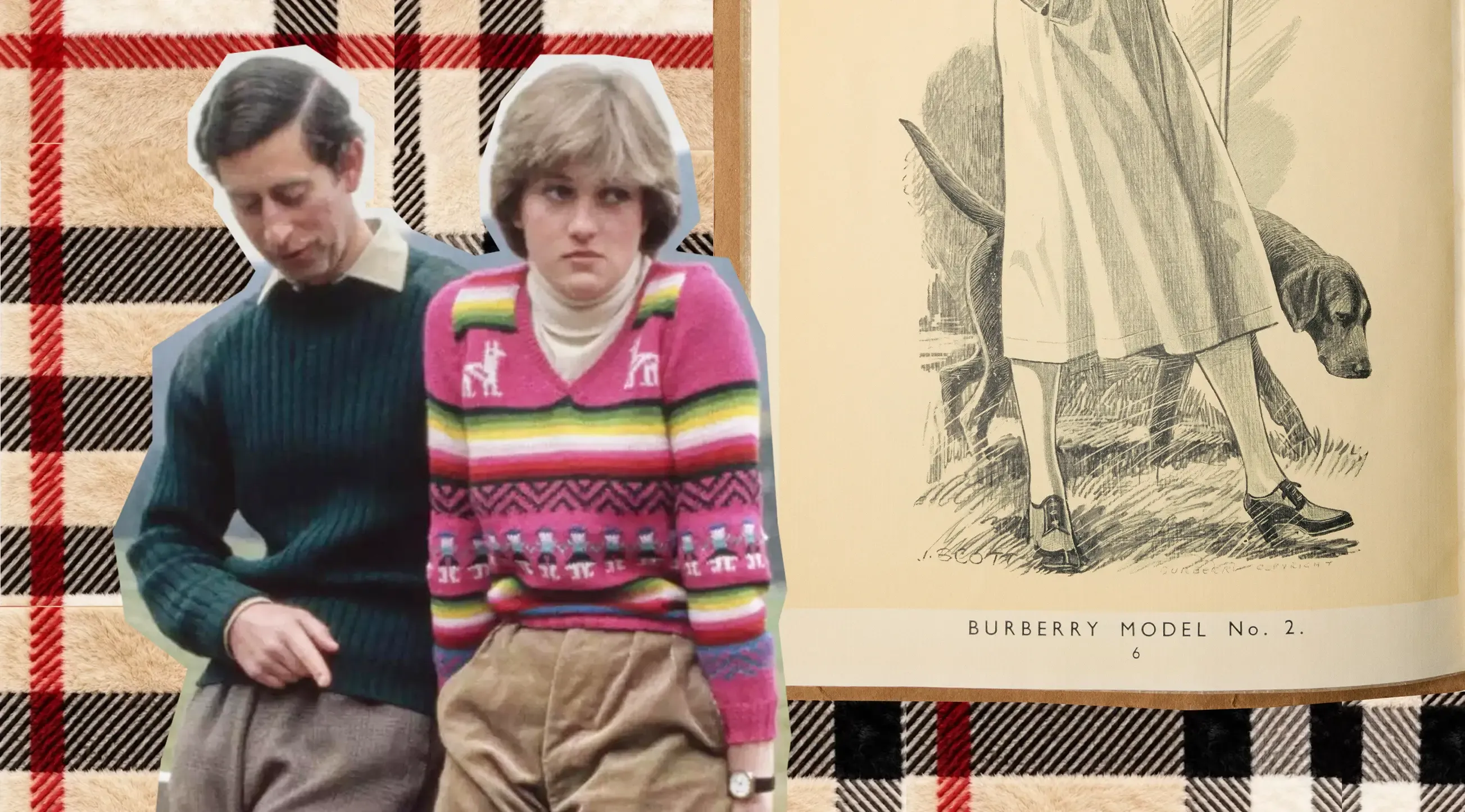
If you think of British countryside style, you might picture Wellington boots, a checked scarf, a tweed jacket, and a familiar raincoat. The trench, perhaps, is the most quintessentially British of them all.
To mark its 170th anniversary, Burberry and the V&A have unveiled The Burberry Trench: Crafting an Icon, a free exhibition charting the coat’s journey from practical outerwear and military attire to a global fashion symbol. The display runs at V&A South Kensington until 3 January 2027.
Realistically, the trench coat has never left London’s streets since Thomas Burberry invented cotton gabardine in 1879. He patented the fabric in 1888; the Tielocken coat, patented in 1912, became a precursor of the modern trench. During the First World War, gabardine’s protective qualities brought it into military service. Decades later, the fabric’s durable, tightly woven twill—with its distinctive diagonal rib, smooth finish, and natural water resistance—made it practical yet chic everyday outerwear: an answer to the British weather.
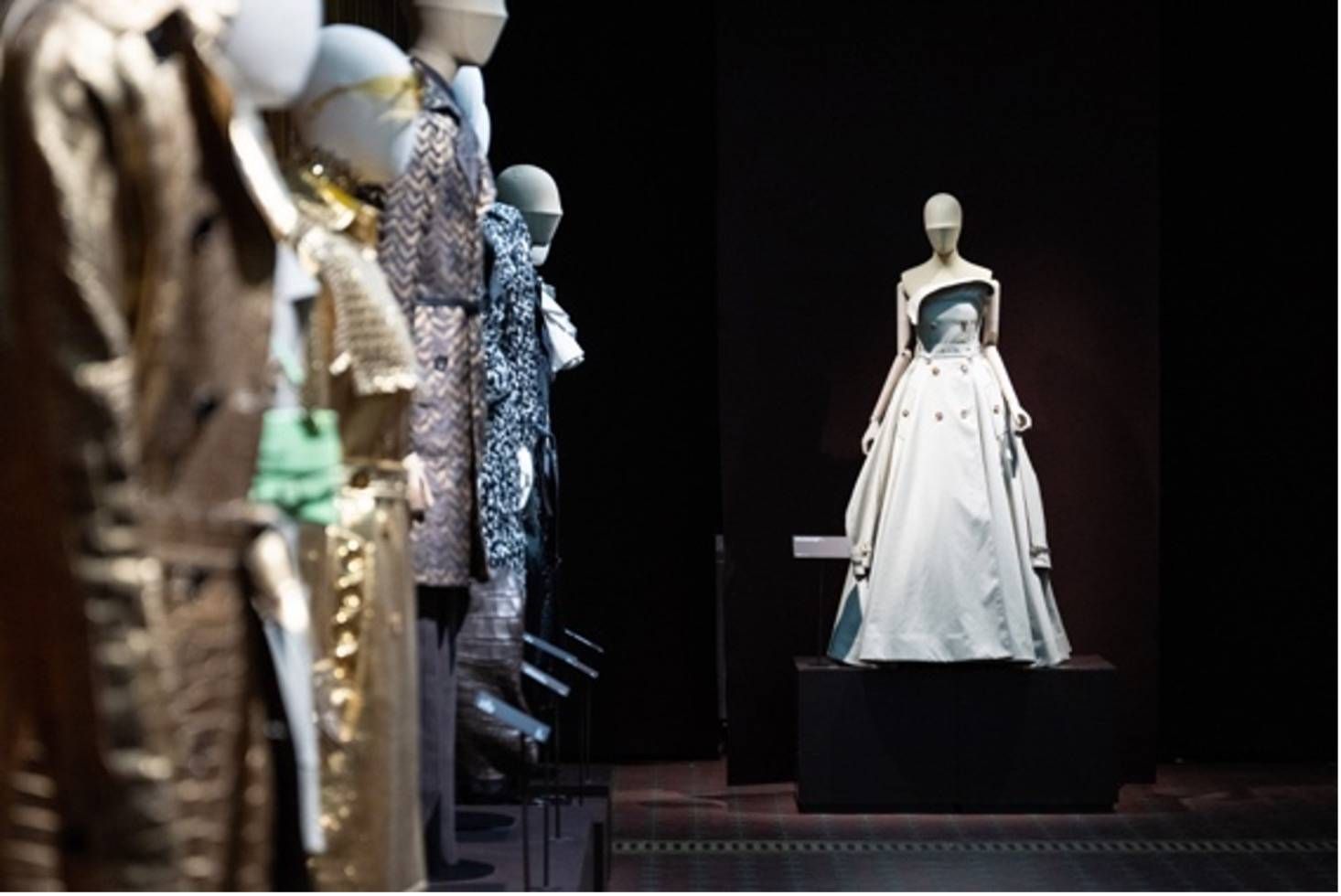
General view of The Burberry Trench: Crafting an Icon display at the Victoria and Albert Museum in South Kensington, London. © Jeff Spicer/PA Media Assignments The trench’s recognisable details remain rooted in its construction: the hand-finished collar, House Check lining, storm flap, and detachable throat latch. The display includes 19 runway looks from the past 25 years, including designs by former Chief Creative Officer Christopher Bailey and current Chief Creative Officer Daniel Lee. These examples show how the same coat has been reworked for changing times, while remaining very possibly British.
“The Burberry trench is a global design icon rooted in British craftsmanship and a symbol of innovation, creativity and timeless style” – Carly Eck, Brand Curator at Burberry
By placing a functional garment inside the design canon, the display underscores its enduring relevance. That matters to a trend that risks being reduced to an old-money costume: the country wardrobe began with practical needs like weather, work, and protection, rather than nostalgia alone.
London Fashion Week 2026: Why McQueen and Mulberry Returned to London
The September 2026 edition of London Fashion Week felt like a homecoming. Laura Weir, chief executive of the British Fashion Council, called it “an exciting moment with the return of leading British brands.” The BFC also reported that accredited buyer attendance was up 19 per cent year on year, with international buyers up 41 per cent.
The schedule bore out her words. McQueen returned for the first time since 2001, with Seán McGirr presenting the house’s Spring/Summer 2027 collection in London after several seasons in Paris—his final bow for the label. Mulberry, the Somerset leather house, also came back to the London runway after nearly a decade. Christopher Kane’s debut collection looked to suburban British street style rather than high-end afternoon tea.
This renewed focus on British fashion also cast its traditional codes into the spotlight. The rule “No brown in town”—the notion that tweed and brown shoes belong in the country, not London—seems to have fallen by the wayside, with Barbour’s waxed jackets bringing countrywear onto the official calendar and into the city’s fashion conversation.
View this post on Instagram
Summer 2027 reinterprets Burberry’s iconic codes and signatures through a new lens Once again, Burberry closed the week: Daniel Lee collaborated with textile designer Celia Birtwell, whose hand-painted florals and vines “humanised”, as The Guardian put it, the House Check on trenches and tailoring. Meanwhile, the quintessential British department store brand, Marks & Spencer, celebrated 100 years in fashion with its LFW debut: a see-now, buy-now show.
The common thread running through LFW26 was heritage reworked. Savile Row tailoring, elements of folklore, and a sense of romance also ran through the broader catwalk schedule, showing how archive research has become raw material for new designs.
The Gentlemen Season 2: Which British Brands Are Behind Its Country Look?
View this post on Instagram
The Gentlemen season two brings country-house style back to the screen
While the V&A brought the trench into the museum, Netflix introduced country clothing into crime drama. Guy Ritchie’s The Gentlemen returned for a second season on 3 September 2026, centred on an aristocratic family, a crumbling estate, and a criminal empire. The premise was tailor-made for fashion, so it’s no surprise the costumes have been discussed almost as much as the plot.
View this post on Instagram
Inside The Gentlemen Season 2 with costume designer Loulou Bontemps. Costume designer Loulou Bontemps dresses the show as a love letter to British makers. “It’s wonderful to celebrate that Britishness,” she said, “especially on a production like this.” The wardrobe draws on countrywear brands including Farlows, Cordings and Dubarry, as well as shooting specialists Purdey and Holland & Holland. One detail is particularly telling: Eddie Horniman’s handmade “plus-twos”, the wide shooting trousers he wears in the show. Netflix’s style guide for the season explains that the costume team had them made because the desired cut was not available off the peg.
Two details define this return of country chic. First, women wear the country wardrobe as confidently as the men. Second, the featured brands are real and mostly independent. Viewers can shop the look, and retailers from Farlows to Cordings have published “get the look” guides.
Bontemps has also argued that fashion often returns to forms designed decades ago. Whether you agree or not, her point makes a case for knowing the archive before attempting to move beyond it.
How British Countrywear Is Being Reworked for the City
The Autumn/Winter 2026–27 forecasts had a name for this direction. WGSN’s menswear themes included “Modern Heritage”, framed around craft and shared histories.
In womenswear, countryside references appear with an unexpected twist: tweed is worn as fashion, but not as costume. British wool is part of that picture too, from Harris Tweed to Shetland knitwear, layered with sharp tailoring and riding boots.
Equestrian Fashion: Why You Don’t Need a Horse to Wear It
Equestrian style deserves its own spotlight. Barbara Horspool of boot brand Fairfax & Favor says it “has always existed as a quiet constant rather than a passing trend”, as she told Country & Town House. What has changed is its visibility: today, you don’t need a horse to wear the boots.
Stella McCartney’s Winter 2026 runway show at Le Grand Manège Jean Caucanas, Paris. The old cliché says, “Country clothes are for men in flat caps.” But 2026 tells a different story, with women’s runways leading the equestrian trend. In March 2026, Stella McCartney staged her Winter 2026 show at Le Grand Manège Jean Caucanas in Paris, complete with horses on the catwalk. Her show notes linked the collection to the Year of the Horse.
Beyond the classics, Hermès has softened the silhouette of its riding boots, while Celine has introduced tailored equestrian-inspired looks. British country dressing is a style language that travels well beyond Britain.
Can Country Clothes Outlast Fast Fashion?
Perhaps it’s mere coincidence that Burberry’s 170th anniversary coincides with the rise of a soft, highly aspirational British allure in pop culture. But deep down, people crave clothes that last. Tweed, waxed cotton, and good wool are made to be repaired, kept in use, and handed down. In a market tired of fast trends, a coat designed to withstand British weather in 1879 still has a purpose.
The new countryside chic is about character more than class. It’s the wardrobe of people who look as if they have somewhere real to be, whether that’s a café in Soho or a meeting room in the City.
Silvia De Vecchi
Editor, London