
Fashion Graduate Italia 2026: Why should the industry listen to emerging designers?
At Fashion Graduate Italia 2026, ten designers from Istituto Marangoni Milano use clothes to question the body. What should buyers and creative directors notice?
At Fashion Graduate Italia 2026, ten emerging designers from Istituto Marangoni Milano put the body under pressure: they protect it, distort it and rebuild it. It doesn’t sound like a chorus—fortunately.
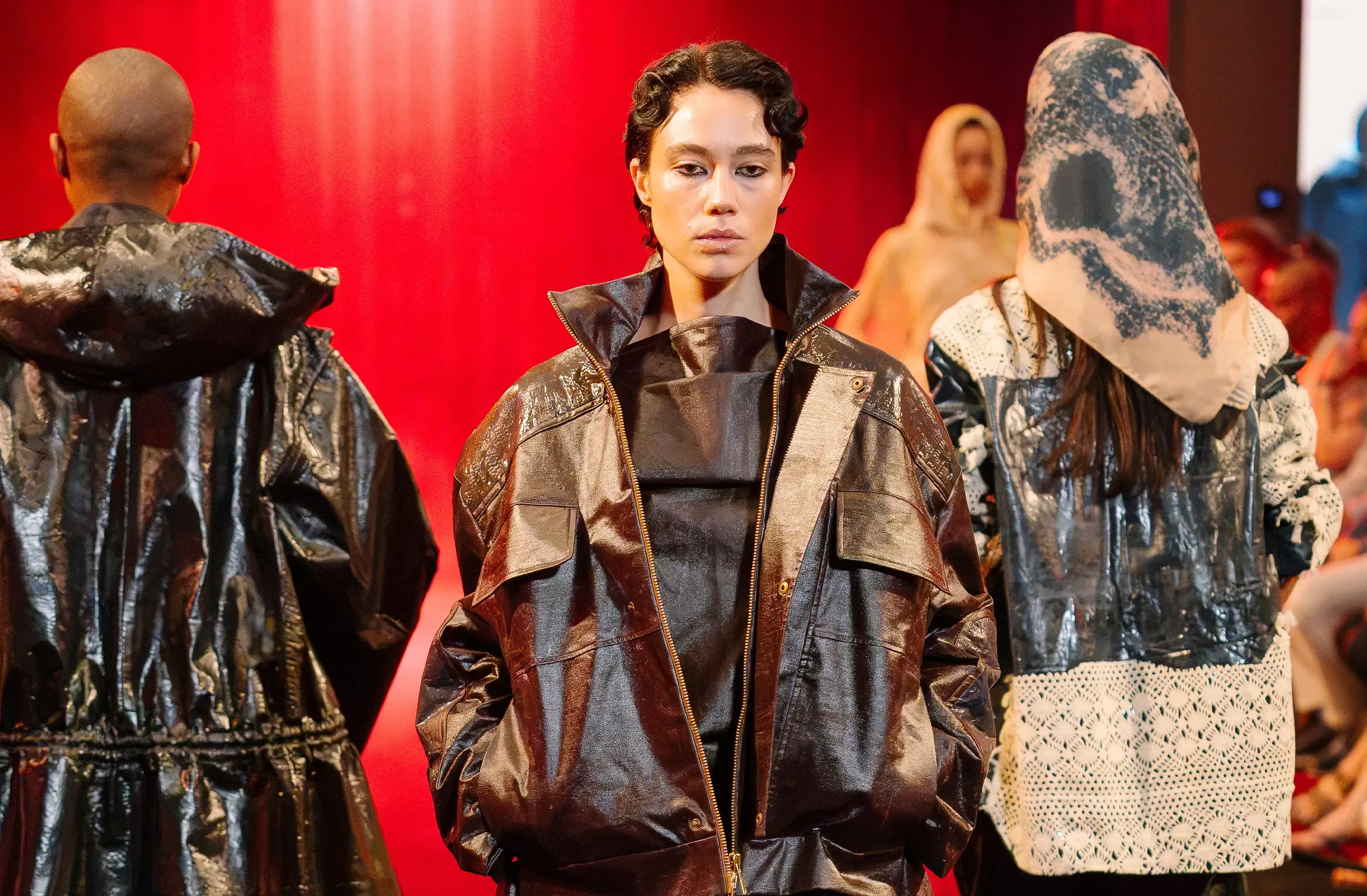
On the runway, the clothes shield, enlarge, and interrupt the figure, with each collection offering a distinct response. For buyers and creative directors, these differences reveal how the designers think through clothing and where their work might lead.
Fashion Graduate Italia 2026: Meet Istituto Marangoni Milano’s 10 Designers
Milan, BASE, 27 October. At 2 pm, a fashion system that spends much of the year wondering where its next big idea will come from looks to ten young designers for an answer. Their work is expected to feel complete, recognisable, photogenic, and ideally ready to sell. In reality, it’s not the collections themselves that need to find buyers; it’s the designers who need to find a place in the industry. The audience includes people who could hire them within months and help set their careers in motion. That is the graduate-show paradox, compressed into a single afternoon: a laboratory for new ideas that the industry also watches as a kind of audition.
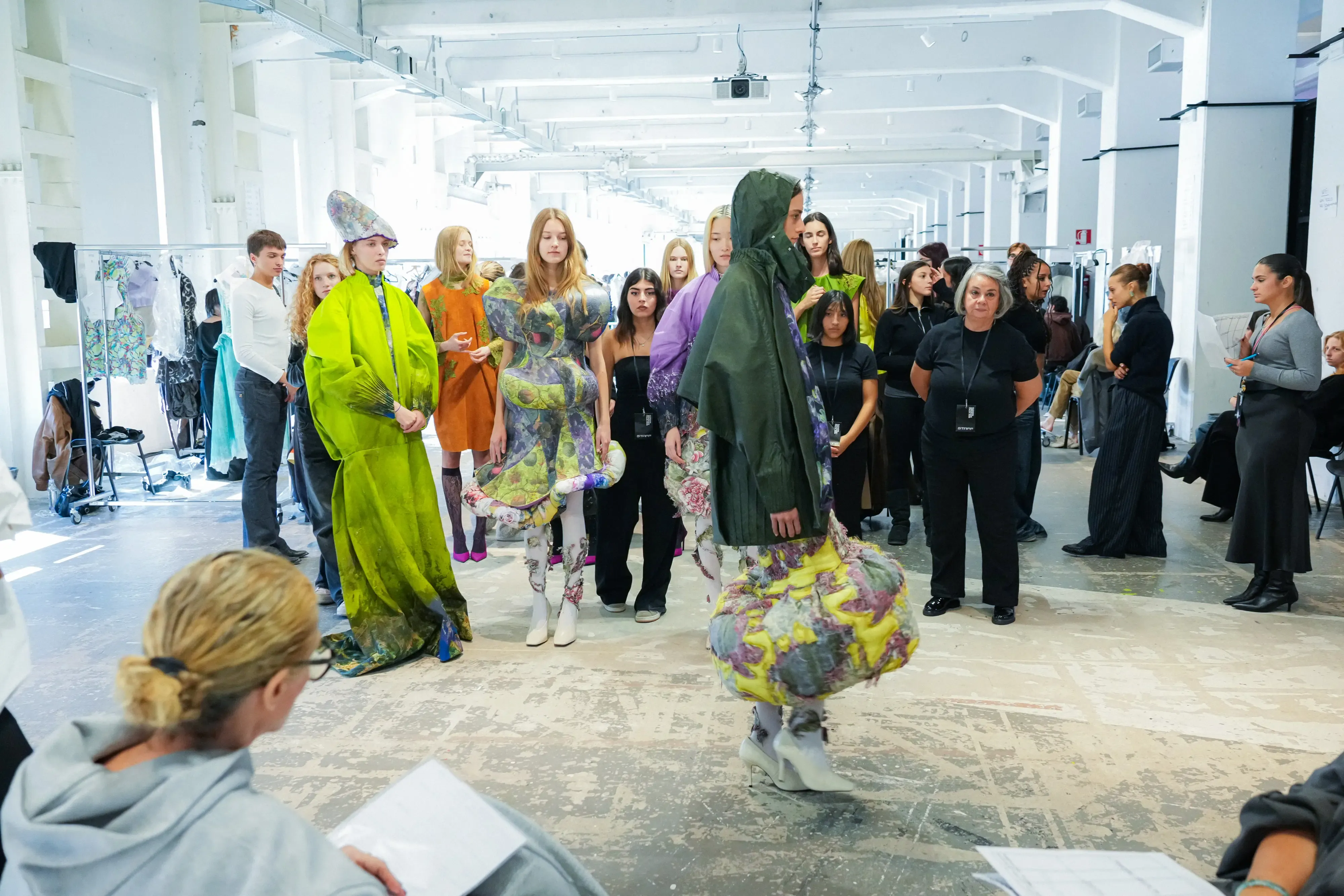
A moment from the Istituto Marangoni student Niccolò Di Carlo’s fittings for Fashion Graduate Italia 2026 For Istituto Marangoni Milano’s runway show at Fashion Graduate Italia 2026, more than two hundred third-year Fashion Design & Accessories students presented their projects. Thirty made the final cut; ten took to the runway. A cross-disciplinary jury of creative directors, buyers, and talent managers considered their research, methods, product quality, and ability to sustain a personal vision.
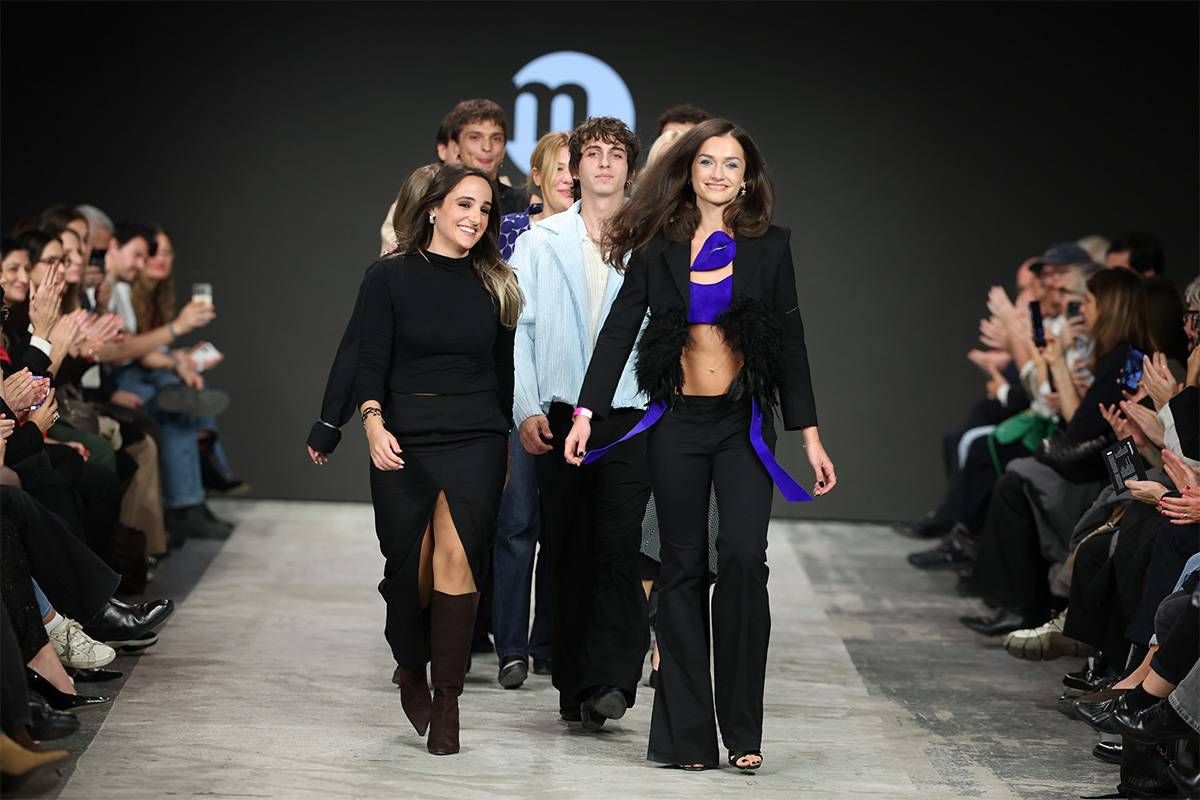
The emerging fashion designers from Istituto Marangoni selected for Fashion Graduate Italia 2026. The show’s title, SPEAK UP!, invited the students to take a stand without turning fashion into an automatic megaphone. According to the Fashion Graduate Italia manifesto, speaking out means opening a space for debate rather than imposing a pre-packaged truth. It is a necessary intention, but a risky one: by 2026, even dissent can acquire its own marketing strategy. That makes it all the more important to move beyond slogans. A show like this can make a convincing case only when that friction is carried into the clothes through construction, material, and proportion.
How Do Clothes Express Identity Beyond Slogans?
Getting dressed can be culturally charged when a silhouette changes how a body is perceived. Of course, a slogan printed on cotton can state a position, but a seam can alter the garment itself, translating that stance into something more powerful. When our bodies compete for attention, images fade from our minds almost as soon as they appear, and identities are often packaged as recognisable aesthetics; a shifted line can say more than another statement.
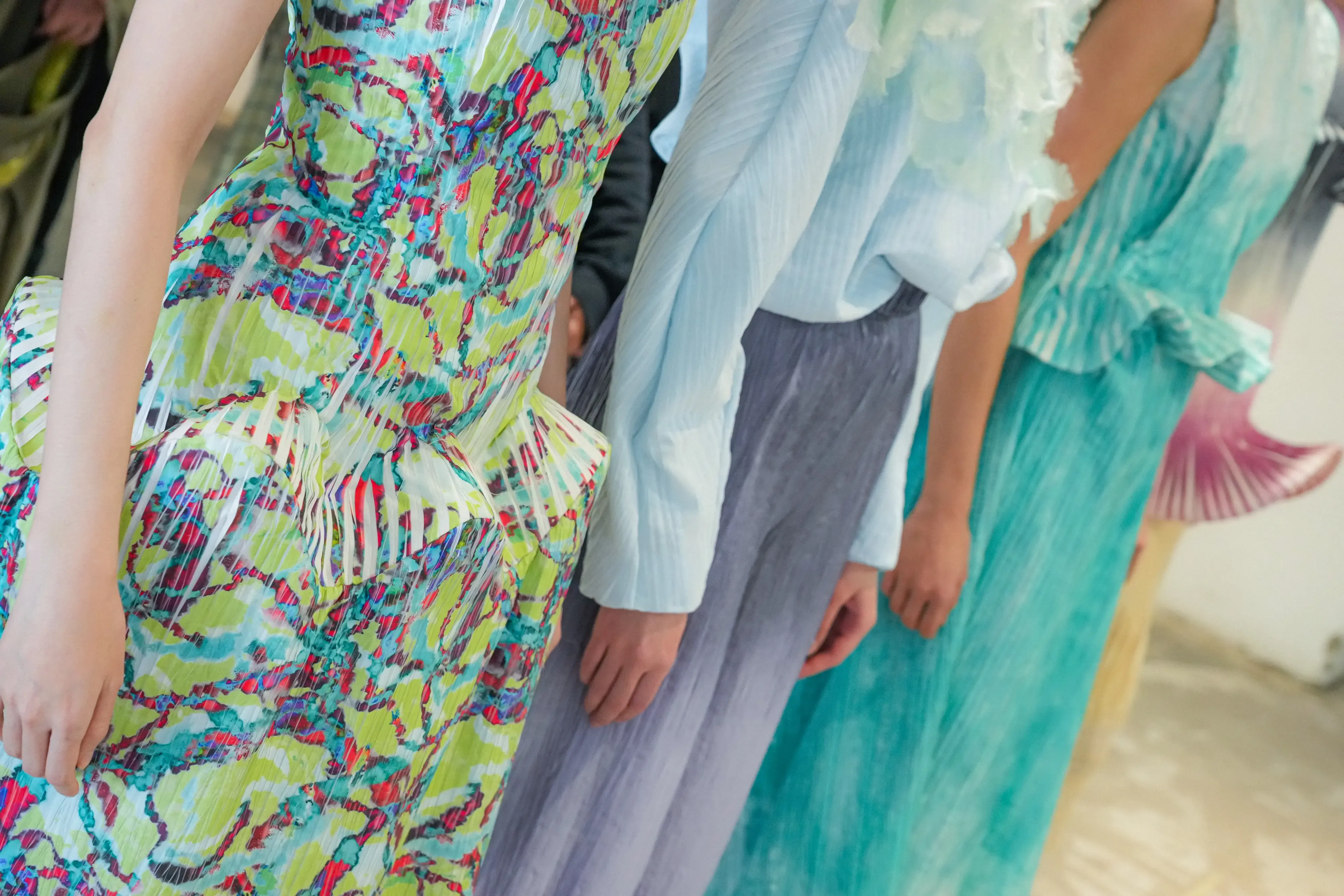
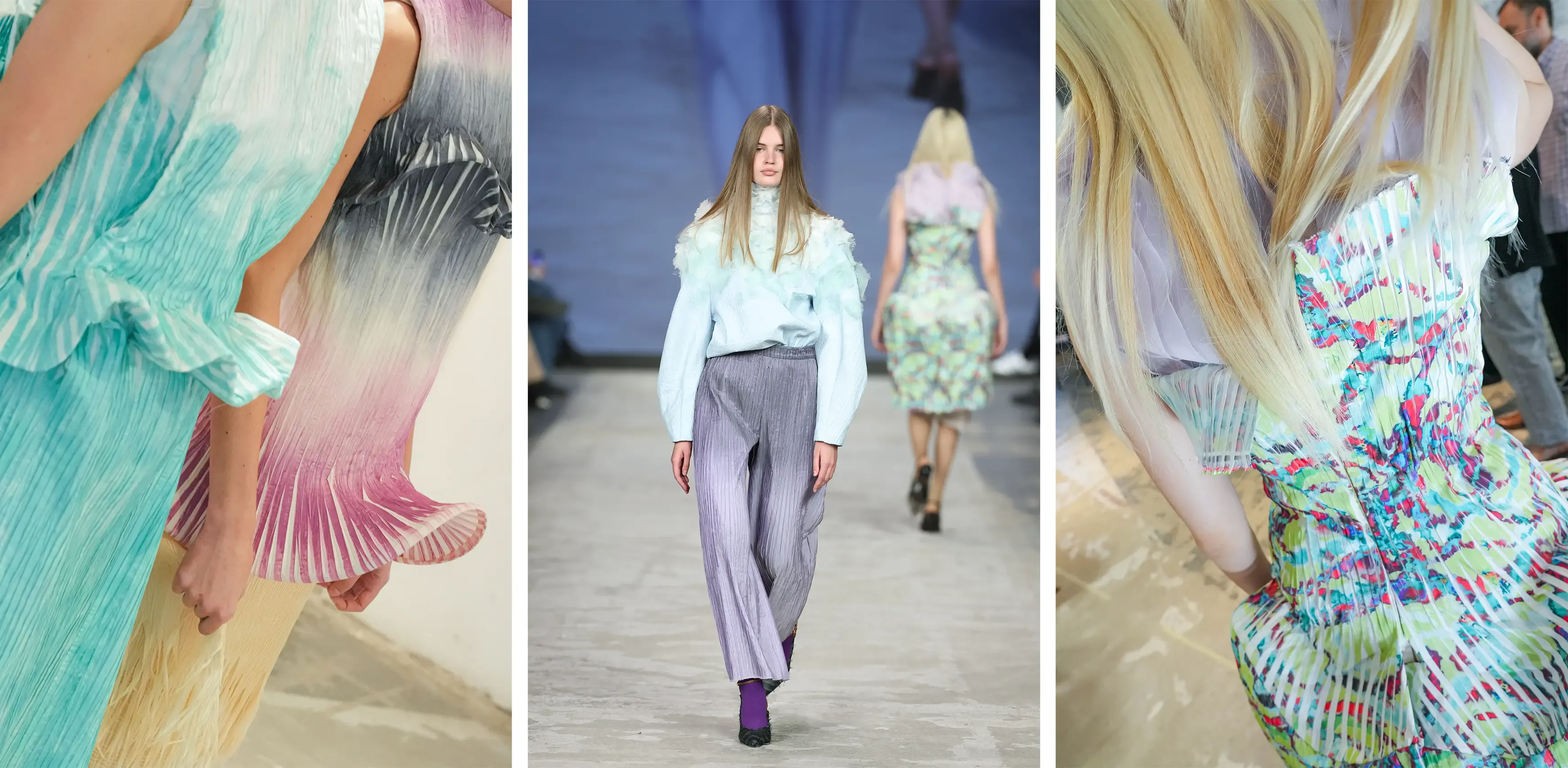
A detail from the construction of looks in João Pedro Anzolin’s graduate collection, Acquainted. Fashion speaks when it unsettles what we take for natural: the “right” figure, a feature made legible at a glance, an orderly version of memory, or a beauty that promises reassurance, among others. A garment can accompany the body and still challenge the assumptions attached to it. Across the Istituto Marangoni runway, the aesthetics differ, but a shared idea emerges: the body is never a neutral starting point. It is a place where identity is continually negotiated.
Can Everyday Life Inspire Fashion Design?
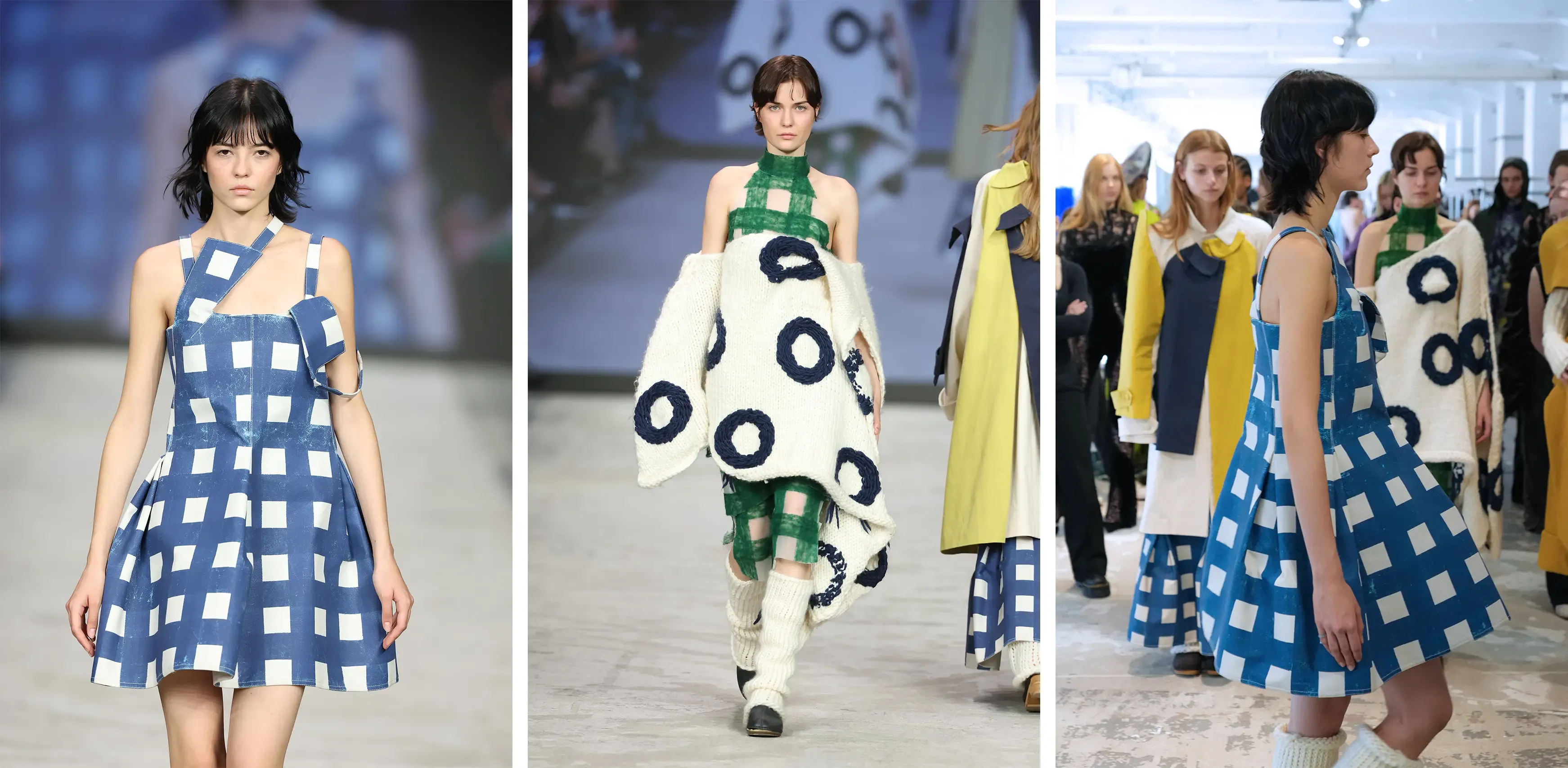
Indoor Wind by Emilia Andersson In Indoor Wind, Emilia Andersson draws on Camus’s notion of the absurd: the human need for meaning versus an environment that offers only maintenance, repetition, and comfort. In the signature look, a blue-and-cream grid runs across a tunic, and the torso takes on the stiff posture of an institutional apron. It resembles a uniform for a job whose function has disappeared. The humour comes from the garment’s exacting discipline. Everything appears ready for use, though the task it was made for has vanished. It’s a clear translation of the absurd: the machine keeps running, even when its purpose has evaporated.
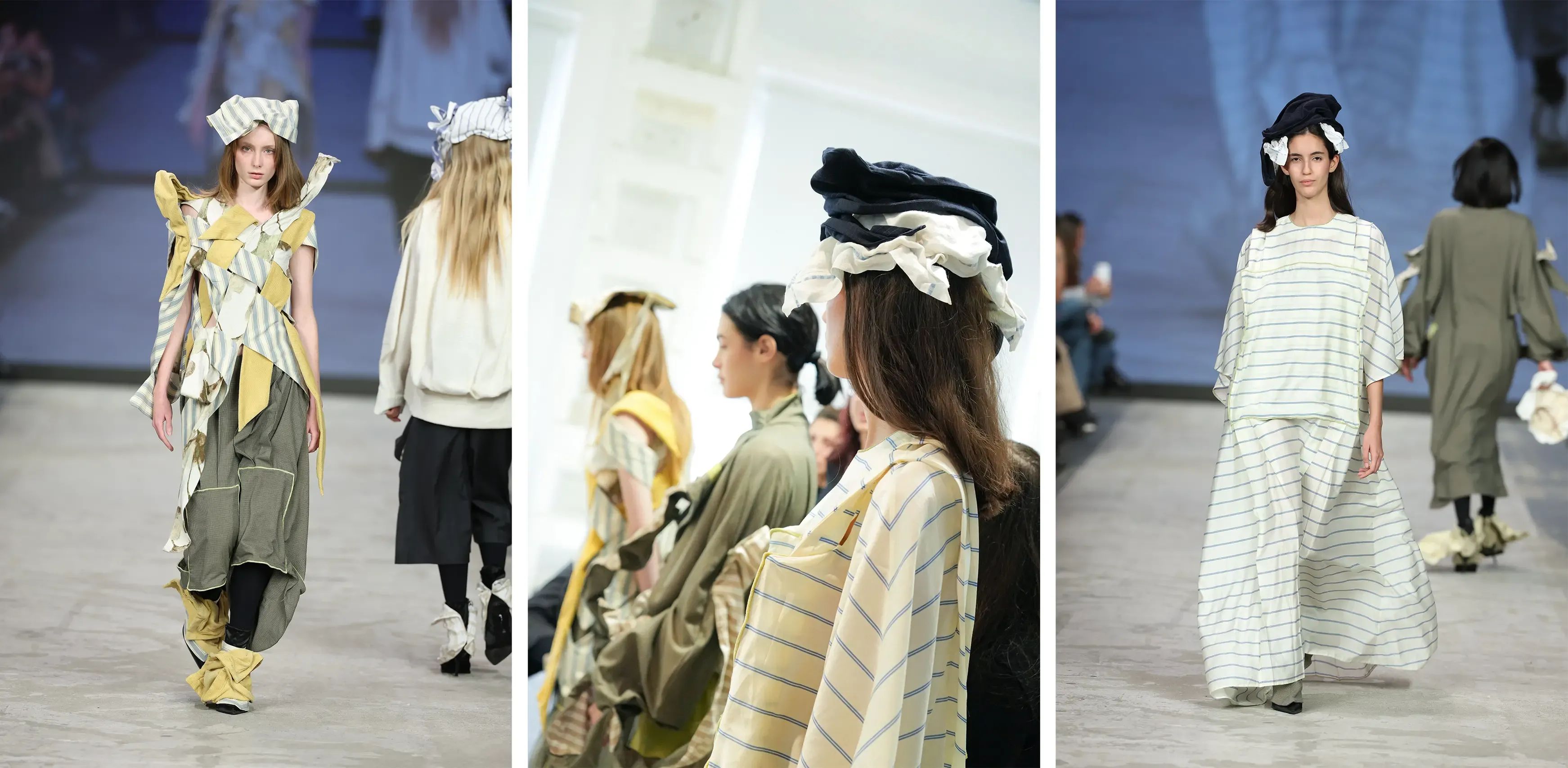
Siri Lindgren’s Anterum Siri Lindgren’s Anterum also begins with ordinary settings: waiting rooms, public transport, places where people are lonely together. The concept points towards simple, controlled silhouettes. In the look selected for Istituto Marangoni’s preview, however, mustard-yellow panels meet striped fabrics, pleats, and oversized pockets; folds gather around the ankles. The contradiction is productive: contemporary conformity is not always neat. Often, it is a messy montage of codes adopted to navigate public space without actually being seen. Lindgren makes that discretion strangely cumbersome, but in an interesting and unexpected way.
Can Clothes Become Emotional Armour?
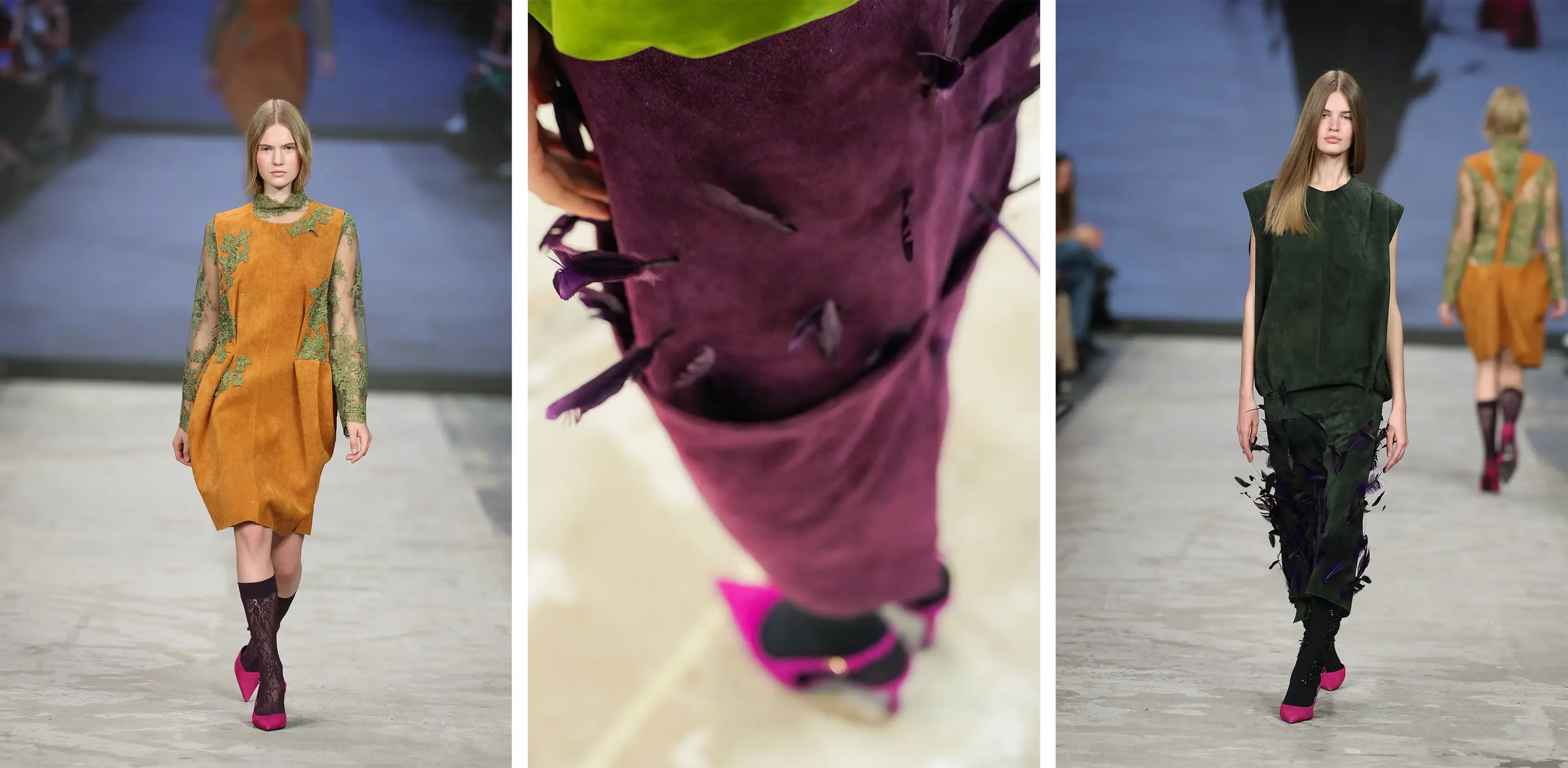
SILENZIO by Leonardo Balthazar da Silveira
With SILENZIO, Leonardo Balthazar da Silveira draws on Fernando Pessoa and Lucio Fontana. Leather and lace evoke the tension between protection and vulnerability; slits and feathers disrupt an otherwise disciplined silhouette. In one look, the upper body remains compact and almost severe, while dark feathers sweep across the skirt, like an emotion escaping its confines. The contrast is immediately legible, yet the precise placement of the feathers adds nuance and depth.
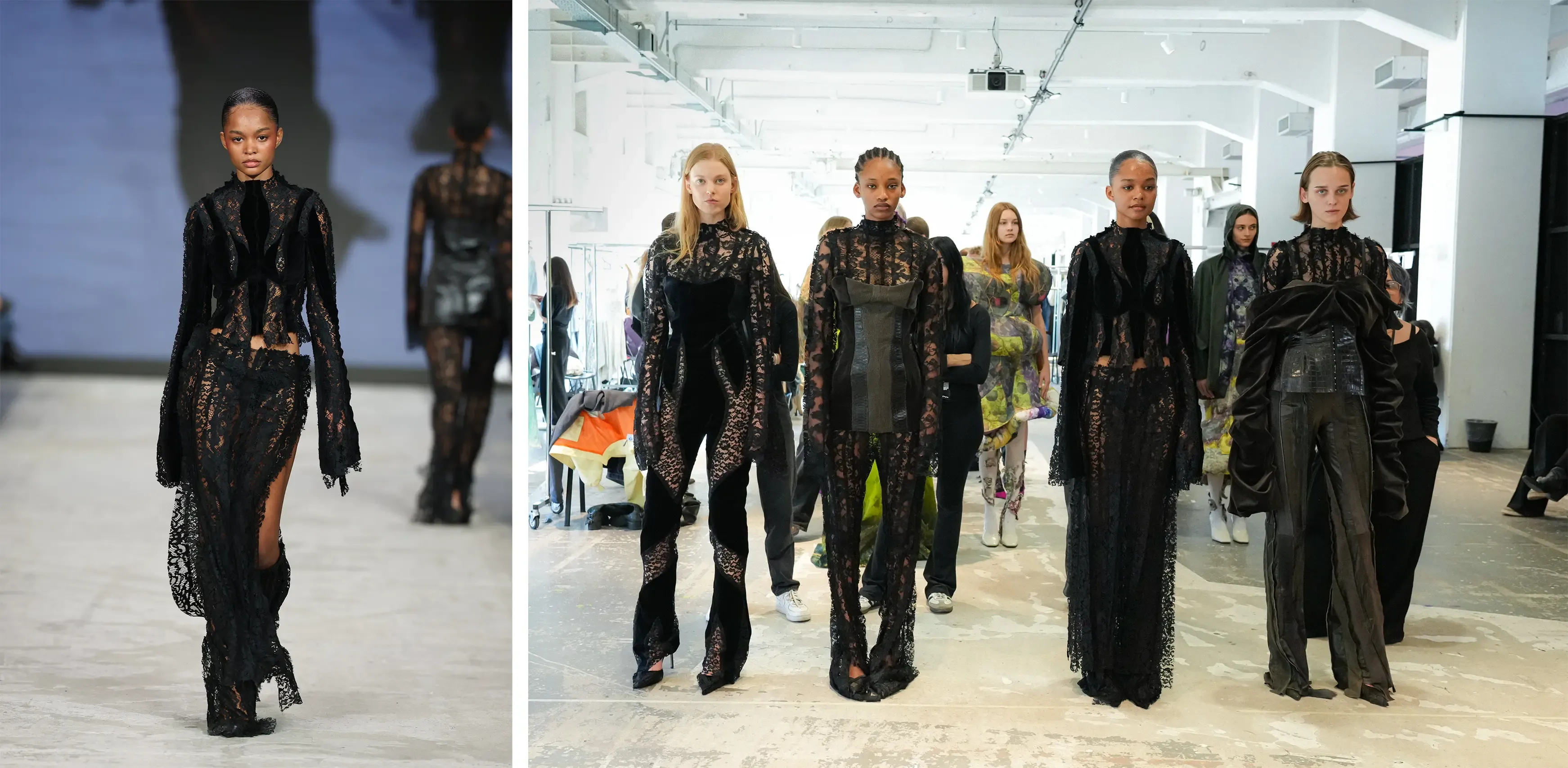
Maria Glykeria Zafeiropoulou’s Dreams Come True
Maria Glykeria Zafeiropoulou names her collection Dreams Come True, a title with a hopeful, familiar ring. The garments give that optimism a more complex form, upending expectations. One look stands out: black lace and voluminous gathered sleeves frame a waist held by an almost armoured structure, while narrow trousers complete the silhouette. Visible seams and deliberately unresolved details keep the fractures of the present in view. Hope takes on a tactile quality, with a rough edge and an uneasy strength. The collection brings these elements together in a dense, theatrical image.

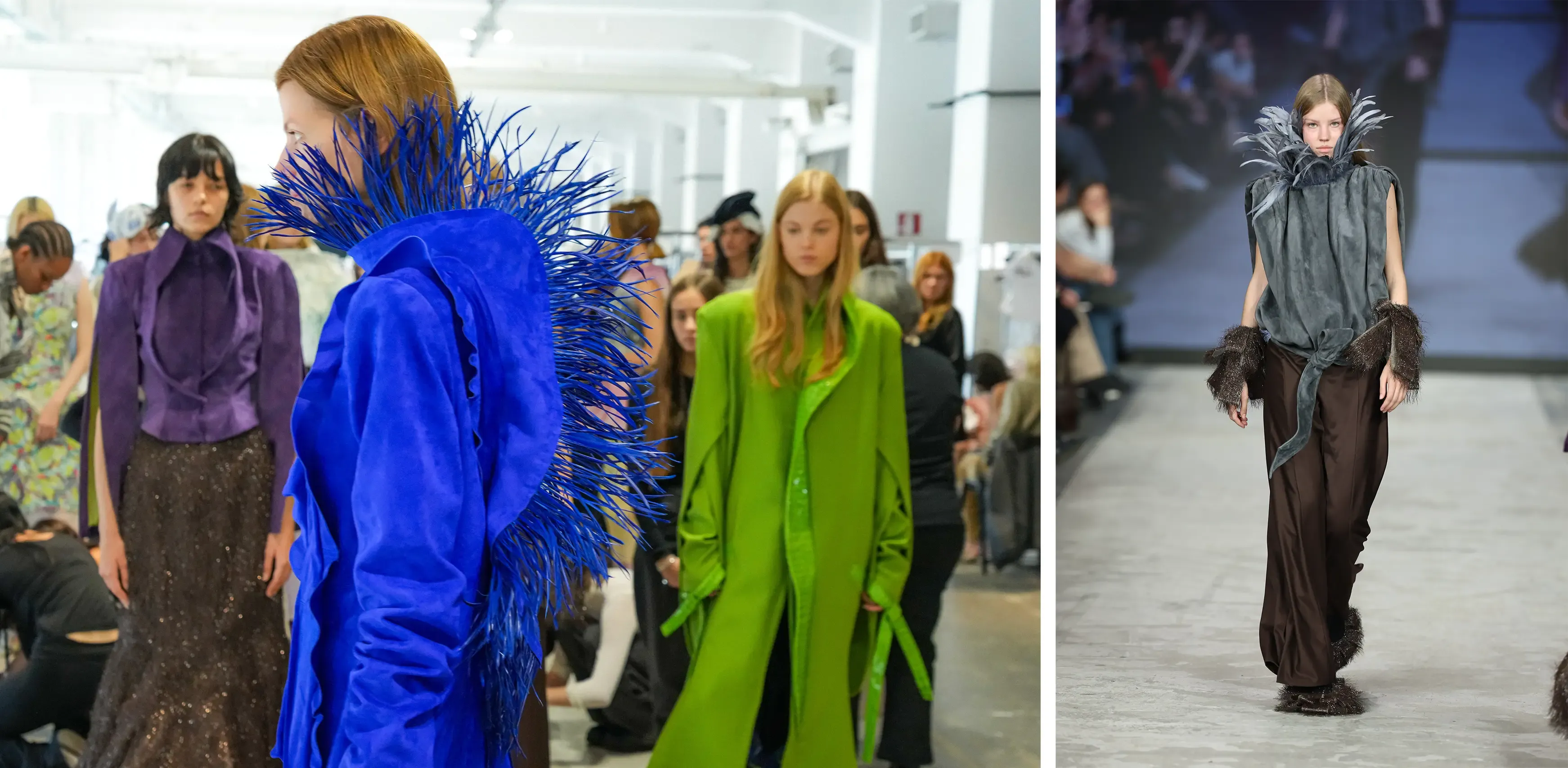
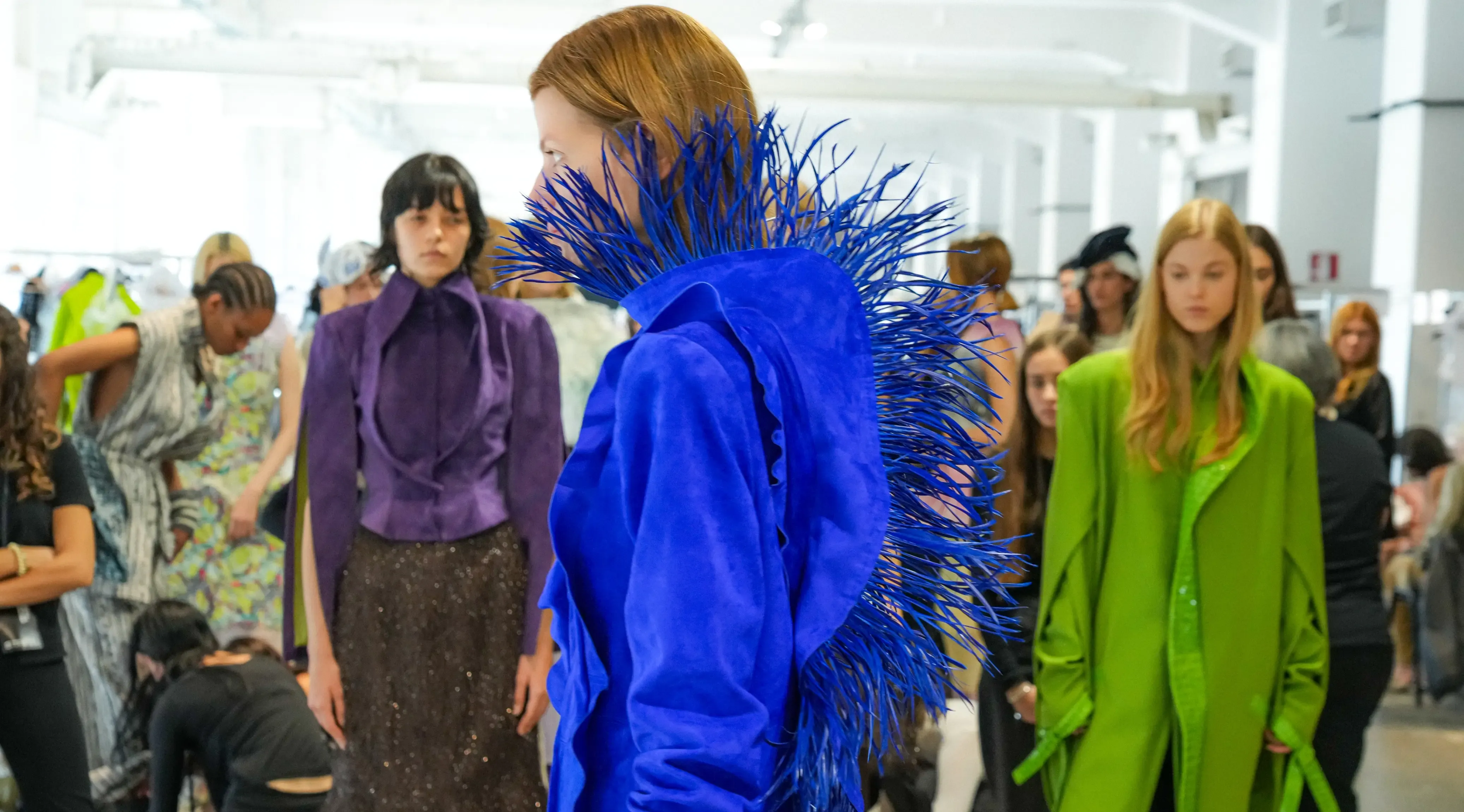
SONDER by Sonia Leonte Sonia Leonte approaches similar themes in SONDER, starting from the knowledge that every stranger has a life as intricate as our own. Her floor-length electric-blue coat pairs sharp shoulders with a long vertical line; feathers form a halo around the face. Minimalism and maximalism coexist within a single garment. Its disciplined silhouette can live beyond the editorial image, while the colour and collar make protection visible as presence. Leonte’s graduate collection commands space with composure.
How Do Fashion Designers Use Memory in Their Collections?
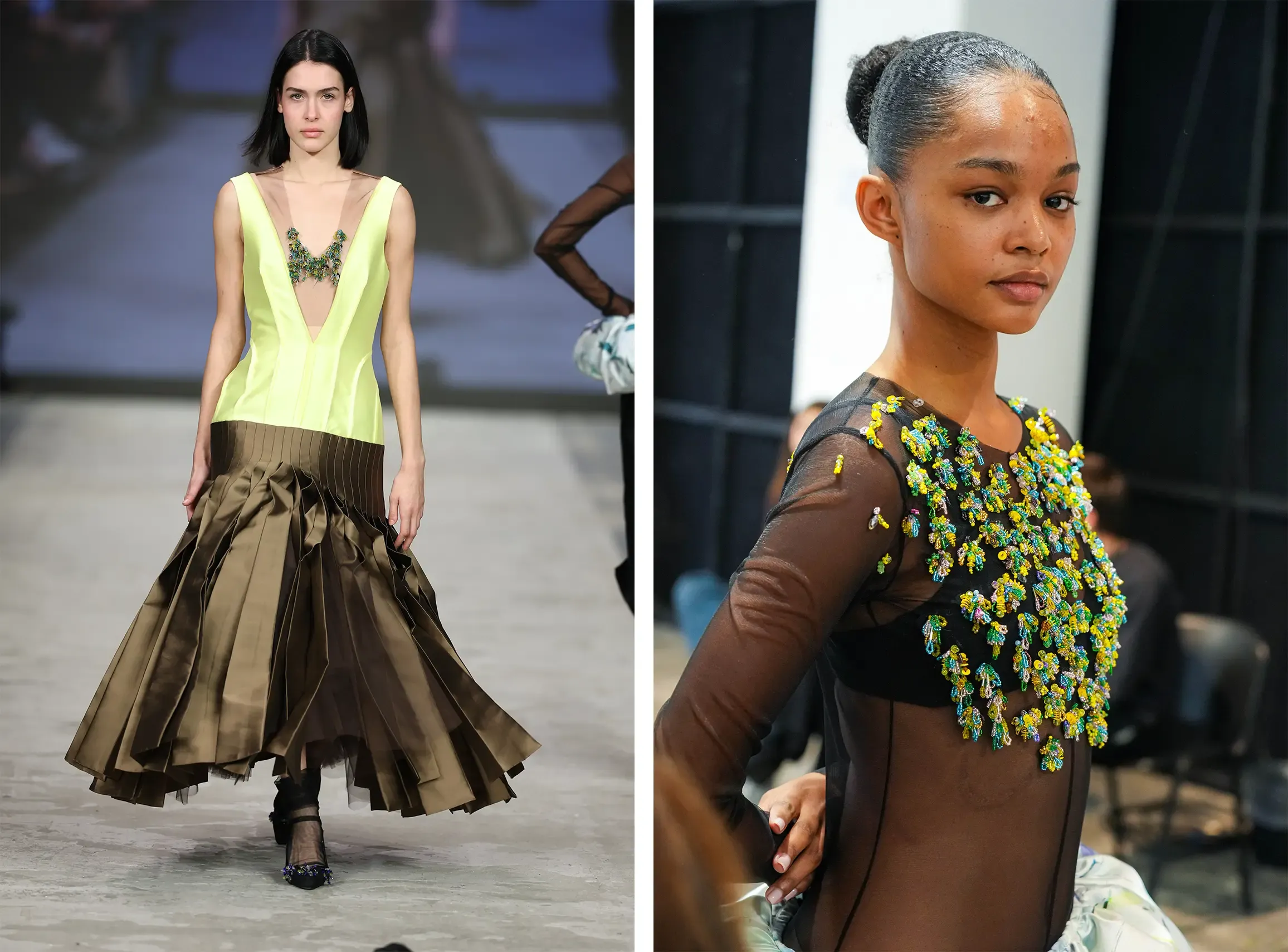
Lidia Pescatore’s L’ultima favola
Lidia Pescatore’s L’ultima favola begins with the tension between childhood and adulthood, combining 1950s proportions with Impressionist echoes. The voluminous bronze-coloured pleated skirt retains the formality of its era, while the top shifts the figure’s centre of gravity. She seems to be wearing the past at a scale she has outgrown. That imbalance suggests that nostalgia is meaningful only when it is challenged; otherwise, it becomes mere styling.
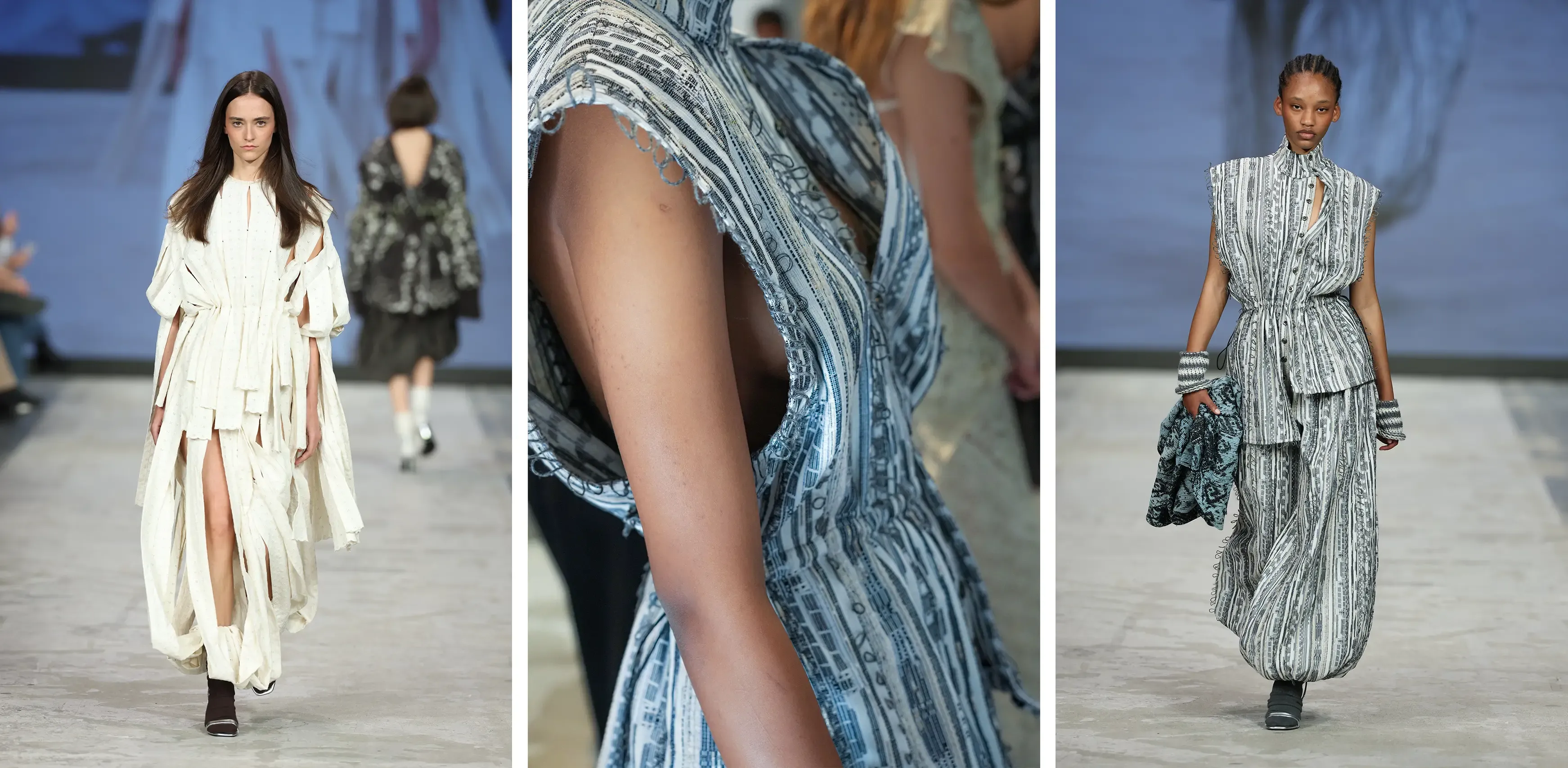
Rodnoe by Mariia Likhacheva
In Rodnoe, Mariia Likhacheva draws on the places, people, and buildings that shape a sense of belonging. Layers, vertical openings, and long strips of fabric cascading from the torso and sleeves make the cream-coloured look feel like a provisional home. Memory is built into the construction itself: surfaces appear worn, separated, and reassembled. This approach is more compelling than mere illustrative nostalgia, as it acknowledges that remembering inevitably involves distortion.
João Pedro Anzolin’s Acquainted
João Pedro Anzolin takes a different route in Acquainted, using optical instability to explore forgetting and acceptance. Pleats, embroidery, and sheer fabrics evoke light flickering on water. In the main look, an acid-toned print cuts across a dress cinched at the waist and amplified at the hips; a lilac tulle collar adds yet another layer of interference. Memory is not sepia-toned: it is an unsettled image that shifts the moment you try to focus. Print, volume, transparency, and layering compete, yet belong to the same visual logic, inviting the viewer to trace how each element transforms the others.
Can Fashion Challenge the Ideal Body?
RitmoMateria by Michele Matà
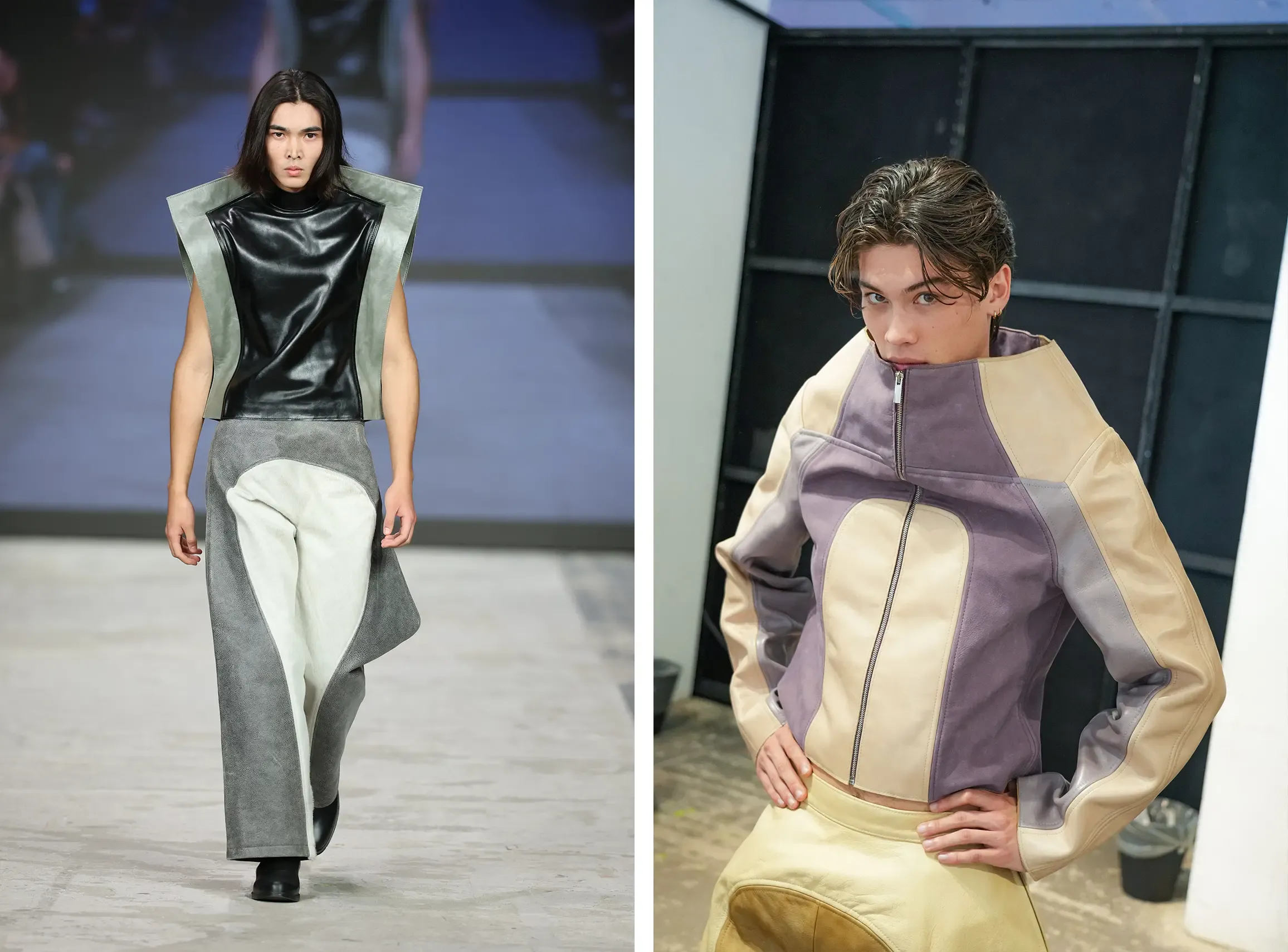
Among the show’s most fully composed proposals is RitmoMateria by Michele Matà. Here, art serves not as iconography but as a design process: forms and proportions are treated as compositional elements. Angular grey panels frame a rigid black bustier; a central white shape crosses the very wide trousers and alters how they read. The body becomes a support, a surface, and a drawing at once. Each line responds to another, the volumes harmonising together. It is one of the rare collections where the theoretical text can be stripped away without diminishing the garment’s impact: the construction itself reveals the method.
Niccolò Di Carlo’s Vil Pensiero e Corpi Altrui
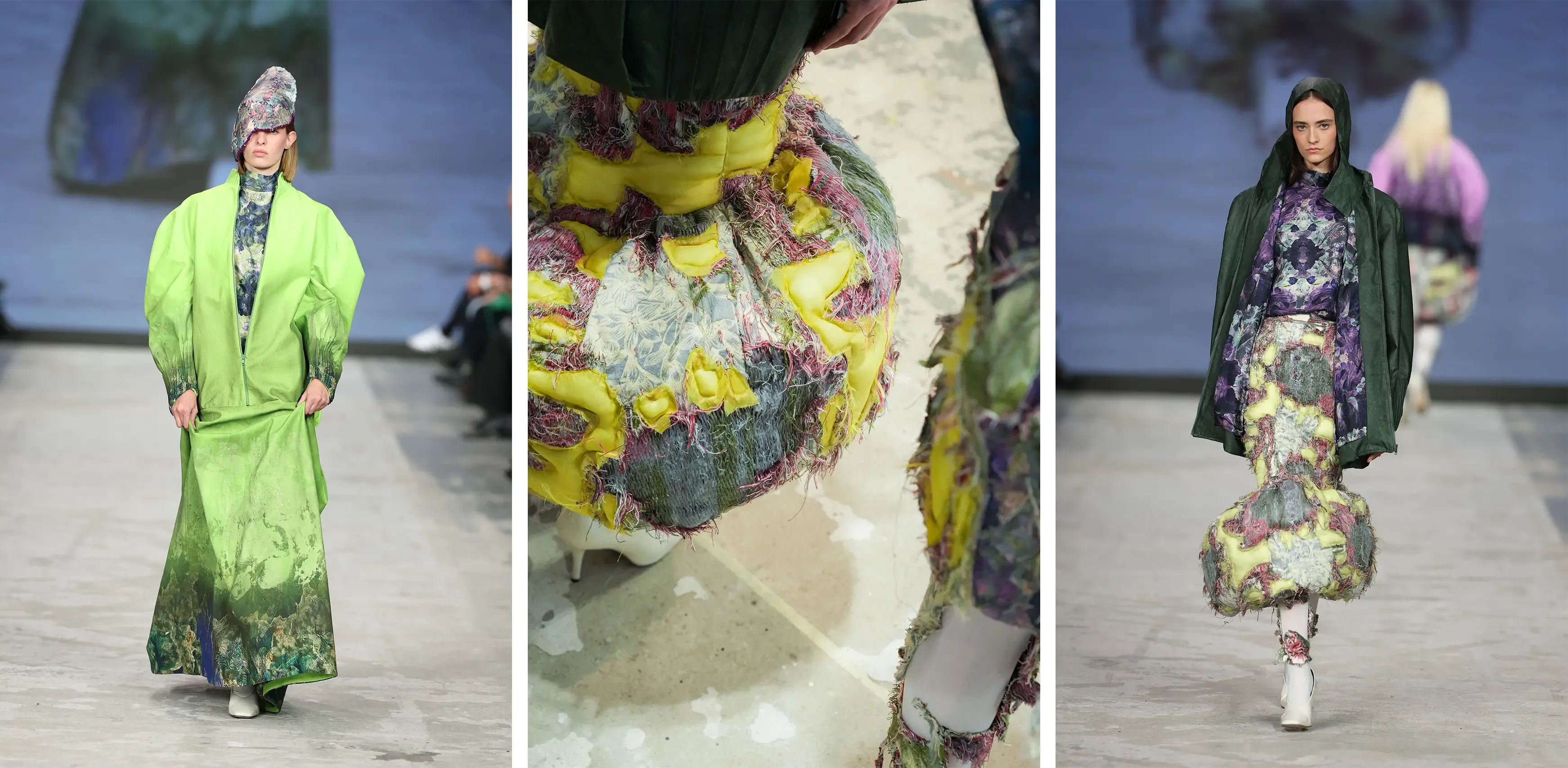
Niccolò Di Carlo takes up questions of the body as a site of transformation, representation, and power in Vil Pensiero e Corpi Altrui, bringing camp, politics and craftsmanship into the same collection. Padded forms enlarge the breasts and hips; curved appendages and textured surfaces turn the figure into an unstable kind of monument. The silhouettes challenge traditional ideas of flattery by making proportion part of the statement. It is one of the show’s most direct gestures, with its argument built into the garments’ structure. The eye keeps moving; the familiar outline of the human form refuses to settle into anything neutral.
What Makes a Graduate Collection Stand Out to Fashion Buyers and Creative Directors?
A strong collection communicates its research through cut, weight, fastenings, and proportion. It should not need over-explaining: titles, philosophical references, identities, and memories need not precede the clothes as credentials for their depth. That is precisely what these ten emerging designers from Istituto Marangoni Milano achieve.
Their personal histories and cultural influences are woven into the garments in distinct ways. Shoulders rise, hips expand, seams remain visible; memory breaks into fragments, and feathers let silence travel beyond the hem. No single generational aesthetic emerges. Instead, these graduate collections offer different ways of thinking about unsettled surfaces, changing identities, and the dressed figure in motion.
By the final look, SPEAK UP! has become an invitation to look more closely. The designers have started ten different conversations about the body. They have something to say, and the fashion industry should keep listening as their work evolves.
Agnese Pasquinelli
Alumna and editor, Milano




 EMERGING DESIGNER What makes Pineapples Don’t Have Sleeves the Colombian fashion brand to Know? Meet Johanna Nodier 30/09/2026