

The Raw Material of Belonging
From Folios Nº7, the second entry in Maze35’s new series featuring articles, writings and essays from Moleskine Foundation’s cultural publication
Folios is the cultural publication of Moleskine Foundation showcasing the theme of creativity for social change through the stories of the Creativity Pioneers around the world that are part of Creativity Pioneers Fund. Through its new editorial column featuring a selection of articles from the latest, seventh edition of the publication, Maze35 presents its second installment.

Ikran and Taneka, part of the Co-Lab cohort in the Young Creatives Programme. Photo by Oliver McKanzie for Folios, Moleskine Foundation Addressing Historical Inequities with Mindful Music in South London
On 21 June 1948, the famed Empire Windrush docked on the River Thames after its 22-day voyage from Jamaica. The 1027 people on board, who were from across the British colonies in the Caribbean, arrived to a Britain that had been devastated by World War Two, a war in which they had also fought on behalf of the “Mother Country”, and for which they had now been conscripted as cheap labour for its postwar rebuilding efforts.
The Windrush generation, as they would later be known, were settled in a number of locations, amongst which were air-raid shelters near Brixton, South of London, that over time became known as the spiritual home of Caribbean settlement in the United Kingdom.
The arrival of people from the Caribbean changed, among many facets of British life, its music scene. Over time jazz, blues, and calypso sounds blended with Latin American, African and Asian influences, enlivened the United Kingdom. These diverse influences made for a unique and delightful cultural heritage in the city of Brixton which has been dubbed a ‘cultural crossroad’. It is in Brixton where British garage, drill, and other subversive genres of music were birthed, and it is also where well-known greats such as David Bowie, Bob Marley, and local icons such as Linton Kwesi Johnson and Millie Small, have called home.
Brixton is also where Raw Material Music and Media (Raw Material) has been situated for over 20 years. Established in 1993, this community music and creative arts centre is dedicated to supporting the creative and personal development of its community, which represents the diversity of South London, including 41% Black African and Caribbean. As articulated by Rachel Nelken, its Chief Executive Officer, the centre exists to answer the questions:Who has a voice? Whose voices have been excluded? And how can Raw Material amplify those muted voices?
The centre exists to answer the questions: Who has a voice? Whose voices have been excluded? And how can Raw Material amplify those muted voices?
For Rachel the imperative of the work in a deeply unequal city like London is ultimately the justice of inclusion, particularly within a traditionally hierarchical sector like the arts. In South London there is also a shortage of well-resourced creative spaces and professional creative industry opportunities available to those with the least access and who are underrepresented in the workforce.
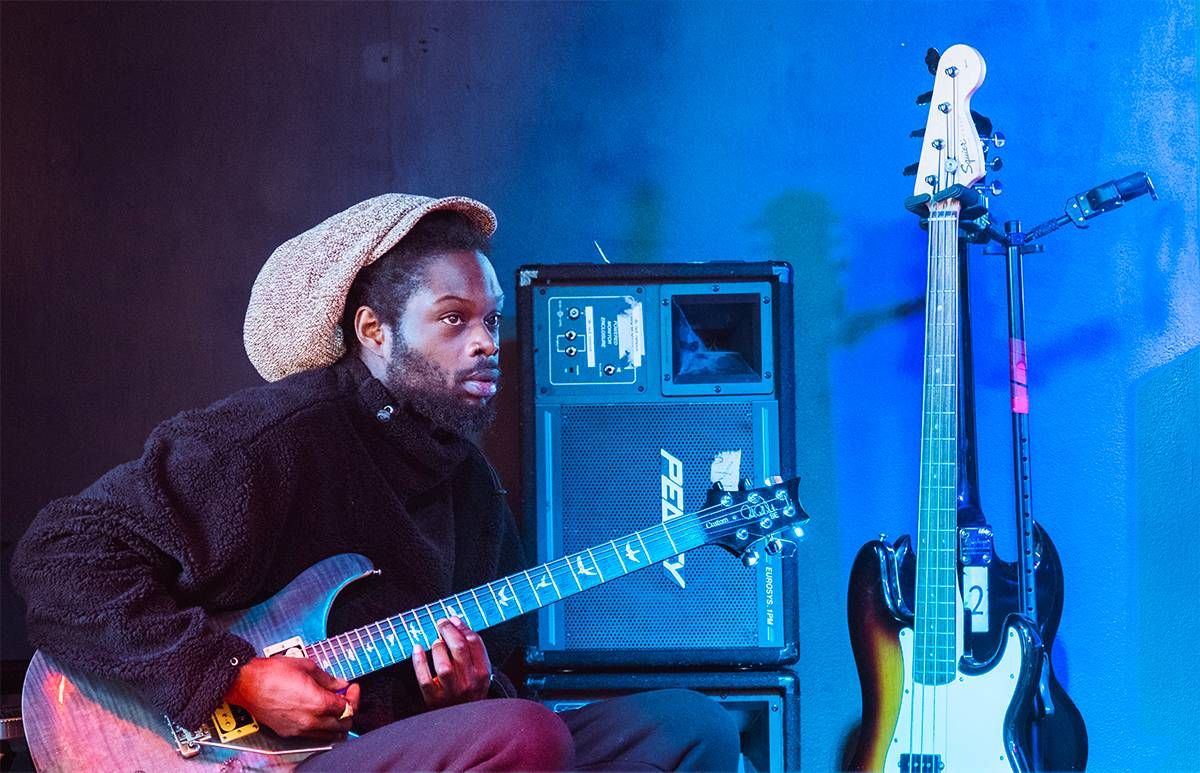
Musician Poku, accompanying others in one of Raw Material’s Monthly Jam sessions. Photo by Oliver McKanzie for Folios, Moleskine Foundation For Rachel, bucking these unsettling trends, redressing systemic inequality, and creating an enduring space of belonging, is the clear driving mission at the heart of Raw Material.
Rachel’s own desire for belonging goes beyond organisational strategy – it is deeply personal and embedded in her early life. Born into a Jewish family and brought up within a religious society which she strongly identified with, Rachel was cocooned in a close-knit community for most of her childhood. Until she was not.
After her parents separated, these communal bonds were broken when she and her family were suddenly ousted. The experience was a painful realisation of the fragility of her community and the limited, conditional nature of her belonging. Instead of distrusting the virtues of community and belonging, she nurtured a desire to build a more resilient kind.
Unbelonging in broader British society was symbolised by the infamous signs that greeted the Windrush passengers upon their arrival, “No Irish, No Blacks, No Dogs”, a manifestation of the reality of substandard housing, low wages, police abuse, and racial hostility, which characterised settlement locations like Brixton. It is therefore unsurprising when considering this history that disparities and inequalities persist till today.
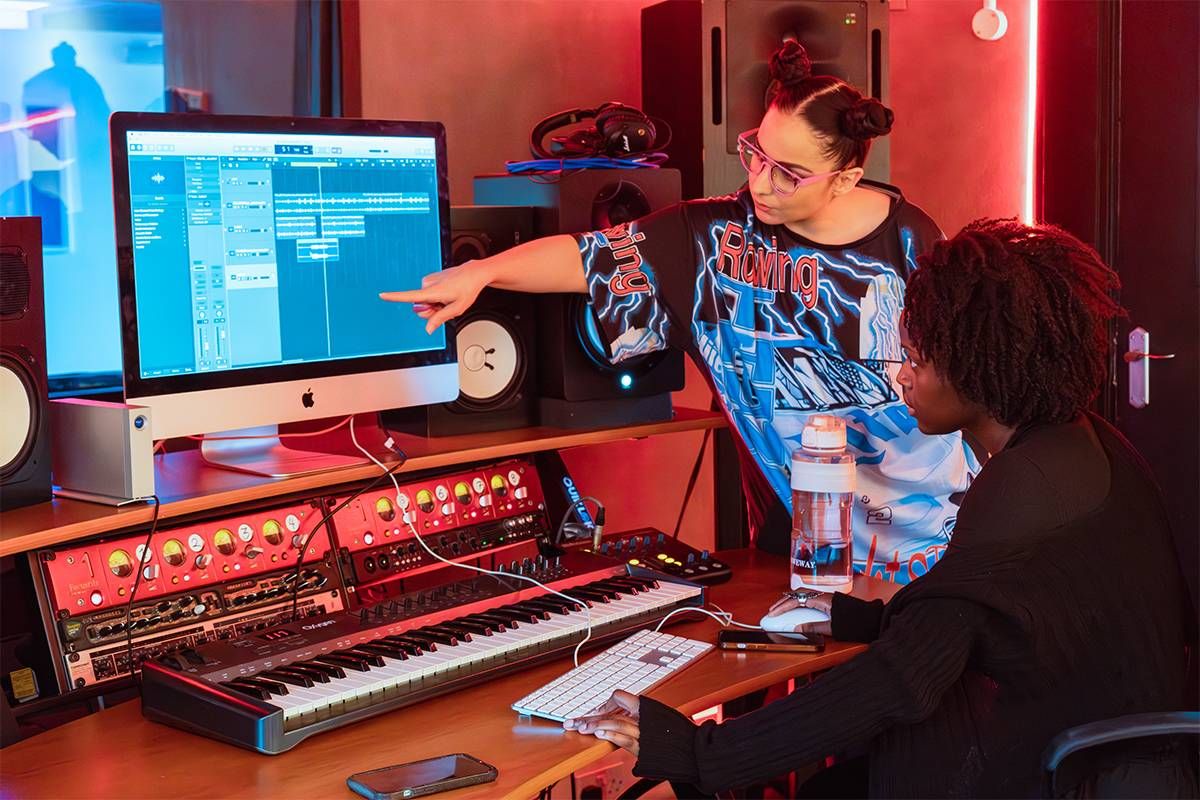
MC and Producer Laughta, working with a student in one of Raw Material’s two professional studios. Photo by Oliver McKanzie for Folios, Moleskine Foundation The imperative of the work in a deeply unequal city like London is ultimately the justice of inclusion.
Lambeth, which is the borough in South London where Brixton is located, was found to be one of the boroughs with the worst racial inequalities, which is evidenced by, amongst many factors, health outcomes. In 2023 it was found that black women face the worst health inequalities in the South of London. It was also reported that 47% of adult mental health hospital beds were taken by black people even though black people make up 19% of Lambeth’s working age population. In 2016, an NHS survey revealed that despite higher prevalence, black adults have the lowest mental health treatment rate of any ethnic group, at 6%.
What can a creative space like Raw Material do to alleviate these inequalities? Before it could do anything, Raw Material had to first transform itself into an organisation that could effectively, legitimately, and constructively tackle these urgent issues.
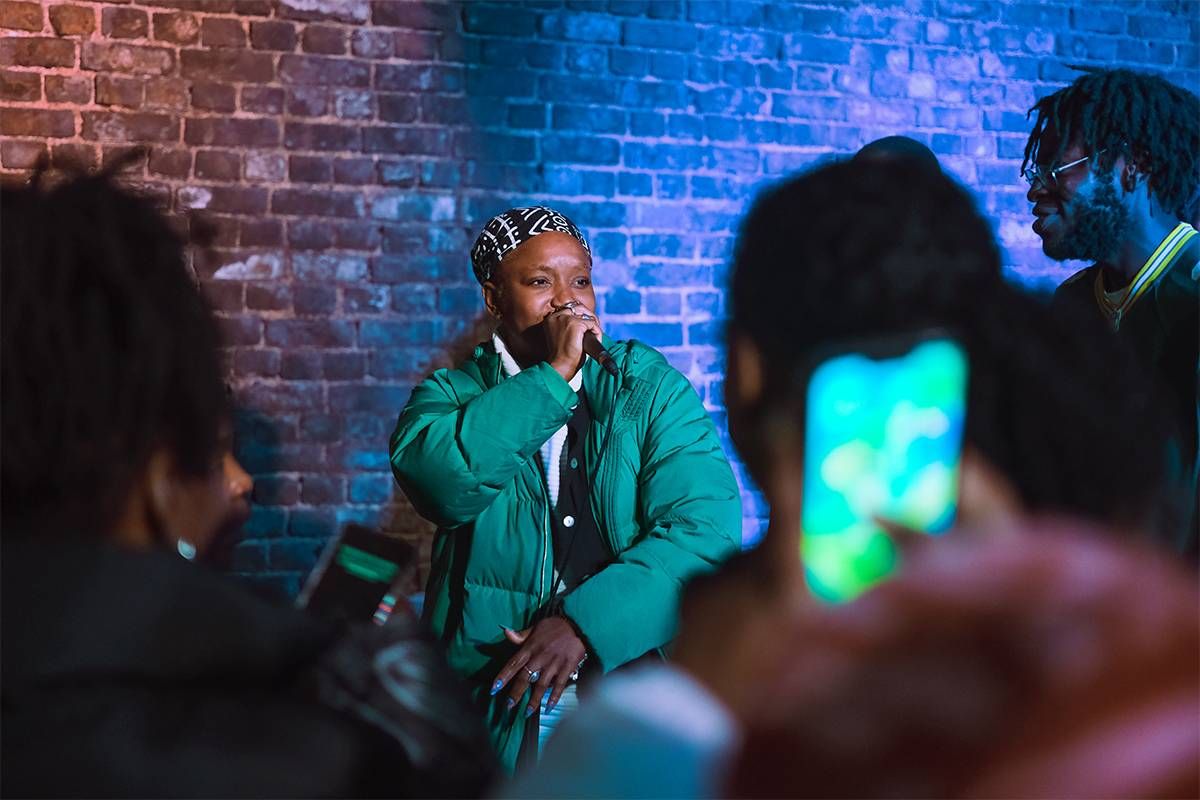
Artist Naala performing at Raw Rotations, the bi-monthly cypher and open mic event held in partnership with the Bureau of Silly Ideas. Photo by Oliver McKanzie for Folios, Moleskine Foundation In 2022 Rachel was appointed the CEO of Raw Material which, at the time, was hanging on by a thread due to the impact of the COVID-19 pandemic. Although Rachel’s predecessor, who had been in the role for 27 years, had founded and developed the organisation, it had struggled both with funding and vision in the difficult climate of the previous decade. Rachel inherited two young staff members who, although both had been given their first opportunities in the creative sector through Raw Material, disclosed a lack of progression, and an organisational culture which failed to include them in its decision-making. Another concern was the composition of the Board, which was unrepresentative of the local and global world with which Raw Material is concerned.
Addressing mental health issues is a natural extension for Raw Material considering the abundant research on music’s positive effects on mental health.
Turning the organisation around was a daunting task in practical terms but for Rachel it was also much more than that; it was also a calling to build belonging. In the realisation of these goals, she first changed the governance and management style to ensure that the staff had a voice in decision-making processes, and in reshaping Raw Material. Secondly, the board was reconfigured to be representative of not just the local community, but more broadly reflective of the lived experience, cultural and creative aspirations of the people the charity serves.
Thirdly, the team intensely fundraised for a capital refurbishment of the three-storey creative centre they feel incredibly lucky to own and occupy. The refurbishment was informed by a public engagement process through which the needs of their community was determined.
The refurbishments have recently been completed, and the result is a space that will be a source of greater self-esteem for its creatives. This is incredibly important for the team as quite often creatives are undermined and undervalued, so the new space is a declaration that it takes them seriously as professionals, and that their work is respected.
Finally, through programming, the Raw Material team has reached community members who are traditionally not catered to, such as those who may not be, for example, instrumentalists, but who nonetheless have a love of music. For that audience Raw Material now offers music production and beat-making.
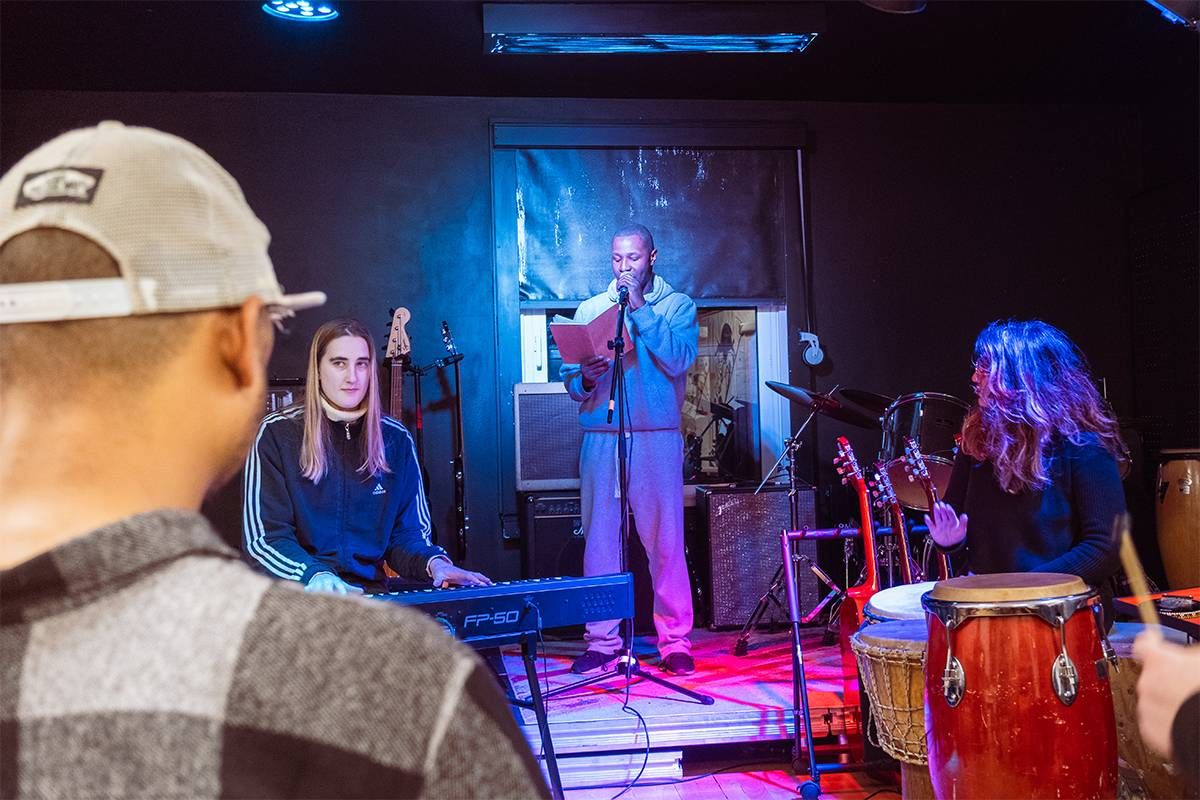
One of Raw Material’s regular members, Matthew, performing his self-penned lyrics accompanied by facilitator Jess. Photo by Oliver McKanzie for Folios, Moleskine Foundation In South London, there is a shortage of well-resourced creative spaces available to those with the least access.
They have also reached age groups which are often neglected by creative spaces. The ever-popular Mindful Music program, serves a group of about 15 adults between the ages of 40 and 60 for weekly spontaneous and cathartic jam sessions, which begin with a mental health check-in, an essential aspect considering that this is a community within the London borough with the highest mental illness rates.
Mindful Music has remained a safe space where everyone can play a range of instruments they are not familiar with, without having to worry about any judgement or criticism. It also has a very calming effect as well as having a lasting beneficial effect on my mood – Karl Paterson, former Raw Material community member
Addressing mental health issues is a natural extension for Raw Material considering the abundant research on music’s positive effects on mental health, substance use disorders, and its healing potential. On this front, Raw Material works very closely with South London and Maudsley (SLaM) NHS Trust. SLaM is one of the biggest mental health service providers in England and, in accordance with their partnership, refers to Raw Material hundreds of people every year who are experiencing a variety of mental health challenges, from the most common, like anxiety and depression, to loneliness, isolation and more serious conditions. In several cases these mental health conditions are long-term and are exacerbated by the kind of systemic challenges that this community faces.
Raw Material’s intervention in the mental health space has proven that transition from inpatient mental health services back into the community can also be best facilitated through creative spaces. It is at Raw Material where transitioning inpatients can restore a deeper sense of self, vitality and belonging beyond their clinical diagnosis or prognosis. 75% of their participants have reported reduced anxiety symptoms while 80% have significantly reduced feelings of isolation.
It is significant that Raw Material exists within the cultural crossroads that is Brixton, a historical setting where culture has long been in service to a struggle for equality, justice and belonging. The intolerance to diversity that greeted the Windrush generation, in many ways, endures today. Raw Material, and the creative tools it offers, magnify the message of diversity and inclusion by introducing different people, not only to each other but to new cultures through sound, thereby diffusing toxic political rhetoric and amplifying marginalised voices which enhances understanding.
The intolerance to diversity that greeted the Windrush generation, in many ways, endures today. Raw Material, and the creative tools it offers, magnify the message of diversity and inclusion by introducing different people, not only to each other but to new cultures through sound.
In light of all the societal upheavals and the current backlash to diversity, inclusion and belonging, how does an organisation like Raw Material remain faithful to its commitment to belonging? With much resolve Rachel concludes, “I think if you look too much at the bigger picture, it can make you feel pessimistic and hopeless. So, for me, the answer is to do as much as we can within that which is within our reach. There is a ripple effect that comes from helping an individual change their mindset and grow in self-esteem, which then spreads outwards to their immediate community and wider society.” And that is the raw material of belonging.
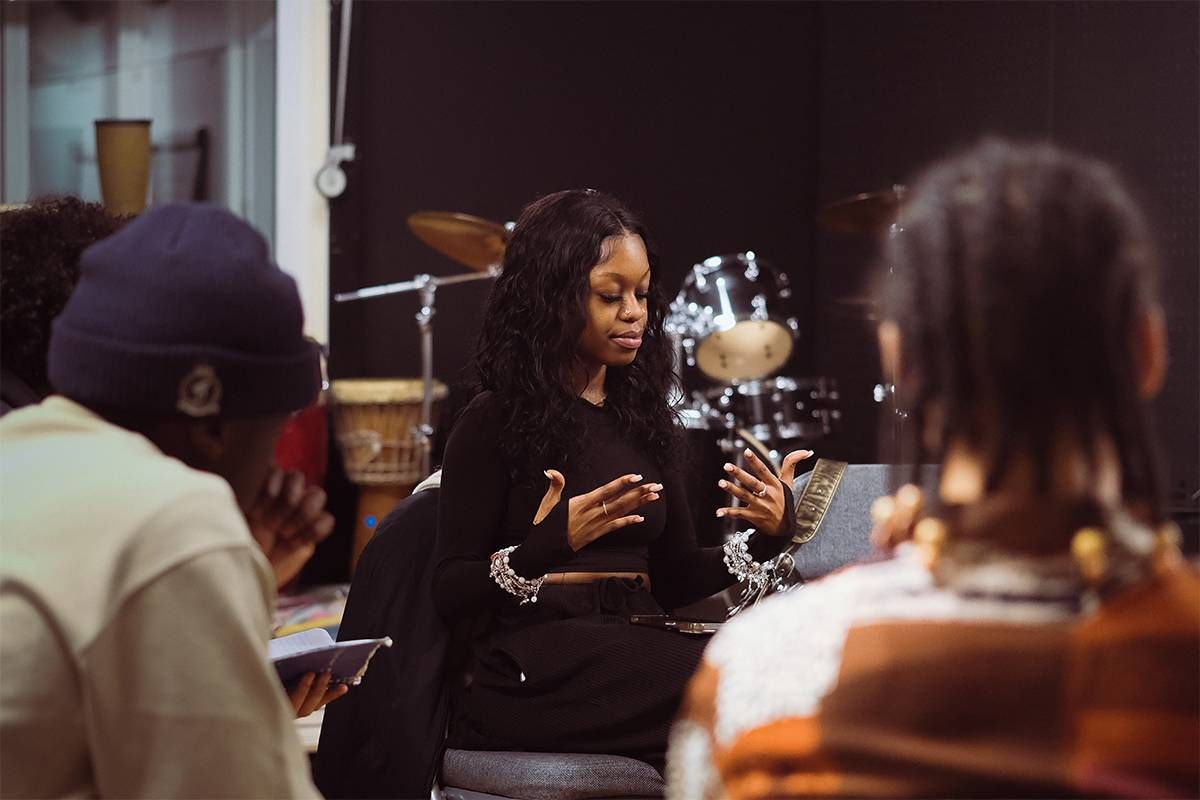
Jasmine, lead facilitator working for Poetic Unity, a Brixton-based partner organisation. Raw Material made an original album bringing together young poets and local orchestral musicians. Photo by Oliver McKanzie for Folios, Moleskine Foundation
Moleskine Foundation Editorial Team with Raw Material

.gif)
 COLLAB & PARTNERSHIPS What if the new gen of fashion designers leads the evolution of fragrances? 22/11/2023

.jpg)