
Naomi Osaka, tenniscore and fashion’s new court
From Naomi Osaka’s Roland-Garros spectacle to Challengers’ tenniscore, tennis became fashion’s newest obsession and a force in contemporary style
Not long ago, the idea that a tennis tournament could define fashion trends, inspire a Hollywood blockbuster and influence luxury marketing strategies would have seemed improbable. Today, it feels almost inevitable. From the rise of the tenniscore aesthetic to the global success of Challengers, tennis has become a defining force in contemporary style. High-end brands are investing heavily in athletes, designers are treating courts as runways, and players now occupy the same space as actors and musicians, recognised as trendsetters and brand ambassadors. Few figures embody this shift more clearly than Naomi Osaka. Her appearances at Roland-Garros 2026 generated headlines far beyond the sporting world, reigniting conversations about the evolving relationship between fashion, celebrity and athletic performance. In the article that follows, editor Silvia Tarini explores how Osaka’s much-discussed looks became the entry point to a transformation that is rethinking the role of tennis in the global imagination.
Naomi Osaka and the Making of a Fashion Phenomenon
“Shine bright like a diamond,” sings Rihanna, and that is exactly what unfolded at Roland-Garros 2026, the French Open universally recognised as the world’s premier clay-court tennis championship. Much of the attention surrounding this year’s tournament can be credited toNaomi Osaka.
Born in 1997, the Japanese tennis star is a four-time Grand Slam champion and has won seven WTA titles from twelve career finals. At just 19 years old, her string of impressive performances earned her the coveted Women’s Tennis Association (WTA) Newcomer of the Year award.
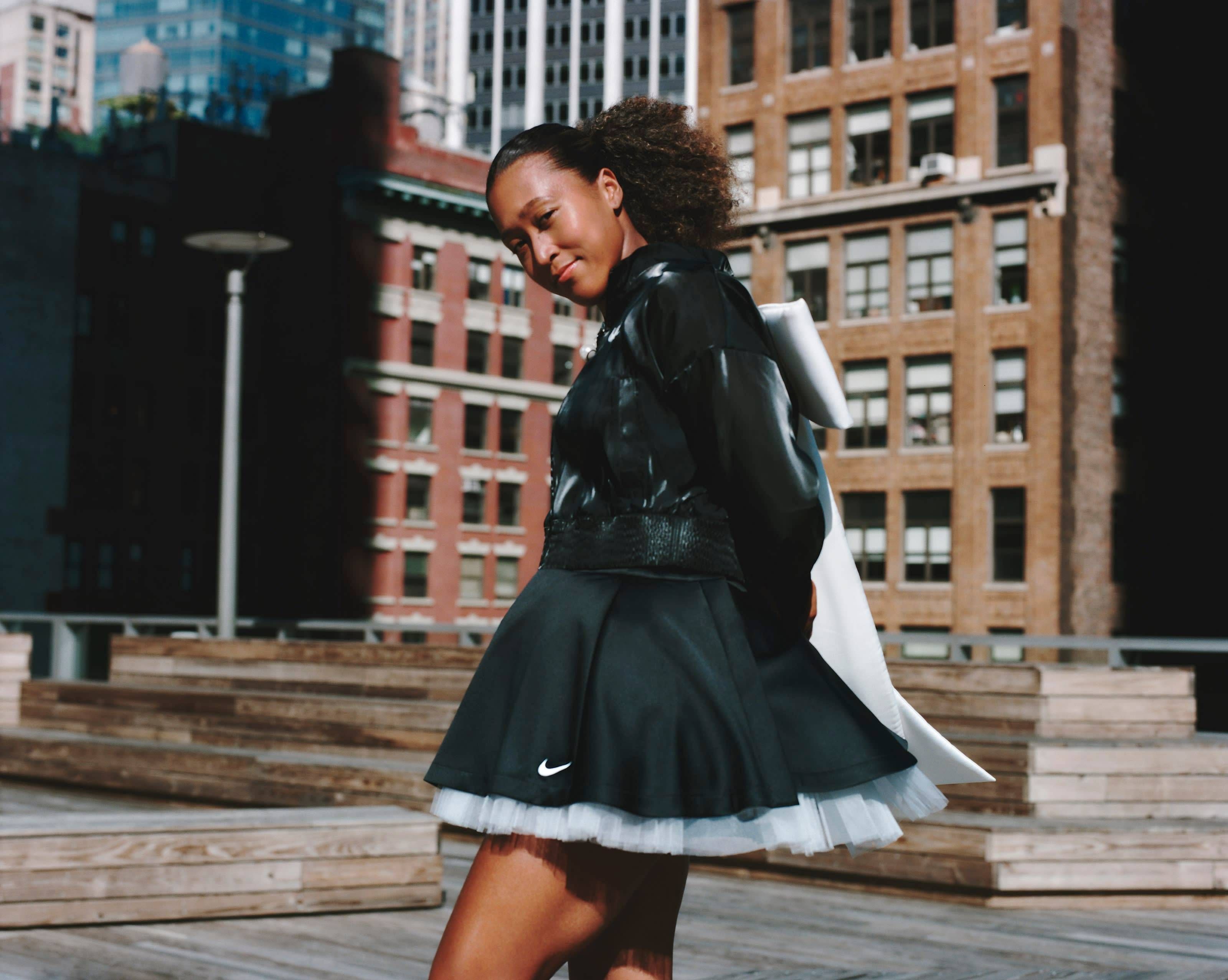
Naomi Osaka reframes the tennis silhouette as a fashion-language of its own, where performance wear, celebrity image-making and court-side spectacle begin to occupy the same visual field. Courtesy Nike Osaka arrived at the postponed Tokyo 2020 Olympic Games as the first Asian tennis player to reach the world No. 1 ranking and the first Japanese-born player to win a Grand Slam title. She also made history as the first tennis player to light the Olympic cauldron during the Opening Ceremony.
However, what is earning Naomi Osaka headlines goes beyond her achievements as an athlete: her sharp sense of style.
The former world No. 1 has turned her tournament arrivals into a fashion moment, stepping onto the court in bespoke, couture-inspired looks from designers who may be cult names among industry insiders but remain relatively unknown to the wider sports audience. Worn only for the brief walk from tunnel to baseline before she changes into her custom Nike kits, these meticulously crafted ensembles—often coordinated with her match-day wardrobe and increasingly embellished with a touch of sparkle—have become an extension of her personal brand.
Despite her Roland-Garros 2026 campaign ending in defeat to Aryna Sabalenka, one thing remains beyond doubt: Osaka is a global tastemaker whose impact is felt as strongly on the Met Gala red carpet and the covers of publications such as Hypebeast, Dazed and WSJ.
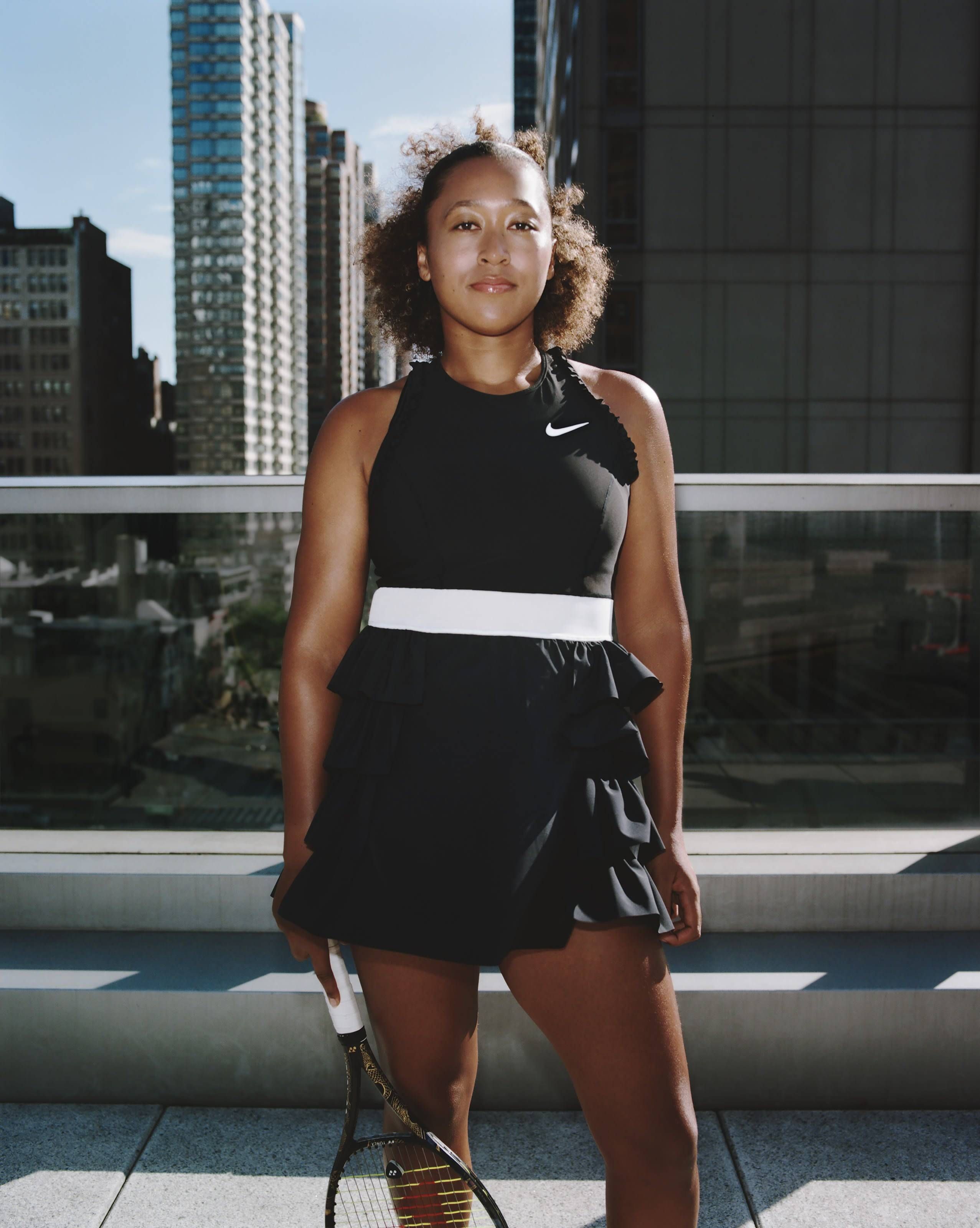
Naomi Osaka’s Nike look reflects how tennis fashion has moved beyond the match kit, turning performance wear into a recognisable part of contemporary celebrity style. Courtesy Nike
From Nike to Louis Vuitton: Naomi Osaka’s Fashion Influence
Is talent alone enough? Personality matters just as much. Naomi Osaka has both in abundance, which helps explain why some of the world’s most influential fashion brands are eager to work with her, alongside Nike, for whom she has served as a premier global brand ambassador since signing a landmark endorsement deal in April 2019. After leaving Adidas, she secured one of the most lucrative and game-changing contracts in women’s sport, complete with provisions allowing her to display personal sponsors on her on-court apparel.
This arrangement has opened the door to a number of creative opportunities for Osaka, starting with collaborations involving Nike itself. It is no coincidence that one of her most notable partnerships was with Nike and fashion designer Yoon Ahn, who created exclusive day and night competition looks—in green and black respectively—for her return to the US Open in 2024.
Even earlier, in 2021, Osaka began carving out her place in fashion through a collaboration with Levi’s on a collection crafted entirely from recycled denim. The four-piece capsule paid tribute to her Japanese heritage while underscoring her commitment to sustainability.
Her influence extends to the luxury sector, too. In 2021, Louis Vuitton appointed Osaka as a brand ambassador, featuring her in its Spring/Summer 2021 campaign and further cementing her status as a global fashion force.
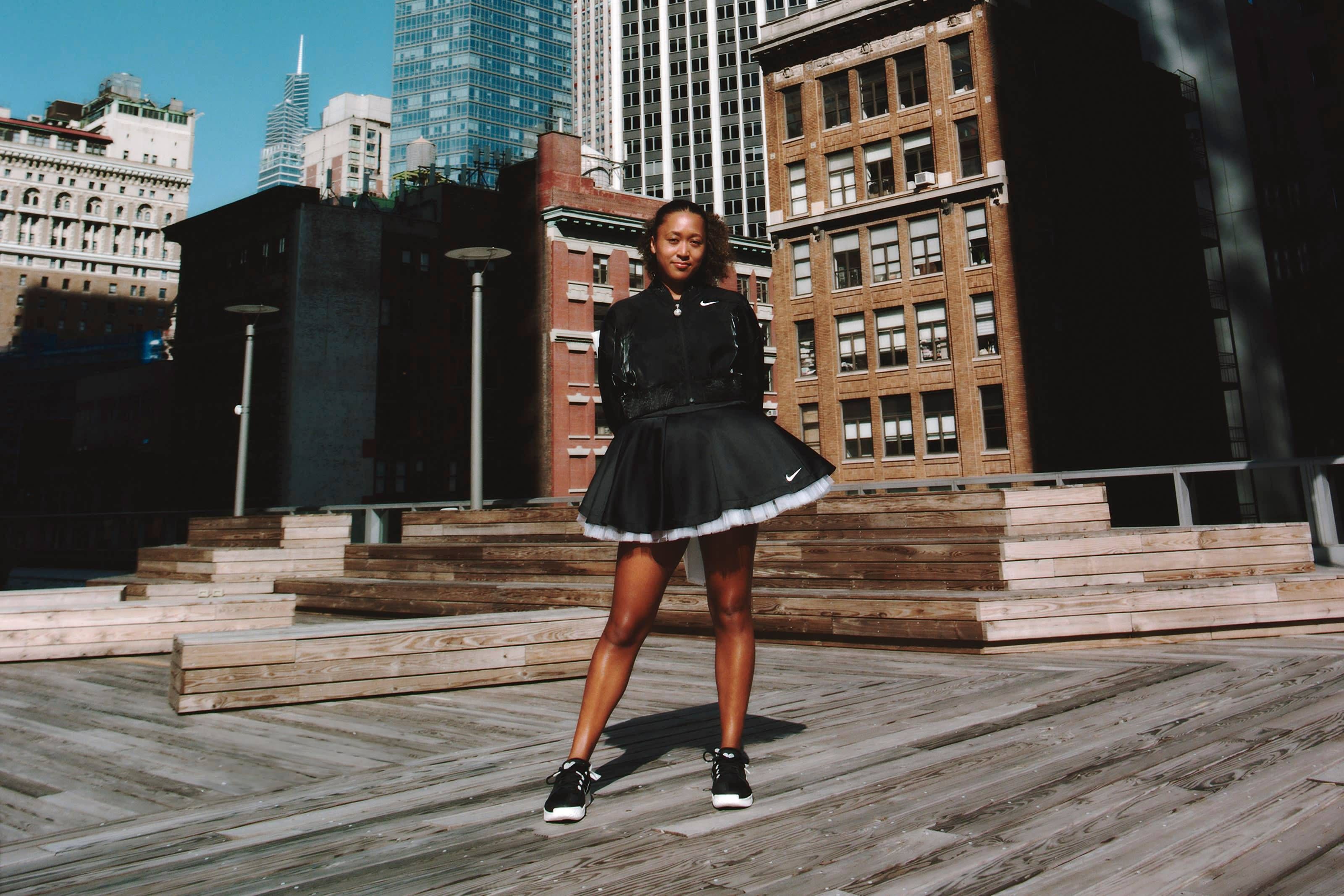
Naomi Osaka’s fashion image extends far beyond the court, positioning tennis style within a broader system of athlete branding, cultural visibility and contemporary celebrity dressing. Courtesy Nike
Court-Couture, Kevin Germanier and the Rise of Sustainable Tennis Fashion
Who says sport and haute couture cannot coexist? The tennis legend has turned this year’s French Open into her very own Naomi Osaka Fashion Week. Among her standout looks, she debuted a breathtaking outfit for her first-round match, created through a collaboration between Swiss designer Kévin Germanier and Nike. Together, they transformed her performance apparel into a couture masterpiece, reimagining the boundaries between athletic wear and high fashion.
The two-act creation, aptly named Court-Couture, was designed not only to support athletic performance but also to command the tournament’s visual narrative.
In keeping with Germanier’s sustainability-driven approach—he is renowned for transforming deadstock fabrics and upcycled materials into red-carpet-worthy creations—the shimmering golden outfit was crafted using elements from Osaka’s previous competition garments.
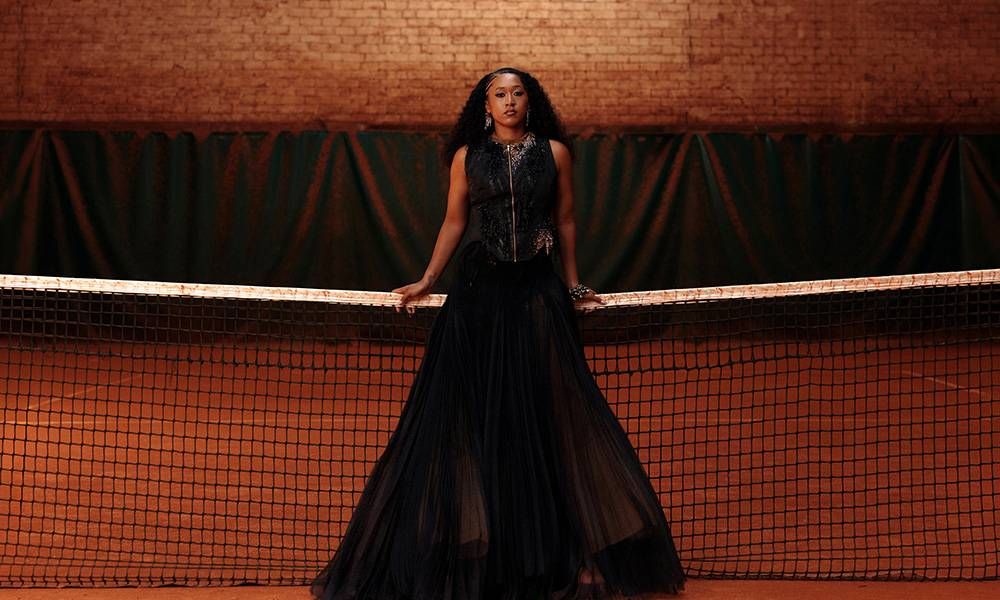
With Court-Couture, Naomi Osaka’s Roland-Garros entrance turns tennis into a fashion stage where upcycled materials, performance codes and couture drama meet under the same spotlight. Courtesy Kevin Germanier
When Fashion Meets Competition: Naomi Osaka’s Roland-Garros Spectacle
Her entrance captivated spectators immediately. Initially, Osaka appeared in a dramatic, floor-length all-black look. As she unbuttoned and removed the outer layer, she revealed her competition uniform beneath: a hypnotic asymmetrical mini dress in burnished gold bronze, entirely embellished with vertical lines of reflective sequins.
The custom Nike design featured a high neckline with the iconic Swoosh logo, paired with an ultra-light pleated layered skirt engineered to float with every serve and forehand. Once again, style was the undeniable winner.
The outfit change itself lasted nearly a minute—much to the delight of the photographers gathered courtside. Yet it also sparked controversy, particularly from her opponent, Germany’s Laura Siegemund, who later lost the match. The issue was not the outfit itself, but the extra time Osaka was allowed to change between sets. In Siegemund’s view, it felt like preferential treatment. “In our sport, every second counts right up until you reach for your water bottle,” she said. “Yet she was given around a minute and a half to change. That’s something I struggle with because the rules are the rules, and nowadays every second is monitored extremely closely.”
Osaka, meanwhile, had a different concern: whether the outfit would be considered too distracting. “When the sunlight hits it, it reflects a lot of light,” she explained. “I was actually worried the umpire might send me off the court.” As a precaution, she had brought two standard Nike outfits as backups.
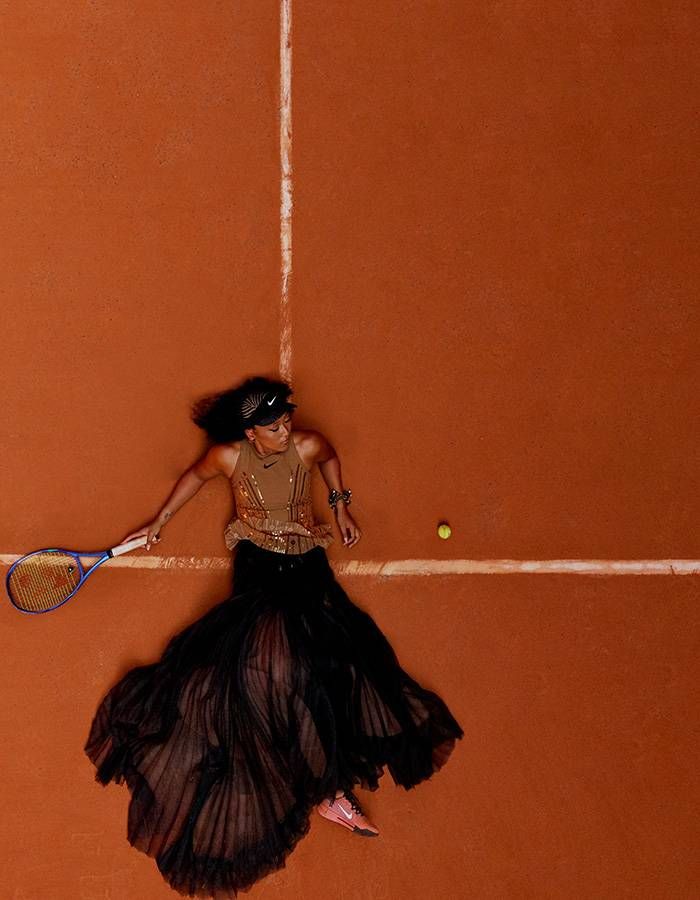
Naomi Osaka’s Court-Couture look turns the clay court into a staged fashion moment, where sequins, movement and match-day tension blur the line between performance and spectacle. Courtesy Kevin Germanier
From Tenniscore to Challengers: How Tennis Became Fashion’s New Obsession
Tennis has long produced athletes whose influence reaches far beyond the court. Few have embodied this crossover better than Roger Federer, whose effortless elegance and partnerships with luxury brands established him as a global style authority.
Serena Williams, meanwhile, transformed the conversation around fashion in sport with her bold on-court looks, collaborations with major fashion houses, and the launch of own clothing label.
Maria Sharapova leveraged her athletic success into a powerful lifestyle and luxury brand presence, becoming a fixture at fashion weeks and high-profile campaigns.
More recently, players such as Coco Gauff and Jannik Sinner have drawn the attention of luxury brands, Mercedes-Benz and Gucci respectively, eager to connect with a new generation of consumers. Their appeal reflects a defining rule of contemporary sports culture: today’s tennis champions are as much athletes as they are influential figures, capable of driving trends and consumer behaviour on a global scale.
In many ways, tennis, with its strict dress code and unmistakable aesthetic, has become one of fashion and cinema most compelling contemporary stages. The recent film Challengers, starring Zendaya, is a perfect example. Costumes designed by Jonathan Anderson (now leading Dior after a celebrated tenure as Creative Director of Loewe), helped spark a global tenniscore movement embraced by both Millennials and Gen Z.
Today, red carpets and clay courts share far more than their signature shades of red. Over time, tennis players have evolved into genuine style icons, making fashion a prominent topic of conversation at major tournaments.
This strong and symbiotic relationship begins on the court, extends to the surrounding clubs and clubhouses, and ultimately reaches the runway. Yet this year, we are witnessing a fascinating reversal: fashion has stepped boldly and spectacularly onto the tennis court itself.
What Naomi Osaka’s Roland-Garros Looks Reveal About the Future of Fashion in Sport
Naomi Osaka’s Roland-Garros 2026 appearance represents more than a memorable fashion moment; it highlights the growing significance of the relationship between fashion and tennis. What was once a sport defined by tradition and uniformity has become a powerful platform for creative expression, storytelling and innovation.
As luxury brands, designers and athletes continue to collaborate, tennis offers fashion an authentic stage where performance and aesthetics coexist. In return, fashion brings new audiences, fresh narratives and cultural relevance to the sport. The success of initiatives like Court-Couture demonstrates that the future of tennis extends beyond competition alone: it lies in cultivating a dynamic dialogue between sport and style, where each continues to elevate and inspire the other.
Silvia Tarini
Editor, Paris