

Elena Friolotto Wins the Swarovski Alumni Contest with a Dress Inspired by the Light of Dew
Elena Friolotto Wins the Swarovski Alumni Contest with a Dress Inspired by the Light of Dew
 SHARE
SHARE Elena Friolotto, founder of the corsetry brand Eibhlín Actias, is the winner of the Alumni Contest launched by Swarovski earlier this year to celebrate designers who have demonstrated their talent through a contemporary approach.
Elena, who studied at Istituto Marangoni Milano from 2018 to 2022, completed the Fashion Design & Accessories programme and graduated with highest honours. Her award-winning project, inspired by the glimmer of dew drops on a meadow at dawn, became a dress with vivid, iridescent luminosity, showcasing both the artisanal expertise she has acquired and her innovative spirit.
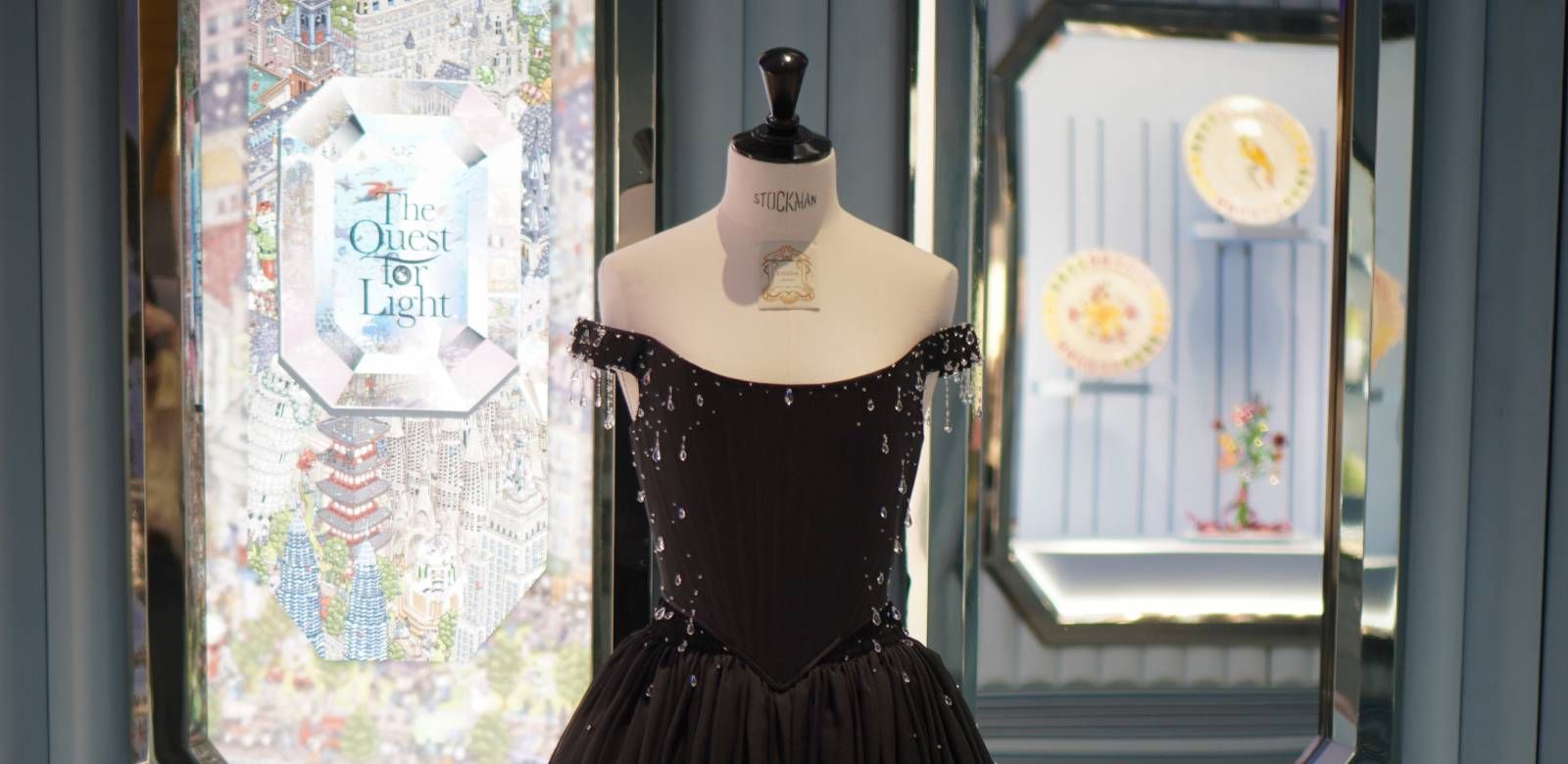
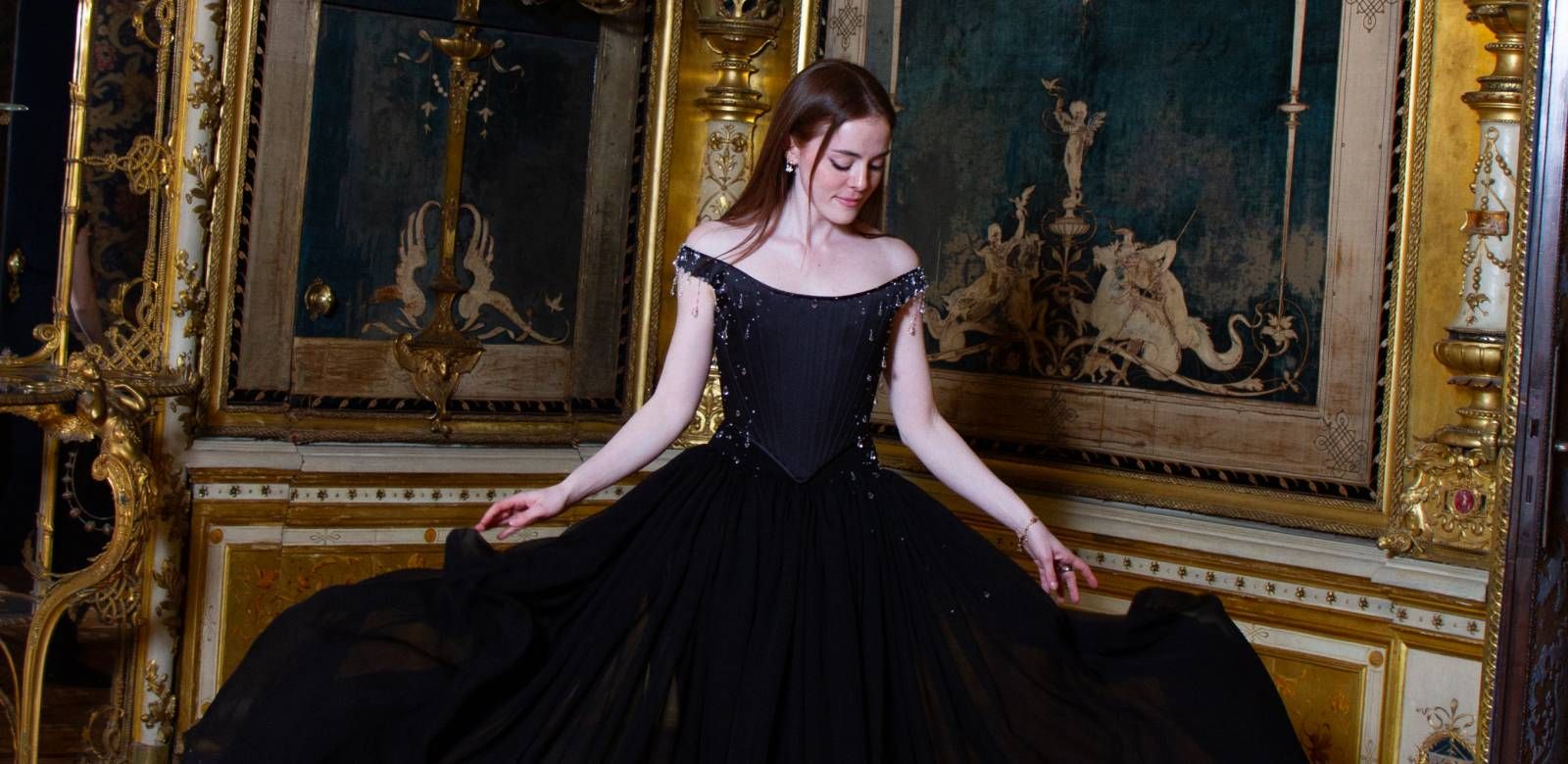
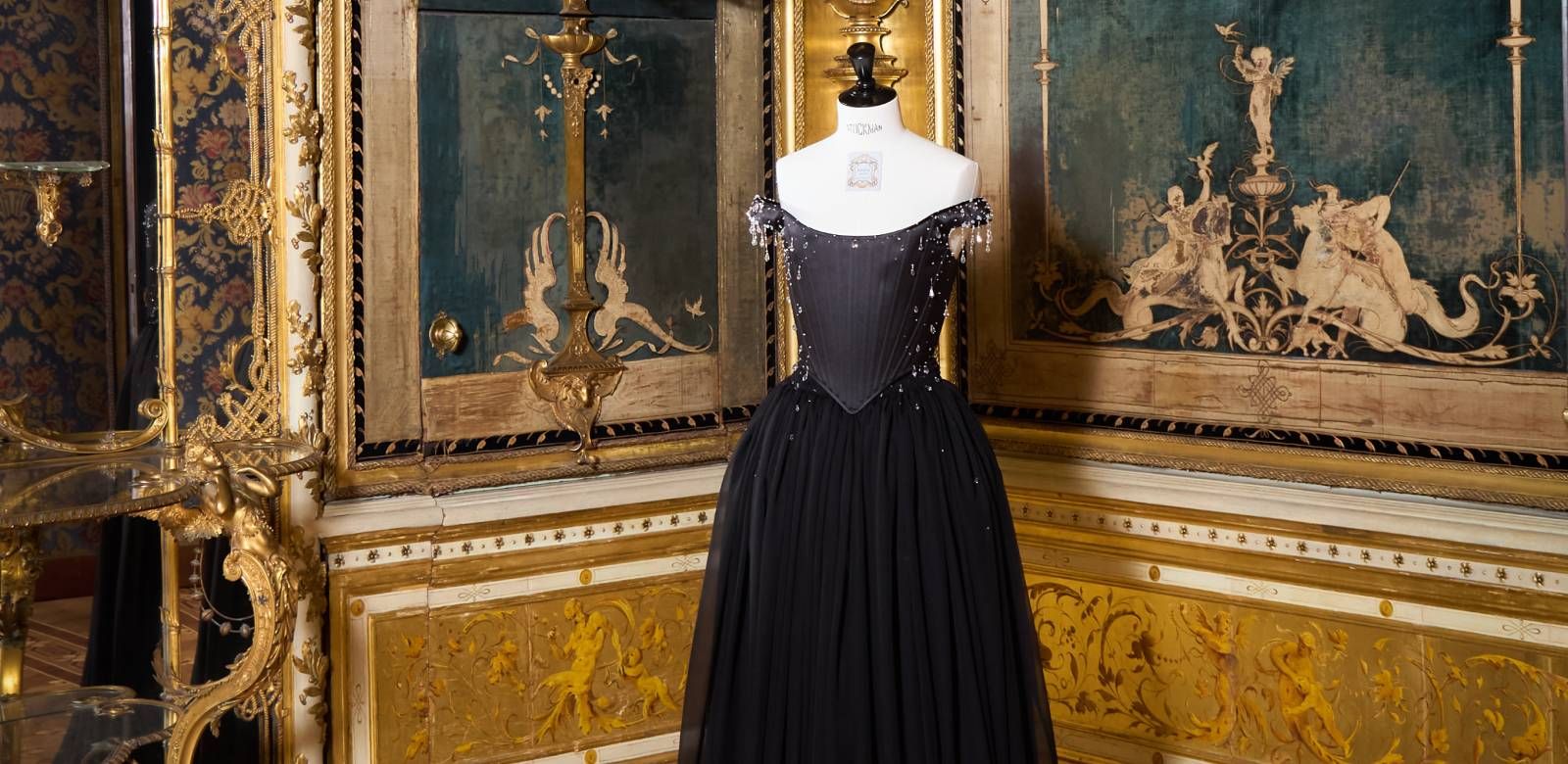
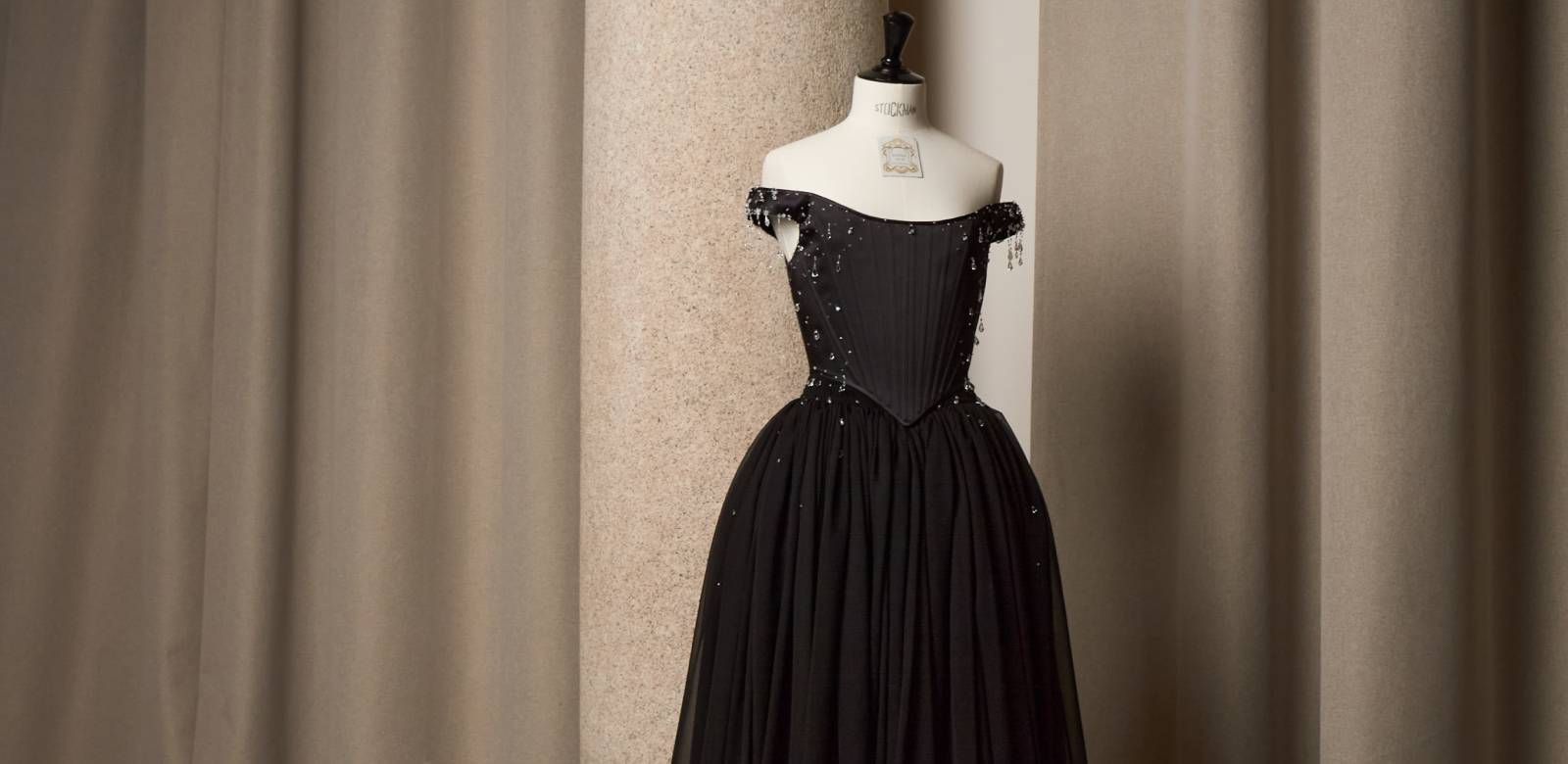
The outfit consists of a corset adorned with Swarovski crystals arranged in an elegant gradient that catches the light, paired with a silk voile skirt sparkling with a Milky Way of crystals.
«From research and design through pattern development, garment construction, and handwork, the process took several weeks,» she explains. «Decorating the skirt alone meant applying approximately six thousand crystals, each placed by hand, one at a time.»
The dress debuted at Swarovski’s flagship store in Piazza Duomo 31, providing a prestigious platform for this Istituto Marangoni Milano alumna. Here, she shares how the project came to life and how her education helped turn her ambitions into reality.
Elena, what does this award mean to you?
It is confirmation that people recognise the sensitivity, research, and attention to detail that I put into every creation. It also arrived at a crucial moment in my career, just a few months after opening my atelier. I hope this will help introduce my work to a wider audience and open doors to new collaborations. As an artisan and independent designer, much of my journey takes place away from the spotlight, amid trials, mistakes, and countless hours of work. This award encourages me to believe in my vision: a project built around craftsmanship, slowness, and quality can still find recognition and appreciation today.
The image of a dew-covered meadow is both powerful and poetic. How did the idea develop?
I pictured dew drops catching the first rays of sunlight, like tiny crystals scattered across the grass. I’ve always been drawn to the beauty of fleeting things. Dew lasts only a few hours and often goes unnoticed, but when you look closely, it reveals extraordinary beauty. It also represents the transition from night to day. I believe my work stems from observing details that are normally overlooked and transforming them into a fashion narrative. I was fascinated by the idea of turning something so delicate and temporary into an object that could be worn and preserved over time.
From a technical perspective, which stages of the project were the most challenging?
The greatest challenge was capturing the delicacy of dew into a structured garment such as a corset. The skirt is made from 12 metres of Taroni silk chiffon, hand-pleated at the waist and adorned with approximately 6,000 crystals, each individually applied along the hem. It was a long and meticulous process. The corset demanded extensive technical research as well. It is crafted from Taroni silk duchesse and decorated with Swarovski crystal drops arranged to mimic the natural effect of dew on fabric. My goal was to achieve something that appeared to form naturally, just as dew does in nature.
What does Swarovski mean to you?
I have worked with Swarovski crystals for many years, and I see them as more than just decorative elements. They can amplify an idea, bring a surface to life, and create an ongoing dialogue with those who observe the garment. That’s why working with such an iconic material was particularly inspiring. Here, light becomes emotion. I feel a strong connection between my approach and this maison’s values: attention to detail, craftsmanship, and the desire to create something truly evocative. I would love to explore new creative possibilities with them while staying true to the artisanal spirit at the heart of my work.
Visualizza questo post su Instagram
In every stage of the project, your commitment to craftsmanship is evident. What value does it hold in today’s world?
It means transforming time into value. We live in an age where everything must be fast, but a garment like this tells a different story. These are processes that cannot be rushed without losing something essential. Today, true luxury lies in knowing that behind an object there are skilled hands, experience, research, passion, and time. What I love about making everything by hand is the opportunity to develop a recognisable style while continuing to experiment. One day, I might be working on a couture gown inspired by dew; the next, on a denim corset featuring hand-crafted leather flowers and butterflies. This constant evolution is what makes the creative process so stimulating.
Corsetry is a highly complex field. What inspired you to pursue it?
It was exactly that technical complexity that fascinated me. Corsetry is a discipline that requires precision, knowledge of materials, and a deep understanding of the human body. What I love about corsets is that they combine engineering and creativity. Today, it’s no longer seen as a symbol of restriction but as a tool of personal expression, capable of enhancing the body and telling a story about identity.
How important was your experience at Istituto Marangoni Milano, both for this project and for the creation of your fashion house? What were the most valuable lessons?
My experience at Istituto Marangoni Milano was fundamental because it provided me not only with technical skills but, above all, with a working method. It taught me how to develop a project from research, build a coherent narrative, and turn ideas into tangible products. Even today, I apply these lessons to every collection and every creation.
Which fashion house or brand would you dream of collaborating with?
If I were to answer ambitiously, I would certainly say Dior and Alexander McQueen. Although they have distinct identities, both share qualities that resonate deeply with me: attention to garment construction, dedication to craftsmanship, and the ability to turn a dress into a narrative. At the same time, I am fascinated by collaborations with brands that are quite different from my own world, such as Loewe. I enjoy the idea of engaging with different materials, languages, and creative approaches.
About Eibhlín Actias
Eibhlín Actias (from Eibhlín, the Gaelic form of Elena, and Actias, the delicate Luna Moth, a symbol of transformation and light) is an atelier specialising in corsetry and bespoke garments. Founded in 2025 by Elena Friolotto, an Istituto Marangoni Milano alumna, in Alassio (Savona), the atelier places the corset at the heart of every creation.
«Not as a symbol of restriction, but as a narrative structure through which stories, emotions, and identities can be expressed.»
From this foundation come bridal gowns, eveningwear, and unique, bespoke pieces created entirely to measure. A particularly meaningful aspect of Elena’s work is its connection to memory and personal history. Clients entrust her with lace, embroidery, and fabrics that once belonged to loved ones, which she then transforms into new garments.
«It is one of the most emotional aspects of my work because it allows precious memories to be given new life.»
Elena collaborates with numerous artists and serves an international clientele. Each garment is made to order and tells a unique story, reflecting the individuality of its wearer.
 GET IN TOUCH VIA WHATSAPP