Discover the next Open Days Milano · Firenze · London · Paris · Dubai Register nowDiscover the next Open Days
loader
FIND YOUR COURSE

Milano The School of Design

The School of Design

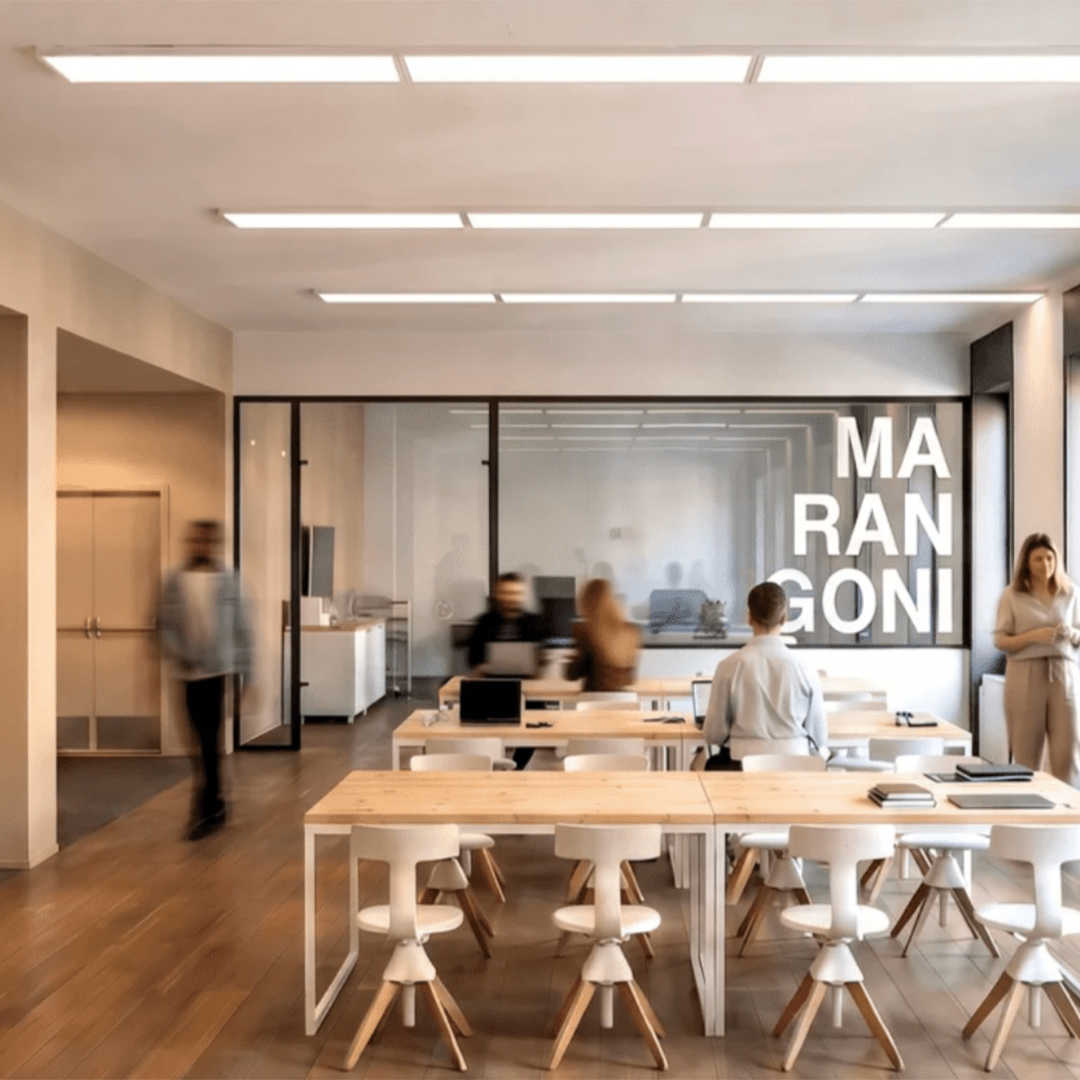
Milan is synonymous with design, and no wonder. It unites a rich history with a continued vital role in the global design landscape that is always respectful of the past but has an eye towards the future. This unique approach to research and experimentation is also reflected in the Milano Design School, where participants will be challenged with projects from artisanal furniture to high-end inspirational design for interiors, products, and visual graphics. All courses at Istituto Marangoni Milano Design School are underpinned by a contemporary aesthetic approach, and a heavy dose of fashion cross-pollination, thanks to the luxury and fashion found around every corner. This design culture is closely linked with the city’s design district and the community of creative designers who are drawn to study, work and live in this fertile environment, leading to an exclusive mix of cutting-edge design paired with new technologies, and an eye for commerce that successfully combines theory with practice.


EXPERIENCE MILANO THROUGH VIDEO

Discover Istituto Marangoni Milano Design through video: a hub where Italian tradition meets innovation in interior, product, and visual design. Experience how fashion influences, new technologies, and Milan’s design district shape tomorrow’s creative talent.

DISCOVER THE SCHOOL
fhd

ACADEMIC COURSES & GUIDANCE
FIELDS OF STUDY

Discover a world of creative possibilities at Istituto Marangoni Milano, where a fusion of creativity and expertise awaits in the fields of Interior design, Product Design and Visual Design.

ENTRY REQUIREMENTS, VALIDATIONS & SCHOLARSHIPS
Latest Updates
square
Becoming a Product Designer Today

In today’s design landscape, the role of the Product Designer goes far beyond the form of an object: it requires method, vision, and the ability to interpret complex needs and transform them into coherent, concrete, and feasible solutions. It is precisely within this balance between creativity and design thinking that the path of Alberto Lago takes shape—an alumnus of Istituto Marangoni Milano Design and now a Product Designer at Lissoni&Partners. Within the studio, he works on highly customized projects, also engaging with the yachting sector, where design becomes an integral part of architecture and the overall spatial experience. The sea, as we will see, often returns as a recurring thread throughout his projects.

Before embarking on a career in design, Alberto gained six years of professional experience in the metalworking industry, covering roles in both production and warehouse operations. A fundamental step that helped him build a clear awareness: the desire to change direction, without improvisation.

“I had very clear ideas about what I wanted to do and who I wanted to become. I was looking for a university that could provide me with creative and methodological skills to conceive a product from start to finish, to channel my creativity and turn it into tangible products—and Istituto Marangoni gave me exactly that.”

alberto lago3

Modular system designed by Imagine, a studio founded by Alberto Lago together with two fellow alumni from Istituto Marangoni Milano Design. Made of stainless steel, the system is based on modular elements that allow a high level of customization, adapting to different functions and contexts—from vases and storage objects to shelving systems or even a TV unit, thanks to its structural interlocking design.


An immersive path between the workshop and a contemporary vision

For Alberto, the experience at Istituto Marangoni Milano Design was not just about education, but a true daily training ground for becoming a designer. A journey lived with intensity and initiative, making the most of every opportunity as a concrete chance for growth.

“I made the most of every opportunity the university offered—I really squeezed it to the core. Whenever I didn’t have classes, I was always in the model-making lab with Lorenzo Bustillos, my Program Leader, asking for feedback on my academic and personal projects, or discussing the latest developments in the design world, from AI to the most interesting projects by leading designers working with prestigious companies.”

Cintura Alberto Lago

Whistle Lamp, a wearable lighting project designed by Alberto Lago. Conceived in Venice, the lamp can be worn on a belt or crossbody, leaving the hands free. Thanks to a flexible internal metal core embedded in the rope, the light can be directed as needed. Originally designed for working on boats, it is adaptable to a wide range of everyday contexts.


It is precisely this attitude—living design as a daily discipline—that Alberto identifies as one of the most valuable elements he took with him from his studies.

“Living your passion every day is definitely what I took with me from Istituto Marangoni Milano Design, and what still guides me today in my work at Lissoni&Partners. Living design in the heart of Milan and being able to contribute to its continuous evolution is a privilege for which I will always be grateful.”

A design approach that starts from space

Today, Alberto works on projects characterized by a high level of customization, where design goes beyond a single solution and instead builds a coherent, integrated system capable of enhancing the overall experience.

His method is guided by a clear and consistent principle:

“My design approach is always the same: designing open spaces.”

alberto lago9

Even when working on rooms or furniture, the focus remains on creating visual continuity, reducing the visual impact of elements, and conveying a sense of openness and breathing room.

“In custom design, I always try to integrate products into the architecture, preferably through material continuity. This approach reduces the visual impact of furniture, creating wider views and making spaces feel larger.”

For Alberto, this mindset represents a clear departure from a certain type of traditional design, often more centered on the object as the main protagonist.

“It is the opposite of traditional design, where the focus is on the product, often conceived as the central and distinctive element.”

From concept to detail: a process built on listening and structure

In contemporary design, the ability to manage diverse inputs and multiple visions is a crucial skill. Alberto describes it very directly: those commissioning a project often don’t have “too few ideas,” but rather too many—and that is exactly where method becomes essential.

“Believe me when I say that they often have too many ideas, not too few. Yet despite the multiple visions, the workflow always remains the same.”

The process begins with understanding how spaces will actually be used, gradually moving toward a complete definition: layout, moodboard, materials, colors, and final choices. A project built step by step, through meetings and progressive validations.

“In the first meetings, we focus on how the spaces will be used. Then we define the room layout. With clients, we develop an initial moodboard that becomes the foundation of the project, which we present step by step during subsequent meetings.”

Attention extends all the way to the smallest details, without ever losing coherence:

“We start from the overall architecture and go all the way down to defining the color of the cushion fabrics and the artworks on the walls. Every detail is conceived and designed by us, always in line with the client’s aesthetic preferences.”

alberto lago2

Seaside Collection, a furniture collection designed by Alberto Lago. Characterized by slightly elastic ropes, the pieces are conceived to move gently with a light breeze, evoking laundry hanging from windows and terraces in coastal towns. A project that brings a subtle sense of the sea into everyday spaces, translating maritime imagery into design.

Curiosity and identity: the skill that makes the difference

To those approaching the world of design today, Alberto offers clear advice—one that speaks more about mindset than technique: explore, experience, be curious.

Navigate. I don’t mean it in the literal sense, but as an invitation to explore the world that feels like yours—whether it’s music, art, product design, or naval design. You have to be curious.

For him, one of the strongest assets in decisive moments—such as job interviews and entering the professional world—has been personal experience, because it builds both identity and credibility.

The elements that had the greatest impact during my job interviews were precisely my personal experiences and my identity.

And from here comes the most important lesson: truly knowing the field you want to work in, deeply and beyond theory.

“A deep knowledge of the sector you work in is one of the fundamental foundations for becoming a good designer.”

Read More
square
European Product Design Awards 2025: Camille Ferreira Wins with “Pebble”

Camille Ferreira has been named a Winner at the European Product Design Awards 2025, in the Home Furniture Accessories category, thanks to her project Pebble: Once again, Istituto Marangoni Milano Design celebrates an important international achievement.

Marangoni Lenovo design week 19

This award confirms the creative excellence of our students and highlights, through an elegant and functional object, a key theme in contemporary design: how human intuition can guide technology — rather than be replaced by it.

From AI to Design Craft: the Creative Process Behind Pebble

Starting from the first question we asked her — what was the creative process behind Pebble, and how did you balance AI-generated ideas with your own personal design touch? — Camille describes a very clear approach: for her, AI is not a creative shortcut, but a raw material to be interpreted.

“As a designer, the use of AI has become a fundamental tool for me. Not to replace creativity or innovation, but I see it as an abstract or ethereal material, filled with information that the designer needs to chip away at and get to the core concept and design.”

This is where her authorial vision comes into play — shaped by selection, care, and intention. Camille also references an iconic quote by Michelangelo:

“I saw the angel in the marble and carved until I set him free.” For me, the creative process has become much more expansive with the introduction of AI, and the skill of a designer now is to know how to hone in on what really matters amongst the influx of possibilities.

The result is an object that turns technology into form, and an idea into a refined, tangible, and domestic experience.


An Accessory that Elevates Everyday Devices

Pebble brings order and beauty into contemporary spaces: an accessory designed to give our most essential everyday devices — laptops — the elevated space they truly deserve, instead of being hidden away among clutter and surfaces.

Its shape evokes a smoothed pebble: soft, sculptural, and essential. A metaphor that mirrors the project’s own design journey — starting from raw concepts and arriving at an elegant, human-centred synthesis.

In the presentation, the project is described as a transition “From AI to Handcrafted”, featuring materials such as solid walnut wood and stainless steel, expressing a perfect harmony between traditional craftsmanship and the digital future.

What Winning the EPDA Means: Pride and New Opportunities

The second question — what does this award mean to you personally and professionally, and how do you think it will influence your future? — opens a more emotional perspective, which Camille shares with sincerity:

“Winning the EPDA for Pebble is a dream realised. I'm proud I achieved this success at this point of my career.”

She also highlights how crucial the support of her educational journey has been:

“But with the guidance, wisdom and much needed pressure from my professors, this pushed me to submit to this prestigious competition.”

Beyond recognition, the award brings a key element for professional growth: the opportunity to connect with an international network of designers and industry leaders.

“The ability to network and meet with leading student and professional designers from winning this award excites me greatly!”

A New Milestone for Istituto Marangoni Milano Design

The success of Pebble further confirms the role of Istituto Marangoni Milano Design as a place where creativity, design culture, and technological innovation naturally coexist. A path that shapes designers who are able to interpret the present with awareness and create objects that combine functionality, aesthetics, and vision.

A result that celebrates Camille Ferreira’s talent and, at the same time, the energy and outstanding quality of the Marangoni community on the international stage.

Read More
MILANO DESIGN WEEK
Ready to fully immerse yourself in the world of design?
Step into a unique creative journey and discover the exhibitions developed by our best talents, in collaboration with leading industry players.
VIRTUAL TOUR

Join us on an immersive journey through the corridors of creativity and innovation at Istituto Marangoni's School of Design.

CONTACTS

Enrolment information for new students

design@istitutomarangoni.com
+39 02 3858 5247


Student Service Office

academicservices.design@istitutomarangoni.com
+39 02 7631 6680

Istituto Marangoni Milano

Via Cerva, 24, 20122 Milano MI

Visualizza la mappa più grande