

How did Salvador Dalí Use Fashion to turn his public image into art?
At Palazzo Reale, Dalí and Fashion shows how Schiaparelli’s Lobster Dress and Dalí’s public image carried surrealism into everyday life
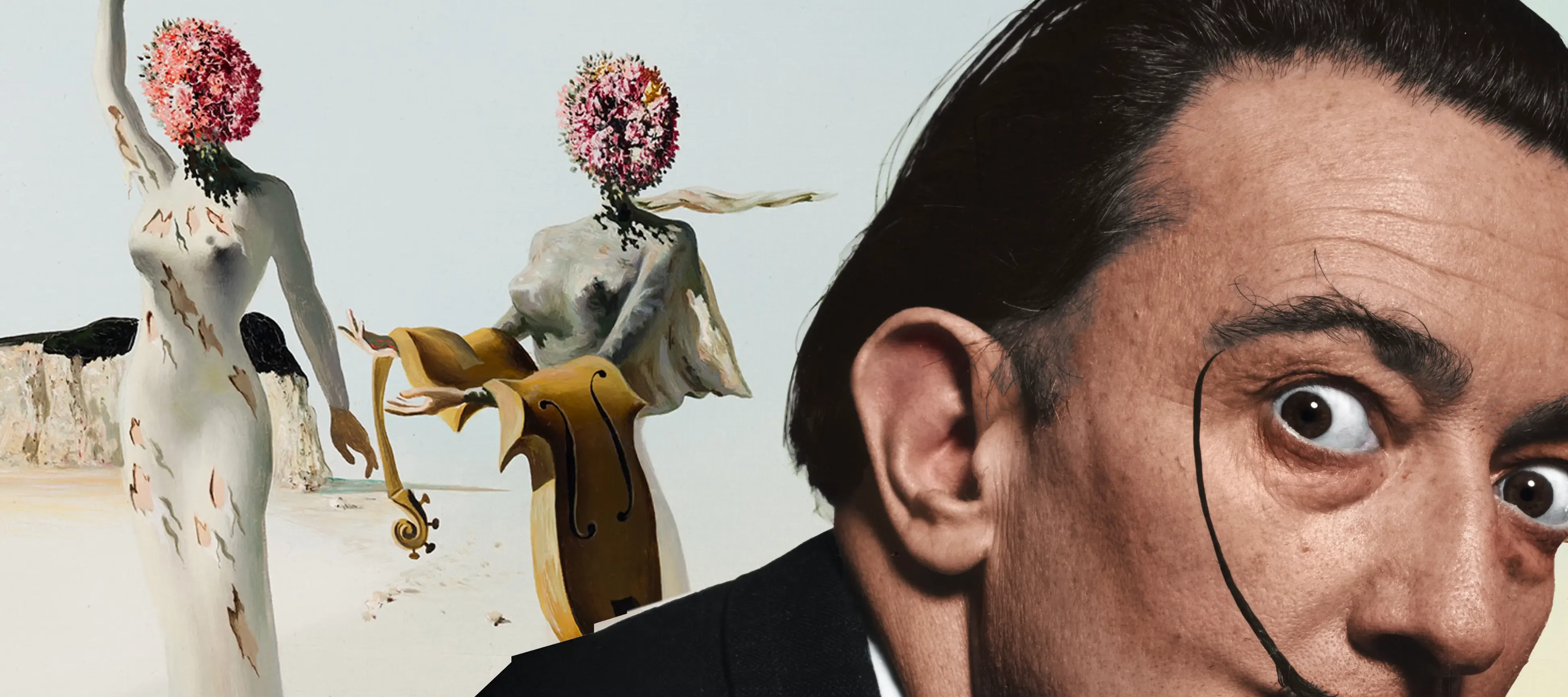
Dalí turned his moustache into a logo and put a lobster on a dress. At Palazzo Reale in Milan, Dalí and Fashion traces how he used fashion to take surrealism off the canvas and into everyday life. His collaborations with Elsa Schiaparelli gave that ambition a form to wear; photographs of his personal style and carefully staged persona reveal how he fashioned his public image into an artwork as iconic as his paintings.
On view through 31 January 2027, the show brings together more than 200 works and documents—including paintings, drawings, photographs, garments, films, jewellery, and design objects—to explore how Dalí’s relationship with fashion connects the 20th-century avant-garde movement with self-invention and contemporary imagination. Together, they reveal a lesser-known side of the Catalan artist and chart the enduring dialogue between art and fashion.
Visualizza questo post su Instagram
What Did Fashion Mean to Dalí? Identity, Desire and the Body
Fashion has always been about more than getting dressed. It transforms the body, creates identity, seduces, provokes, and occasionally rewrites reality altogether. Salvador Dalí understood this instinctively. In his universe, shoes, dresses, jackets, gloves, and jewellery were never mere accessories: they became symbols charged with desire, irony, and psychological tension.
A shoe could become suggestive, a hat architectural, and a piece of jewellery a miniature sculpture. What you wore could shape who you became. This idea remains central to contemporary fashion: designers today routinely treat the body as a canvas and clothing as a tool for transformation. From Prada’s intellectual approach to collections to the theatrical worlds created by fashion houses such as Schiaparelli, the idea that a garment can be an object of thought—not just an object of use—remains deeply Dalí-esque.
Visualizza questo post su Instagram
Why Is Schiaparelli’s Lobster Dress Still a Surrealist Icon?
Any story about Dalí and fashion inevitably leads to the lobster. In 1937, his collaboration with Elsa Schiaparelli resulted in the legendary white silk “Lobster Dress,” featuring a giant red lobster printed across the skirt. The dress was humorous, provocative, elegant, and completely unexpected—precisely because it defied conventional fashion norms.
The dress showed that fashion could function as visual art: an object that could convey an idea, a joke, a fantasy, and even an element of shock. Schiaparelli and Dalí recognised that luxury could also mean absurdity, fantasy, and surprise. That principle still defines some of fashion’s most exciting moments, from Miuccia Prada’s deliberately subversive takes on everyday clothing to the surreal, body-conscious creations of contemporary designers who blur the line between garment and sculpture.
Visualizza questo post su Instagram
Dalí’s Moustache and the Art of Personal Branding
Another reason Dalí still feels modern is his understanding of the image’s power. His famous moustache was not simply a moustache: it became a logo, a signature, and a striking example of personal branding.
Dalí transformed himself into an instantly recognisable character, understanding that the artist could also become the artwork. Fashion eventually adopted the same logic: designers became celebrities, models became icons, campaigns turned into cultural events, and fashion houses developed their own mythologies.
Prada, for example, has built much of its cultural influence by linking fashion to art, cinema, architecture, and intellectual life rather than simply selling clothes. Dalí would have understood this strategy perfectly: create an image so compelling that people are drawn into the world it represents.
How Did Dalí Blur the Line Between Fashion and Art?
Dalí allowed fashion to embrace strangeness. He demonstrated that a garment could be humorous, unsettling, erotic, intellectual, or absurd—sometimes all at once. By bridging fashion and the visual arts, he showed that clothing could participate in a broader cultural conversation.
His collaborations with designers, photographers, and fashion houses anticipated a world where partnerships could turn the runway into theatre, the campaign into a short film, and the accessory into a collectable object. Think of Schiaparelli’s surreal accessories today, Prada’s conceptual cool, or the deliberately distorted silhouettes of recent seasons: the idea that clothing can alter reality rather than merely reflect it is still very much alive.
Visualizza questo post su Instagram
What Could Fashion Give Dalí That Painting Could Not?
But the influence went both ways. Fashion gave Dalí’s imagination something painting could not: a living body. It enabled surrealism to leave the canvas and enter everyday life. Dreams could walk down the street, the absurd could be worn, and symbols could touch the skin.
A painting remains static, but a garment moves through the world. It enters a party, appears in a photograph, or moves through a city, worn by someone who turns it into a social experience. For Dalí, this was part of surrealism’s larger ambition: to dissolve the boundaries between art and life.
Dalí, Fashion and the Human Figure: Clothes as Temporary Surrealism
The exhibition’s journey from painting to sculpture, design, mannequin, and body reveals one of fashion’s oldest obsessions: transforming the human figure.
Dalí was fascinated by the uncertain territory between the human and the artificial, the organic and the manufactured. Fashion does the same thing. A corset compresses the body, a heel alters posture, a shoulder pad expands proportions, a dress redraws the figure. In this sense, fashion is a form of temporary surrealism. Dalí simply made the mechanism visible.
What Did Dalí Know About Image-Making Before Instagram?
Looking at Dalí today also prompts reflection about the contemporary image economy. He understood the power of attention long before Instagram and TikTok.
Salvador Dalí knew that people remember images before explanations, that eccentricity can become identity, and that desire rarely begins with practicality: it begins with fantasy. Fashion sells possibility: the promise that we can become more glamorous, mysterious, rebellious, or desirable.

.gif)
.jpg)
.jpg)
.jpg)

.jpg)