
How emerging designers can truly make their graduate collection stand out
Ten Istituto Marangoni London graduates draw on NASA archives, a grandmother’s crochet and reclaimed sofa leather at the 2026 Magma show
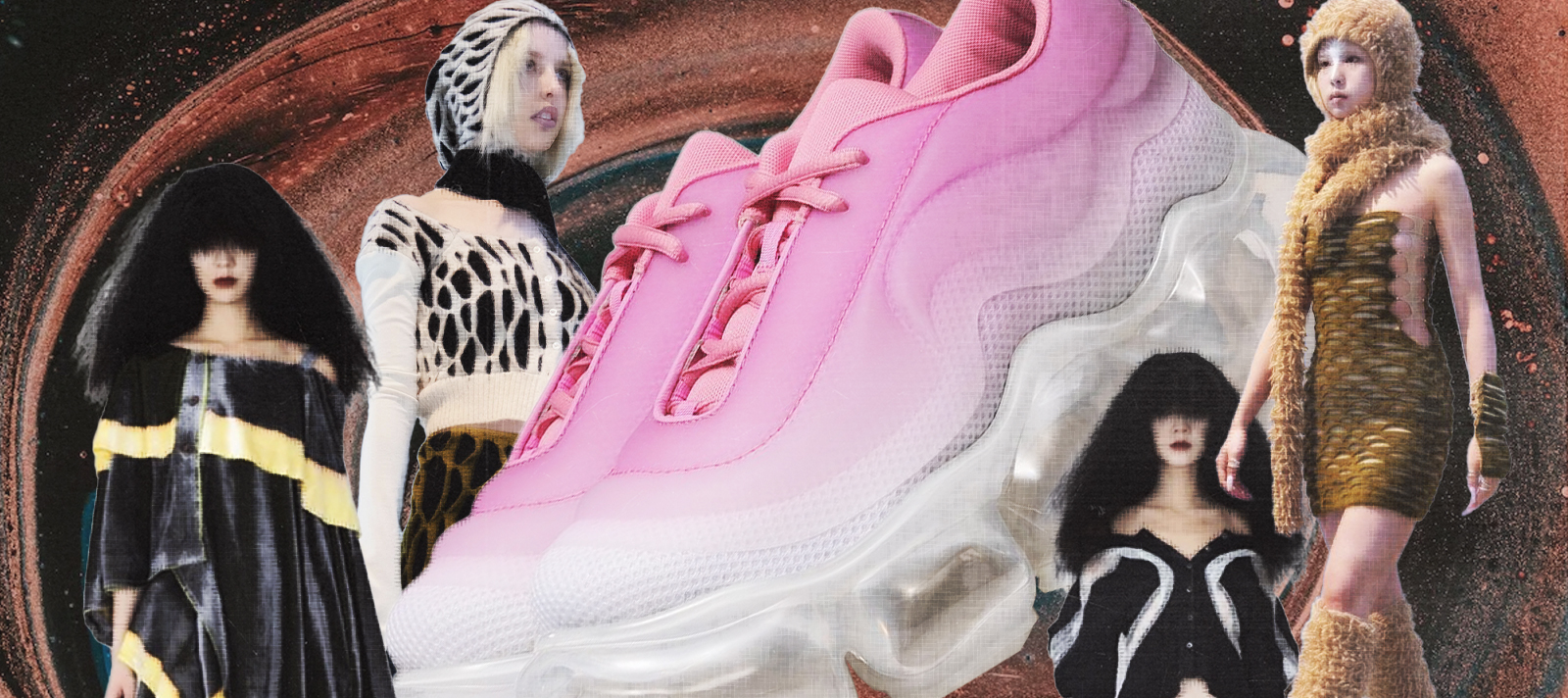
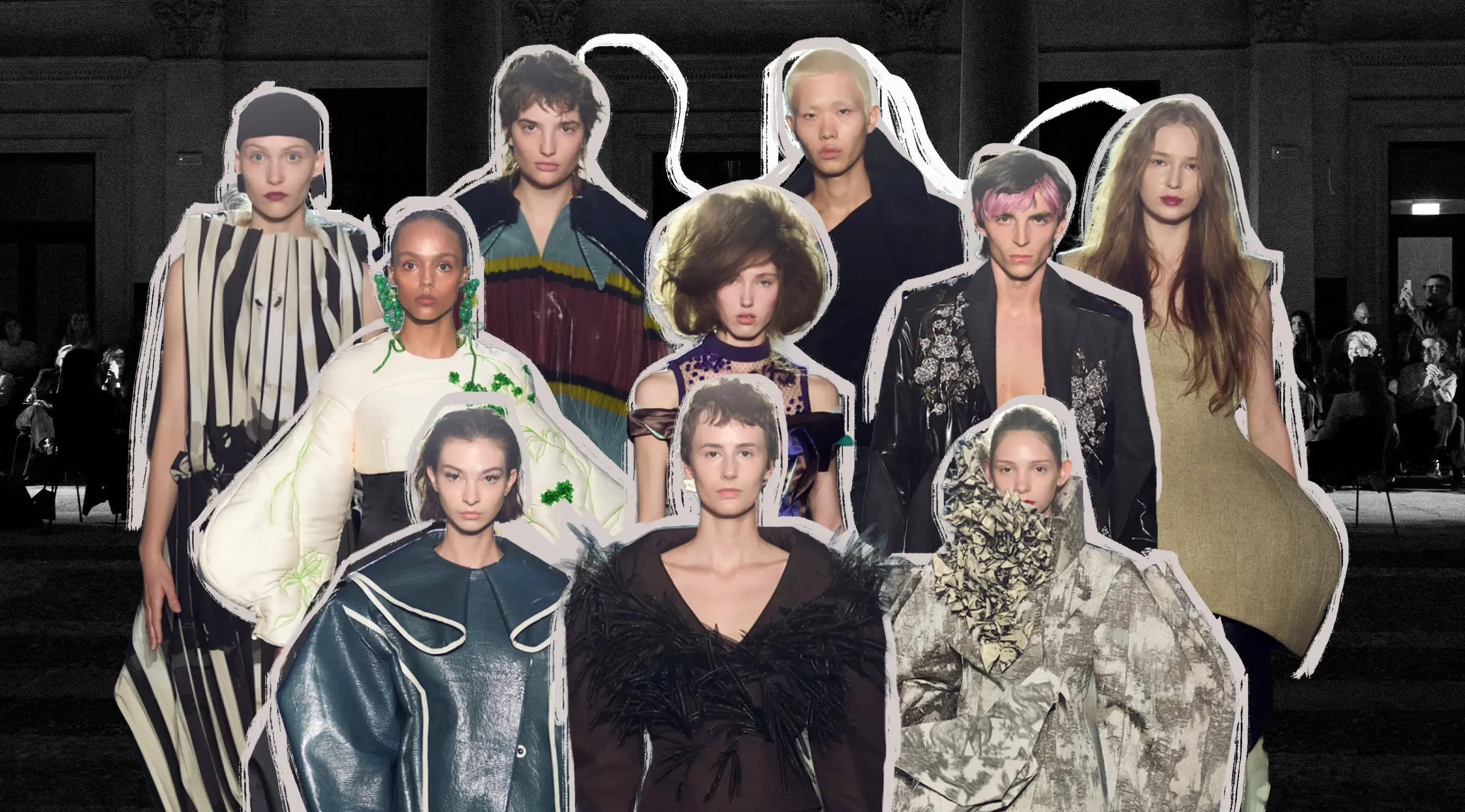
One collection follows a schoolboy who dreams of reaching the Moon; another turns a designer’s grandmother’s crochet tablecloths into runway pieces. These are two of the ten collections showcased at Istituto Marangoni London’s 2026 graduate fashion show, where designers drew on NASA archives, Russian émigré history, family memories, and reclaimed upholstery leather. The show’s title, Magma, captures the pressure of the process: research, experimentation, and revision, through which personal references are translated into clothes.
How Ten Emerging Designers Turn Unexpected Sources into Fashion at Istituto Marangoni London’s 2026 Graduate Show
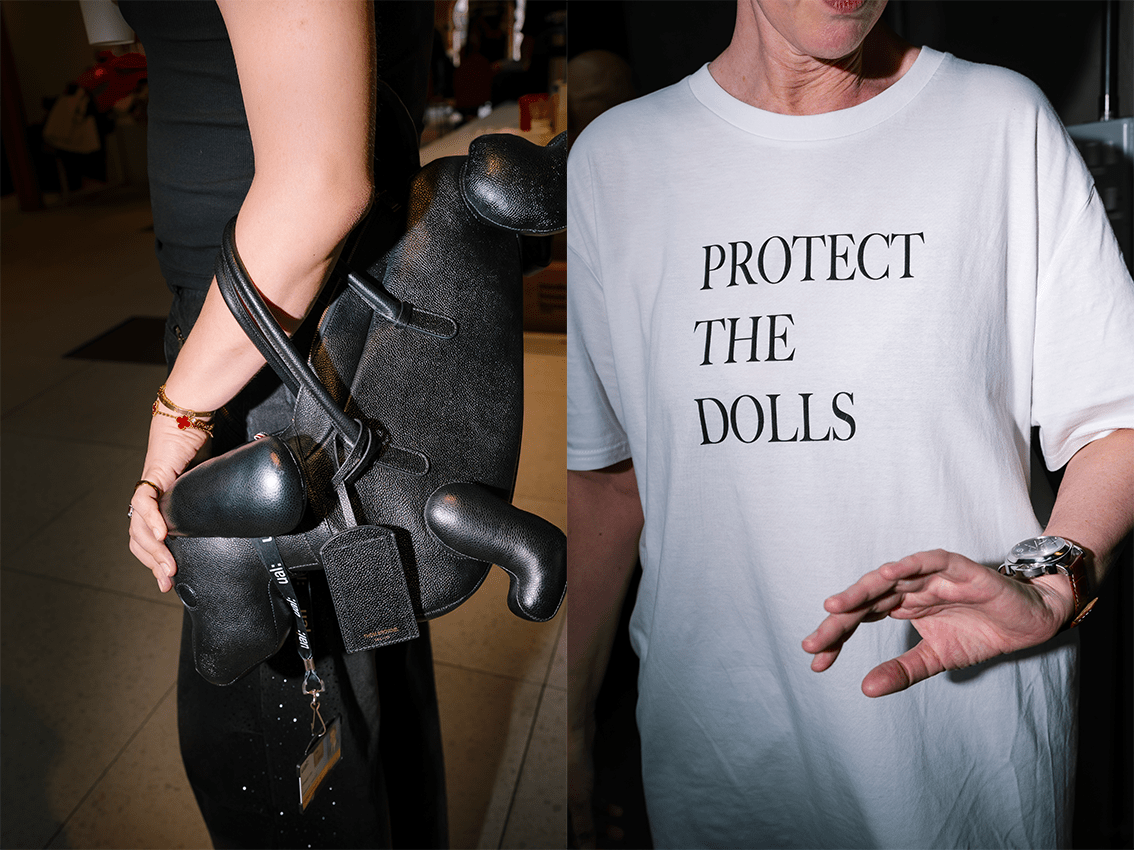
Magma evokes the sense of energy building unseen before erupting to the surface. For the show’s ten graduates, it also became a metaphor for the creative journey behind each collection.
Beneath the show’s energy lie deeply personal stories. Chaos unsettles perfect tailoring; grief gives way to resilience. Nature emerges through fabric manipulation, while discarded upholstery is reimagined as sculptural clothing. Here are ten designers turning memory, research, and found materials into fashion.
Military-Inspired Menswear: Daniil Khatsko Turns Russian Exile and Grief into Tailoring
For Daniil Khatsko, clothing becomes a visible expression of emotion. His collection explores despair, loss, and resilience, drawing on personal experience and the upheaval surrounding the Russian Revolution and the first wave of Russian emigration.
Khatsko became interested in how emotional states shape not only behaviour but also what people wear. What might garments look like if despair and uncertainty dictated their form? That question became the starting point for his collection.
He does not just recreate period dress. Instead, he uses history to consider hardship and displacement. His main reference is classical military attire: he studied its construction and function, then took its codes apart. Distorted forms turn symbols of authority and order into expressions of tension and vulnerability.
Making the garments by hand brought him closer to the process and to the human stories stitched into each piece. The collection brings together craftsmanship, history and raw emotion.
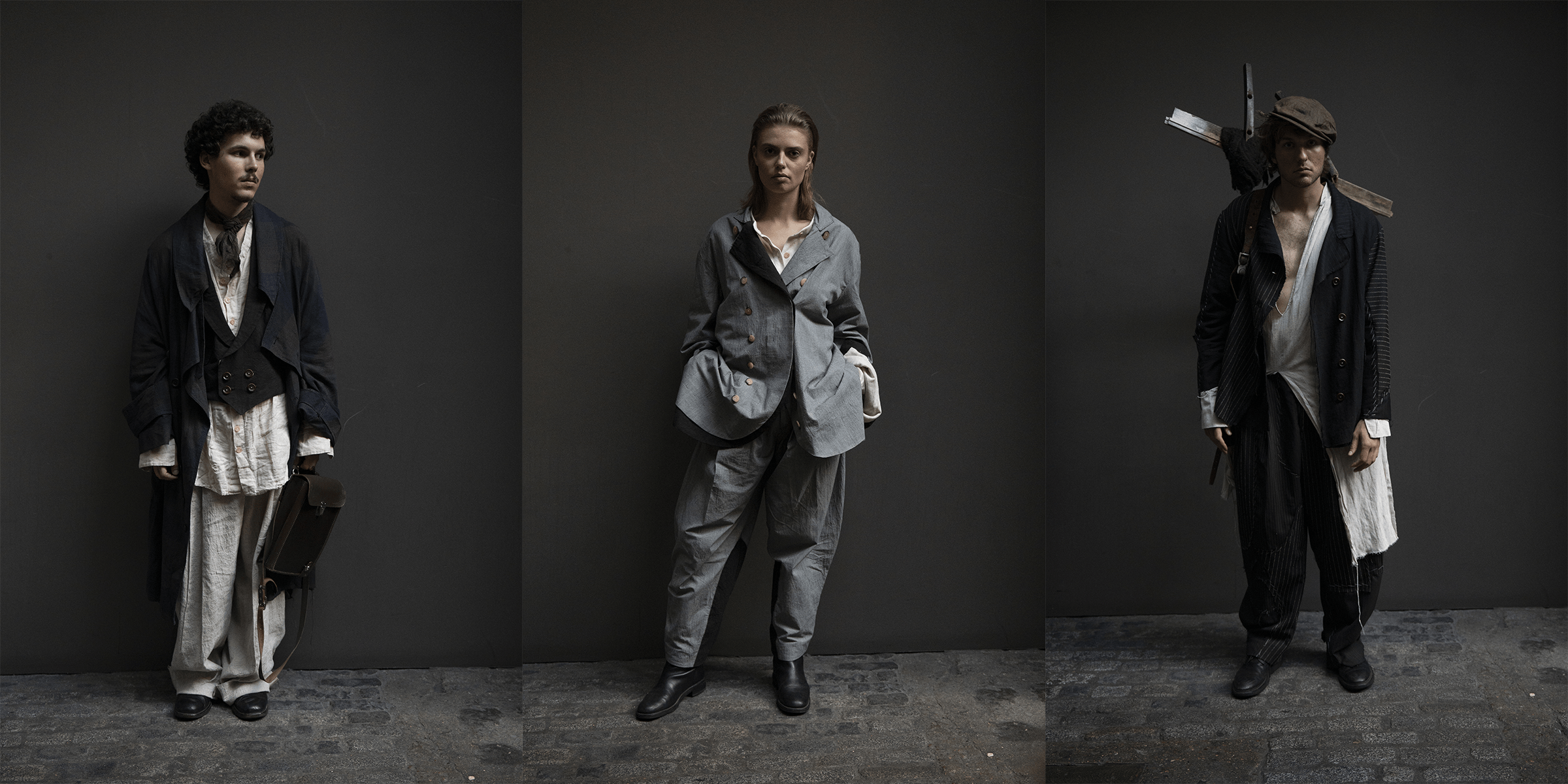
Daniil Khatsko’s collection explores history, craftsmanship and vulnerability. Courtesy of Istituto Marangoni London.
What Does Patrick Bateman’s Suit Say About American Psycho? Giulia Improta Reworks Its Pinstripes
What lies beneath a perfect suit? For emerging menswear designer Giulia Improta, the answer is a complicated inner life. Her collection explores the tension between appearance and reality, drawing on American Psycho and its impeccably groomed protagonist’s hidden turmoil.
Improta begins with the pinstripe suit, a familiar emblem of professionalism, success and control. Rather than preserve its precision, she disrupts it. Metal wires sewn into traditional garments allow her to bend the silhouette of a trench coat and distort tailored suits and raincoats.
The result turns a familiar symbol of order into something tense and expressive. Traditional tailoring becomes a way to expose the unease beneath a polished exterior.
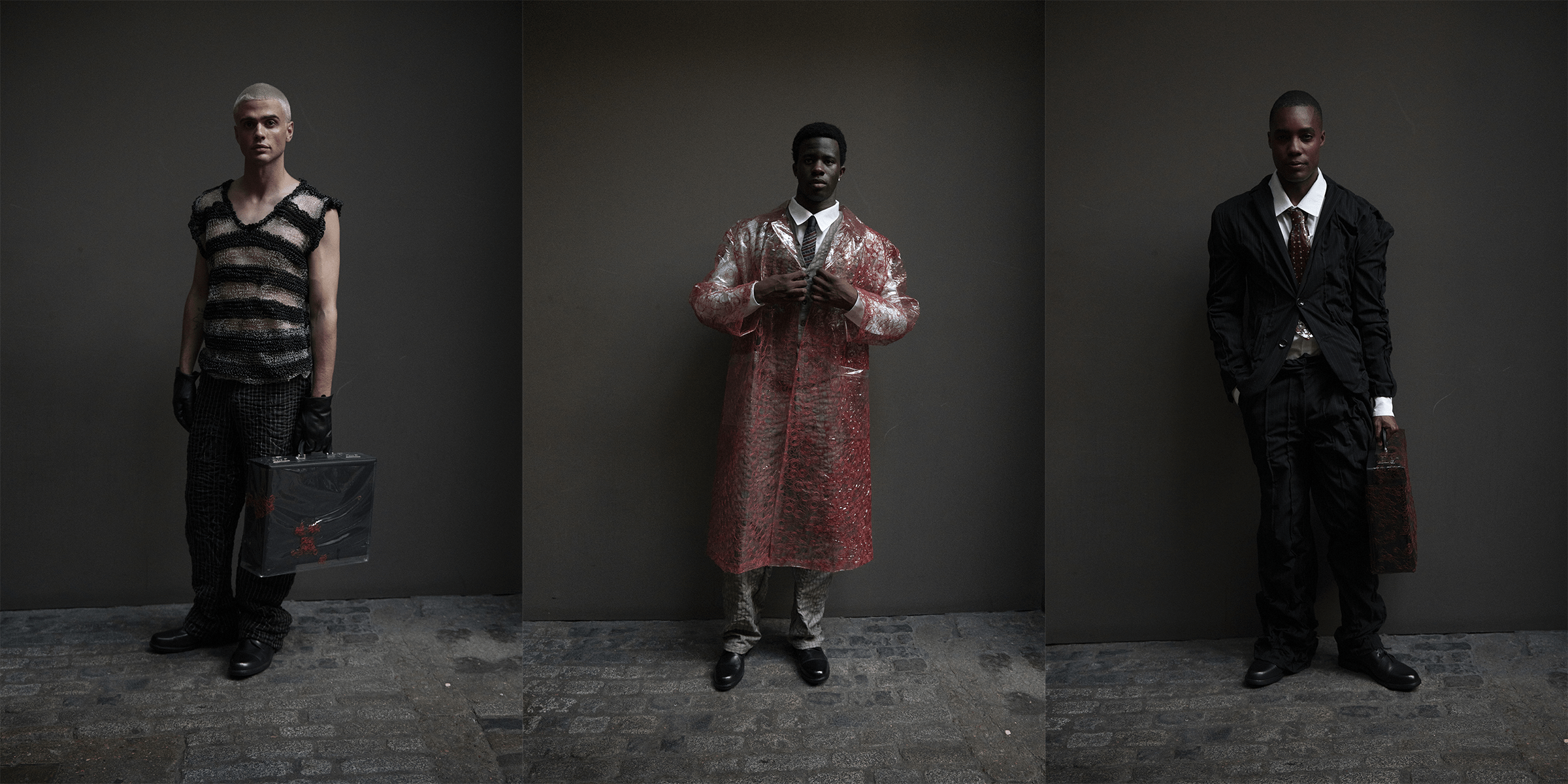
Giulia Improta’s collection subverts traditional tailoring, revealing hidden tensions. Courtesy of Istituto Marangoni London.
Nature-Inspired Fashion: Gyulee Lim Uses Draping to Echo Flowers and Branches
For emerging designer Gyulee Lim, nature is both muse and visual language. The Law of Nature translates organic forms, textures, and movement into sculptural garments.
Blooming flowers, tree branches, and the ever-changing patterns of the natural world inform a collection about growth and transformation. Lim does not simply copy nature; she seeks to capture its qualities in fluid, organic silhouettes.
She experimented with a range of fabrics, allowing the materials to guide each design. Draping is central: layered folds evoke nature’s rhythm and movement , while sculptural details recall petals, branches, and other natural forms.
Many of Lim’s strongest ideas emerged during the making process, and that openness to the unexpected now shapes her design philosophy.
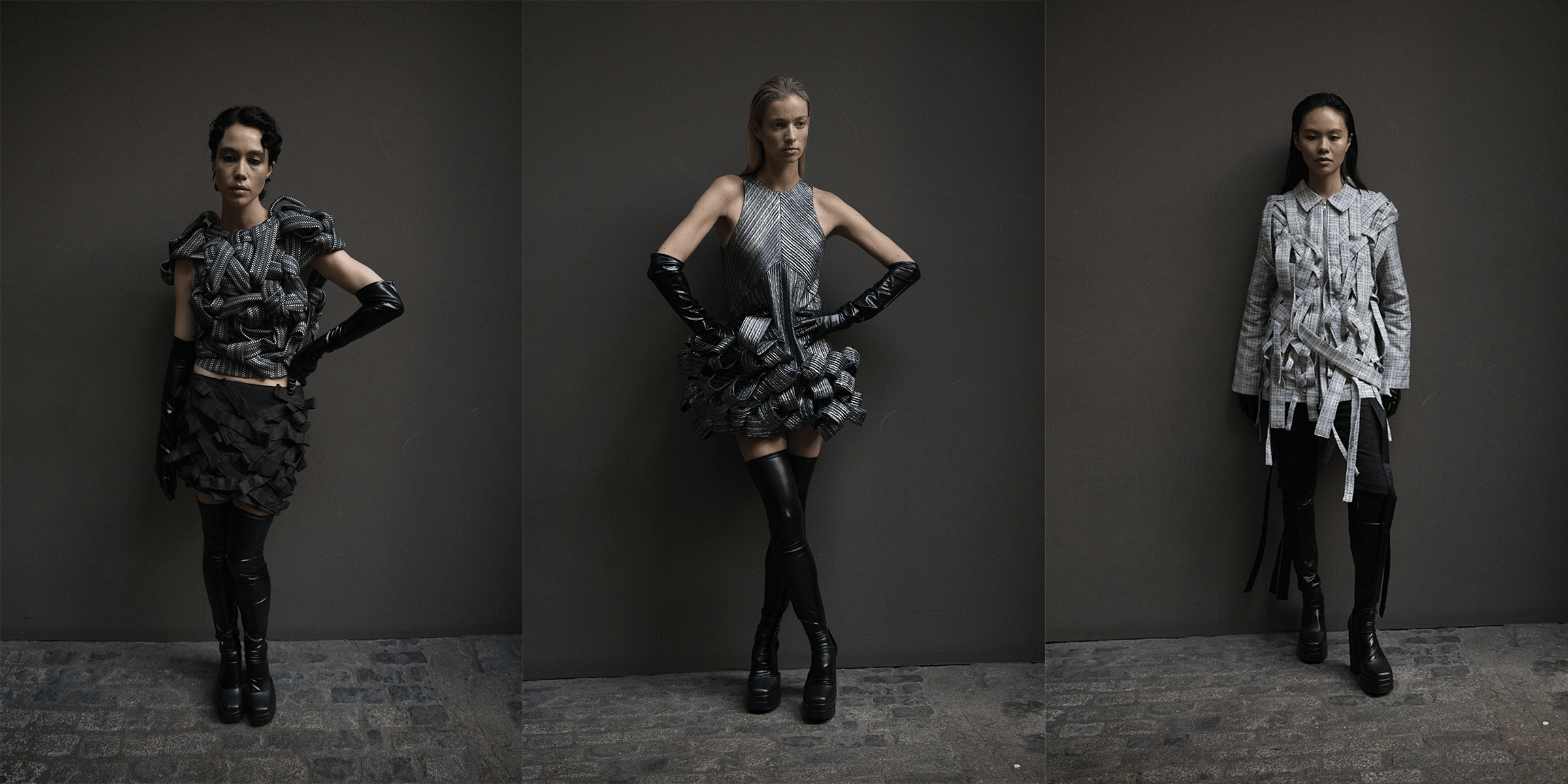
Gyulee Lim’s collection transforms nature into sculptural silhouettes and organic forms. Courtesy of Istituto Marangoni London.
Surrealist Menswear: Ho Kyun Kim Uses Optical Illusion to Distort the Suit
For menswear designer Ho Kyun Kim, the body is a canvas for illusion. His collection draws on Surrealism and its fascination with altered realities, using optical illusion, dazzle camouflage, and exaggerated proportions to challenge conventional ideas of shape and form.
There is no need for embellishment—the silhouette does the work. Kim reworks classic menswear tailoring as sculptural pieces, including a jacket with dramatically elongated sleeves and altered proportions that blur the line between garment and body.
Careful pattern cutting makes the distortion possible. Through construction, Kim turns ambitious ideas into wearable garments, showing how silhouette alone can change the way we see the body.
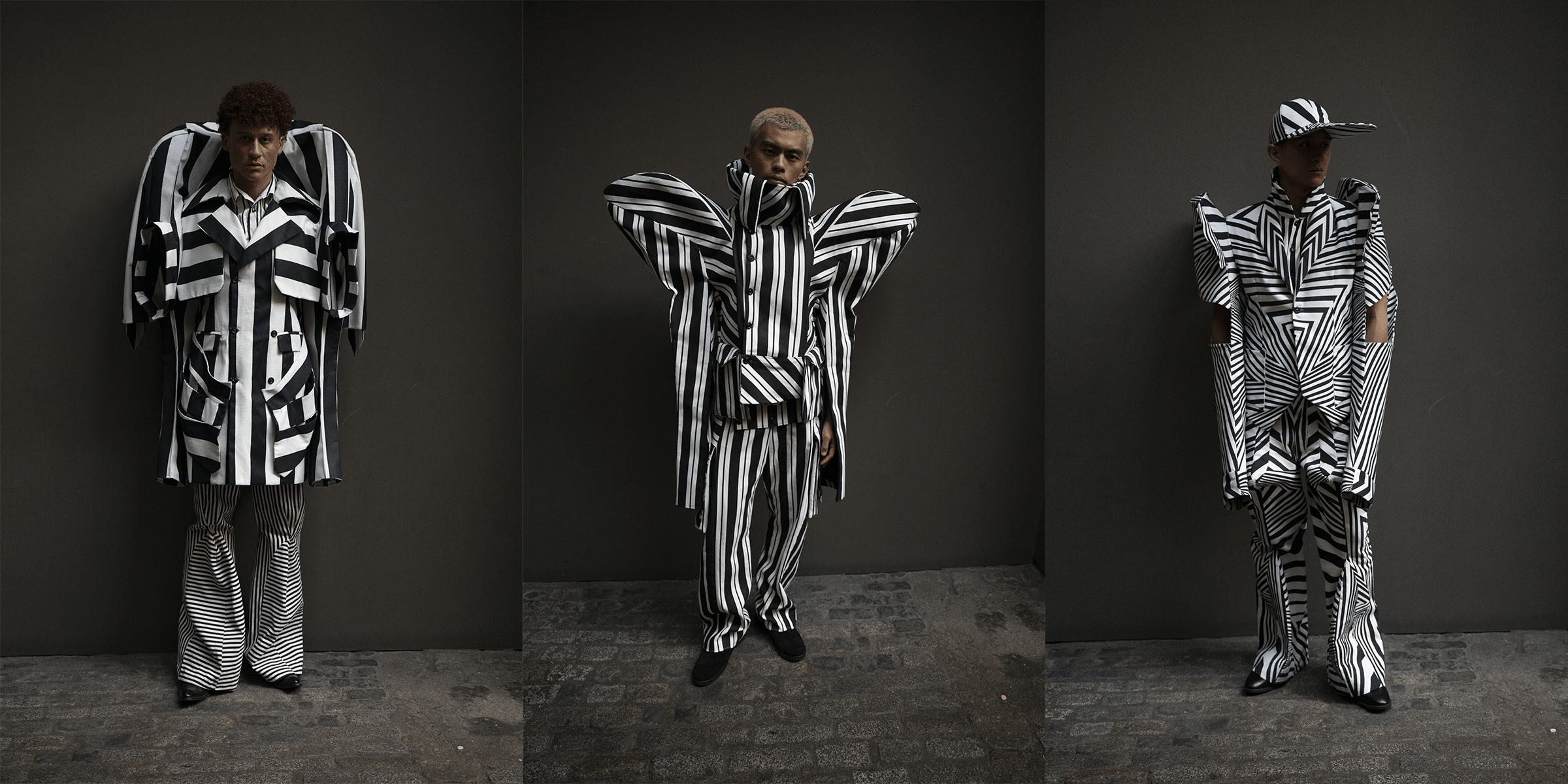
Ho Kyun Kim’s collection explores optical illusion through surrealist tailoring and distorted silhouettes. Courtesy of Istituto Marangoni London.
Loden and Suede in Fashion: Lavinia Mandl Weaves Three Heritages into One Collection
For Lavinia Mandl, fashion is a way to explore her Austrian, Italian and Argentinian roots. Fragments brings these influences together in a collection shaped by family history, traditional textiles and handcraft.
Materials are at the heart of Mandl’s work. She combines deer suede, goat suede, and leather with loden, a traditional Austrian wool fabric associated with Alpine dress. The contrast between soft suede and robust wool gives the garments structure, texture, and durability.
Each fold is hand-stitched in place, making the construction visible. The detail celebrates traditional craft while adding depth to each piece. The collection honours Mandl’s heritage and introduces a confident design voice.
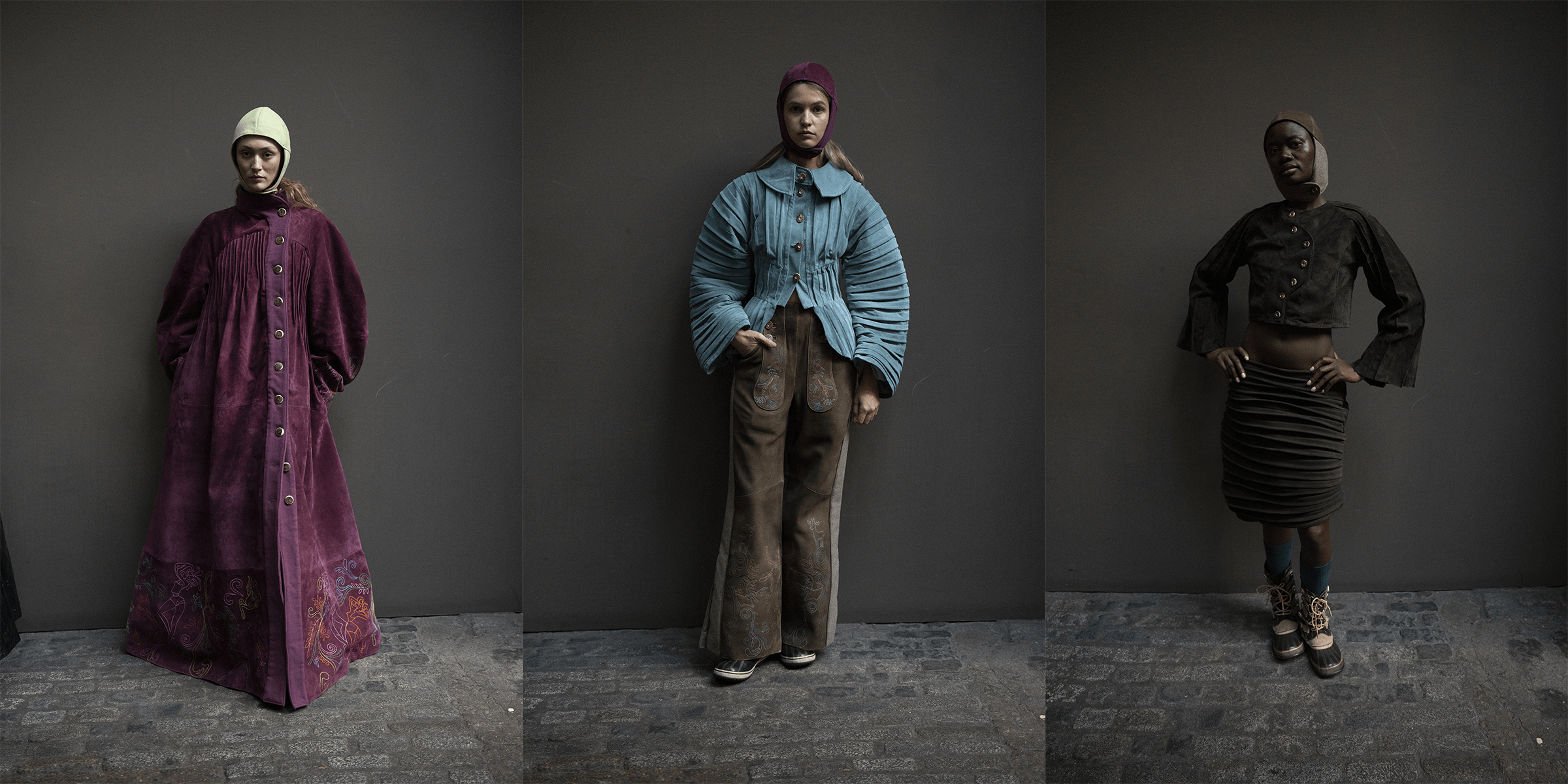
Lavinia Mandl’s Fragments blends cultural heritage, traditional textiles and craftsmanship. Courtesy of Istituto Marangoni London.
Catholic-School Uniforms and Glass Dresses: Liana Tsz Yan Chan’s Fashion of Liberation
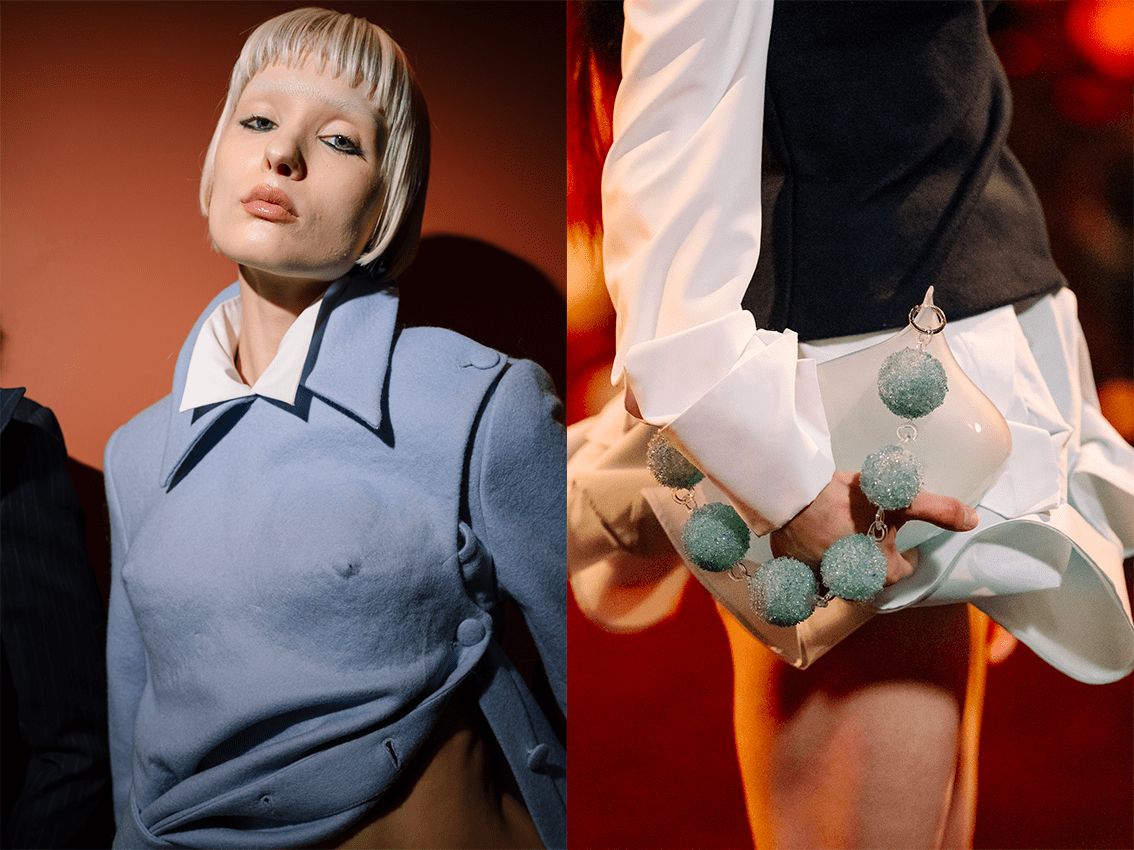
For Hong Kong-born designer Liana Tsz Yan Chan, fashion is an act of liberation. Her collection, Apotheosis of Me, draws on her Catholic-school upbringing and the expectations of family and culture that came with it.
Chan takes the uniform, a symbol of discipline and control, and rewrites its rules. She reworks familiar silhouettes to question obedience and champion individuality.
Her most striking dresses are built from glass hoops, each bent and linked by hand. The slow, painstaking process mirrors the story the collection tells: fragility alongside resilience. Sculptural and luminous, the pieces give form to the invisible aura that surrounds each of us.
Chan says the freedom to experiment without judgement at Istituto Marangoni London helped her find her voice. She was named Best Designer of the Year 2026.
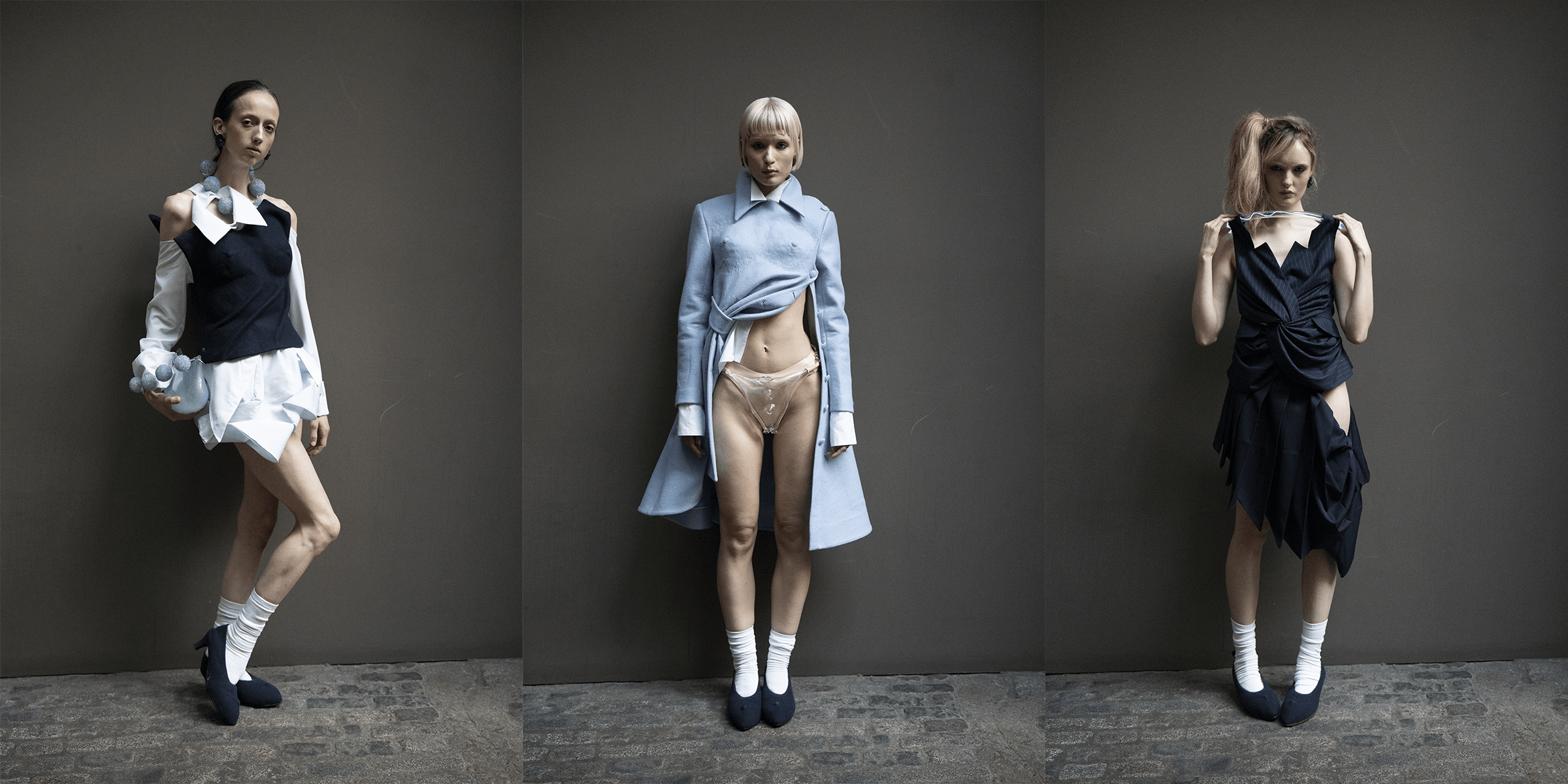
Liana Tsz Yan Chan’s Apotheosis of Me explores individuality through reimagined uniforms. Courtesy of Istituto Marangoni London.
How Does NASA Inspire Fashion? Rafael Imanol Stamatoiu Sets Astronaut Archives Against the School Uniform
For fashion designer Rafael Imanol Stamatoiu, every collection begins with a story. The Boy Who Flew to the Moon brings together childhood dreams, personal ambition, and the history of space exploration.
Stamatoiu drew on NASA’s archive of astronaut garments, and early footage of Apollo missions, focusing on the technical details, function, and symbolism of astronaut clothing. Rather than recreating spacesuits, he sets those references against the familiar codes of a school uniform.
At the centre of the collection is a boy who dreams of becoming an astronaut. The fictional character echoes Stamatoiu’s own journey into fashion, with its hopes, challenges, and determination.
Reflective surfaces and padded elements recall space travel and astronaut suits, while school-uniform details and textile treatments ground the clothes back on Earth. The collection balances nostalgia, playful imagination, and technical utility.
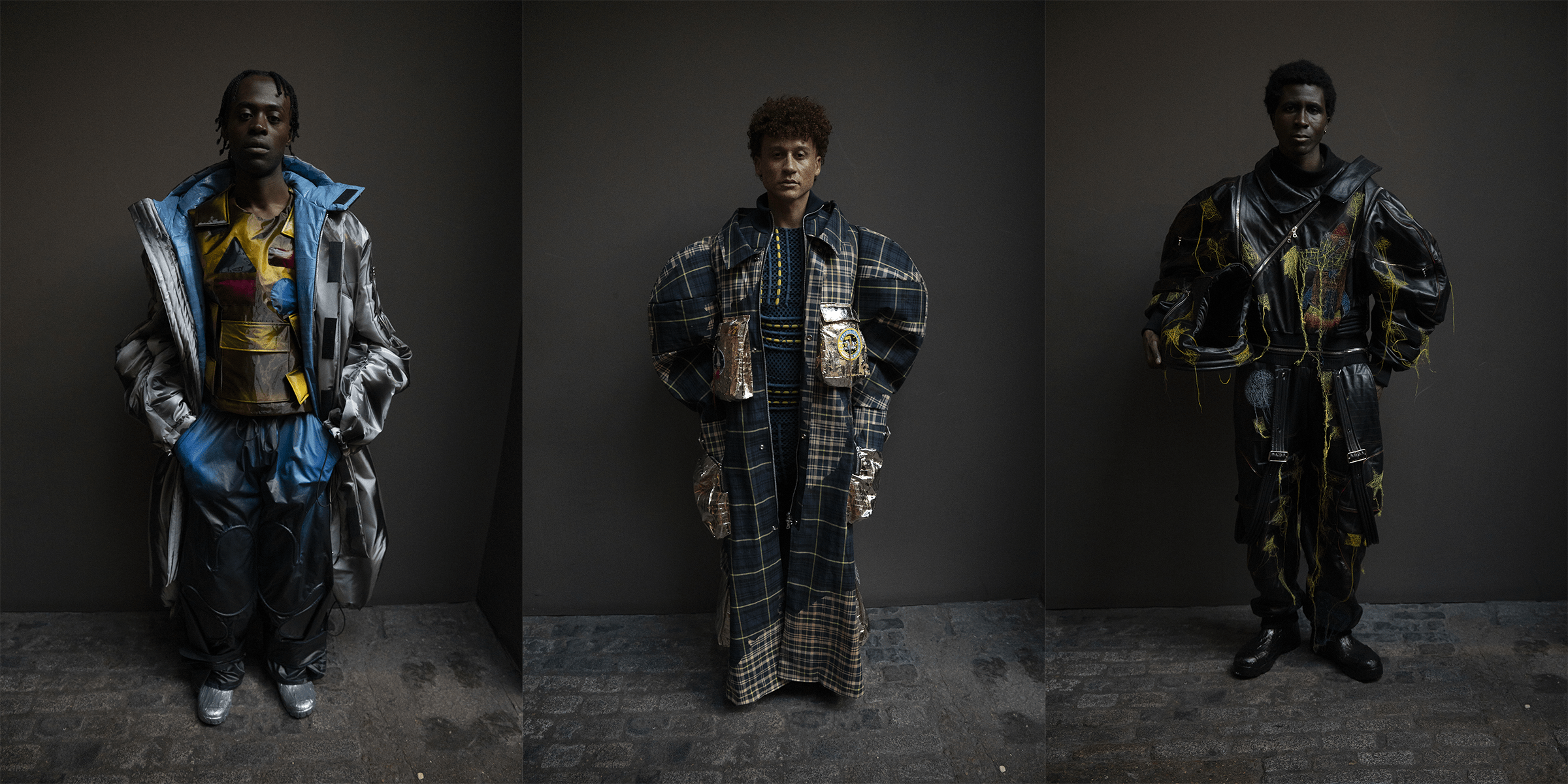
Rafael Imanol Stamatoiu’s collection blends space exploration, childhood dreams and technical design. Courtesy of Istituto Marangoni London.
How Can Crochet Be Used in Fashion? Riccardo Sanna Turns His Grandmother’s Tablecloths into Runway Pieces
For womenswear designer Riccardo Sanna, fashion can preserve memories while creating new stories. Donne di Masua draws inspiration from the women who worked in the mines of Masua, a village on Sardinia’s southwest coast, and from textiles crafted by his grandmother.
The collection began with his grandmother’s hand-crocheted tablecloths, known as centrini, made over a lifetime. Sanna refused to let them remain tucked away as keepsakes; instead, he integrated them into contemporary garments, carrying their history and the care woven into their making.
The collection sets the delicacy of these textiles against oversized, structured silhouettes. Handmade boots, created by bonding crochet to vinyl and inspired by Wellington boots, complete a wardrobe that brings family memory and craftsmanship into womenswear.
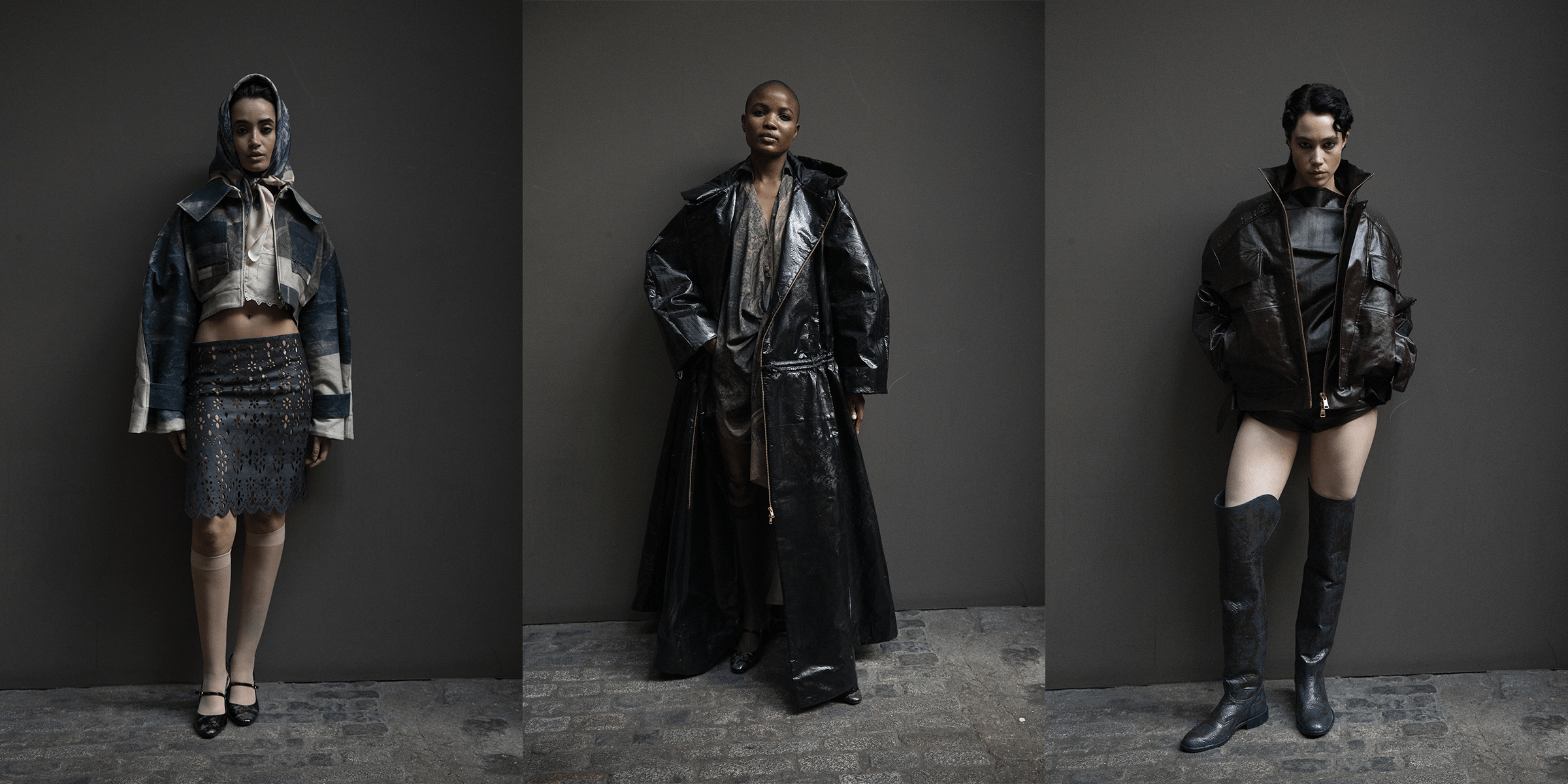
Riccardo Sanna’s Donne di Masua blends family memories, Sardinian heritage and craftsmanship. Courtesy of Istituto Marangoni London.
Snoopy and 1970s Sweden: Sian Pierrou Bengtsson Turns Family Memory into Fashion
For Sian Helga Louise Pierrou Bengtsson, fashion is a family affair. Her collection, I Went Back to Pick Up What I Left, draws on Swedish heritage, family memories, and her mother’s childhood in 1970s Sweden. The collection also features whimsical references to Snoopy and other Peanuts characters.
Bengtsson reimagines familiar folk-costume motifs through a contemporary lens. Techniques such as silicone fabric manipulation, hand-painted polka dots, and florals lend the garments unique texture and individuality, with details that evoke the optimism of that era.
Her mother crafted the ceramic buttons and beads used on the clothes, adding material richness and connecting each piece to the family stories it embodies. For Bengtsson, fashion is an art form that embraces experimentation, imperfection, and discovery.
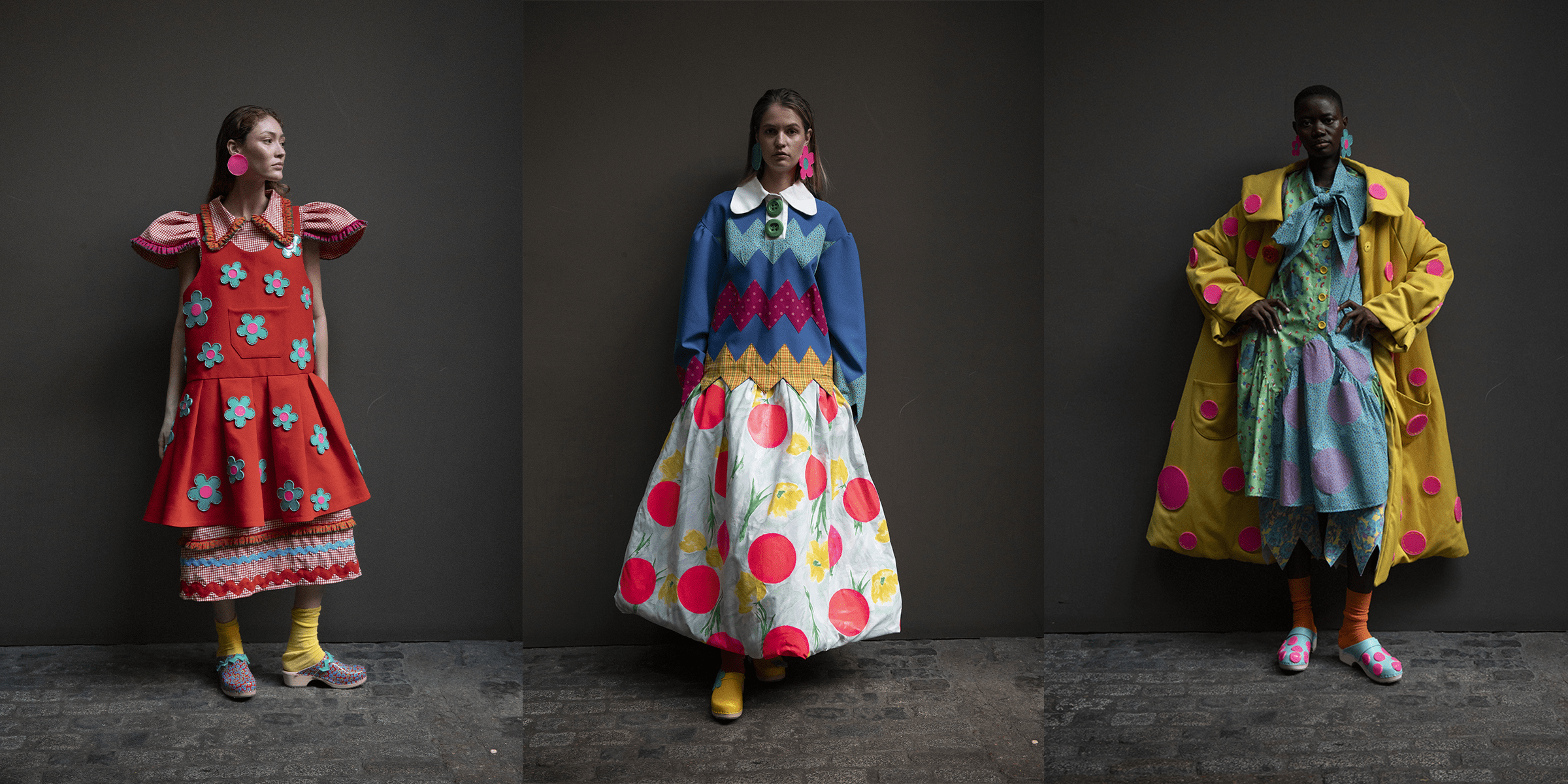
Sian Helga Louise Pierrou Bengtsson’s collection celebrates Swedish heritage, family memories and playful craftsmanship. Courtesy of Istituto Marangoni London.
What Can Discarded Sofa Leather Become? Virginia Bozzola’s Upcycled Fashion Collection
Virginia Bozzola starts with the material itself. Rather than imposing a silhouette, she allows the weight and structure of reclaimed leather to guide the shape of each garment.
For The Quiet Transformation of Objects, Bozzola sourced upholstery leather from discarded sofas and car seats around London. The material’s weight and durability brought both challenges and possibilities, turning the design process into a negotiation between the leather and the garment.
She keeps the silhouettes minimal so the texture and craftsmanship can come forward. An earthy palette echoes the leather’s raw character.
Bozzola admits she began without a fixed vision for the final outcome. The initial uncertainty felt uncomfortable, but it ultimately became the collection’s strength: an experiment in upcycling and in allowing a design to emerge organically from its materials.
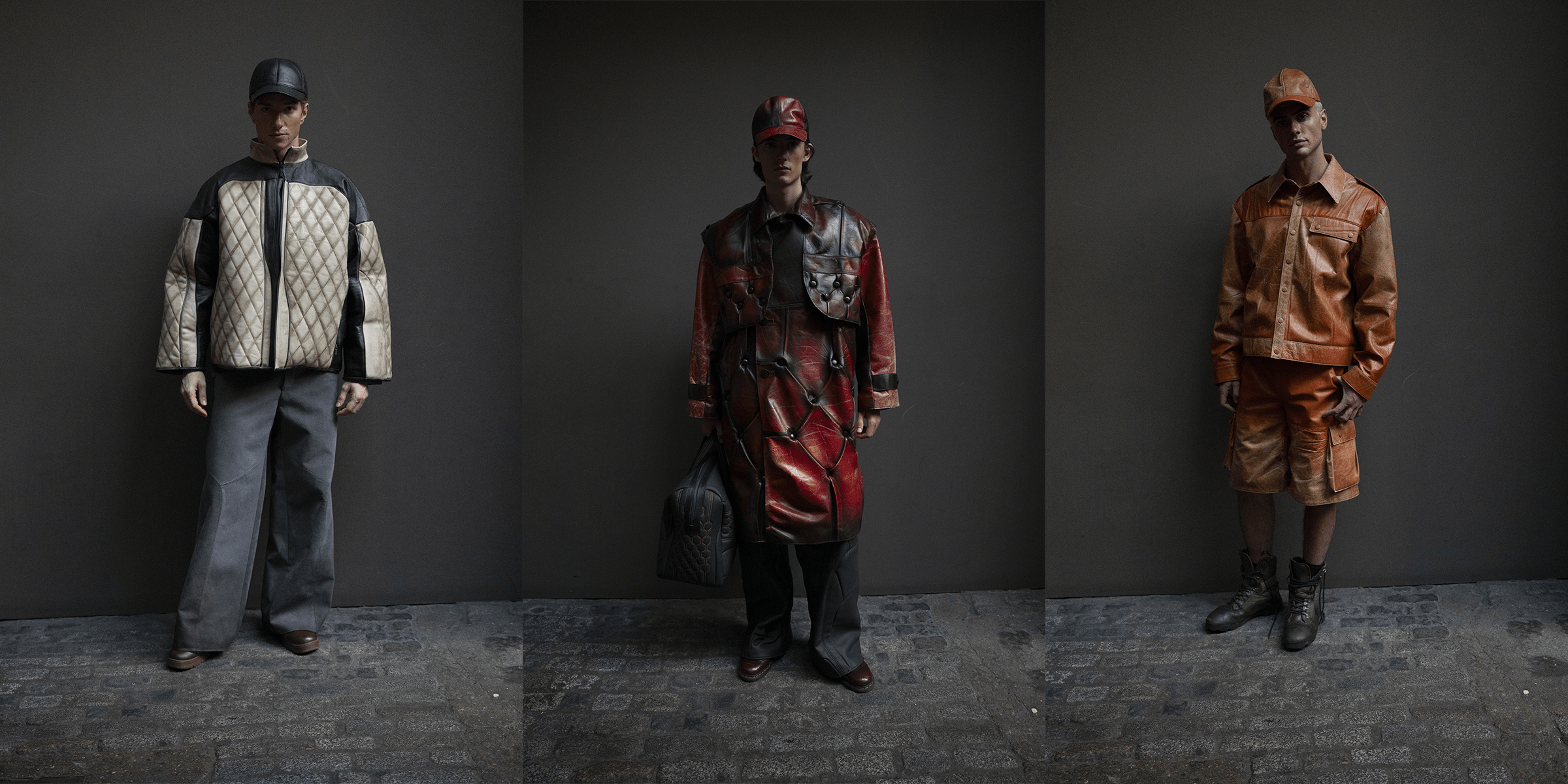
Virginia Bozzola’s collection transforms reclaimed leather into contemporary silhouettes. Courtesy of Istituto Marangoni London.
Silvia De Vecchi
Editor, London



 EMERGING DESIGNER Meet the 10 emerging fashion designers bringing innovation to Milano Fashion Week 01/10/2025
 EMERGING DESIGNER 10 Emerging designers at Istituto Marangoni Milano: What do clothes say about identity? 30/09/2026