

The Innovation Culture Symposium brought together leading professionals to discuss AI and creativity in fashion.
The Innovation Culture Symposium brought together leading professionals to discuss AI and creativity in fashion.
 SHARE
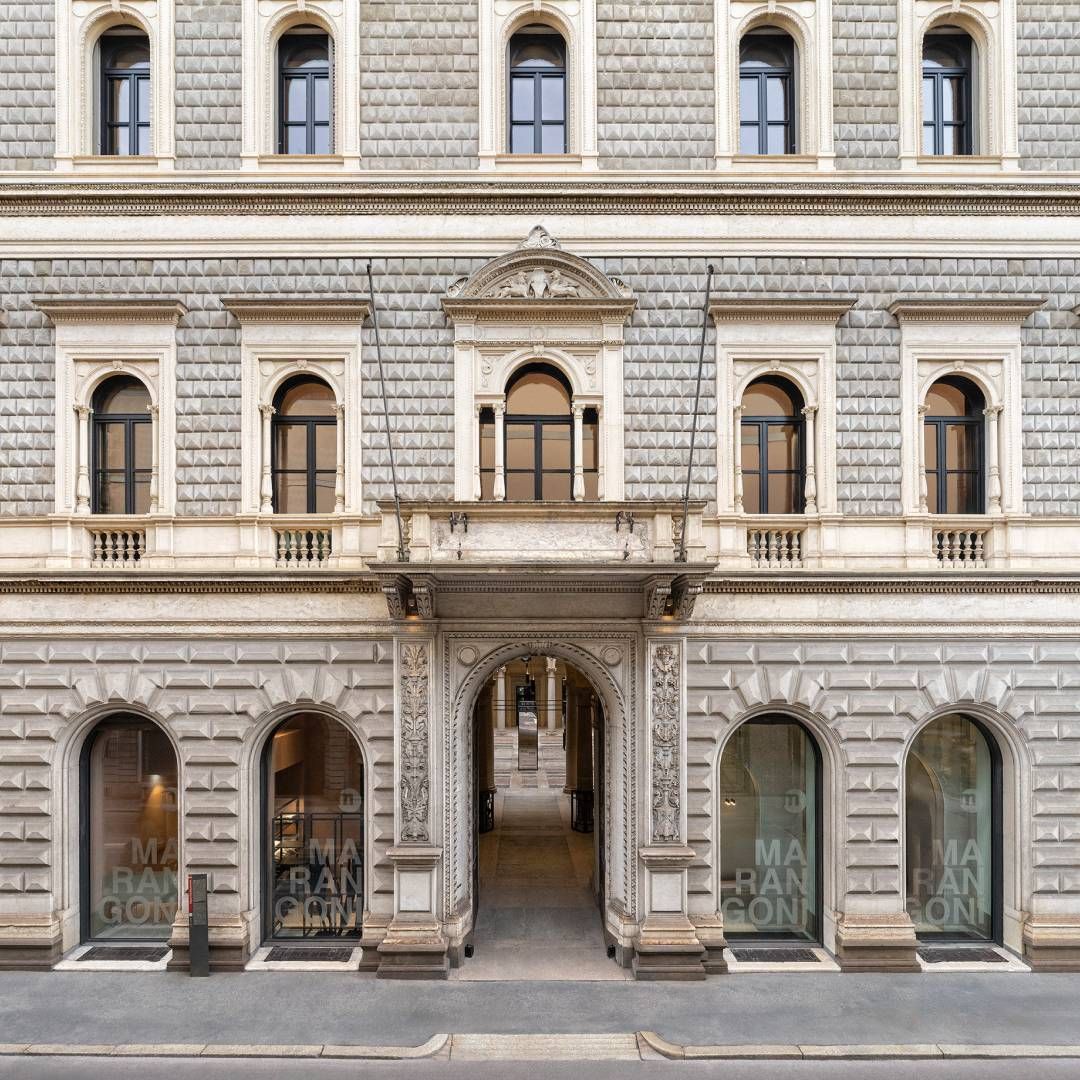
SHARE What happens when artificial intelligence, algorithms, and new technologies stop being simple tools and become active players within creative processes? This compelling topic was explored by Istituto Marangoni Milano through the Innovation Culture Symposium • Discussing New Paradigms in Fashion, held at the Palazzo Turati campus. The event unfolded across three panels, bringing together faculty members, researchers, fashion and luxury professionals, and distinguished industry guests to foster dialogue on the future of creativity and the new paradigms transforming the fashion system — from creative direction and smart textiles to digital platforms and emerging consumers.
To address technological innovation, the symposium adopted an open discussion that examined both its limitations and contradictions, as well as its potential, to understand how technology is reshaping the language of fashion and how the industry can adapt.
Luxury in the Algorithmic Era
The first panel explored one of the fashion industry’s most pressing issues: the impact of artificial intelligence on the cultural and economic foundations of luxury. Participants included Marta Martina, IM Faculty member, fashion and media researcher, and journalist; Simona Murialdo Sànchez, Art Director & IM Milano Fashion Styling Course Leader; and Rita Laino, Global Human Resources Director at Valextra, moderated by Carlotta Sadino, IM Creative Masters Programme Leader.
For decades, fashion has thrived on concepts like authorship, vision, and uniqueness. Today, artificial intelligence is redefining many of these pillars. Rather than causing abrupt change, AI operates through recombination — reshaping what already exists. Generative tools accelerate and compress established phases of the creative process — research, reference gathering, synthesis, and translation — fundamentally altering the flow of creative thinking.
The main risk is visual homogenisation: an overproduction of images paired with limited critical selection. Creative direction is shifting upstream in the process, with briefing, constraint-setting, and system design becoming central acts of authorship. And what if the most compelling forms of creativity emerged precisely at the margins — through error, resistance, and unpredictability?
THE VALEXTRA CASE
Rita Laino, Global Human Resources Director, shared how Valextra uses artificial intelligence as a resource that serves brand culture rather than dominates it. AI becomes a tool for amplification, enabling controlled experimentation and supporting more sustainable creative processes. Here, innovation is not about replacing a brand’s language but expanding its possibilities.
Human–Machine Dialogues
The second panel shifted the focus to the evolving relationship between people, smart materials, and emerging technologies. Speakers included Alessia Moltani, IM Faculty member and founder of ComfTech; Carolina Guajana, Fashion Business Programme Leader; Alessandro Castiglioni, Deputy Director & Senior Curator at MA*GA Museum and IM Milano Faculty member; moderated by Simona Ironico, PhD, IM Fashion Business Programme Leader, and Carlotta Sadino, IM Creative Masters Programme Leader.
Clothing is being reimagined—not just as something we wear, but as an interactive platform that collects data about the wearer, interprets signals, and forges a dynamic relationship between the body and the environment. Advances in wearable technology and smart textiles demonstrate how fabrics integrated with sensors, responsive systems, and artificial intelligence can transform how we think about design.
This represents more than technological innovation; it signals a new paradigm in the relationship between individuals and products. Intelligent textiles can interact with and adapt to their environment, enhancing quality of life.
Additionally, the speakers discussed how AI can be used to preserve a brand’s identity without anchoring it to the past. In a landscape marked by continuous shifts in creative direction, artificial intelligence could become a tool for continuity, capable of safeguarding a brand’s symbolic heritage while enabling growth and adaptation.
THE RAMY™ CASE
A B2B platform leverages data and AI to help fashion brands manage creative legacy and succession planning for creative directors. Acting as a “digital twin” of brand heritage, it captures and operationalises the symbolic, emotional, and stylistic aspects of brand identity. Instead of replacing human creativity, AI provides a strategic framework that supports innovation without dispersing a brand’s identity.
Creative Disruption & Attention Economy
The third panel addressed the increasingly central issue of consumer engagement in a world saturated with endless content, images, and stimuli. Panellists included Carlos Gago Rodriguez, IM Faculty member, academic researcher, art director, and fashion buyer; Daniele D’Orazi, IM Faculty member and Master Fashion Omnichannel & E-Commerce Scientific Coordinator; and Astrid Daprà, IM Faculty member, Global Luxury & Fashion Executive (including experiences at Balenciaga, Saint Laurent, Prada, and Armani), advisor and catalyst; moderated by Simona Ironico, PhD and Fashion Business Programme Leader.
The primary challenge today is not producing more content, but generating meaningful content. Artificial intelligence can replicate styles, speed up processes, and scale production; what it cannot independently generate is vision — a distinct point of view.
Some artists deliberately use altered, sabotaged, or dysfunctional machines to question the power structures behind these technologies. This may have been one of the symposium’s most powerful insights: in an increasingly automated context, genuine human value lies in intention.
New generations seek identity over mere products, and brands that focus solely on performance risk creating content devoid of substance. Today, storytelling is no longer simply a marketing tool but an expression of values, awareness, and ethical positioning.
If technology can amplify and accelerate, a fundamental question remains: what stories do we really want to tell?

 GET IN TOUCH VIA WHATSAPP