
Can a skirt predict a recession? Spring 2027 puts the Hemline Index on trial
The Hemline Index links skirt lengths to the economy. But Spring/Summer 2027’s varied hemlines and menswear shorts put its value as a recession signal to the test
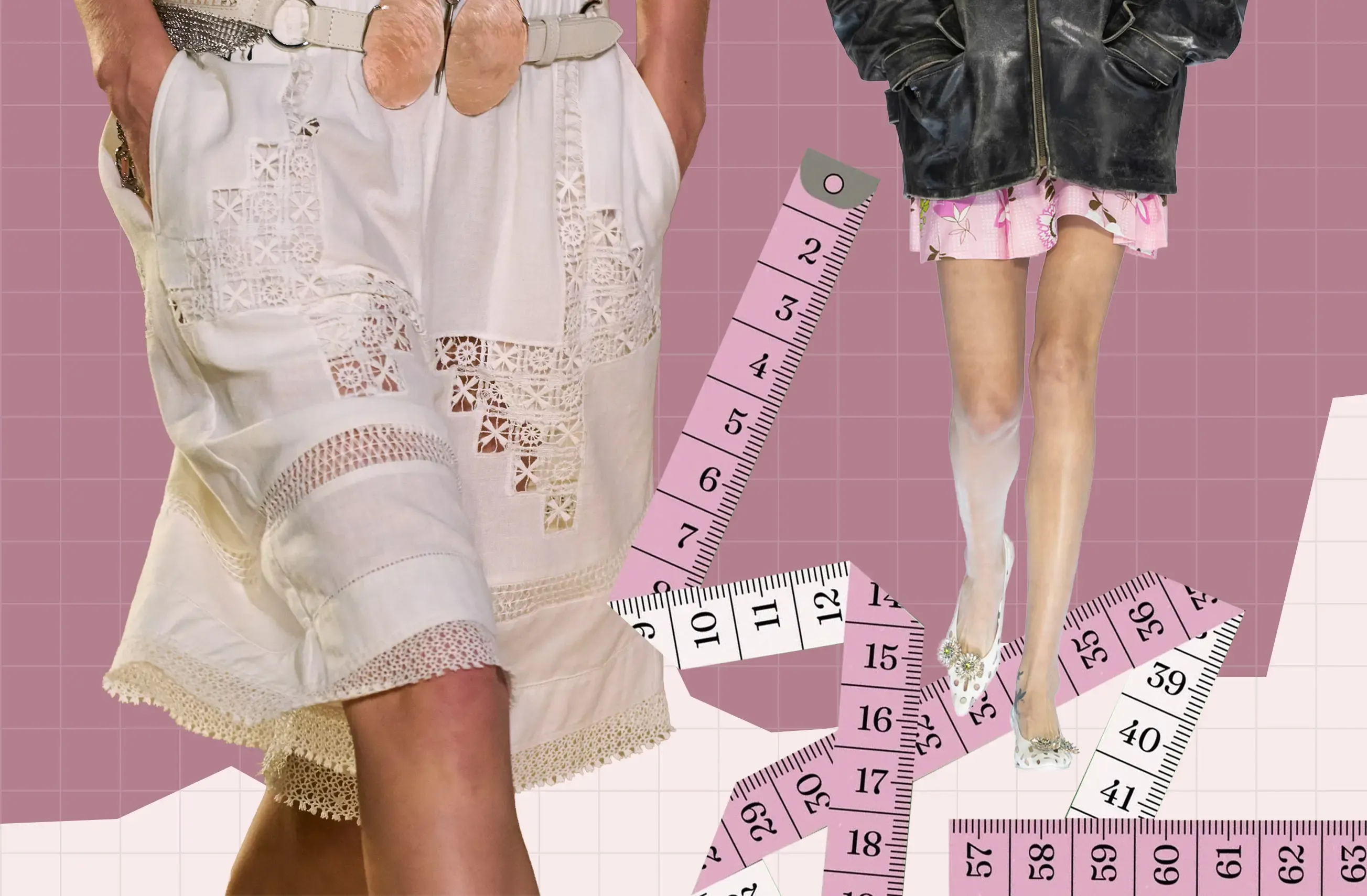
The Hemline Index asks a lot of a skirt: to reveal where the economy is headed. According to this theory, shorter hemlines accompany prosperity, while longer ones signal financial strain. What just happened in the Spring/Summer 2027 shows complicates that tidy equation: Prada centred a full catwalk on skirts, while menswear designers ranged from abbreviated shorts to loose, below-the-knee silhouettes. With so many hem lengths on display, the season offers no clear verdict. But that ambiguity is not the central issue. The real question is why the Hemline Index still holds our attention when its claims are so widely disputed. Is it merely “fashion folklore,” or does it still tell us something about how social change is reflected in what people wear, even when almost every length is in play?
View this post on Instagram
What Is the Hemline Index, and Does It Work?
Often attributed to economist George Taylor, the Hemline Index suggests that skirt lengths rise and fall with the economic cycle: shorter hemlines are said to accompany prosperity, while longer ones signal financial hardship. Its appeal is clear: it turns an abstract economic climate into a visible detail.
The supporting evidence, however, is weak. A 2020 study comparing Google Trends data on skirt trends with economic growth in Croatia found little evidence that economic conditions could reliably predict skirt lengths. Economist Philip Hans Franses, who examined nearly a century of L’Officiel fashion data with Marjolein Baardwijk, has also described the Index as an urban legend, pointing to the lack of a stable causal relationship. These findings do not settle every fashion market, but they offer little justification for treating the Index as a forecasting tool.
Nevertheless, the Hemline Index endures, suggesting that it offers an irresistible way to translate an abstract economic climate into something immediately tangible, as well as broadly relatable.
Spring/Summer 2027 Skirt Trends: Why There Is No Single Hemline
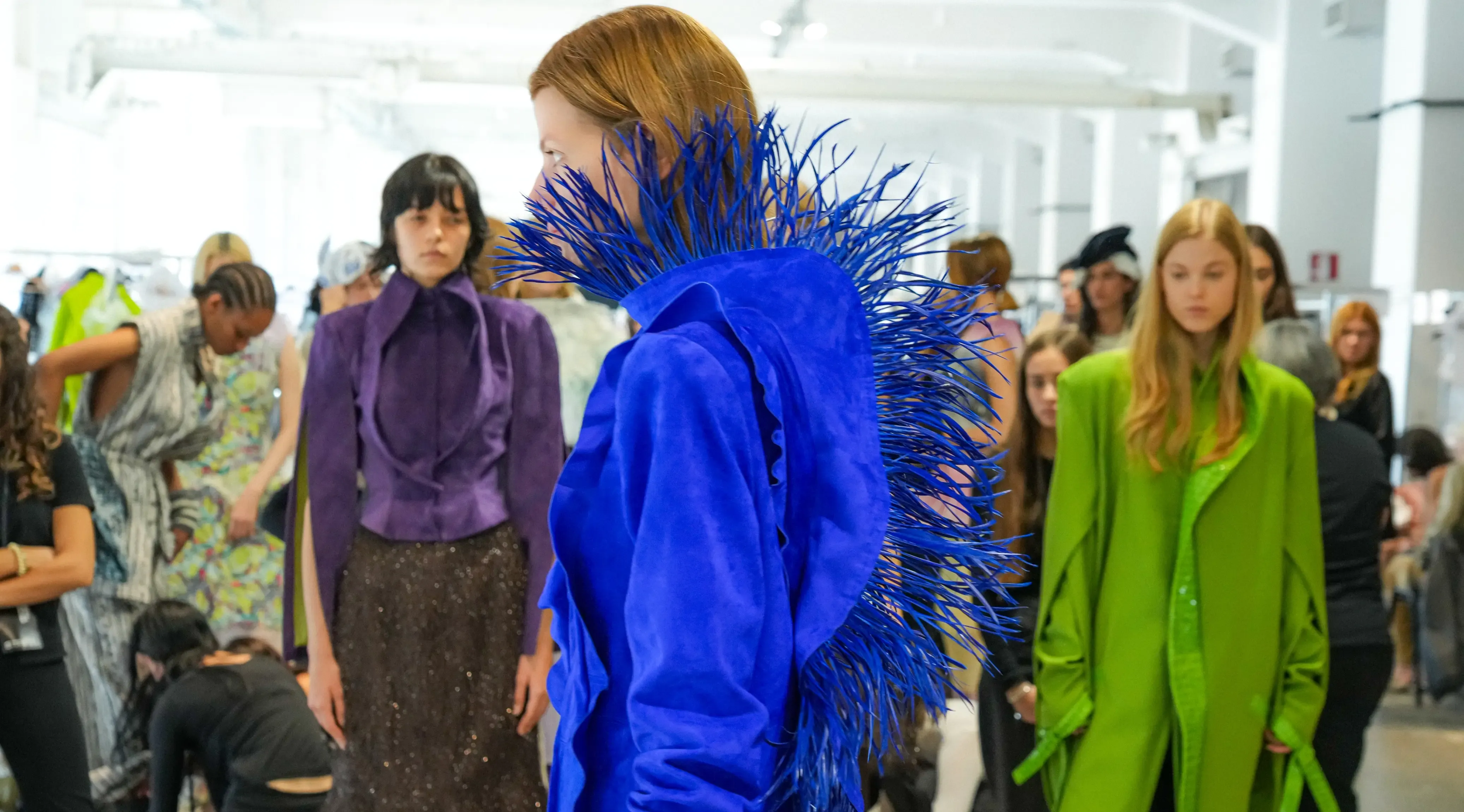
At Prada’s Spring/Summer 2027 show in Milan, Miuccia Prada and Raf Simons sent 63 looks down the runway, each featuring a skirt. Pleating, layering, and varied silhouettes explored the garment’s versatility. The collection resisted a singular ideal of femininity or identity, instead celebrating multiplicity and self-expression.
Elsewhere, skirts were not the sole focus, but many SS27 collections—particularly in Paris—underscored the mini’s renewed cultural prominence. Miniskirts appeared at Miu Miu, Loewe, Isabel Marant and Stella McCartney.
At the same time, other designers embraced knee-length and midi silhouettes, suggesting that the current moment is less about a single dominant hemline and more about a broader reconsideration of the skirt itself.
View this post on Instagram
Spring/Summer 2027 Menswear Shorts: From Micro to Below the Knee
Menswear’s Spring/Summer 2027 collections also brought leg length into focus, with designers opting for sharply different proportions. At Dolce&Gabbana, abbreviated, leg-baring shorts made a statement; elsewhere, designers explored tailored boxer-style shorts, culottes, and oversized denim jorts.
GQ identified shorts as a major area of experimentation at Paris Fashion Week, while Vogue highlighted loose, below-the-knee silhouettes across the wider menswear season. As a result, these contrasting proportions make it difficult to argue that menswear is moving uniformly towards shorter hemlines.
What Can Spring/Summer 2027’s Hemlines Tell Us About the Economy?
What can the SS27 skirts and shorts, read alongside the Hemline Index, really tell us without inviting a sensational conclusion?
If shorter hemlines reflect economic confidence, the renewed visibility of exposed legs across womenswear and menswear on many—though not all—runways might suggest a collective mood of optimism and, by extension, favourable economic conditions. But that reading risks missing the more immediate influences shaping these collections: the cyclical resurgence of early-2000s aesthetics, the growing fluidity of gendered dressing, the prominence of sportswear, and shifting ideals of the dressed body. Shorter shorts can signal athleticism, playfulness, or a challenge to conventional masculinity, just as a miniskirt might evoke youthful rebellion or feminine self-assurance. Longer silhouettes, by contrast, can convey sophistication, practicality, or deliberate subversion. Ultimately, hemline length cannot be read as a straightforward indicator of financial conditions alone.
As such, the Hemline Index matters less for its economic accuracy than for what it suggests about clothing as a social language. Fashion does not exist apart from the economy, but its response to economic conditions is rarely straightforward. More realistically, the varied skirts and shorts of Spring/Summer 2027 speak to changing attitudes towards the body, identity, and self-expression. On their own, these garments are more likely to capture the spirit of the times than to indicate whether consumers feel prosperous or financially uncertain.
So what do we make of the Hemline Index? Of course, it cannot reliably predict the next recession, but it still has value as a way to see how fashion trends and everyday pleasures reflect changing values, shifting priorities and the ongoing relationship between economic conditions and cultural expression.
Nicole Han
Student, Paris